‘We’re all in it together’ – why I hate hate

This isn’t entirely an Autism or mental illness blog. It is more a being human one. I write this as the world seems to be falling into a shadow of hatred. Everywhere there is ableism, xenophobia, bigotry, blame and judgement.  In the USA there is a lot of bigotry and hatred fuelled by a number of things but possibly most significantly by the recent election campaign. The fact that the Ku Klux Klan are active for the first time in two generations demonstrates what this means.

But the USA at this moment in time is a very long way from having a monopoly on hatred. I remember when I was at university in the mid-2000s there was – for the first time in my knowledge – debate on whether or not the use of torture was OK in interrogations of terror suspects. More horrifying than the fact that this discussion was even being had was that I was one of a few people in my circle of friends to express concern about this fairly fundamental shift in the dialogue around the treatment of prisoners. You have to have lost the perspective of a persona s being human to a great extent to be thinking physical torture is OK. This was a response to a series of acts of aggression and hate by Al Qaeda – another group which had lost sight of other humans as being human.

So where does this sort of thing come from? I think it is the result of having a central, social concept of ‘self’ and than a deviation from that self to an outsider, an ’other’. The ‘other’ includes everyone who  s eccentric (Literally outside the circle). It might be one of a vast number of groups, from Autistic people to Black people, those who identify as Queer – basically any group which does not fit within that social centre. These groups get ascribed negative qualities that members of the group are supposed to have which are then used to victimise them. I saw a documentary on the artist Christian Boltanski who found out at a young age that his father was Jewish. The young Boltanski was apparently horrified and said to whoever delivered this piece of information ‘but he can’t be. Jews have big hands for collecting all the money.’ That a young boy had come across such a horrific racial and cultural slur was appalling but these sorts of stereotypes exist for almost every ‘Othered’ group. They help perpetuate the stigma.  When somebody is ‘Other’ they can cease to be seen as an individual. The other is ‘not like us’. This tends to result in a number of responses, from victimisation to paternalism.

This sort of thing has been going on for a very long time. It is the flip side of identity and it is terrifying to watch. Othering can be aided and abetted by media commentators and public figures.

It sounds pretty horrible and hopeless but there are some actions and attitudes which can help.

  • One thing I try to live by is that when and where I see hatred or othering in place – be it against me or anyone else – I try to not stand by and say nothing. One of the ways othering and hatred work is by making everyone feel like to stand up against it is to go against what everyone else is doing. Some people may be victimised themselves for supporting the basic rights of others. The more people that stand up to hatred and bigotry the better.
  • Another strategy is to live by example. Be out loud and proud as an ally. Secrecy and fear breed secrecy and fear. But if someone states amongst their friendship group that they support whatever ‘othered’ group, it is very hard for others to attack them without seeming foolish or nasty. Also, some people may be keeping their positive and supportive views secret for fear of being discriminated against themselves. You bearing witness to kindness and inclusion could make these people feel less alone.
  • My final strategy – and I am aware there are several more but these are the ones I tend to use myself – my final strategy is standing  together. I really struggle when I see someone form one ‘othered’ group being prejudiced against members of another. For example, an Autistic person expressing racist sentiments. We need to stand up together with others who are Othered. I live my life this way. I would never intentionally discriminate against any other person due to their membership of another ‘Othered’ group. As Terry Gilliam said in the dark but wonderful 1980’s film Brazil ‘We’re all in it together’. Terry Gilliam was being ironic. I am not. I suspect when standing together ‘minorities’ might not be a minority any more but if we are all attacking each other it just fuels the fires of hatred and is counterproductive for members of all othered groups.

I will finish with a statement which I sort of pledged myself to late last year due to some world events. It is “I will not stand idly by and watch the world go to darkness and see my friends and peers  vilified and abused.” I really hope it doesn’t come to that but that if it does I hope to live up to my aim.

11289587_846906952057360_4546062650575153305_o


Purrs from Mr Kitty… Autism and animals 

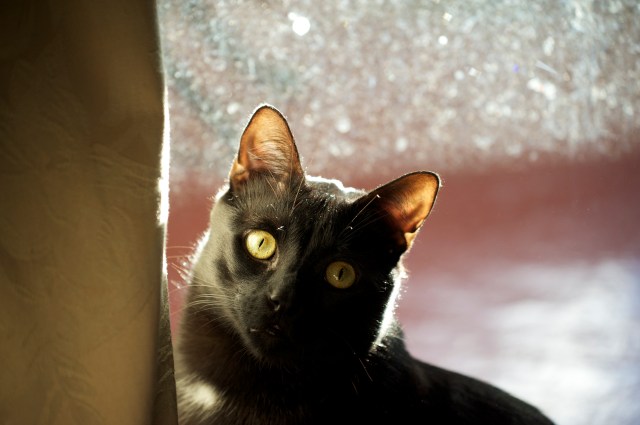
You will know if I think a lot of you because when I sign off an email or message I will include the line ‘And purrs from Mr Kitty’ before I sign. My Kitty is my black cat, I have shared my lovely home Whimsy Manor with him since January 2013. Like many Autistic people I have an incredibly strong bond with animals, In my case that has always been cats although I have autistic friends who love horses dogs, lizards, snakes and probably most famously cattle (After doing some work with her online, I sent Professor Temple Grandin a photo of a pottery cow with a floral design that I have. I reckon Temple gets even more bovine things than I get black cats from friends and supporters!) .

I don’t know how much research there is on this but Autistic people often have a bond wth their animals that non-autistic folks simply can’t fathom. If any non-autistic folks are reading this, here is my attempt to explain what a cat does for me. I’ll use narrative because I like narrative and I usually do it well.

Between 2010 and 2013 I spent many months in psychiatric wards being treated for a pretty unpleasant psychotic episode. (I have a  mental health diagnosis in addition to my Autism.) My life was a constant struggle: A struggle to keep my job and home; a struggle to keep my self-respect and dignity; and sadly on many occasions a struggle to exist at all. My apartment – at that point unnamed – was lonely and scary. A lot of my illness was focused on the house. I believed all the appliances were dangerous so showered in a  bucket and hand-washed all my clothes in the middle of a Canberra winter. I went to work as often as I could and secretary longed to be able to live in the office – sleep under my desk and not have to return to my scary home.

I have always been close with cats and many friends told me ‘you will be happy if you get a cat.’ I dismissed this. I couldn’t even look after myself. How was I supposed to care for a living creature? On day early in 2013 I was home from work. Again. I felt miserable. I went to put the garbage out and there was a little tabby cat on the wall. I gave this cat a cuddle and he loved it. There was lots of purring and smooching. When I went back inside I realised while I was petting the cat my misery had retreated. Not only did I not feel miserable when I was with the cat, I actually felt good. I decided to adopt a cat at that very moment of realisation.

A close friend at the time was the local cat rescue lady. I called her and asked if she had a cat for me. She came over that weekend with four cat carriers. Three had several kittens in them.My home had nine kittens running around. They were lovely but I didn’t want to keep any of them. The last cat was an adult cat in his own carrier because he hated the other cats. He had been a stray up until three days previously. He definitely had an attitude! He was sleek and black. Instinctively I picked him up and gave him a cuddle. I could feel the moment we bonded – I held him to my chest and he purred deeply right away. I called him Hieronymus Bosch Kitty Purkis II which got shortened to Mr Ronnie and then somehow morphed into Mr Kitty, which is how he is known to most people now.

Mr Kitty is the closest being to me in the world now. That bond is so strong. I have to board him quite often when I go away to give presentations and when I am without him I feel a physical void where he should be.

IMG_1594

He is incredibly cuddly – but only with me.  We are a package – you want a Jeanette and you’re going to get a Mr Kitty in some form or another. My furry feline friend has had the most significant impact on my mental health of anything ever. Within a few months of his arrival my house had gained its current name and some artworks on the walls. I am now rarely anxious about my home which I would not have believed possible five years go. I am always content when cuddling Mr Kitty and when I feel bad I will old him close like I did that first day. He always purrs. My mental health care plan involves one third taking the right medication, one third my attitudes and thoughts and one third Mr Kitty and human friends and family.

Mr Kitty has transformed my life, He has been instrumental in me building mental health resilience and self awareness. He really is the best gift I ever received, My mum, who is one of the Autistic people who do not have a bond with animals – even she says Mr Kitty was a gift from God. I am inclined to agree with her.

Of course this isn’t just about me and my lovely furry boy. Many, many other autistic people respond in a similar way to their pets or assistance animals. So many autistic kids need their dog or guinea pig in order to get through life. There really is nothing in he world like the bond between an Autistic and their pet. I can’t explain why that is. For me I have always been drawn to cats. I understand them and they are a lot easier than most people to read and communicate with! But they also give me something transcendent. I a truly in another place when I am with Mr kItty. I look at his little face and I know him more than I can the human inhabitants of the world.

So thank you for reading this and purrs form Mr Kitty.

WJP_3428

When time is a protective factor 

My friend and fellow Autism self-advocate Penny Robinson often mentions a quote from UK author and academic Rita Jordan that ‘The biggest gift you can give to people with autism is time’. This has certainly been the case in my experience. I think the audience who will respond best to this post is parents of older or adult  children – not just parents of Autistic children, but parents who worry about their child’s choices and the path they are taking through life regardless of their neurology. I hope this post gives hope.

I was going through photos of me at various ages and came across the one pictured here. This image was taken with my dad in Melbourne, where I lived at the time. It would have been either 1997 or 1998. I was 23 or 24 years old, and it was probably  the worst time of my life (despite me having a sparkly hat!). At the time the photo was taken I had just moved into a two bedroom house run by a charity. The house was for young women who identified as lesbian and who had just been released from prison – I fitted those categories quite neatly at the time. The house was perfect – I had the place to myself and I adopted the most cuddly cat you could imagine, who was the original Hieronymus Bosch Kitty Purkis – or Mr Kitty. I had a new pair of new Converse runners and all was apparently good with the world. My perfect world lasted all of a week before  I became  frightened and overwhelmed in the ‘free’ world as an institutionalised recidivist and did the thing I was best at then – committing random crimes to get arrested and go to prison. My house was lost as was my beautiful cat – he got cat flu despite me having had him vaccinated, and my support worker – one of those ‘mercy of strangers’  people who help but have no personal stake in where their client’s (or their cats’)  lives end up. She decided not to pay for vet treatment for my furry fella and he died.

That’s a rather sad story isn’t it? But it improved and one of the key factors for improvement was time. Criminal me was known for being completely without insight or self awareness. She was self-destructive, self-defeating, impulsive, violent, addicted and incredibly negatively focussed. Imagine the parents of  that young woman – my parents. They were anxious at the best of times and I am horrified to have been the person who unintentionally put them through the hell they undoubtedly encountered. Imagine that young woman’s mental health workers? Imagine the lovely clinical psychologist who diagnosed that apparently lost person with Asperger’s and then watched her miss appointments and refuse to accept the diagnosis and the assistance it could have meant for her, preferring the world of crime and drugs to the world of accepting herself as an Autistic woman.

Time alone did not address the issues I faced of course. People helped and supported me to get to a point where I could make positive, sensible choices.  I often give this example of people having a  major issue with their behaviour, such as a drug addiction. The person with the addiction issue is the only person who can change  their own behaviour. No one person telling them will be able to make them change. This might sound  a little hopeless, for if nobody can make them change and they don’t want to, what hope is there? In fact telling somebody going through addiction issues how much you love them and want them to stop using whatever substance or maladaptive behaviour, by offering genuine advice and support, you are putting in that person’s mind an alternative route so to speak. So they need to make the decision and make the change themselves but you can help them along their path. You might tell them 1000 times that they can change and they have fought and been angry and dismissed what you say every time but when the time comes that they are ready to make a decision to change, those 1000 statements from someone who loves them and cares for them are incredibly important.

I think maturity is about learning from your own mistakes and from others’ experience and stories. For those who care for someone having issues with managing life in whatever way, there are some points to consider.

  • Never give up on  a person. I went from being a homeless, violent criminal to being a many times published author and ACT Volunteer of the Year (among other things). If my parents ever gave up on me they never let me know it and were always beautifully supportive. I imagine it cost them a huge amount to do this but, in our case at least, it paid off.
  • Time itself is actually a protective factor. People’s brains do not tend to fully mature until around age 25. For Autistic people that maturing can happen later at around 30 or sometimes later. Much and all as I hate telling parents ‘wait until they are 30’ for their child to move beyond poor choices, in many instances that is in fact what happens.
  • Things like mental illness can temporarily impact on somebody’s thinking and attitude. This can be frightening for parents and people that love them, but illness is often fleeting or episodic. Even if it is concerning, somebody needing to access clinical support for their mental illness can in fact be a step on the road to self awareness and understanding and the underlying issues being addressed.
  • I have met parents who despair over their young adult daughter not finishing a course or getting a job. Much and all as I hate telling people to put things into perspective, as two different people’s pain or worry is not comparable, I think it is important to b aware of the continuum of challenging  choices and behaviour.
  • So I suppose managing a life of difficult or counterproductive choices – of yourself or someone who you love – factoring in the time and experience element can give some hope and perspective. I feel for parents whose child is wandering on a dark path and I feel for the child too having been in dark places myself. The beauty of being me is that I try to model hope for those in dark places.

img_4611


Assertiveness – Why its hard and some strategies

Assertiveness, limits, boundaries. All incredibly useful strategies for navigating life and staying safe from predatory people. In my own experience, I was almost completely unable to set any kind of boundary or limit until I was about forty.

Here’s one of many examples of when I could have used assertiveness but didn’t.

Between ages 28 to 32 I lived in public housing. I was aspirational – going to university and hoping to be able to move to somewhere nice and less dingy. My neighbours tended not to be aspirational – most of them were alcoholics. Being an Aspie social chameleon I was keen to be accepted by everyone so I learned how to fit in. My housing situation was all fairly grim but there was one factor which made it almost impossible – we shall call this factor Renee (*name changed). Renee was a rather sad and broken person but I struggled to sympathise because Renee was a stalker and worse still she was MY stalker. Renee had wanted to be my partner since I moved in. She would get drunk and aggressive and accuse me of things I hadn’t done. She would sometimes try to force herself on me sexually. She told me all my faults and then sang my praises, depending on her mood. I felt trapped by Renee. I understood that most people in this situation would set some firm boundaries but at that point in my life boundaries were as remote as Mars. I know they existed but could not reach them. Very occasionally – usually after she had been violent to me or a friend – I would tell Renee to leave and not come back. She knew me well as she would wait for a week and then knock on my door looking contrite and sad. I would ‘forgive’ her and let her back in and the whole thing would begin again. I spent almost four years haunted by Renee and when I finally escaped my supported housing flat I was haunted by thoughts of her for another three years after that.

This is one of a litany of my experiences where assertiveness and boundaries would have really helped and where I simply couldn’t apply them. I am not alone here sadly. I know a load of people who struggle with setting boundaries and enforcing them. Assertiveness is a useful but very elusive skill for so many people.

Autistic people often struggle with assertiveness, as do many other groups and individuals. I will just focus on Autistic people and assertiveness here but I imagine the things relevant to those of us on the spectrum are probably relevant to others too,

Some of the reasons I think assertiveness is so hard for Autistics  include:

  • We often struggle to be accepted socially from a very early age, This can set us up to be strongly focussed on pleasing others and gaining friends. That can work well up until the point we need to set a limit or boundary. When this occurs I think many of us feel that our friend will disown us or not like us any more. So we go along in the friendship or relationship not speaking up the something goes wrong. Usually this is interpreted by the friend or partner that we agree with their actions – otherwise why wouldn’t we say something?
  • Many Autistic people – and others too – have experienced bullying, abuse, violence, gaslighting and other invalidating and harmful behaviour from others. This impacts on a person’s sense of self, identity and self-worth. They may not even realise they have a right to stand up for themselves or if they do, they are afraid expecting further abuse. Often even if the initial abuse happened many years ago it may still be almost impossible for someone to stick up for themselves.
  • Some people have spent a lot of time in supported housing or residential care  or psychiatric hospitals and institutions. The way these sorts of settings work is to ensure everyone does what is expected of them. There is often a very clear power dynamic going on in these settings. People in these places are generally expected to do what they are told and not ‘rock the boat’. This can make it almost impossible to set limits and boundaries, even if someone has been living outside of these settings for many years. It also raises a strong danger of abuse within the institutional settings.

Thankfully learning assertiveness does not need to be an insurmountable goal. There are a few things you can do to improve it. These include:

  • Self worth. We often have low self esteem and self worth which can contribute to a lack of assertiveness. Consciously working on building your self worth is a good first step.There are things you can do to build your self worth, including being aware of how you describe and talk about yourself to others. If there are lots of blaming words and thoughts, try and consciously change how you view and talk about yourself. You can also do things like writing one positive thing about yourself each day and, if possible, spend time with people who value and respect you.
  • Practice makes perfect. I find when improving my own assertiveness, it was quite an incremental process. I didn’t start by standing up to a bully, I started by standing up to tradespeople and telemarketers. Each time I did this I grew in confidence and my resolve to be assertive in the future grew too. I can now set limits and be assertive in a number of situations and it is wonderful. I thought I would never achieve this.
  • Some people find working on assertiveness with a psychologist or other mental health worker is helpful.
  • There are a few simple tricks around practicing assertiveness which if you use them will hopefully make the experience a positive one which you can build on. These are:
    • Before the conversation, make sure you are aware of things which might be going on for the person you wish to set a boundary and / or be assertive with. If they are catering for a child’s birthday party and have 35 six year-olds coming over in less than two hours, it’s probably not going to be a time they are receptive to you setting a limit.
    • Not only pick your time, but pick the way you have the conversation, taking into account your own needs and the other person’s preferences. If you dislike phone conversations, using the phone  might increase your anxiety so it might be worth meeting face-to-face or via email. And if the person you wish to set the limit with doesn’t respond well to email – or whatever – maybe don’t use that medium.
    • You can run through what the issue is and what you want to say to a friend, partner or family member, preferably one who is not involved in whatever the problem situation is themselves.
    • Use ‘I’ statements. Start from the position of ‘owning’ your concern rather than saying ‘when you did this thing it upset me…’
    • Don’t blame the other person. Set out what they are doing which is causing you difficulty as objectively as possible.
    • Describe the outcome you would like and if possible ways you and the person you are speaking with might be able to get to that point,
    • Remember that people who like and respect you tend to respond well to an assertive, respectful conversation.
    • Allow yourself time to debrief after the conversation, either just by yourself or with a friend, partner family member or talking to your pet.

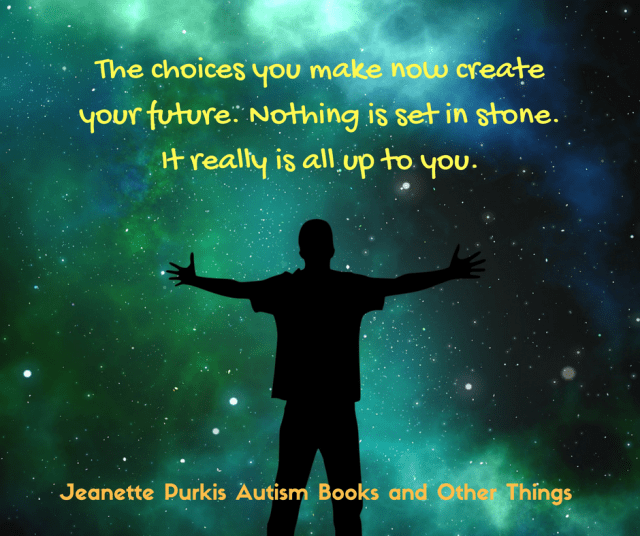
the-choices-you-make-now-create-your-future-nothing-is-set-in-stone-it-really-is-all-up-to-you

Causation, Autism ‘cures’ and why I find these very concerning  

This post is me musing on my concerns as science starts to understand more around Autism and genetics and what the implications of this might be.

I am Autistic. I was born in 1974 and diagnosed 20 years later. As a child and teen I was ridiculed, bullied and hated. I felt alienated and on the outside of society until I was about 30. If someone had told me I was Autistic when I was a child my life would have been different. If you had said to me ‘I can cure this’ I would have jumped at the chance to have what I thought was a ‘normal’ life. I imagine my parents – one of whom is now diagnosed as Autistic and the other fits the ‘broad Autism phenotype’  description – I reckon they would have chosen to cure their daughter who struggled to fit in and live a usual sort of life. Flash forward to 2017 and if I were offered this ‘cure’ to make me non-autistic I would say a clear and emphatic ‘no!’ Many of my Autistic friends have also said they would decline being ‘fixed.’ For me, this is because I don’t know what a non-autistic Jeanette would be like. I have never been that person and I like who I am now. I have got through countless struggles and dramas and have become quite wise and sensible, and my Autism has contributed to that rather than detracting form it. My Autism comes with gifts – I can write anything. I barely edit as the sentences and paragraphs just pop out of my brain and onto the page. And one thing which might be a little controversial is that I wouldn’t desperately want to be non-autistic because I don’t like the communication style they use.  What I say as an Autistic is the words and the meaning. There is nothing else going on. There are not multiple layers of meaning in my words, or micro-expressions with my face betraying to other non-autistic folks that I didn’t mean what my words said. I don’t like this kind of communication and in fact I often view it – albeit in a rather tongue in cheek way – as perhaps one of the deficits of ‘neurotypical disorder’.

I am not proposing that all elements of Autism and good and worthy. Autism can be extremely hard – as I know myself – but in my mind teaching Autistic children and adults strategies to navigate the world and supporting them to do so is a much better idea than ‘curing’ Autism and wiping us out of existence.

Of course there is currently no ‘cure’ for Autism. This article is based in speculation but it seems to me that science and research may turn up something in coming years which changes the Autistic brain into a more typical one. I do not look forward to this.

The notion of causation around Autism is something  which has been occupying the minds of researchers, parents and clinicians for a very long time. If they could just find the Autism genes or epigenetic factors they could provide a ‘cure’. Despite perhaps sounding promising, this has some pretty significant negative connotations attached in my mind. Here are the reasons why:

  • Focussing all the attention for Autism research on causation and potential ‘cures’ is not much use to Autistic children and adults in the here and now.
  • It can be hard for parents and  / or Autistic people to discern the useful research from the charlatanism. As in any ‘industry’ parents of Autistic kids are frequently preyed on by charlatans interested only in making a buck. Some of these ‘therapies’ are in fact dangerous, such as bleach enemas (now thankfully outlawed in many places) or just shamelessly grubbing money from people desperate to make their little person’s life easier to manage (e.g. $35 a litre for camel milk is one I have cone across.) There is a lot of pseudo science and downright unscientific rubbish (anti-vax anyone??). These things actually tend to harm Autistic people and our families and distract parents from helping their children with useful interventions.
  • Another issue I have with ‘cures’ for Autism is more philosophical but also very important. Imagine if there was a prenatal genetic test mums could take to find out if their child is Autistic. The mum takes the test and is told how she can ‘cure’ her unborn child’s Autism using genetic therapies.  How many parents do you think would elect to keep the Autistic child or not cure their child’s Autism if they could? I would hope it would be a larger number than it probably would be. Then imagine there was a way to fix all the genetic diseases, and all the other apparently ‘undesirable’ traits in our human genome? Doesn’t sound like a very nice world does it? If anyone has seen the film Gattaca they will have seen a glimpse of this – designer children and disease and difference confined to those too poor to afford the ‘fix’. This option sounds far off but I’m not sure quite how far off it is. It is certainly a future many people have speculated about and is basically Eugenics. Instead of showing people to respect difference it would involve eradicating all the difference, Absolutely makes me shudder.
  • And on that point, from a purely economic and social view Autism comes with some incredible, useful skills, talents, philosophies and experiences. How many Autistic people (diagnosed and undiagnosed) are working Silicon Valley? How many great writers, inventors, actors, musicians, engineers, botanists, medical doctors,  ethicists, etc etc etc in the past and present have been Autistic? A great many of them. To deny the world the gifts of Autistic people would be tragic indeed.
  • If a ‘cure’ was administered and no new Autistic babies were born, can you imagine what would happen to the millions of us still with the diagnosis? If observations of other health conditions being ‘solved’ (and i use that term in a very ironic sense), pretty much all the funding and support and services may well be under question as society’s attention is diverted to another health problem which instal viewed as being ‘fixed’ already.
  • One of the key issues that face Autistic people in relation to ‘cure’ thinking is that most people view Autistic children as the face of Autism. Autistic children – like typically developing children – are not yet mature. So the people who would make decisions over whether or not to ‘fix’ their child’s autism might not know about Autistic adults and how we change from children. It’s a bit like trying to imagine a five year old working as a lawyer next week!

So if a cure becomes available I hope people are considering these kinds of issues because they are very real. I’ll just pop in the much-used and very accurate Professor Temple Grandin quote saying ‘We are different, not less.’ (And if you don’t know Temple, she is Autistic and is the world’s leading expert in some areas of animal husbandry and was listed as one of Time Magazine’s 100 most influential people.)

11043316_802276853187037_6636589104752091030_o

On Autistic community, identity and respect  

I am an Autistic self advocate. As such I belong to a broad and diverse community comprising other Autistic self advocates, Autistic kids and adults, parents and family of Autistic kids (who may or may not be on the spectrum themselves), Autism support organisations and peak bodies and others with a stake in the wellbeing of Autistic people. Within our community there are many groups. Mostly I find the Autism community to be supportive and encouraging and i’m proud to count myself among its number. However, there are some issues which can come up which I would like to address in this post

Identity

The first sentence of this post was ‘I am an Autistic self-advocate’. There are some pretty strong indicators of how I choose to identify just in that short passage. I use ‘I am Autistic.’ This is known as identity first language. Lots of people I know use this rather than ‘I have autism.’ It is not the ‘correct’ way to identify, it is just the way I choose to. Identity first language means that I see my Autism as an integral part of my character which I cannot remove. It is part of me. Another clue to my self identity in that sentence is my use of the upper case ‘A’ in Autistic. Not many I now people use this but to me it reflects my view I am part of a culture, a sort of nationality of Autistic people. All of this is part of my identity. However, it is not everyone’s identity. Some people in the community get upset when other people do not use identity first language but say ‘I have autism’. This is foolish and unhelpful. How another person chooses to identify is their own business, not mine or anyone esle’s.

Trolling behaviour

Unfortunately some trolling and online aggression also goes on in our community. There are different shades of this, from unhelpful criticism to outright aggression. Sadly our community is not immune from the curse of the keyboard warrior. Some of the trolling and negativity baffles me. I see in the world a lot of people who could be called enemies to Autistic people – charlatans selling dangerous ‘cures’ to desperate parents of newly-diagnosed kids, people who are ableist bullies and victimise us, even people pushing eugenics. When another Autistic person trolls me or any of my friends or advocate colleagues, I wonder why they attack other Autistic people rather than focussing their vitriol on somebody who could probably benefit form some criticism. I mean, Andrew Wakefield is right there! Why target people who are essentially working for a similar outcome as the troll professes they are?

Events and organisations

I give presentations for a lot of different autism and other organisations. Some of these events are for organisations I have some reservations with. I often get questions and criticism form people saying ‘why wold you speak or write for them?’ My answer is usually the same. I don’t not so much speak or write for the organisations but for the audience. Of course there is a line I won’t cross but I never want to be someone who just preaches to the choir. If I just spoke to people with what I consider ‘good’ Autism world politics we would probably be sitting in a very small room telling one another how great our ideas are! Sharing my views with a larger base of people who are outside my small group of friends and colleagues is essential. Otherwise why would I consider myself an advocate? I think if a parent of a newly diagnosed child, or an adult who has recently received their Autism diagnosis is looking for information, I would like them to see something from me or another advocate colleague than from someone who is not supportive or understanding of the needs of Autistic people.

Disagreement and dissent

Dissent and disagreement are actually wonderful things provided they are respectful. There is a huge difference between trolling and respectful, reasoned argument. If you disagree with what I say, please let me know. Dissent is a great way to broaden thinking and refine your ideas.

Fundamentalism and sectarianism

One common issue in any culture is fundamentalism. Fundamentalism can be summed up as ‘What we think is right. Any even small variation from this ‘truth’ is wrong. We need to make sure everyone knows what we think and try to bring them around to our way of thinking as their’s is ‘wrong.’”  Fundamentalism is really divisive and unhelpful and sadly it does lurk in parts of our community – as it does in pretty much all communities. An example of this is that I got into some trouble with some more fundamentalist members of our community a while back when I posted something with ‘the wrong’ terminology. It wasn’t that I was using offensive terms, I had just apparently put the wrong nuance on my wording of a post. A couple of people shared my post and ‘ripped me to shreds’ on social media. They did not message me to engage in discussion. T o me that demonstrates fundamentalism in action. My statement was actually very positive and helpful but because I didn’t conform with the ‘right’ terminology, all that positive message was seen as unhelpful and worthy of derision.

Perceptions of the community

Things like fundamentalism and criticism for how others identify is not only difficult for people currently within the community, it has a significant impact on people who have just joined us – such as those who are newly diagnosed or whose kids are newly diagnosed. People just finding their place within the community can be put off by being attacked for saying the ‘wrong’ thing. Assumed knowledge that if someone is Autistic the they ‘must’ identify in one way or agree to a series of quite specific ideas can be off-putting and even exclusionary. Divisiveness and focussing on minutiae can often alienate people.

Please feel free to comment and discuss this one.

IMG_0446

‘Tis the season to….’ reflect on social connection apparently

I thought this was going to be a big reflective Jeanette-fest but (thankfully) it moved away from that and into a nice piece about the importance of social connectedness. Enjoy

Here goes…. Last night I went to take my medication. I take seven different sorts at two different times in the day. I’m quite vague and rarely have a good handle on which day it is (or month, or year sometimes) so I take my meds using a webster pack. The pharmacist puts the different pills in little sections for the corresponding time and day. It works well and incidents of me taking the wrong thing or the right thing at the wrong time have been rare.  Most of my medication is for my mental health difficulties, which are significant and numerous. So back to last night. I popped out the evening pills and was about to down them in one go when I noticed something was wrong. Instead of the usual three Seroquel tablets which are white and oblong and always have been, there were three round white mystery meds. My paid job is in risk management so my brain was adding up likelihoods and consequences. I sensibly concluded that taking medication which I didn’t recognise and could be the result of a pharmacist error and possibly result in illness or death…well it wasn’t an option. I spoke to one of the mental health crisis team who agreed that I should miss the dose.

As a result I slept for about three hours and was in a twilight sort of waking dreaming fug for the rest of last night.  There were some pretty interesting visual distortions and I found myself actually needing to argue with myself that eating cat litter – while a new experience – would probably be one I regretted. Probably would regret quite a lot. I sorted the issue of the meds with the very apologetic pharmacist and called in sick at work. That is not the main point of this post though, just the background.

Today something happened which got me thinking. First of all a friend called to see if she could take me to the late night pharmacy. Then my manager at work messaged to make sure I was OK. I called back and she spoke to me for some time. A great friend in Adelaide and I had a great – and amusing – message conversation. My lecturer friend messaged to make sure I was OK even before I got up! Then I checked Facebook and loads of people had asked if I was OK and suggested useful things I could do, including a friend from overseas who gave me a bunch of information about the psychotherapy model she uses. My phone rang again and it was my former supervisor who now works in a different area but who heard I was off sick and wanted to check I was OK and wish me merry Christmas. Another friend sent me lovely flowers. I was quite overwhelmed with all these people caring and wanting to help …

Keep that in your mind. I now want to take the rather well-used blogging TARDIS and go back a few years to a younger Jeanette in similar sorts of circumstances, mental health-wise. This previous version of me is in her twenties. She is living in supported housing for young people with serious mental illness. She is quite psychotic – the combination of a recent medication change and taking on a role as a casual dishwasher in a restaurant and being a huge perfectionist – which had resulted in acute illness. Twenty-something me had the following supports: Lovely parents who are accepting and beautiful but both work full-time and live 300km away, a support worker from the house I lived in, a mental health case manager, one friend that I met the year before in a  mental health rehab place and who is in hospital for what will turn out to be the final 12 months of hr short life, twelve housemates from the supported accommodation i was living in, a somewhat creepy ex-therapist who would shortly afterwards be deregistered for misconduct and a very lovely brother who communicated via the quite new medium of email from the United Kingdom where he was on an extended visit. My younger self was admitted to the psychiatric hospital. I had one visitor – the creepy ex-therapist who I had asked not to come. I also had a misdiagnosis so while I was experiencing delusions and terror, the hospital staff thought I had borderline personality disorder. This meant they tended to be blaming and punitive rather then supportive.

Of course twenty-something me managed to navigate her way through all of this to where I am now. The point I wish to stress though is the sort of people  my supports were. Apart from loving but distant family members, everyone who supported me was doing it because they were paid to. My former self had only one friend who was in an even worse predicament than I was. The number of people who had any meaningful personal stake in what became of me were few and far between. Imagine if all the people you look to for support are essentially strangers employed to keep you out of harm’s way? They may be nice, they may not be nice. You have very little say in who you get. And even to the nice ones, you are essentially part of their work.

Sadly this is the case for vast numbers of people. Right now just in Canberra where I live there are probably tens of thousands of them. People in aged care – including young people in aged care due to the lack of more age-appropriate facilities, people with mental illness who have lost contact with family and friends, homeless people, those in prison, people who are socially isolated and many Autistic people. This includes many people who have no friends or family or who suffer family valence and domestic abuse. I could list so many categories of people who are n a similar spot to where where I was in my twenties in terms of support and social connection. It is very sobering.

I was lucky, or fortunate, or blessed, or determined or whatever you want to call it but many people aren’t. This is not their ‘fault’ – in fact the notion or fault in these situations is way too simplistic. Please don’t give me that ‘deserving / undeserving poor’ concept. Just imagine that you are sick and in hospital and the only person who visits you is a creepy ex-therapist who you complained about to the relevant authority? Imagine you live in housing not with people you choose to but with those who lived there when you moved in and you had nowhere else to go? In fact I was incredibly lucky then as I still had connections to family. Many people – even twenty-somethings – in that situation have little or no family connection or harmful relationships with family.

I’m not going to ask you to all rush out and invite a homeless person to Christmas dinner, but the act of thinking around my medication mishap sort of opened the door to these sorts of consideration. We are all people. We all make mistakes. No single one among us is better or worse than anyone else. Everyone can change. Being someone who has a genuine stake in the outcome of someone’s life other than being paid as a case worker (or whatever), can make a huge difference.

Thank you to all the people over the years who have helped enable my own journey. I can’t name you all but hopefully you know who you are.

Merry Christmas or Happy Festivus or just happy Friday to everyone. JP

wjp_8044

I don’t need fixing, thanks

In my understanding, Autism is a neurological difference, a divergent way of viewing and experiencing the world. Autistic people are Autistic for their whole life. It is an integral part of us. Autism is viewed by different people in a variety of ways, from something deficient and in need of ‘fixing’ to a strong and inclusive identity.

I am an Autistic woman. I do a lot of responsible, high level, apparently impressive things. I work full-time in a professional role in Government administration. I write books about Autism and other things which people read from time to time. I have represented as a self-advocate in all manner of forums. I have bunch of awards for leadership and community service and lots of other cool stuff. I am an Autistic woman. I have a long list of things which make me different and unusual to many people. This does not stop me from doing all the various things I do.

As other Autistic people often do, I stim, I have passionate interests which I am absorbed in and which could be described as obsessions. I have meltdowns, I can get very anxious and worry and catastrophise at times. I have eaten the same evening meal at home since 2013 (fried rice with veggies and egg – I know you might ask. And it’s yummy and has gained the term ‘Jeanette fried rice’ with some of my regular visitors). I never make eye contact and instead look at the forehead just above the eyes. I have no understanding of human body language or facial expressions. Unless you are visibly crying or say ‘I am upset’ I can’t pick it from just looking at you. My cat is the most important person in my life. I talk loudly and sometimes miss the thread of the conversation. I wear all sorts of things which people say are funny. And I don’t mind any of this. It is me. I have achieved all of my various exciting things as this quirky person.

So this is why I am sad when people try to ‘fix’ me or to ‘fix’ any other Autistic person. In my mind, if things related to your Autism causing harm or danger to you or others then they need to be addressed but if the only issue is that you don’t look or act like the other non-autistic humans, then I feel the lesson should be about others learning to value and accept you as you are rather than nit-pick about meaningless differences.

Take the making eye contact issue. So many Autistic kids are told to look people in the eyes. Almost all my Autistic friends have described what this feels like. It is different for everyone but it tends to be a really unpleasant and intense thing. One friend talks about making eye contact as being like to laser prongs boring into her eyes, physically painful and overwhelming. Another said it is like laying her soul bare. For me, eye contact feels like I can see into the person’s very essence and being. I feel trapped and lost. I very rarely make eye contact by accident and avert my gaze as soon as I can.

I met a non-autistic former teacher once who proudly told me she had taught a  boy on the Autism spectrum who was about 11 years old. She said he would look at his feet when speaking to her so she described physically putting her finger under his chin and literally ‘lifting his gaze.’ I was tempted to do this to the former teacher to see how she enjoyed a physical invasion of her space. I didn’t because I’m very nice but I was really upset to think of this happening to some young boy.  This sort of thinking around eye contact, particularly with children on the spectrum, is sadly very prevalent. The thought is that eye contact is some kind of basic means of communication and if you aren’t doing it, you are communicating ‘wrong’. This is untrue. Eye contact is not universal. Many cultures – including some Indigenous Australian cultures – see eye contact as invasive and aggressive so avert their gaze out of respect.

This example comes down to the very basic notion of respect and understanding. Autistic people – and particularly children – are being forced to do something largely unnecessary and which is often incredibly unpleasant for them because their ‘different’ is viewed by many as making them ‘less’ .

Some ‘treatments’ for Autism involve modifying apparently ‘problem’ behaviour. This often includes things like stimming. If you are unsure what stimming is, it is described as ‘self-stimulating behaviour’. It is often a self-soothing technique and is different for each person. Some people – like me – have a lot of sensory seeking stims. Looking at shiny paper or colourful art – or as most people who know me would know, colourful jewellery, shoes, clothes and wigs. My other stims are physical ones – I wiggle my fingers when excited and clap my hands once or twice when nervous. When I am about to get up on stage for a presentation I often tap my hands on my thighs a few times to get ‘in the zone.’ None of these things are hurting anyone but they are helping me to process emotions. Some  ‘therapies’ for Autistic children try to get them to stop stimming. I am actually not 100% sure why this is but I imagine it is because the behaviour looks odd. Some people might argue that stimming or looking visibly different is a cause of bullying. Oh dear. I think we need to go back to our human 101 class and understand the somebody ‘looking weird’ is not actually doing any harm. If a bully targets them, that is the responsibility of the bully, and presumably those who helped show him or her that different and weird deserve abuse. And stimming for autistic people is often a very effective de-stressing and de-escalation strategy, helping them manage life better and avoid meltdowns. To take that away from someone and tell them it is wrong and they need to stop doing it, is pretty cruel and unhelpful really.

We would be so much better off to try to make the world more understanding and respectful of difference rather than taking away people’s strategies and making them look at someone in the eye. Teaching Autistic people to be ‘less autistic’ is incredibly unhelpful and mean and invalidating to the autistic person. They will always be Autistic. It would be some much better to teach them to respect and love themselves rather than berating them for stimming and other ‘odd’ behaviours.

I’m going to finish off with a bit more of my experience on this topic. In recent years I have been told to ‘learn to manage your emotions’ (in response to me using strategies to de-escalate what was looking like a massive meltdown in a setting where meltdowns would have been very damaging to my reputation). I have been told that ‘you shouldn’t say you are Autistic. You could pass for normal,’ and that old chestnut ‘You shouldn’t talk about Autism. You are very mild.’ So basically if I do the social chameleon thing and try to look more neurotypical I get dismissed and gaslighted and if I show just a little of my challenges with overload I am seen as unstable. Thankfully most people in my life at the moment understand all the things discussed in this post. But there are still kids and adults suffering just because they are meant to ‘be less Autistic’.

And you know what? Nobody can ‘be less autistic’ or ‘be more Autistic.’ We are who we are and that is OK.

IMG_3534

Reflections on a helpful year

Yes it is that time again – self-reflection and contemplation and that sort of thing. Hopefully my reflection will include some relatable and useful nuggets for readers to consider.

My 2016 has been an amazing year in many ways.  If you look at my social media posts there are all sorts of tangible achievements I have had – awards, public speaking opportunities, books being published and contracts for more books. The sorts of things which make my parents very happy to introduce me to their friends. These days I have a lot of ‘parental pride points’. That may sound  a little trite and self-indulgent so I will qualify it with the ‘that was then, this is now’ story (briefly). This time twenty years ago I was incredibly unwell with mental illness. I was socially disadvantaged and excluded. I had every desire to ruin my life. I hated myself. I was a prisoner and would be a prisoner, homeless person, drug addicts and alcoholic for some years to come. I was apparently without hope. I am ashamed to say I turned my parents into the couple sitting up the back of the Autism support group feeling and and not wanting to share what their child was doing,

Somewhere between then and now I changed my attitudes to life and started on a much more positive journey. I won’t list these accomplishments but suffice to say I am a largely very happy, insightful, fulfilled, respected person who has pride in what I do and is passionate abut driving positive change for Autistic people and those who love us.

In the eleven years of my advocacy journey I have learned a lot about myself and the world. So while on paper 2016 was the most eventful, exciting and fulfilled year of my life, all that excitement was paired with some changes and realisation which I don’t put on Facebook so much. These include:

  • A loyal friend is a beautiful and highly valuable person. Reciprocate and respect that person.
  • I have a mental illness. It results in lots of suffering. I used to worry I would go to hospital and have to miss a bunch of presentations and things. I don’t worry about that future at the moment – or I try not to at least.  When I am unwell I seek the required assistance and support and remind myself that everyone suffers. Where it leads to is largely up to how I approach that suffering. If I catastrophise and worry, the worst usually occurs. If I remind myself that suffering is part of existence and I will get through it, it actually makes it a lot more manageable and less likely to result in hospital or other nasties.
  • Lacking assertiveness is not an option for me. I am available to pretty much anyone in the world who wants to talk to me. This is a choice but it does sadly involve occasionally having to set a limit or stand up to someone. I am constantly surprised how I have taken on this skill. in  short space of time. Necessity is the mother of invention as they say.  I’m very proud of my ability to be assertive in a firm but respectful way.
  • There are people in the world who want to hurt and abuse people from minority or disadvantaged groups. As I belong to a fair number of those groups,I feel I have a reasonability to support others being victimised and take a stand in what I say. I  really don’t ever want to stand idly by and watch when evil and discrimination and hate occur.
  • I have finally learned to not be competitive against other people. Someone succeeding is not ‘stealing’ my success. This has been an ingrained attitude with me for years. I hated it as I felt really guilty about being jealous. It saddens me that I had to have a bunch of success in order to overcome my jealousy but it is how it is I guess.
  • I am less ashamed of my ego. Someone once told the that I wouldn’t be able to put myself into the world without confidence and a fair whack of ego. So I guess as long as my ego is kept on a leash and that I am only competing against myself, it can actually be a positive attribute.
  • I learned that other people are anxious about putting writing and thoughts into the world in case anyone says mean things. I don’t think like that very often. Finding out that others do this made me more self conscious about posting blogs but thankfully my social media family are almost all very lovely and supportive.
  • I learned that disagreement from others can drive learning and growth. Providing the disagreement is from place of respect – on both sides – it can actually be very useful.
  • I also realised that I learn something from every conversation I have around Autism.
  • I had so ay people telling me that my work has made a difference in their life. I also learned that taking this gratitude on board can be  a bit overwhelming, so I just tend to say ‘thank you’ to them and not get into a discussion about my apparently excellent work.
  • I learned that I do not need everyone to like me.
  • I learned through friends that Mr Kitty loves me as much – or possibly more – than I love him. I am eternally grateful for the gift of Mr Kitty.  expel who don;t strongly relate to animals may not understand this, but being given Mr Kitty was the single most influential event in me recovering form three years of mental ill health.

People are gelling me ‘onwards and upwards’ for next year. I”m not sure how this works. The last three years of my life have been incrementally more and more amazing and presumably this can’t happen each year or by 2026 I will be the supreme leader of the universe (and I don’t want that!!!!) I think each year has different challenges and learnings. I have applied to start a PhD next year so that will be another adventure. I have all I need right now. Consolidation and supporting the careers of others will be my goals for next year.

Thank you for your support, kind words and contribution to my understanding of life. I am privileged to be here, privileged to get to do all the things I do and grateful for every moment. I look forward to doing my thing next year.


Awards pic 2

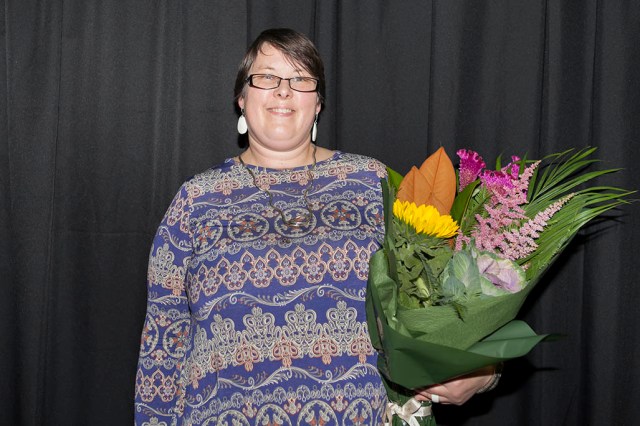
OK, this one is an accomplishment. I am actually very proud of this. It was the ceremony where I received my 2016 ACT Volunteer of the Year award


Tips for taming an errant brain…


Most people who read this blog regularly know I have a mental illness which makes my life rather challenging and difficult from time to time. It is doing so at the moment in fact, hence my perceived need to write this blog. Don’t worry – I’m not going to whinge about my errant brain chemistry. Instead I will use the experience of my errant brain chemistry to share some things which are helpful to me and which others can benefit from too (hopefully).

I have had the crisis team call me every day for over a week. They called me twice tonight. Anyone who has used public mental health services in Australia will know there is only one step between that and me going to hospital – that of the crisis team visiting me. I have no intention of that happening. I am an empath so being in hospital with all he other people’s misery crowding in with my own misery is very unpleasant. I will resolve to be miserable at home if I can.

There are a few things going on that will enable to me to remain at my beautiful home Whimsy Manor rather than what the French so poignantly used to term ‘l’hotel Dieu’ (literally ‘God’s hotel’).

These things are keeping me able to manage:

  • Mr Kitty. My black feline friend has a number of useful functions other than being his beautiful and naughty self. He is protective factor in terms of logistics, If I did need to go to hospital, I would need to find cat boarding at very short notice for an indeterminate period of time. I wouldn’t want to do that to Mr Kitty – or my bank balance. I just think ‘not an option’ to myself and keep going. And of course the furry boy is incredibly cuddly. Every time I pick him up – whatever he is doing  – he goes in for a snuggle. He is the most affectionate cat I have ever had. Cats are ace!
  • The fact that people ask me for mental health tips and strategies and helpful resources puts my own issues into perspective and altruism and assisting others are great distractions,
  • I have basically trained crisis team and other local mental health services to understand my needs. This took a very long time. Sadly I think a lot of Autistic people  have had issues accessing respectful and beneficial mental health care. But for me now I am reasonably be sure if I call the crisis team they will actually help me so I am not afraid to seek help. You have no idea how sad I am to write that sentence. Seeking help for mental health issues really should result in help being given, not invalidation and dismissiveness.  Unfortunately this is often not the case for people with mental illness and it would seem particularly to be the case for Autistic people with mental illness.
  • I use some pretty nifty strategies which work for me. My favourites are from the Dialectical Behaviour Therapy (DBT) model. one is distraction – i.e. focussing your attention on something other than focussing on feeling miserable. This tricks your brain into sort of forgetting your distress, at least while you are doing the distraction. I often need to do distraction continuously but it is a very helpful strategy.
  • Another DBT skill I use is one called ‘Opposite Action.’ This means challenging what your unwell brain wants you to do and doing the opposite, I find it is particularly good for depression. I might feel like staying in bed all day so I get up and make breakfast and have shower instead. It usually lifts my mood perceptibly. It can be had to do if you are feeling really low but tell yourself it will be worth the effort.
  • Whenever I am unwell I remind myself that the distress will not last forever, For me at least – and I think for a lot of people – my mental illness episodes are cyclical. So if I’m feeling miserable now I know I won’t be forever. It is just a  matter of getting through it now.
  • I access help. I certainly didn’t used to but I have learned that help is available. Even if it is a Lifeline counsellor I’ve not met before on a phone or an online chat, I find it is usually helpful to reach out to others.
  • I am not ashamed to discuss my illness – or that I have an illness – simply because it isn’t something to be ashamed of.

One thing I will say about managing mental illness is that effective strategies vary across individuals so find things which work for you.

A mental illness can often distort your thinking and make you view things like friendships and social interactions very dimly. I can get very anxious and think I have unintentionally upset people. Then when I start to come out of the illness I realise I was putting two and to together and making 5612.8! Sadly you can’t always trust your brain. You can strengthen your ‘you’ to be able to challenge your brain when it is misbehaving but I think that might be a topic for another blog,…

So I will take me brain and apply Mr Kitty cuddles and cups of tea and Facebook chats with lovely people and hopefully the crisis team will stop calling me soon 🙂

My mental illness is just one of my attributes. I don;t know why I would ever feel ashamed of it