“You’re reliable so you would have been in the kitchen”

The year is 2016. I am a single woman living alone and supporting myself with the income from my job. I have no children and do not want or expect to. I work full time, have a Masters degree and have written three published books. I identify as part of the Asexual bit of the Queer identity. I am an out loud and proud Autistic. I also have some kind or atypical schizophrenia which is mostly controlled with medication. From time to time, I need to go to hospital because of my mental illness. I spend a few weeks there and then go back to my home. I consider myself independent.

A couple of months back I had an appointment with my psychiatrist (an older man who shows me respect and care). I reflected that the medication I take to control my illness was not available until fairly recently and that had I been born a couple of generations ago I would have probably lived in an institution. The doctor looked at me and said something which profoundly affected me, He said ‘Yes. You would. They would have got you working in the kitchen because you are reliable.” Just like that, my hypothetical past self, with all the intellect and empathy and wisdom I have, confined to an institution where her greatest achievement would be to serve a roast dinner to the other inmates (and I use that term deliberately) of an institution, all of whom were destined to spend the rest of their days there. I won’t even start on the sorts of abusive ‘treatments’   which were used on these people who had the terrible misfortune to have a mental illness  – or as I understand, for some people  just to have some eccentric or divergent issues – and live in time before  effective treatments and somewhat improved attitudes.

I have probably spent well over a year of my life in the more modern psychiatric hospitals, where most people only stay for days or weeks rather than eternity. One thing I have always noticed among the majority of my fellow ‘consumers’ (how I hate that word!) is the level of intellect and sensitivity we share. I can’t help but imagine all those people in those monolithic institutions, being served dinner by ‘reliable’ Jeanette.

I paint a dim view of the past, but this is not to say the present is anywhere near faultless. I have had my mental illness diagnosis for 21 years – half of my life. I have seen some changes in psychiatric care (and at times ‘care’). My first admission was in a psych ward was in a hospital most of which was disused. All the men slept in a big dormitory and all the women slept in another. I spent most of my time alone in the high dependency unit. My friends from the Somebody’s Daughter Theatre Company (one of whom has an Order of Australia) apparently  had to argue with nurses to allow me to have drawing materials. The materials were certainly not toxic but rules were rues apparently. The nurses barely spoke to me. The doctor saw me twice and on the second occasion said site matter of factly, ‘you have schizophrenia You will need to take this medication.’ ‘How long for?’ I asked. He didn’t know. I was given a case manager but I lived in the country and didn’t drive and the case manager was two hours’ away form where I lived. The woman I boarded with drive me there once and then never again. So technically I had a case manager but I could’t get to him. We didn’t have the internet then. I was not given any information on what one was supposed to do when diagnosed with schizophrenia. I figured I would work it out for myself.

A year later I got quite psychotic and spent three months in hospital. The first one I went to kept me for a month and then deemed me fit to go home. I wasn’t and within less than a week ended up in another hospital. The chief psychiatrist there seemed to be obsessed wth borderline personality disorder, diagnosing most of his female patients with that, including me. (Funny that borderline is so rarely diagnosed in men and boys).  My parents told the psychiatrist my two diagnoses (Autism and schizophrenia) but apparently they were wrong about their only daughter who they loved and knew better than pretty much anyone. I got the borderline tab which resulted in my acting on intrusive thoughts about violence being seen as attention seeking and manipulative. I ended up in prison, then became so institutionalised and hopeless that I probably would have liked to be ‘reliable’ Jeanette in the kitchen of the asylum, safe from terrifying freedom. I managed through a combination of my own  determination, faith, parental love and a good whack of luck to escape that awful world. I lived in residential services for people with mental illness for many years but eventually got to a point where I reenrolled in university and began the journey to where I am now.

I did not spend time in any psychiatric ward between 2002 and 2010. I became extremely unwell in 2010 and found it almost impossible to get help. The services which were all too keen to put me in hospital in my twenties now saw a high-performing, professional person that they hadn’t met before so therefore must be OK. I kept getting taken to the mental health assessment unit by police and ambulance and being asked by the staff if  I was going to work. When I replied that I was, they sent me home, where I was terrified and close to acting on some of the evil thoughts I had. I believed I was in purgatory, that God was punishing me. I couldn’t use the appliances at home because I thought they were cursed too. Yes, I was going to work but short of that my life was a horror movie populated by ghosts and demons with apparently no way out. I thought the shadow life I had would keep going until I died. Even though I asked for help, none was available because apparently I didn’t fit the typical picture of what mental illness was supposed to look like.

Eventually my mum came to help. She advocated on my behalf and made sure I got assistance. But what happens for the people who don’t have someone to do that?

When I ended up in hospital I could tell that things had change a bit but the basic issues were still there. The lack or respect for the patients and our families, the paternalism, the control and assumption that we are dangerous. When I was discharged I got placed with the public mental heath service. All the doors to the consulting rooms were locked and the receptionist sat behind a glass screen, presumably because we were dangerous. They don’t have the glass screen at pubs and alcohol can facilitate violence but I guess public mental health system users have less clout than drinkers.

I spent five years in the public system before I realised how unhelpful it was. I found myself a great private psychiatrist (there is no glass screen or locked doors at his clinic incidentally). He has done something no other psychiatrist has done with me and that is tell me the long term physical effects of some of the medications I take and work51BaEj34k-L towards getting off the medications which cause a significantly increaser likelihood of osteoporosis and the one which has an effect of dulling my intellect.

I have trained the crisis team to understand how to work with me. This was a conscious act after many negative experiences.

I have managed to make things workable with my mental health and the services I use. However I know I am unusual. I have a good income so can choose a private doctor. I am insightful and confident, so if things are going wrong I can steer them in the right direction. I am extroverted, enabling me to speak up. I also have some standing in the community, so if mental health services were being horrible to the 2016 ACT Volunteer of the Year (i.e. me) it might possibly be newsworthy. Sadly most people who use public mental health services are not really newsworthy. Like prisoners, they tend to have fewer social connections and supports and be more powerless to advocate for themselves.

So thankfully I am not working in the kitchen in the institution because I am ‘reliable’, but mental health services still have a long way to come in my view. People with mental illness deserve respect and support but often this doesn’t happen. We are getting better at talking about mental illness as a society – particularly anxiety and depression – and that is fantastic. Change is certainly happening incrementally and my recently experience of mental health services was superior to my experience in the 1990s. Mental health services do still need a lot of attention to make them inclusive though. Just as my Autistic public persona will say ‘nothing about us without us’, so too will my public persona with schizophrenia because the principles of inclusion work similarly. We have come a long way but we still have a long way to go.

My mental illness is just one of my attributes. I don;t know why I would ever feel ashamed of it

Destination Neurodiversity 

I just spent two days speaking at the Victorian Autism Conference in Melbourne.   It was a great experience. I spoke in a break-out session on mental health and Autism on Thursday and gave one of the keynote presentations, about resilience, on Friday morning. I usually enjoy these sorts of things both because I love sharing my knowledge with others and I am an extrovert who gets a lot of energy from standing up in front of an audience. Unfortunately many events I have attended in the past have focussed on Autism have in fact been quite poor in terms of encouraging and supporting Autistic people to attend and including Autistic perspectives within the program.

I go to a lot of these sorts events. This one was a little different to others I have been involved with – actually quite a lot different. The organisers – Amaze / Autism Victoria – intended this conference to be inclusive and based in the understanding of neurodiversity. They had one international speaker, Steve Silberman, author of Neurotribes – a book which has a strong focus on the neurodiversity movement. I had dinner with Steve and some of the other speakers and we had some very interesting conversations. I really enjoyed talking to Steve and he seemed so attuned with the sorts of issues which are dear to my heart as an Autistic advocate.

This week’s conference was noticeably different to most of the ones I have attended in the past. There were considerations and measures to address sensory issues, a large proportion of the speakers – I think around half – were Autistic. Some of my Autistic friends were involved in planning the event and their thoughts and concerns seemed to have largely been taken on board. There was no discussion of ‘cures’ or ‘Autism epidemics.’  When I arrived and went to register, one of the events company staff saw me and gave me my lanyard meaning I didn’t have to queue. There was an app with the program and useful information on rather than one of those sad little bags you usually get at conferences. This was awesome. I hate the conference bags you get because I don’t look at the contents and then struggle with my environmental wishes to not waste stuff and throw anything potentially useful out and the sheer ugliness of the conference bags.

I left at the end of the first keynote and spent the ten minutes the speaker was taking questions by myself in the quiet room. I wasn’t overloaded but as I have more of a profile these days, I often find the breaks a bit overwhelming, with people coming up to me all the time. One of the Amaze staff saw me and asked if I was OK. I assured her I was and then I was alone for a glorious fifteen minutes, after which I could go and do my thing and talk to others.

There were some issues but many of these seemed to be around the venue rather than oversights or omissions on the part of the conference organiser. It was not a perfect conference from a neurodiversity perspective but the intent was clear and I for one really appreciated it and think it was far superior to many Autism conferences I have attended in the past.

This takes me into some interesting territory. As an Autistic adult, author and speaker I go to many Autism events, most of them organised by Autism organisations who provide services to Autistic children or adults and our families and supporters. It seems odd that I have been speaking publicly about Autism for eleven years but it is only now we are getting an event – and hopefully more events in the future – focussed around neurodiversity and trying to be accessible and inclusive of Autistic people – you know, the people the conferences are about!

I am 42. This means that the Asperger’s diagnosis was first available in Australia when I was 19 – and had been through school and all the hell it entailed. I was an undiagnosed Autistic girl in a school system which had no infrastructure to support me even if I had a diagnosis. I went through my twenties being abused and attacked and misdiagnosed with extremely unhelpful mental illness conditions which I didn’t have. I finally accessed assistance with an Autism-specific organisation when I was 28, signing up with an employment service for Autistics which no longer exists but which had a very paternalistic attitude to the clients who essentially paid its bills.

I feel that all the things I achieved  – a Masters degree and professional job – resulted mostly from my determination,  strength and resilience with very little assistance form any Autism organisations. The best help I got from another source, was Autistic author Donna Williams mentoring me and supporting me through writing and publishing my autobiography. Since then a lot of the assistance I’ve had – both personal and professional – has come from other Autistic people

I get to this point in my life – and to the point in the life of the Neurodiversity movement – and wonder where things will go. The relationships between Autistics and services assisting  us do seem to be becoming less based on ‘them and us’ and more collegiate but I think this will be an ongoing journey requiring goodwill and respect.

On a personal note, I find the ‘them and us’ things – the organisations which tolerate or condone abuse, the organisations like the one which offered me a speaking opportunity but stated they could not pay me anything, not even my airfare and accommodation, because they were paying a non-autistic keynote several thousand dollars and had no funds left for me. I don’t want the crumbs that fall from the table – I want the whole enchilada, inclusion and respect-wise!  In order to get this, I think we, as advocates, need to educate and support many Autism organisations to come on that journey too, although there can be a grey area. I often speak and write for organisations which I don’t think are 100 per cent ‘kosher’, mostly because the audience tends to be educators, parents and others who support and work with Autistics and I would rather they got their message about Autistic knowledge and experience from me or a fellow self-advocate than from some clinician who seemed to stop learning about Autism in 1997. In fact, I often find that through being involved with organisations during the panning stage of talks, I get a chance to change thinking with the organisers as well. It should be noted though that some things do not need gentle education and support to change attitudes, they need immediate action and sanctions. This refers to activities which are abusive to Autistic people.

I think we are living in what may be a very exciting time. Steve Silberman was interviewed on the ABC News Breakfast yesterday and he described the Neurodiversity movement as being the civil rights movement of our time. Hopefully my Autistic advocate colleagues, Ally colleagues and I will be making sure nobody has to ‘sit at the back of the bus’ and we can take our place in the world as we deserve to.

IMG_0446

The long journey home

At the age of 34 I purchased a property after having been employed in a professional role in the public service for just over eighteen months. This doesn’t sound very exciting or momentous – single professional woman buys entry level property and fills it with ‘nice things’ – not really a headline for the front page. For me however, buying a property was an amazing and magical – and very scary – thing.

Housing was always a challenge for me. I moved out of home at 17, an undiagnosed Aspie sharing  accommodation with other young adults who seemed to be privy to a secret rule book about share house ettiequte which I was not able to read. I went through a new share house every six months for some years. I would either find the inhabitants of the house irritating but be unable to tell them or the housemates would get sick of me and move out leaving me lonely and poor paying the rent for an entire house and sitting by the phone waiting for it to call. My last share house in that period was with some heroin-using hippies.  I didn’t realise they were using hard drugs and had seen then smoke weed but nothing else. I left this house quite dramatically, being arrested and sent to jail due to my scary criminal boyfriend at the time convincing  – and coercing me –  to be part of his hapless criminal acts. I remember asking the cops if I could say goodbye to my beloved cat Sensei and them refusing. While I was in prison the hippie ex-housemates convinced me to given them my bank details under the premise of paying a month of rent I owed. When I was released from prison I discovered they had stolen all my money – $4000 I had saved carefully during my two years employed in a fast food restaurant. They said it was compensation for having the police in their house. I took this on face value and felt guilty about upsetting them so much that they needed to take my money.

My life after than went on a bit of a chaotic trajectory. When I applied for public housing some years later I was assessed as being the highest level of housing need and was granted a spot on the priority housing list as a homeless person. I was a little surprised at this as I hadn’t slept under a bridge or anything, When I saw my application and the list of over forty addresses I had lived at in the preceding years I had some kind of understanding of why I was granted priority status.

I was in receipt of income support benefits for fifteen continuous years. The worst thing about this wIMG_3693as the complete lack of choice around where I lived. I spent years being sent to live wherever there was a spare place – from crisis housing in a rooming house down a dodgy street in St Kilda where stray dogs prowled and which was so poorly lit at night I wouldn’t venture outside the house after 6pm! I also lived in variety of mental health crisis accommodation programs. I spent two years sharing a house with fourteen others, all young people with serious mental illness. A lot of drugs and drinking went on and the house was an old mansion which was home to a bunch of huge spiders and very unhappy ghosts of former residents forever condemned  to exist  in crisis accommodation. The house also came with some staff members who had got paternalism down to a fine art. The rules at the house were often nonsensical and counterproductive.
When I finally got my ‘own’ public housing property – which I was expected to inhabit until my dying day – I was filled with horror. Because I was on the priority list for public housing, I had to accept the first property I was offered, otherwise I would go to the back of the waiting list. I thought I had cleverly avoided high density public housing because my application had a note from my psychiatrist saying I shouldn’t be in a development of more than three stories high. Most of the public housing in Melbourne at that time was high rise and I really didn’t want to live somewhere like that, Sadly I was given a place in a huge development of many blocks of twelve units. There were more than  100 flats and most of them were inhabited by alcoholics and drug addicts There were even school bullies who always asked me if I was a boy or a girl. Their derision took me straight back to my own school days. I lived in this place for almost four years, I befriended many of the alcoholics. Socialising with alcoholics involves getting drunk, a lot. I was studying my honours and then masters while living in this place and attended many tutorials very cranky and hung over. I had a stalker too – a  woman who was obsessed with me, and was very aggressive. It took me four years to exorcise her malevolence from my mind after I stopped seeing her.

The funny thing is that my awful housing situation was a catalyst in me getting an education and applying for public service jobs despite the  likelihood of my success in the applications being almost zero. Had I lived in a nice low density housing complex, with some pubic housing and some privately-owned properties I would probably still be in Melbourne, probably doing paintings to sell at the market or teaching one art subject as a sessional lecturer. Of course ether that ir y actual path would have been nice too. The fact that my living situation was so challenging set me on the path to where I am now. I am happy about that.

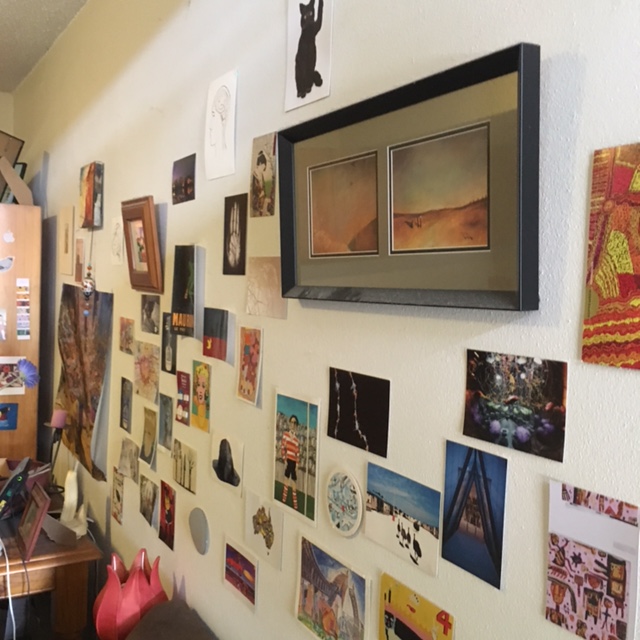
I do love my little flat called Whimsy Manor, with all its art and its resident black cat.  It took me a few years to appreciate the charms of my little apartment. I had a number of expensive maintenance issue for the first couple of years and these contributed to a significant episode of mental illness that lasted a few years. I felt my flat was a compromise as it was one of the cheapest units on the market and I was desperate to move to escape a  scarily controlling housemate when I first moved to Canberra. I had to make a conscious effort to love and accept my home, The change in attitude is evidenced by the proliferation of art which is now hung salon style form every available surface.

I often reflect on how fortunate I am to have this little piece of Canberra which is crammed full of Jeanette things. I don’t have to share it with anyone except Mr Kitty, there is no longer a risk of being robbed by the junkies next door – because I’m fairly certain there are no junkies next door! My home is my supportive place. I know that many others in the world are not that fortunate though. There are so many people living in unsuitable housing or insecure housing. It can be a huge issue for Autistic people. We can struggle in shared housing and low employment rates mean for many people buying property is an impossible fantasy. I wish I could buy a Whimsy Manor for everyone who needs one.


IMG_2816

‘Well it’s pretty mild isn’t it?’ – and other unhelpful attitudes around Autism 

I think a lot Autistic people have been told one or more of these things at some point in their life:

‘You don’t look Autistic’

‘It’s pretty mild though isn’t it?’

‘I have an (insert relative here) who is actually Autistic’.

These statements usually betray a level of ignorance around Autism and they can be incredibly hurtful. This sort of thing is basically people who don’t understand Autism  defining our identity.

I will unpack two of these sorts of statements which I have heard said about me and which were hurtful and left me angry and upset.

The first one is “You shouldn’t say you are Autistic. It’s pretty mild, isn’t it.”

This statement demonstrates a complete lack of understanding of both me and other Autistic people and the challenges we can face. Before I respond on my behalf, I shall respond on behalf of a friend and her two sons. Both boys are on the spectrum. One does not use much spoken language and has quite high support needs in terms of daily life. The other boy is very verbally articulate and outwardly confident and engaged in life. My friend says that people almost always put too low expectations on one child and too high expectations on the other. The assumption of ‘mild’ Autism fails to understand the challenges people with less obvious support needs face every day.

Moving onto my own experience, the ‘mild’ label is highly unhelpful. If you look at me now you will see somebody who is outwardly successful. To some people my Autism probably seems more of a reason for my work helping others than a difficulty for me. The fact is I have built my strategies and wisdom around managing my struggles over many years.

As somebody who did not have a diagnosis as a child, the fact that I looked largely like a ‘typical’ girl but wasn’t, resulted in endless bullying. I looked like a non-autistic person so school kids had an expectation that I would behave as such. When I didn’t, they responded with confusion and often active hostility. I was  probably more ‘weird’ to them than someone who was more obviously in need of support would have been.

The bullying I experienced led to all sorts of other nasties – it stripped away my self esteem and self confidence. It left me incredibly negatively focussed and actively seeking out bad things well into my adulthood. The other thing I suffered from continuously for many years was sexual violence. Predators apparently saw me as fair game and I was haunted by predatory men for many years. I was naive and didn’t understand the non-verbal cues around sexual behaviour, So while most people would see that an interaction was headed towards sexual activity, I did not. I would find myself in men’s bedrooms having no idea how I got there or how to escape. I felt like I had a sign on my head saying ‘please abuse me.’

As a person with ‘mild’ Autism and no diagnosis there were no services for me at all. I was expected to be able to manage the world with no assistance. All these things conspired to make my early adult years totally disastrous. It took me years to learn to manage being who I am and where I fit in the world. I was in a self destructive space for many years and I am very fortunate that I didn’t not die. So when somebody who I barely know suggests my Autism is ‘too mild’ to be considered an issue, you can understand why I get quite upset and immediately set them straight.

The second comment which has cause me concern is “You don’t have to say you are Autistic, you could pass as ‘normal’.” I find this incredibly insulting, especially if the person knows about my work in Autism advocacy. It suggests that being Autistic is somehow shameful or something I would want to hide.  I do not want to be neurotypical. I am happy to be my Autistic self. I am proud of who I am as an Autistic woman.

My other concern with this statement is that if somebody says that to me, they probably say similar things to other people, who may not be as confident in their Autistic identity as I am. This sort of statement might make them feel bad about being Autistic. Another concern with this attitude is that many Autistic people actually do try to look and seem more neurotypical often as a means of surviving in a hostile world. I would like a world where people don’t feel the need to hide their Autism and try to pass as ‘normal.’ I did this for many years and it stripped away my own identity. It betrayed my lack of confidence in myself, and that I hated myself. Comments which suggest Autism is something to hide or be ashamed of are very counterproductive.

Ignorance around Autism can be damaging and invalidating, We need to work to change attitudes so that Autistic identity is not defined by those who barely know us asserting their assumptions and expectations on us. Autistic identity needs to be shaped by Autistic individuals.

11337050_846907702057285_2323837875752479115_o


Please turn off the gaslight – it’s obsolete


I had a bit of a stressful interaction last night which has prompted me to draft this post. I wish I didn’t have to draft this post because the activity it focuses on – gaslighting – is one of the most pernicious and damaging forms of invalidation. It something many people with mental illness, those who are on the Autism spectrum or have some other kind of neurodiversity or disability experience. Gaslighting refers to the act of casting doubt on someone’s experience, usually making them question their reality and doubt what they know to be right. It is confusing and cruel. It is one of those poor behaviours which often comes from those in a place of authority, particularly certain health workers unfortunately. Sometimes the people doing the gaslighting may even believe what they are saying, being people who assume that Autistic people or people with mental illness couldn’t possibly be experiencing what they say. This tends to come from those who focus on people’s deficits and assume incompetence. For others it is concerted, intentional and calculated to grind down the person’s resistance and make them doubt their very reality. This seems to occur a lot in situations of family violence of ongoing abuse as well s in health services.

A few examples from my own life include more than one psychiatrist questioning my experience and telling me I must be  delusional even when I was not experiencing  psychosis and health workers  denying my genuine claims of abuse or violence. On one irritating but in hindsight slightly absurd occasion I had a psychiatric nurse not believe the toilet in my room in the hospital was unusable. I was too frightened to use a communal toilet. I told the nurse four times and he did nothing. Eventually when he was in my room for some other reason he said ‘oh the water’s running!’ I have had schizophrenia for a very long the and none of my delusions or hallucinations have involved toilets!

The instance of gaslighting  which prompted this post happened last night. I was messaging with an Autistic person – who in my mind really should have known better. I had only spoken to this person once before but he quite forcefully asked me to call him after some misunderstood messages. He then proceeded to tell me he was ‘concerned;’ about my Facebook posts and my illness and then isolated one post and argued with me about my experience. The whole thing was tainted with paternalism and power. I felt like I was in hospital speaking to one of the more arrogant psychiatrists I have come across in my travels. In the past I probably would have doubted myself but thankfully I’m older and wiser and tougher (and possibly bigger!) than I have ever been. The next thirty seconds of conversation involved lots of expletives from me and I then blocked him from my everything. I was absolutely furious. I have had certain people in authority treat me like this but a fellow Autistic doing it was barely describable.

The worst thing about gaslighting is that it turns your negative experience back on you and makes you question yourself. It is unfortunately very common and a lot of people don’t realise it is happening. Gaslighting causes you to doubt yourself and this can have a terrible effect on your self-confidence and sense of identity. I have schizophrenia. This means I have episodes of ill health and periods of remission in between. To question my experience of something because I have schizophrenia, assuming it is a delusion – even when my health is good – is pretty offensive. It is the height of invalidation and we know from psychology and psychiatry that ongoing invalidation can have serious impacts on people’s psyche throughout their life.

So what do we do about this? It is quite a challenge to address in any big picture sense because it comes from all sorts of places and happens to people from many demographic groups. At its worst it can perpetuate abuse and violence. The victimised partner in a family violence situation being told that ‘all couples have fights. It’s not abuse. You’re just being dramatic. It’s nothing to worry about. If you go to the police they won’t believe you anyway’,  is going to struggle to seek help and prosecute the offender. This sort of gaslighting can be taken on board by the victim over long periods of time meaning offenders aren’t brought to justice and the victim remains in  a terrible situation. In a scenario which is closer to home for me – mental health services – people being gaslighted might not have the confidence to speak up when mistreatment or abuse is happening, Gaslighting in fact tends to grind people down so they often won’t complain or seek redress and I suppose at its core, that is probably the intention of it.

All I can advise is to be in tune to gaslighting and if it happens, try to call the person on it. If you are unable to do that, talk to a friend or family member or trusted support worker about it.

And for me, I am  glad I called the fellow on it yesterday and I’m glad my response was anger against the person doing it rather than on myself. I am rarely angry but it was justified in that circumstance.

OLYMPUS DIGITAL CAMERA


Stigma in mental heath services

I have a diagnosis of an Autism Spectrum Condition and atypical schizophrenia. In my 42 years I have accessed a large number of publicly and privately funded mental health services. My mental illness is difficult enough to manage by itself but I often experience more difficulties trying to get help form mental health services than those caused by the illness.

Even now, Autism – and particularly female Autism – is not well understood among many mental health clinicians. This often results in misdiagnosis, misunderstandings and mistreatment. I have had psychiatrists tell me I am lying when describing my symptoms because my experience apparently didn’t match what they had in their diagnostic manual. I had one doctor in the 1990s whose rather arrogant attitude coupled with apparently no understanding of Autism among adult women was instrumental in my spending the next three years in institutions of varying degrees of malevolence.

Some types of stigma have happened over and over again:

  • While a patient in hospital being told that violence committed against me by other patients was my fault because I was being ‘annoying’.
  • A level of ignorance around Autistic communication styles resulting in difficulties accessing services. An example is having my need for care questioned because the only question asked by crisis services around my capacity was ‘are you going to work?’ Because I am literal I didn’t realise that I needed to expand upon this question and explain that yes, I was still going to work but that I was not coping in any other domain of life, including personal hygiene, grooming or eating and that I was too frightened to use any household appliances in my apartment due to delusional thinking about ghosts in my house. This inability to have my needs understood and the ongoing denial of assistance meant that I experienced terrifying hallucinations and intrusive thoughts for months with no assistance and increasingly believed that I would never get help. This risk of self-destructive behaviour increased with each day that I didn’t get help.
  • Clinicians making flippant comments about my Autism not realising the impact an apparent challenge to my established diagnosis had on my anxiety levels and sense of identity. And example was ‘You’re too cool to be Autistic. Look at those Converse sneakers!’
  • Being given advice in clinical settings which was highly unhelpful, such as ‘why don’t you quit your (very well-paid and fulfilling) job and go onto the ($12,000 per annum) disability pension?’
  • Having seclusion used as a punishment. During one hospital stay in the mid-1990s I spent a week in the seclusion room with the door locked and inadequate clothing for the season. I was terrified the whole time.
  • Being given a helpful treatment plan based on my needs and then it not being used or mentioned again.
  • Having low expectations, assumptions of incompetence and deficits-thinking from mental health clinicians. This is unfortunately consistent across almost every mental health service, hospital or psychiatrist I have used. I always feel like I need to explain that I have written three books, work full-time, own my own home, have given talks at a huge number of conferences and events and conferences, including for TEDx Canberra and so forth.

These sorts of experiences happen to others on the Autism spectrum who also experience mental illness. There is a wide gap in knowledge around Autism and how it interacts with mental illness. It amazes my that so many people tell me that they were misdiagnosed and their experience was questioned by psychiatrists. It is almost like if the person’s experience doesn’t fit the text book, question the person’s lived experience and not the textbook. Not only is this illogical, it is also very damaging.

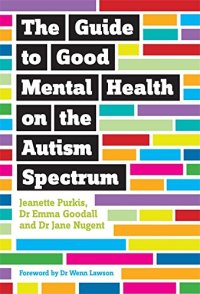
I actually got so sick of these sorts of stigmatising experiences that I co-wrote a book called The Guide to Good Mental Health on the Autism Spectrum to help Autistic people better navigate mental health services but also to assist mental health clinicians to understand how to respectfully treat Autistic people so that their treatment was actually helpful and not counterproductive.

It is very disappointing that services which exist to help people can be so detrimental to health and recovery. I should note that I have received a lot of vey positive and supportive mental health care too.

DSC_0251

On friends

I just had dinner with two good friends, one of whom is moving away soon. It was a lovely evening and helped me feel happier and more relaxed after a stressful week. My friends and I share a few key things in common, mainly in that we are Autistic self-advocates and so move in a similar social and professional groups. Conversation was easy, we all acted with respect and there was a bunch of reciprocity and other good things which Autistic people and our parents are often told we can’t do well or at all.

Autism is described as a social commotion disorder (or difference if you are being respectful to Autistic folks who mostly prefer not to be seen as disordered).  Autism is believed by many to make social communication impossible or very difficult. We tend to be viewed as loners, isolated and lonely. We are also seen to be self-centred, thoughtless and rude. As lifelong awkward singletons who don’t know how to have a conversation and need to be taught a bunch of skills around eye contact and small talk and other supposedly essential parts of social communication.

have a few difficulties with this model of Autistic social communication:

  • Difference should not and does not equal deficient. If an Autistic person does social commciation differently it is often assumed they aren’t ‘doing it right’ while in fact they are just doing it differently to the expectation.
  • Autistic people are not generally intentionally rude or thoughtless. We communicate differently so sometimes we might say something which comes across as blunt. We rarely mean to cause offence and are often very thoughtful and considerate. Sometimes non-Autistic people can be very thoughtless in communicating with us but we are the people usually thought to be at fault. We tend to want to be kind and supportive to others. Issues can occur if they misunderstand some of our words or deeds and we don’t get the chance to set it straight.
  • Autistic communication does tend to be different to non-Autistic communication. We state things clearly, focus on facts and information, do not notice or understand multiple layers of meaning or non-verbal communication. Our communication is often direct whereas non-Autsic communication is more subtle or nuanced. None of this equals an inability to be a good friend. I see these communication differences as cultural differences. If someone speaks German and you don’t understand them it is not because they are broken or deficient, it is because you don’t speak German. If you learn German the two of you will be able to converse. This is similar to differences around Autistic and non-autistic communication.
  • Autistic people often find friends amongst other Autistic people. Most of my friends are on the Autism spectrum and this works well for me.
  • Autistic people might be very introverted and / or have less need for direct social interaction as others might This is not the same as isolation or loneliness although some Autistic people are lonely or isolated too).
  • Non-Autistic people may find the communciatio of Autistics awkward or odd. In their mind that person is not like them and probably is not friend material. They can exclude the person as a friend, not realising that the Autistic person might have a very large social network of others on the Autistic spectrum or in relation to their interest or passion. It is almost as if the Autistic peer group is invisible to others. They might think somebody could not possibly have any friends, despite the fact that they do.
  • Many people don’t care about social expectations and make friends from outside their own neurology – whatever it may be – and find meaningful friendships from another neurological culture. We are all people after all, sharing a vast amount of experience.

Tonight my friend and I were sitting next to each other talking but also looking at our phones. She remarked that a lot of non-autistic people don’t  cope well with this but for us it was fine. There is a lot we share as Autistic adults. I spent years at school being ostracised and called weird. Now, 30 years later, it is nice to have friends who I can be ‘weird’ wth and who get it without any need for explanation. Friendship is a great gift and Autistic people can offer and receive that gift just like others can.

IMG_2592-2

My friends are awesome 🙂


When music saved my life

This is not my usual sort of blog. It’s not about some aspect of Autism or mental illness. It is about that most powerful or entities which has inspired love and hate and pride and power – music – and how it promoted my survival against a collection of hostile forces, including myself.

I want you to come back to the late 1990s with me. I was in my twenties and I was in prison. Ethics, morals, hope, fulfilment – these were concepts for other people. I was a skinny, confused scared kid in a dangerous world. I wanted bad things to happen to me. I was violent and self destructive. I could not survive long outside of an institution of one sort or another, I was seen as a lost cause, a management problem, a no hoper. I agreed with these perceptions of me and could see no future.

I was a very poorly behaved prisoner. I was always in the management unit with close supervision. Management prisoners were locked in one building all the time and if we weren’t into the outdoors bits of the prison is was always supervised, on the way to somewhere like the medical centre and in handcuffs. Independence was not a word I ever used. I spent the vast majority of my time in prison in management. There was very little to do. The other women listened to hip hop music, most of which I wasn’t keen on. They gave each other manicures and talked about their boyfriends and kids out there in the world. I was never hated but didn’t have much to say to many of the other women.

Life in management was boring and repetitive. You were locked in your cell from 6 pm to 8:30 am. It was about eight metres by two metres with a shower, toilet and foam mattress and limited storage space for all your bits and pieces. There was no conversation or human contact once you were in there unless some crisis occurred where there was a buzzer you could press and wait for a bored officer to respond. You would get a 250 ml milk carton for your coffee and tea which were rationed out in little plastic tubs. In summer the milk would go off in a couple of hours outside the fridge, You would have all your cups of tea at once in a fight against the milk turning into its inevitable lumpy rancid mess.

I am an extrovert. I respond to human company quite well so spending most of my life by myself was a challenge. Sometimes I would commit some infringement which would result in ‘the slot’. That meant up to 28 days in a row in solitary confinement with no cigarettes or human company save for the medical staff with your meds and the officers tantalisingly unlocking your cell door to do count only to vanish without so much as a ‘Hello Purkis.’. One time I got sent to the slot for 28 days and  was out for an hour and then the Governor came and gave me another 28 days! There were other punishments which I do not care to spend time too much on as they  are triggering even now 20 years later. The worst was the ‘wet cell’ – supposedly for prisoners at risk of suicide. I never worked out where the name came from as it was never actually ‘wet’. It had a concrete bed, toilet and sink and a camera on you constantly and the light on 24/7. I would be sent here as punishment for various infringements for five days at a time. It is almost impossible to sleep with a light on all the time on a hard bed with insects and spiders walking in under the door and me having nothing with which to ward them off. I used to ask for a book, not only as entertainment but because I could effectively dispatch a spider in one shot with a well-aimed book.

This shadow world was my existence for over three years. Amazingly I do not hold a lot of traumatic memory for this time. I am not angry or bitter. I made poor choices and experienced the consequences. The people in charge of my management probably meant no harm. I think one of the reasons for my lack of rancour over the poor choices I made and their difficult consequences for me was that I had a saviour in that dark world. Shortly after I went to prison I saved up from my $4.50 a day earned putting remembrance day poppies onto cards and bought a tape deck and radio. This was my salvation. In all those many many hours alone I had the absolute gift of music. I taped the songs I liked and soon had a stack of tapes. I numbered each tape and knew every single song on each and the order they came in (I was a criminal Aspie but still an Aspie!!)

I always listened to the rock music station. This was not my favourite station but I didn’t want to be associating my favourite station – the one that played alternative rock – with prison if and when I was released.  The tape deck and radio became the most valuable thing I owned. I had no property, few friends and apparently no future but I had Midnight Oil and The Screaming Jets and Hole and Blink 182 as well as all the different radio shows hosts. The radio gave me something to focus on outside of prison. It was a link to a better world. I treasured it. There is very little which is transcendent in prison. Very little beauty or wonder. There is a lot of death and misery and anger. Music was the one thing I had which gave me transcendence. Without it i doubt I would have survived and I think it played its role in meaning I have never blamed or been angry about my life. back then. The criminal ‘boyfriend’  who led me on that hideous path, the inept and rather sadistic psychiatrist who misdiagnosed and punished me, my own stupid flawed self incapable of making a positive choice to save herself. Instead I look back and see the things which took me from that world – my family with their love and acceptance, the competent mental health workers who helped and supported rather than blaming, the few prison officers who saw my potential.

I am now in a different place. I look at my past and what could have been and wasn’t – my death or the destruction of my mind and soul. I am grateful and I know that creativity is such a vital thing for all of us. So thank you music, thank you Radio MMM in the 1990s, thank you good art and literature and thank you to all the people who cared and loved. And thank you to me for eventually putting that creative brain to work.

DSC_6789


‘Nice!’

I’m sure if I ever did one of those Wordle diagrams based on the words I use most frequently in correspondence that the biggest number of ‘hits’ would be for ‘lovely’, ‘great’ and ‘fantastic!’ I am the nicest person I know. I am helpful, thoughtful, considerate and obliging. I will go out of my way to help anyone. I spend as much time on voluntary activities to help others as I do on my paid work. This has not always been then case. It was the  result of a deliberate choice. I made a conscious decision some years ago to be the very helpful person I am now. There were a few reasons for this.

As many people know, I am Autistic. When I was a child I had quite a different experience of empathy to almost children. I didn’t used to have emotional empathy or logical empathy. Wheat I had instead used to terrify me. I believe my experience is now described as hyper-empathy. An example of this was when one of my friends at church lost her father I stood next to her in Sunday school and absorbed all her grief and despair. It was as if I had lost my own father. I wanted her to stop feeling that way for what were then quite selfish reasons – I was overwhelmed with her raw emotion when I was near her and this was very distressing for me. I went through life feeling everyone’s horrific emotions like they were my own. To counter this I became aloof and distant. I steered conversations away from anything remotely personal or emotive. That combined with my social awkwardness and strong opinions meant that people tended to think I was a rude and selfish person.

I grew older, moved out of home and met an evil man who I was too naive to be cautious of. We started a relationship and I discovered he was a violent and cold-hearted man. By then I was too involved with him to escape. We did terrible things and found our punishment in prison. The worst punishment for me was my inability to have an emotional connection to the violent things I had done. I couldn’t feel guilt in an emotional sense despite my knowledge that I ‘should.’ I thought that I must be a monster and a psychopath. I went into a shadowy life, trying to reconcile myself to crime and my apparent lack of connection to other people.

After a few lost years I made some changes. In twelve step programs there is an understanding that people get to a point where they can no longer continue – they either die or make dramatic change and start on the road to recovery. i decided I would stop my destructive life and understand how human beings ‘work’. I would be kind and positive and helpful. I learned that if you make the decision to do so, changing your life is very possible and changing your character is doable as well. I turned my character from being  negative, destructive  and detached to being the me I am now, The main catalyst was the change in my attitude. Your attitude underpins every facet of life. It can be hard to change your basic approach to life but I am proof it can be done.

I soon found being a positive and kind person was far preferable to being a criminal. I also found that my basic character actually was kind. All the negativity and destructive behaviour was a sort of overlay on top of a basically decent human being. The biggest challenge as ‘nice’ me was assertiveness. I could never stick up for myself and was terrified I would lose friends if I didn’t acquiesce to their every wish. I should note that my lack of assertiveness was not a result of my being kind and helpful. I am very assertive now but I still care for others. My lack of assertiveness was most likely a combination of being bullied all through high school and having a low self esteem and then having been in prison for some years where people were violent and dangerous and I was afraid to disagree with anyone.

I basically uncovered my core personality of ‘nice.’ I am very happy about this. And ‘nice’ has some applications through my life which enable me to get by. My ‘nice’ can head off prejudice and can help open conversations around Autism and mental illness. It also means that if I am angry people take it very seriously.

My ‘nice’ is not the solution to everything and it is also not for everyone. Some people have a load of righteous anger and indignation – which is often a very useful thing if their is discrimination happening, You are never going to see me storming the Winter Palace or anything like that but my approach is effective for me. And I’m 10000 times happier than I was before I put on my metaphorical yellow fluffy beanie of ‘nice.’

JP meme jpeg

Reflections of madness past

A few things got me thinking this week. The first one was on Saturday, which happened to be my birthday. I had just done my shopping and noticed a man standing in an archway smoking a cigarette. He seemed interested in me. Like women everywhere I started to tense up. ‘Hello Jeanette!’ the man said happily. I was momentarily thrown and must have displayed my puzzlement on my face. “It’s me, Simon from the mental health crisis team!”. My face blindness is pretty severe and all male mental health workers seem to look similar so I hand;y recognised him, but when I knew who he was I knew he was a very caring man. We got talking. He congratulated me on my recent receipt of the ACT Volunteer of the Year award. We parted, both of us smiling. The next thing which got me thinking was yesterday. A friend in the US said she didn’t know what my co-morbids were, except for ‘mild schizophrenia’. Once again, I was a little thrown.  I’ve never found my illness to be a mild charter. She is angry and destructive and dangerous, it’s just she doesn’t show up that much these days. The final encounter – and the reason I am writing this blog – was another chance encounter with a mental health worker. I was in a seemingly endless supermarket queue, regretting doing shopping after work, and a man greeted me. ‘Where do I now you from?’ I asked. He leaned in closer and informed me in a whisper that he was one of the workers form a residential mental health service I was living in a few years ago. “ah!’ I said, relieved ‘You are the New Zealand fellow.I don’t remember your name’. We chatted a bit, he said he had seen me in the paper and we parted.

So I think this must be a week to be reflective about mental illness.

When a person is inside their own head, they tend to assume others know their history and experiences. This thought resonated with me today as I realised how my success with writing and public speaking and things only really began in 2013. I have only been the public profile, Neurodiversity-promoting, rainbow wig-wearing, social media demon, mentoring, published way too much, role model-y, unlikely, impossible doyenne of Whimsy Manor for less then three years. Most of the people who know me now did not know me in 2013. In fact most of my friends now did not know me before 2013. Probably 99 per cent of people who have come across my memes, blogs and books did  not know I existed before 2013. I am called all sorts of rather superlative epithets these days but I certainly wasn;t in the past. A tiny proportion of people who know me now knew me when struggled most with my mental illness.

My last significant period of illness lasted from 2010 to mid-2013. As I was coming out of that period, I wrote my employment book, one of the events – along with my talk for TEDx Canberra – which triggered the recent expansion of my world. Between 2010 and 2013 I was in psychiatric hospital so many times I lost count. I took almost one whole year off work in a 3 year period. I moved to a residential mental health unit three times for stays of around three months each time. My 37th birthday was spent in hospital. I was convinced that because of the multiples of the number six and their association with Satan I would die before my 37th birthday. When the day of my 37th birthday passed I was delighted and very surprised because I hadn’t died.

If you are a dedicated reader of my blogs ad other writing you will know I live in magical if cosy residence called Whimsy Manor which is the house version of me – bright, loud and friendly. It took me years to make my Whimsy Manor out of the desolation my house was when I was unwell. My episode of illness in 2010-2013 was sparked by anxiety – apparently a frequent precursor to psychosis. And that anxiety was around my apartment, I had a leak in the kitchen followed by a leaking shower. This was very soon after I bought the place and I’d spent all my savings on the deposit. When I had to replace my shower for the princely sum of $3000, I didn’t have the obey and had to use my credit card to pay. Given that I spent many years homeless, the impact on my sense of security in my first property I owned and had held high hopes for was devastating.  The installation of my new shower was a comedy of errors between tradies who all blamed each other for their stuff ups. My anxiety went sky high. I got so anxious I thought my house would fall down. I would lie in bed expecting the walls to cave in. The illness started from there. I had chosen not to see a psychiatrist when I moved to Canberra and got my antipsychotic medication form my GP who thought  it was for depression. When I started to get really unwell it didn’t even occur to me to ask for help – I am an independent Jeanette after all. I hated my apartment and regretted buying  it. I wished I could live at work and even considered doing so.

By the time I finally got help it was because my mum had come to assist me – she was the person I finally told how horrible life was. When my mum arrived I had an infestation of pantry moths and was overwhelmed by that. I thought I had to move but was so stressed even thinking about it that it defeated me still further. My mum cleaned out all the cupboards and hung up peppercorns to discourage moths from returning and bought me a bunch of air tight containers for dry goods. I would not use my shiny new shower because I thought it was still leaking so I washed with a face washer and sink full of water. I couldn’t use the washing machine for similar reasons and so hand washed all the clothes. I was somehow managing to drag myself to work although I’m not sure how efficient or effective I was! When my mum arrived she realised I needed more help than my GP and her confusion around my diagnosis could give me. My mum called the mental health crisis team who were perplexed by the atypical nature of my illness and assumed I must be OK if my mum was there. In the end my mum called the police. Two lanky young officers turned up and figured that I wasn’t any kind of threat. Their boss, a middle aged sergeant, then talked to me. I said ‘Are you taking me to jail? I don’t  mind going to jail. I just need to be somewhere else that isn;t here.’ She reassured me that you had to do something wrong to go to jail and instead drove me to the hospital. I finally got the kind of help I needed although my next few years were horrific. One thing I have always found in mental health settings is that a good deal of invalidation and prejudice can happen there, alongside the care and support.

So that is  and example of my illness when she is in a foul mood and wants to hurt me. I am very fortunate not to have experienced that kind of hell for a while. The interesting thing is that now I have a lot of commitments and responsibilities which I didn’t have five years ago. This adds a dimension of anxiety to life as I would hate to cancel an event, but I did have a lot of great strategies which I learned – and put in a book! Which is where I shall finish this rather long post. I had the opportunity to co-write a book called The Guide to Good Mental Health on the Autism Spectrum with Dr Emma Goodall and Dr Jane Nugent. I essentially shared what I have learned in my 42 years of managing all sorts of mental health trials and tests. For me that is the main value to come from my illness. Here’s a link to the book if you want to see it. https://www.amazon.com/Guide-Mental-Health-Autism-Spectrum/dp/1849056706/ref=sr_1_1?ie=UTF8&qid=1469615816&sr=8-1&keywords=purkis 

DSC_6920