Autistic parents – my favourite person in the world

Ok so please indulge me because this is going to be  a very personal blog about a journey I have taken in life to get from where I was to where I am. Along that journey there have been a number of influential people but one is – and has always been – very significant. She is an Autistic parent of an Autistic child – my mum. This is not going to be a sloppy story about how everything was OK and there was love all over the place and Hallmark cards and hearts and things. My life has never been like that. Has anyone’s actually? Mine and my mum’s story – like many family stories – is messy and complicated with anger and disappointments and so much love your heart and brain feel filled to the brim. Family life is usually imperfect and confusing and infuriating in my experience but it can be magical too.

I am 41 and my mum is a few years or so older. We now both have an offical diagnosis of Autism / Asperger syndrome but neither of us had that diagnosis at the time we probably would have benefitted from it most. We are both of that sort of lost generation of undiagnosed Autistic children who put up with hell every day in the school yard and feel alienated and isolated and that we were the only person like us in the world. Embarrassment and shame followed me for endless years, the world was confusing and scary. People took advantage of us and abused, bullied and discriminated against me just because of a little divergent neurology.

My mum is not quite the same as me. We are both disciplined and dedicated, hard workers, passionate about what- and who – we love. We are both in that logical mould of intellect, have passionate interests (for me Autism advocacy and cats and for my mum nature, particularly fungi and insects). We approach challenges with logic and intellect. When a friend tells us a problem we tend to respond with advice, almost a default setting I think. Both of us are on a learning journey to stop doing that! Our main point of difference is the introvert / extrovert division. My mum would be in hell if she found herself onstage in front of a crowd, whereas I take the stage with joy and wave to the audience like I’m a real celebrity.

My relationship with my mum is unlike any other relationship I have. I think that may be true for most people. For us there were testing challenges and grief. Almost like gold or silver refined in fire, our relationship now shines, but it didn’t used to.

Some of you may know that my life twenty years ago was so different from my life now that it is almost as if there were two Jeanette’s – the criminal, unwell, homeless, defeated broken one and the advocate and author and professional me of today. I try not to reflect on those times as I am so filled with shame at the sadness and anger my actions caused. One thing I do remember fondly was my family- all of them – and how they responded to my criminal behaviour and institutionalised existence. My grandmother in the UK and I corresponded every week when I was in prison. I have a big box chock full of the letters. I haven’t managed to read them in twenty years  – i’m waiting for the right time I think. My parents standing by me, parting with money and peace of mind to support the walking disaster that I was. They visited me every month. I looked forward to the visits a lot – my favourite thing in the world. Of course I never told my long-suffering parents that. I would argue with them and be dismissive and ‘meh’ in the way only a drug addicts and criminals with a high intellect and a mind filled with anger can.

When I finally bade farewell to the life of prisoner – perpetrator and victim – my parents were right there. I have photos of my first day of freedom in February 2000 standing next to my mum who had come to help me settle into my ew world. I’m not the best at deciphering facial expressions but the me in the photo looks a little scared as does the picture of my mum. We were doing this journey to the positive together but I don’t think either of us quite knew where it would go or how we n might get there. Over the next few years I enrolled in university and became more espeablishced as a positive person. I visited my parents a lot in those first few years of freedom and ambition.

I still retained that terrible thing that thirty-somethings often do when they just see the faults of parents. I got over that by becoming really unwell with mental illness at the age of 36. An amazing unintended consequence of a couple of years of terror and confusion was a far stronger relationship wth my mum. My parents, and particularly my mum, were there for me 100 per cent. We  were vulnerable together and it was wonderful. All that criticism and judgement I had just vanished and now we are our own little club of two.

As an Autistic person, my mum was given what I term ‘unhelpful help’ from people who thought all my problems were my mum’s fault. They were not and had never been my mum’s fault. Having an Autistic parent for me has always been a positive because my mum always knew how to reach me, what to say. We see the world through quite similar eyes and that is a good thing. As a child I could tell my mum absolutely anything and there was never any blame or judgment. Apparently one of my friends when I was going trough the horrors of my twenties, a woman in her forties, actually said to my mum – to her face – that she would have done a better job of raising me than my mother did. Any of you reading this who are parents will know what a horrible, invalidating and incorrect thing that was to say. (My mum is a complete angel and actually made peace with that woman a few years ago).

Now that we both have our Autism diagnoses and have reconciled any arguments or misunderstandings, I feel so close to my mum – inseparable and completely trusting. Our relationship ad lives have gone through some awful things but it has somehow brought us together.

I hate that some people assume Autistic parents will not be able to raise children well. My mum raised me and while I had a horrible time in the past, I am now considered a role model and a very positive person who helps others. My Autistic mum has been the strongest influence on my character and she has set a great example. Autistic parents tend to have different positives and difference negatives to non-autistic parents. My mum is an Autistic parent and she raised my brother, who has three very lovely children himself and works in a responsible public service role,JP meme jpeg and she raised me and I think I’m a fairly decent human being. So thanks mum. You are the best person ever.  You enabled me to do all the things that others said I wouldn’t.


Coming out schizophrenic – loud and proud!

I saw my psychiatrist today. As always this was an opportunity for philosophising about life, the universe and everything (I do turn 42 this year, after all).  We discussed medication -mine to be precise. I reflected that if it wasn’t for the anti-psychotic medication I have taken for 21 years I would have been unable to be a public servant, an advocate and public speaker, an author, a Masters graduate, a homeowner, a member of ordinary society. Instead I would have ben kept in an institution for my adult life. If I was ‘lucky’, I would have been released into the community with little or no support. I would probably be a homeless person begging for change at the bus stop, a crazy lady who parents would caution their children to avoid (even though madness is rarely contagious).

While I have reflected on this matter before, what really brought it home today was when my psychiatrist said today ‘You would have been in the asylum. They would have had you working in the kitchen because you are reliable.’ The instant after he said that I saw myself  unmedicated and terrified, scrubbing pans and hoping to please the work supervisor in the institution. This was not a big stretch for me because I did spend some years in my youth in various institutional settings.

I saw the fragility of mine – and others’ – existence and livelihood. I mourned for those thousands upon thousands of people with mental illness who have been put away out of sight in the absence of effective medication or therapy and denied the opportunity to reach much of their potential. I had a step-grandmother I never met because she died before I was born. She had a similar mental illness diagnosis to me. She died very young and as far as I could tell didn’t have much of a life. There are almost no relics of her among my mum’s bulging cupboards of family memorabilia. I saw a photo of her for the first time only a couple of years ago.

More effective medication has allowed some people, including a very grateful me, to live a more fulfilled life. Things have changed in mental illness treatment and support but there is still a long way to go. An example of this is to  compare my Autism advocacy and my mental health advocacy. Autistic people are socially disadvantaged but we have a strong and growing self-advocacy movement and a growing influence in society. Of course this is great and I’m all for it – in fact I try to be a driving force in it.  The advocacy movement for schizophrenia  – which I have a version of – is far less noticeable.

While many Autistic people are very proud to be Autistic and happily identify as such, people with schizophrenia seem a lot more likely to keep to ourselves. I don’t know of any current celebrities who identify as having schizophrenia… (And bugger it – I’m owning this. From now on I am ‘schizophrenic’. Person first language my butt!)

Anyway, mental illness is still seen by many as a character flaw, a deficit in personally, a guarantee that everything the person who has an illness says is crazy and irrational. We are seen as prone to violence, ‘attention seeking’, incapable of holding down a job, dishonest, dependent, needy.

I am grateful that I acquired my illness at a time where there were more effective treatments than me spending the rest of my life being ‘reliable’ and scrubbing pots and pans in an institution. For me to think of that waste of potential is horrifying and sobering.

While I am glad we don’t routinely institutionalise people with mental illness for long periods of time, there is still a very long way to go. The first thing  would like to see was a society where schizophrenic folks were able to openly talk about their illness and experience without terror of discrimination.

The illness itself is usually a big challenge and often results in a fair degree of psychiatric disability. I have only worked for a portion of my adult life and I know that there is always the possibility I will need to stop work due to my illness, if only for a while. There is another issue though, which is that there is so much stigma about psychotic illnesses that most of us prefer to keep it from employers and others in authority often for fear of the often all too real discrimination.

In my time in various workplaces I have had a number of colleagues come up to me in a quiet corner and whisper ‘I have schizophrenia too. please don’t tell anyone.’  If we have no voice we are essentially silent and invisible. If you ask whether there are schizphrenic people in professional roles in the workforce I can categorically say there are because I know a bunch of them but most people would probably answer no to that question. An Indigenous Australian advocate said something which stuck with me. She said ‘if you can’t see it, you can’t be it.’ Until other people with mental illness see their peers proudly holding jobs in different industries involved in all spheres of society, including in civic and leadership positions, we will be disadvantaged.

A few years ago I was really unwell with psychosis. I took nine months off work in a two year period. I was supported wonderfully by my workplace, but it was a very frightening and difficult time. I stayed in a residential mental heath service a few times. One time I was there, one of my housemates was a quiet young woman who had just gained the same diagnosis I did at around her age. I think this woman saw me as a bit of a role model. One day she knocked on my door and said ‘Jeanette, I’ve been told I have schizophrenia. What does it mean? Will I be able to do what everyone does? Work and stuff?’ I replied to her that the diagnosis did not need to mean anything other than the medical interventions it would require – probably medication, seeing a psychiatrist, possibility hospitalisation if things get too awful. I told her I had a job and a Masters degree and that support and self-acceptance was key.

So yes, I’ve come out schizy. I don’t know that I have time to do as much advocacy around schizophrenia and mental health as my Autism world work but I will gladly lend my thoughts and encouragement to and advocacy movement that breaks down the hundreds of years of stigma and segregation about mental illness. Yay! (Mr Kitty approves too.)

photo-17


A Cook’s tour to doing the impossible

I think almost everyone who follows my blogs and social media may be aware that on Monday I was named the ACT Volunteer of the Year for 2016. This was something of a surprise to put it mildly. The most immediate consequence has been a number of media appearances and lots of people saying congratulations – including strangers! So today I was sitting in a radio studio speaking to a journalist about my life. It was a long interview – around 3o minutes. It covered all sorts of elements of my life, including some rather shameful ones from my early twenties.

The journalist was very sympathetic and asked me lots of questions which gave me the opportunity to showcase my work in the Autism community. Towards the end she asked me what was I most proud of in my life. I have been asked similar questions by journalists in the past and I usually focus on a tangible output like a book. Today I thought differently. Having just taken a trip through my memories I realised that I am incredibly proud to simply be the person I am now. I don’t mean that in  superficial or arrogant way.

My journey is remarkable. If you haven’t heard it before, twenty years ago I was in prison, I had a severe drug problem, a complete lack of insight or self-awareness, I was effectively homeless, I had’t worked for years and I hated myself and actively sought out negativity. In twenty years I have gone from that desperate place to where I am now – an author,public speaker, professional employee, masters graduate, homeowner etc. I don’t think about this much. It’s just my life. It’s like having brown hair or glasses – it’s an attribute I have so I don’t often need to question it. However going through the interview today I got a glimpse into my unusual life course. I often jokingly say I am impossible or unlikely which evidently I am not because I exist.

Looking back today I could see how exceptionally unlikely my life journey from negative to positive was. I realised that at so many points everything could have come unstuck. In fact on a number of occasions it did all come unstuck and I somehow blundered through to head back into the right direction.

The purpose for the post is to share the strategies I can identify which helped me and share them. I do not believe there is much intellectual property in advocacy. I tend to think that if you know something which might help others, share and share away!

Here are a few of the things I have identified about how I got from being destitute, disadvantaged and miserable to being current Jeanette of the extreme overachievement!

  • Attitude is vital. One of the main issues I had in my early life was that I actively sought out negative things. I wanted bad things to happen to me. When I decide to  change that attitude and try to be positive everything changed and changed very quickly. This was not a clear cut change and I had to encourage the nascent positive attitude as it slowly grew. I consciously decided to actively seek out the positive and I kept that in my mind. If I was unsure around a decision whether it was positive or negative, I would interrogate it. I used the idea of ‘if someone did the thing I feel like doing to me, how would I feel?’ A little bit of a clunky strategy but it pushed me onto the positive road.
  • Learning to ask for help. For me this is an ongoing problem as I prefer to try and  fix it myself! Unfortunately some things – and especially mental health challenges and social disadvantage – often benefit from some outside assistance.
  • Learning to value myself as an Autistic woman with a mental illness. Prior to when I was about 27, I could not accept either my Autism or schizophrenia diagnoses. I think this was a reflection of my immense dislike for myself and my inability to accept myself. As soon as I accepted my ‘labels’ and started to own them, life got a lot easier,
  • Setting realistic goals and sometimes a few unrealistic ones too! Having goal to work towards is a great motivator. Sometimes goals do need to be recast or reassessed but I find them to be quite helpful.
  • Deciding that I wanted to change my character. Our character is in a state of flux. We get the chance to change who we are to some extent. In fact most of the time it is about one million times easier to change oneself than another person. You are in control. You are the CEO of you.
  • Trying to fill my life with meaning. This didn’t always involve anything big and impressive. Painting a picture or writing a poem or having coffee with a friend was often enough meaning for me.
  • Rewarding myself for successes. I spent a while expecting others to do this until I realised that was more frustrating and annoying than much else. Even now I mark occasions with a little gift or treat for myself
  • Spending time with cats. I know some people don’t bond with animals but for me having feline friends has always been a great support. Apart from the cuddles and affection, having the responsibility for looking after a furry person has often been a good protective factor around things like loneliness and hospitalisations for my mental illness.
  • Finding things which made me laugh. Laughing is wonderful and can snap your mind out of a dark place, if if only briefly.
  • If somebody is hateful or angry, remind yourself that I only have to suffer from it when I am interacting with them. They have to be in that nasty internal world all the time. I always find this makes dealign with angry or discriminatory people a bit easier.
  • If I made a mistake, I would try to reassure myself that it was in the past and it was an opportunity to learn rather than something to regret. Regret is probably the least helpful emption – you can’t go back and change it and regretting it will just focus you on the mistake in the past rather than the way forward. Much better to make positive use of mistakes and let them teach you for next time. If this sounds impossible, at one point for me it was impossible and now it isn’t. The way I built this strategy was to study the Dialectical Behaviour Therapy skill of ‘acceptance.’
  • Take joy where you can get it and don’t strive for a’perfect situation’ or life. There is no such thing. I am exceptionally successful in many ways and I enjoy my life but it is still very hard for quite a lot of the time. When I am really struggling with my brain;s more unpleasant issues, being able to get through an evening without calling the crisis team or Lifeline is a good thing and one to be appreciated

I hoep some of these are helpful for you too.

Your past meme


Coming home

I got home to Whimsy Manor about twenty minutes ago. I hastily unpacked one case and left the bigger one for later. I checked that there had been no burglaries, floods or other house-related disasters and poured myself a glass of Chardonnay. Home is wonderful – my space with my pictures and taste, my chaos, my presence  and my cat (when I pick him up from cat boarding tomorrow). .I love to come home. But thinking about my home here got me thinking about the concept if home more broadly and I was left thinking that I have come home from another kind of home – the Autism community.

I just spent a week in Melbourne firstly attending an Autism Expo and then the Aspect Autism in Education conference, where I delivered  plenary speech on my education journey. I have been advocating around Autism for eleven years. I never really felt all that connected to my community back in  2005. Firstly there were not as many people advocating from the ‘lived experience’ perspective. There were a  few Autistic authors but many of them lived overseas and there were only a couple of prominent Autistic people in Australia who I liked but found their success and wisdom a little daunting and intimidating. I spoke at about one conference a year if I was lucky. I had my autobiography which had come out in 2006 but it was definitely a niche market book. What parent wanted to read the story of an Autistic criminal and communist?

Time went on. I didn’t think much about Autism advocacy – firstly because I was busy in my new life of being a public servant and then because I was busy managing my unpleasant mental illness – some kind of schizophrenia which really doesn’t like me and seemed determined to destroy all I was trying to build.

I came out of the worst of the illness after about three years. I had an ally in a beautiful black cat with the official name of Mr Hieronymous Bosch Kitty Purkis the Second (‘Mr Kitty’ to his friends). I met a young man who changed my life. I don’t think he intended to. He was 21 and had a diagnosis of Asperger Syndrome since he was six years old. He was very sheltered and had finished school at the age of fifteen but nobody had ever tried to reengage him with learning. When I told him i was an Autistic author and public servant he didn’t believe me. He actually thought I was lying because apparently Autistic people couldn’t do those things. After meeting this young man I decided I did not want other Autistic people to have a  life of  giving up on education and employment at the age of 21 and spending the rest of their life playing video games. I could;t think that this was much of a life for people I wanted to help them achieve goals and fill their potential – whatever that might be. I addressed this concern by writing a book on employment for Autistic teens to introduce them to what employment is like and build their confidence to work. When I was writing the book, I was asked to audition for a TEDx talk – I gave the talk in September 2013 on the day of a federal election which ushered in anew Government for Australia and ushered in a new phase of life for me.

Before doing TEDx I often had the experience of calling or emailing Autism organisations and having to go through a long description of who I was, what I did and how I could assist their organisation. Almost invariably I heard nothing back. I can actually pinpoint the moment at which this changed and I have my good friends at the Autism Cooperative Research Centre to thank. A few weeks after my employment book was released in 2014 somebody told me about a new Autism research body that was looking at employment. I quickly Googled the organisation and emailed them, desperately hoping they would want to consult with me around employment but being fairly certain I would hear nothing back. Two hours later one of their Executive, and now a good friend, contacted me and said how excited they would be to have my involvement in their reference group. ‘Wow’ I thought. And in fact two years later and I am a great friend of the Autism CRC and have worked with them on many projects and events.

Since then my Autism world career got a little bit excited. Which leaves me to this week. I do love a good Autism conference and the event today and yesterday was so filled with interesting and educational encounters that I can’t list them all but here are a few highlights:

  • I caught up with many, many Autistic and ally friends and colleagues. I have a number of friends now and when I was younger I didn’t really have that many. I used to think people were doing me a big favour by being my friend but now I have a better understanding that it is reciprocal and my friends and I benefit from our friendship. There is an ever-expanding group of us who see each other at these events and I always have a great time.
  • I feel comfortable being myself at Autism events. People seem to like and value me too. I am always a bit quirky anyway but when I am in settings with a lot of non-autistic people I can feel self-conscious and try to squash my Autieness and quirks. But now when I am at Autism events I get to be myself and people don’t get upset – actually quite the opposite happens and I think my foibles even endear me to some people.
  • Like it or not, I am now a well-respected person in the Autism community. This still surprises me and I wonder when everyone will work out that I’m just an egotistical idiot and tell me to go away but it hasn’t happened yet!
  • I loved seeing some of my friends who are in a different place on their journey speak to an audience and add their important voice and experience to the discussion. In my mind the more advocates there are the better. I don’t ever want to be the ‘only Aspie in the village’ and will always try to support others to build their confidence to advocate in whatever capacity that may be. I always say that I am not speaking on behalf of anyone except myself but that if others find some value in what I say that’s great. So the more people sharing their unique voice can only make things better.

Thank you to everyone doing the valuable work of advocacy and support and empowerment. It certainly is a fine way to spend one’s time.

13173307_10154843649621038_3735844444824383725_o

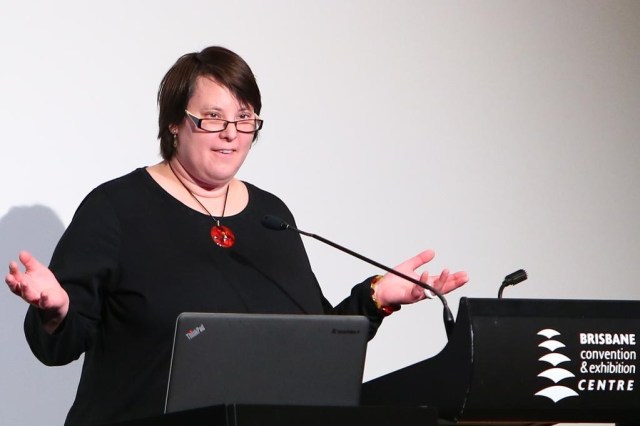
Me doing my thing today


Autism-friendly, inclusive or not so much

This article views inclusion through the lens of Autism conference and events and then draws out she thoughts on what is inclusion.

I speak at quite a few Autism events and conferences. It is quite popular for organisations now to ask Autistic speakers and experts to give presentations at events. This is a great thing and certainly a step in the right direction. when an Autistic speaker was rare and if they were speaking it would most likely be seen as ‘colour and light;’ rather than substance. As well as Autistic speakers, conferences are also attended by other Autistic people with a variety of perspectives – some are parents, some are professionals and some are there to gain insights for their own lives.

A conference is often by nature not very autism friendly and inclusive. There are usually hundreds of attendees, many talks going on in different rooms which may be hard to locate, big, unfamiliar venues, lunch and morning tea options which may or may not be appropriate, and ‘social’ events like cocktail parties which can be decidedly autism unfriendly.  Also, a lot of people travel to conferences and I can attest that airports, planes and hotels are often quite stressful environments with sensory overload and stress combined.  For Autistic conference delegates, the event may induce stress and even meltdowns. There are usually chill out rooms at Autism specific events but these are not always what they promise to be. I remember one event where I went into the chill out room for a bt of space before my talk and was confronted with about thirty little kids practicing for a dance recital! Needless to say, it wasn’t a very ‘quiet’ quiet room.

Basically what these sorts of experiences tell me is that there is a lot of goodwill around inclusiveness but sometimes it is not realised and becomes disappointing and frustrating  for Autistic delegates and speakers. I think often the intent behind the inclusiveness of events is good but it is not followed through very well. I get quite upset when a conference which should have been an engaging an productive event actually turns into a big stress which requires a lot of psychological maintenance afterwards to ensure I am OK.

I had dinner last night with the CEO of an Autism organisation. We had a great conversation. I am going to be a keynote speaker at this organisation’s conference later in the year, The organisation is actively promoting inclusion at the conference. Autistic advocates are involved in all stages of the planning of the conference. Sensory issues are being considered with a view to making sure people don’t struggle to take in the presentations or suffer due to bright lights or off-putting and distressing sounds. The CEO and I discussed the conference and the preference many organsiations have to book Autistic speakers for their events. We agreed that there is a long way to go but that things do appear to be improving,

These considerations around inclusiveness are reflected throughout society. A lot of lip service is paid to respect and diversity but sometimes that does not translate into actual inclusion. Inclusion is a complex beast – different people think it means different things and it can in fact it often does mean different things for different people.

Genuine inclusiveness has at its core respect for the individual who may be ‘different’ or ‘other’. I have a friend who asked me once ‘what is offensive?’ I thought about this for a bit and concluded that what is offensive is what is intended to cause offence. People may say inappropriate things without meaning to offend – I come across that all the time. I see these experiences as are an opportunity to educate the person. Bu there is a huge distance between inclusion and prejudice.  It is one thing not to offend but another entirely to include others in decision-making and social life. I sometimes think that some people and organisations see inclusion as simply a lack of prejudice but that seems wrong to me. A lack of prejudice is an absence of something whereas inclusion is a positive, conscious choice. A person or organisation chooses to be inclusive. It is proactive and decisive.

So what we need to do is not just fight prejudice but also promote active inclusion

I will be interested to see how people react to the ‘inclusive’ conference I am speaking at later in the year. I hope it is genuinely inclusive. If it is then it will be a great example for other organisations to  follow. If not, I suppose it will be a learning experience. Just as when any idea or activity is put into the world, the experience and time will tell whether it was inclusive or whether it missed the mark. If something doesn’t work, there is an opportunity to put into practice learnings from the failure

An just to conclude, here are some reflections on the concept of inclusion:

  • Inclusion is essentially about people form different demographics and backgrounds being included. This relates to decisions around your life, having your viewpoint taken on board, being respected the same way other people are respected and being free from prejudice and hate.
  • Inclusion is not only for verbal Autistic people and / or those with a high IQ. Inclusion is for everyone. For people who are non-verbal, a pretty fundamental part of inclusion is getting them a means to communicate. Once someone can communicate their needs, those needs can be respected.
  • There are different types of inclusion – in employment, in expressing oneself, in education, relationships and social connections, in housing and accommodation, in civic life and government and many others.
  • Inclusion is not just about big picture, social inclusion. Individual relationships and interactions can also be inclusive, or not. Bullying is a form of exclusion which can lead to other kinds of exclusion.
  • Everyone deserves to be included. It is not an optional extra but a vital part of being human.
  • Every single person has a stake and a responsibility in inclusion. An inclusive society is better for everyone.

10294977_799382020143187_8989493424462827214_o


‘Good’ communication and Autism

If you visit the DSM 5 or the ICD 10 diagnostician criteria for Autism, probably the first thing which you will see is something about Autism being a deficit in social skills and communication. Many people think Autistics are poor communicators – well, it is in the diagnostic criteria so that isn’t particularly surprising.  I struggle with all sorts of communication methods: body language, eye contact, tone of voice, flirting, manipulation, sarcasm, and some idioms confuse me completely. The only communication which I can rely on in life (at least when communicating with those rather baffling non-Austic people) is my own – the words I say, the words I write.  I am terrible at communicating in the ‘traditional;’ neurotypical way. I don’t know what my face is doing to the point that people have thought I was a creepy stalker for staring at them, while in fact I was thinking about something and they were in my line of sight. I was unaware that they were even there! This sort of thing has always been picked up on, particularly by mental health clinicians and Autism professionals.

For me  the notion that Autistic people are poor communicators is rather fraught. It  also relates to some concepts around empathy.

One thing I have observed is that Autistic people are actually very good at communicating with one another and having empathy for one another. This suggests to me that we are actually more of a different ‘culture’ – complete with our own communication language and empathy and emotional language. When the DSM 5 talks about deficits in social communication, I think it refers to deficits in social communication with neurotypical people. I find that when a bunch of Autistic people get together, there is a lot of mutually understood communication and empathy going on.

Conversely, if Autistics are a separate culture, then so are non-Autistic people. So while the Autistic individual struggles to communicate with the non-autistic, so the non-Autistic individual struggles to communicate with the Autistic. The deficit is perhaps not that one style of empathy or communication is ‘wrong’ or ‘broken’ – rather that there is a difference. When communicating with a group of Autistic people, a non-autistic person is the one who probably has ‘deficits’ in their communication.

If I moved from Germany to Australia and was learning English, English speakers would say my communication was deficient. Put me in Germany with other German speakers and I would communicate just fine. It’s more a difference than a deficit. If the entire world were made up with Autistic people, I imagine the concept of communication deficits would be redundant.

So what do I do about this? I like to be understood by my audiences and when I speak or write and often my audience is made up of non-Autistic people as well as Autistic ones. I have to somehow work out how to present my information in a way that both groups understand and can relate to. I learned long ago that non-Autistic people and their quirks and nuances confuse me. I can hardly ever work out what neurotypical people’s motivations are, even on television programs or movies. I decided when I was younger that I couldn’t work out what the non-Autistic people meant with all their nuance and subtlety, but I would at least ensure that I could express myself in a way that they could understand . This might at least address issues of being misrepresented and misinterpreted. It has taken me a long time to get to this point but I think now my communication is very ‘NT-friendly.’ I still find being in interactions with Autistic people a lot easier and less confusing  but I can usually make myself understood to a fairly high granularity of meaning by my non-Autistic peers.

Some things can get in the way of communication, even after the cultural differences between Autistics and non-Autistics are taken into consideration. One of these is that nasty little thing called ableism and along with it, all its little friends; assumptions, prejudice, paternalism. I was at an event last year at Parliament House in Canberra. It was one of those ‘get dressed up and shake hands with politicians’ sort of things. A non-Autistic colleague and good friend, an Autism advocate friend and I were talking to some high-achieving person in the finance sector. She spoke to me for a bit. After we stopped speaking she said quite loudly to my non-Autistic friend ‘Oh, she is articulate isn’t she?’  I’m not sure what she was expecting of me as a three times published author, career public servant and Masters graduate but I don’t suppose those were the lenses through which she viewed me, an Autistic women.

Another challenge can be when people use communication methods other than speech. There is a long and shameful history of people – and more importantly service providers and  clinicians  – seeing those who are non-verbal as having a low intellect or intellectual disability. While this is true for some people, a lot of Autistic people who don’t speak all the time are viewed as lacking in intellect and tragically sometimes left out of decision-making and actions which impact on their own life. In fact, lots of Autistic and other people – including me – cannot speak in certain circumstances. When I am very unwell with my mental illness I am often non-verbal for some time or when I do speak it is garbled and non-sensical. I can assure you that almost everyone who sees me in that state treats me like I have some kind of intellectual disability. In fact a large proportion of Autistic people who are non-verbal are highly intelligent. Even so, I have heard stories of clinicians or even family members taking away someone’s communication device as a ‘punishment’.  Just think about that for a bit. ‘Jeanette, you are really stressed and having a meltdown from overload, so I will make your behaviour better by removing your only means to work through what you are going through and ask for help.’

So communication is not just as simple as ‘Autistic people have deficits….’ We all speak our own language and neither the Autistic or nn-Autistci is ‘better’ they are just different.

11043316_802276853187037_6636589104752091030_o


No need to explain….

From time to time various people decide that they need to give me advice about the simplest of things (booking a table at a restaurant, using a taxi, that sort of thing).Some people also take pity on me when they believe that what I am trying to say is not being understood by a third party (for example when I am asking about different phone deals in a shop). I am sure these people think they are doing me a big favour, but they are actually doing exactly the right thing to really annoy me. There is a word for this sort of thing – ‘ablesplaining’. That is, people who don’t have disability ‘helping’ people who do have disability with things they can do themselves. There is a version of this sort of thing called ‘mansplaining’ which is where some men will patronise a woman when giving advice about things she can probably work out herself (apparently anything to do with cars is a common environment where this can happen.)

So yes, today I have my ‘politically correct’ (or what I think of as simply ‘being respectful of others like a decent human being’) hat on.

Usually the people who are trying to ‘assist’ me to book a table at a restaurant and so forth do not have hostility or discrimination in mind. They probably genuinely think they are helping. But I don’t think it is very helpful and in my case it makes me feel I am like a child or an incompetent person. I certainly don’t have skills to do some of things my non-autistic peers often take for granted. I don’t drive because I am anxious, I need support for mental health issues, my ability to work out ulterior motives of others is almost non-existent and other challenges but none of these things make me a incompetent person. With regard to not driving, I earn a good wage can take a taxi if there is no bus route to where I need to go. I bought an apartment on a very good bus route keeping in mind my non-driving. If I need photo ID I always keep my passport up to date even if I don’t plan to travel overseas so I have the requisite ID points when required. I also have my Australian Public Service lanyard which is photo ID and a Working With Vulnerable People card (also photo ID). Basically I plan for my limitations and challenges and build in strategies to manage them. In other words, I am a resourceful human being, not somebody who needs to be schooled in how to book a table for dinner!

Another thing to consider around this is that I am exceptionally good at some things non-autistic people are generally not so good at but I don’t condescend to them about it. An example is my ability at writing.  This skill is innate – I have never learned to write in any formal sense but I have written three published books and contributed to many more (I’ve lost count of the number but I think it is around eight).  When I meet a non-autistic person I don’t hover over them while they write an email to their mum, hoping to give some pearls of wisdom around a topic they are so plainly deficient at compared to my literary skills! Public speaking is another exceptional skill I have. I never really learned how to do it. This week, I spent  thirty minutes preparing a talk, delivered it the next day and had the organisation (who never really knew me before) ask me to join their Executive Board right after the talk. I don’t ‘dis-ablesplain’ to my non-autistic friends who struggle with public speaking. If they ask for assistance I give it.

There is that cringeworthy image of a person with a vision impairment crossing the street when some well-meaning citizen steers them into the opposite direction they need to go in, thinking it is ‘helpful.’ It is exactly the same for those of on the Autism spectrum or with mental health issues. If we ask for help, please do give it. If not, we probably don’t need it and it may just irritate us.

I think the key with this stuff is perception and actually, although I hate to say it, power. I think that Autistic people and people with schizophrenia (my own disability ‘labels’), very commonly experience a power differential, especially with clinicians, some family members, educators, and other support people. The dynamic can be one of support and help in its best manifestation or invalidation and dismissiveness at the other extreme. This power dynamic is not the sole responsibility of individuals. It is part of the way society seems to be structured and the shared attitudes around disability held by many. When I get up on stage and introduce myself as an Autistic woman with schizophrenia  I deliberately put it in the same slide that says I am a public servant, Masters graduate, homeowner, author and things like that.

I think they more we can change people’s expectations of incompetence and dependence for those with disability and health conditions the better. I think ablesplaining comes from an often unconscious power dynamic where the person with disability is seen in need of help and that translates to everything about them, including things they are capable of without assistance. Our skills and competence can be eclipsed on some people’s minds by that diagnostic lave;. I had a professional woman say to a on-Autistic friend I was dining with at a function ‘oh, she’s so articulate!’ after speaking with me well within earshot (I was less than a metre away from her!) I’m sure this rather insulting statement was not meant to offend but I felt like a performing seal!

Thankfully a load of my Autism and mental health advocate friends are working on this and trying to empower us and change those unspoken power dynamics and assumptions.

I always have to restrain myself in ablesplaining situations from saying, well, this:

“I have published three books with Jessica KIngsley Publishers. I have spoken for TEDx and at almost every major Autism event in Australia. I manage severe mental illness on a daily basis. I overcame involvement in drugs and crime, self-hatred and bullying to be a well-adjusted human being. I have worked in a responsible paid job in Government administration at quite a high level for over nine years. I have a number of awards for my work around advocacy. But no, I’m really struggling with whatever menial thing you are ‘helping’ me with. In fact, why don’t you do it? I’m a bit tired after all those achievements. Oh and make sure you book for a high chair and a table near the window.  Will you remember to do that? I know it’s tricky but….”

WJP_3458

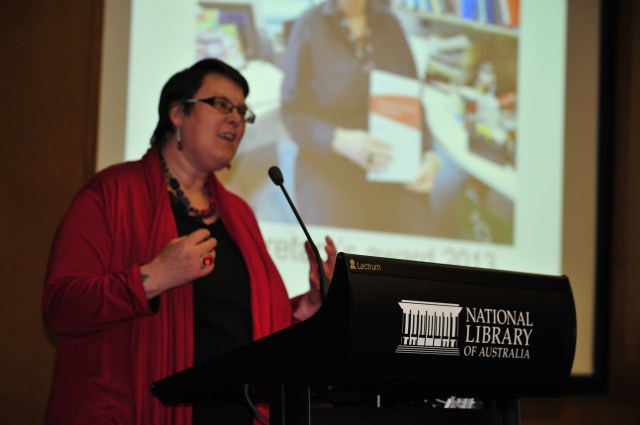
Me, not being incompetent at the National Library talking about my second book which had just been released


Queer as (Autistic) folk – sexuality, gender and Autism

I returned from a trip to Perth yesterday. It is a four hour flight from Canberra so I decided to see what visual entertainment QANTAS was providing on their little screens. I discovered the ‘documentary’ page and was delighted to find a number of interesting shows. There was the Autistic Gardner which I sadly only discovered as we were landing so didn’t get to see. (Although it’s ok because I fly a lot so I’ll check it out next time).  I watched a great BBC film about Pop Art and its long reach across the globe for the past fifty years. I then saw something called ‘Between a frock and a hard place’. It was marketed as being the back story to one of my favourite movies – Priscilla: Queen of the Desert. I clicked on it and spent an hour feeling all sorts of things. The doco was basically a very engaging investigation of Queer sexuality and gender identity in Australia in recent decades. The whole way through I had to stop myself from pulling out my laptop and writing this blog…so I’m writing it now!

I think I have always been part of the Queer spectrum, from my childhood where I was terrified of having to marry a man and have kids- the future I shared with all the other women in our conservative church. As a teenager I had negative experiences of heterosexuality and decided men were not for me. I identified as Lesbian for decades and had a few female partners before discovering that there is another option which suited me far better – asexuality. I have always been very proud of my divergent sexuality and felt that anyone who has trouble with it is very confused, not to mention rude. Things like homophobia and transphobia are beyond me. I simply can’t understand why anyone else cares what people’s gender identity or sexuality is. If sexual activity is between consenting adults, the only way it would impact me is if I was in the bed with them! And as to gender identity, no transgender person has ever tried to force me to transition to a different gender or do anything else. As one would expect, an individual’s gender identity is their own and while immediate family members can go through some difficulty working out how the dynamics of relationship ect work when a partner or family member identifies as a different gender, it is no reason for hatred and prejudice and even violence but sadly these things do happen. Like many other Autists prejudice around things like sexuality baffles me. I felt terrible watching that documentary on the plane when a family talked about their gay son being murdered in a hate crime which was only investigated twenty years after it happened because at the time the police didn’t care. How is that even possible? A human being is a human being and really doesn’t deserve to be killed just because he does;t conform to the ‘norm. And if someone is killed surely they need to police to spend as much care and diligence bringing the murderer to justice as they would for anyone else.

In my travels throughout the Autism world in the past ten years or so I have met a lot of Autistic people who have a ‘different’ gender identity or sexuality, Apparently there is research which demonstrates Autistic people are more likely to identify as Queer. This would certainly be true of people I know. Of course some horrible reductionist types might have a ‘reason’ for that. I don’t actually care about a reason or cause – supporting people to be who they want to be is more important to me than trying to work out a ’cause’ (and in my experience looking for a ’cause’ to things often comes from a place or wanting to ‘fix’ it. I don’t want Queer people or Autistic people to be ‘fixed’ – we don’t need to be! We are fine just as is.

When talking about Autism and sexuality and gender identity or disability and sexuality more broadly, there are a few things which tend to crop up. Some people think Autistic adults are not sexual beings, that we are somehow like children or innocents. When Autistic people form attachments and relationships, some parents or support people try to discourage or end the relationship. As with anyone trying to come between partners, this is a very slippery slope. Autistic people have as much right to sexual pleasure and relationships as anyone else does. For me I am asexual but this doesn’t make me – or other Asexual Autists – less ‘adult’. In fact Asexuality is not confined to Autistic people – there’s plenty of non-autistic ‘Aces’ out there too. It is important to remember we are adults and as long as a sexual encounter or relationship is consensual and not exploitative then let people go for it!

There is an excellent book which has just been released looking at these sorts of things. It is called The Autism Spectrum Guide to Sexuality and Relationships. I wrote one of the forewords for it. It really is wonderful. The author, Dr Emma Goodall is an Autistic Autism professional. I don’t normally do book plugs but I really love this one. http://www.jkp.com/aus/the-autism-spectrum-guide-to-sexuality-and-relationships-33995.html

the-autism-spectrum-guide-to-sexuality-and-relationships

Feel the fear and tell it to go away

I started this post while sitting in the QANTAS domestic terminal at Canberra airport. I was about to fly to Perth via Melbourne. I was relaxed and happy and ready to have an amazing time in Perth talking about Autism and meeting people I haven’t met before. This would seem a very ordinary occurrence – professional public speaker flies to other city for presentation. Not really a newsworthy headline. The funny thing is that for fifteen years of my life I would not fly. I was terrified. I saw every possibility of in flight disasters – engines falling off or stopping mid-air, terrorism, friendly armies accedientally shooting down the plane, pilot error and any number of other things. I simply didn’t travel other than on a train or bus. This all changed when I moved to Canberra in 2007 for work. My department paid for flights and removal expenses. To get to my amazing new life I had to catch a plane. I was so anxious I thought I might not be able to get on the aircraft at all. Once  I boarded the plane I was hyper-aware of every noise. I looked at the flight attendants for signs of worry. I had a gin and tonic at 10 am! I wondered whether being seated in the front of the plane was better than the back if there was an accident.

Thankfully  – and rather unsurprisingly – I got to Canberra in one piece. I realised I would have to get used to flying so I started working on my thinking. I told myself I would need to fly places because Canberra is quite a distance form other cities in Australia. I took a few flights in the first year and each time I became slightly less anxious, Nine years later and I can quite happily hop on board a plane and go wherever I ned to. I get nervous on take-off and landing but it is fairly mild in the scale of the sorts of anxiety I experience.

Fear is my constant companion. I have the Autistic’s anxiety and the terror of irrational things which comes from my mental illness. (For example I love my favourite Melbourne hotel but am always aware of ghosts because it is on the grounds of the Children’s Hospital and there must be spirits of unfortunate kids roaming about, angered that they didn’t make it to adulthood). Fear and anxiety are like nasty little twins in my life. One spurs on the other and I can really suffer as a result. In order to live my life I need to use a number of strategies around managing these aspects of my character.

My life is currently packed with things which I am anxious or frightened about. Here’s an average day: Wake up and feed Mr Kitty, then worry if he is OK because his fur looks a bit different to usual. Am I gong to come home to a deceased Mr Furryface? I give him an extra cuddle just in case and wonder if I need to call the vet. I walk the ten minute walk from Whimsy Manor to the bus stop. The old guy who walks past me every day carrying a stick and looking so angry even Autistic me who doesn’t get facial expressions can work it out. Why is he angry? Then as I go further I see a couple with two big dogs. I can’t see if they are on a leash. Will they attack me? And if they do, what if they attack my left leg with the skin grafts which is so fragile that I could lose it if I had a bad injury? I get on the bus. We nearly hit a cyclist and I am horrified. I get to work which is a pretty safe place most of the time, but I am feeling overwhelmed and sensitive What if I completely flip out and yell at my colleagues for no reason? What if I am inadvertently rude to a senior manager? Why is my supervisor meeting with my Director with the office door closed? Oh my gosh! Have I done some terrible transgression I am unaware of??  How long can I live on my savings if I am fired? I go home and am happy to find Mr Kitty alive and well and waiting for his dinner. I give him a bigger cuddle. I turn on the TV to the Antiques Roadshow and then Spicks and Specks – dramas and the news are always terrifying. I get my news form internet news sites because I can pick which articles I look at but even that  can be difficult sometimes.  I do a bunch of writing and advocacy things and then go to bed, getting right under the covers even on a hot day as for some reason I think the blankets ward of evil spirits.

The thing about my life is that I am constantly in that state but I have learned to operate within it and build strategies to manage it so I can do what I want to do. I sometimes manage to downgrade the level of fear or anxiety if I cannot get rid of it entirely. I made a decision a long time ago that I would not let anxiety and fear stop me from doing what I need to do. I accept that I go through a lot of suffering because of this but I have also achieved milestones which make me – and my family and friends too I think – quite proud. I know there are worth things than suffering and in my mind the trade off between doing what I want and experiencing a certain amount of terror and anxiety is an easy choice.

I know that most Autistic people have struggles with anxiety too. If I were to offer any advice it would be to accept that life is going to be a challenge – pretty much everyone’s life is, Autistic and on-Autistic alike. Anxiety and fear may well be your constant companions too, so try to learn to manage them with strategies where you can and ask for help when you need to. It can help to a actually visualise anxiety or other challenges as a character and tell them to go away. Things like mindfulness, distraction by doing something you enjoy, and  strategies you can work on with a therapist or psychologist are really helpful for many people too. Medication is an option some people pursue although I would suggest caution and make sure you trust the doctor who prescribes it and you are the person making the decision about taking or not taking medication. It is possible to live a good life with anxiety issues but it can take a while to develop strategies that work for you. Remember you aren’t alone. Talking to others on the spectrum and/or those with anxiety challenges can help and make you feel less isolated.

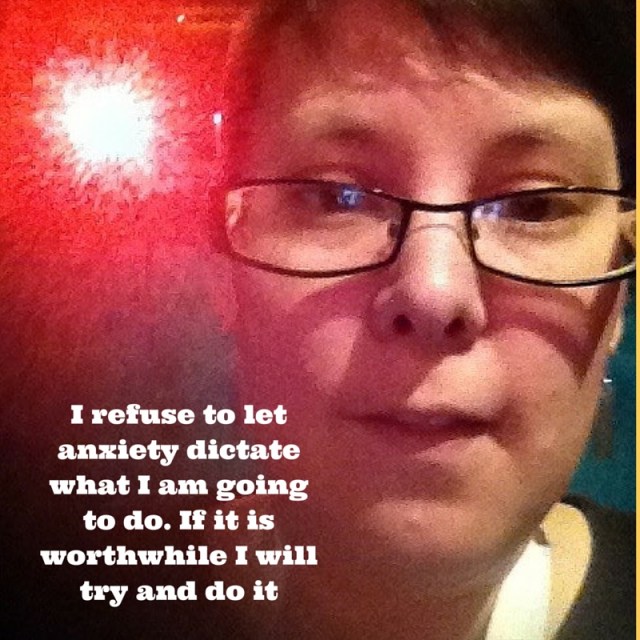
I refuse to let anxiety dictate what I do in life. If it is worthwhile I will try and do it-3


Go girls! – Making changes for Autistic women and girls

The other day a fellow Autist from the USA said to me how pleased he was to come across an Autistic woman who speaks about neurodiversity. I had never actually considered myself through that lens. I am just Jeanette and I write things which are important to me. But of course I am an Autistic woman – not a choice, just the particular circumstance and gift I was given.

I do know about being a woman though and an Autistic one. I have faced many of the challenges, trials and horrors women  can experience and those which sadly Autistic women so often experience – abuse, bullying, victimisation, being invalidated by those health professionals  who did not understand what an Autistic woman looks like clinically. I spent many years isolated and friendless. I have been diagnosed wit health conditions I don’t have and told I was ‘too cool to be Autistic.’ I spent at least five years being preyed upon by apparently every creep and abuser in Australia. I’ve lost my identity to fit in with others, puzzled about my sense of self. I have been robbed, ripped off and taken advantage of. But it’s not all bad. I also have found some good things in this world as an Autistic woman. I know myself now through a strong identity of neurodiversity and Autistic pride. I love myself and will not stand for bullying or intolerance of myself or others. I know other Autistic women, many of whom are my friends – more than I could ever have imagined existed. I have gradually learned I have the characteristics common to many Autistic women  and embraced them – empathy, creativity, deep thinking and a great passion to make the world better.

Today I had the immense privilege to meet a whole room full of young girls on the Autism spectrum and their mums and dads. I am an ambassador for an organisation called Yellow Ladybugs which is a social meeting group for young girls on the autism spectrum. I live in Canberra and the Yellow Ladybugs group is based in Melbourne so I had never been to one of their events. Today I was in Melbourne and attended three groups of girls doing painting at the National Gallery of Victoria. The organiser – Katie Sparkles (that’s not her actual name – she told and  forgot how to spell it – sorry Katie 🙂 – thanked me each time for my involvement but it was an absolute joy for many reasons. I spoke more to mums than their daughters. I’m not all that good with young kids and am more confident talking to teenagers. I did have some conversations with the girls and put my mentor ‘hat’ on, building their confidence around hotter drawings. (Yes, Autistic people can be perfectionists even when we are very little! I told a couple of girls that there is no right and wrong in art which  think helped a little). One little girl decided I was her new friend and put her little hand in mine wherever she wanted to go. It was lovely (and I was very happy that I have my working with children card!) It was lovely to see the girls enjoying their painting and talking to one another and the adults. I felt immensely protective of these young girls. As always with Autistic kids and young people, I see my younger self in them and want to protect them from the horror I experienced as a kid and young person.

It was great talking to some of the mums. I had a few mums come straight up to me and say ‘You’re Jeanette!’ and then we would get talking about her life and family. One thing I said to many of the parents was that there was nothing like Yellow Ladybugs when we were little and how wonderful it is that such groups exist now. Of course parents of Autistic kids often discover through their children’s diagnosis and discussions around it that they are on the spectrum themselves. So when I reflected on the lack of services for Autistic people in the past I wasn’t just reflecting on my own exeprience but on that of the person I was speaking to. That lack of services was a terrible thing. Basically us little Autistic girls in the 1970s and 1980s were different – perceptibly do and obvious to bullies and predators – but not different enough to attract any support and if we did get noticed and sent to a therapist then there was no diagnostic spot to place us. This either meant that our parents were told we were ‘acting out’ or that we got given a very unhelpful misdiagnosis. I have an Autistic friend who spent years in institutions for schizophrenia simply because they answered pychiatrist’s questions about ‘hearing voices’ and ‘seeing things’ literally. This person struggled until l their 40s when they received an Autism diagnosis which changed their life.

So I suppose accurate diagnosis is very important. The fact that there are increasing numbers of services and support groups for Autistic young people is fantastic and makes me very happy.

I am a bit ashamed to admit this but for years whenever I spoke at an event where parents complained about the shortcomings in Autism services for their kids I would respond with ‘well it’s better than the I was a kid!’ Th implication was that they should stop complaining because my education and childhood journey was much worse then anything now. Of course that was just me dealing with my own issues. I am happy to say that I am absolutely delighted that young kids on the spectrum – and young girls in particular – have access to social support and other supports. I looked at all those young girls today and just felt like giving them a big hug and saying ‘I so hope you avoid all the evil I went through. Go well and be amazing!’ When I think about what I have achieved with a horrible start in life, I can only imagine the opportunities those young girls today may have. And I understand we have not ‘got there’ yet around building a great word for our Autistic young people but today I felt we are heading in a positive direction .

So yes, I am an Autistic woman and I speak from something of a neurodiversity and Autistic Pride perspective. I long for the day that I don’t need to anymore.

Here is the link to Yellow ladybugs if you want to find out more: Yellow Ladybugs

IMG_0129