The meaning of Life, the universe and um..meaning

This year I turn 42. For those of us who enjoy Douglas Adams’ Hitchhiker’s Guide to the Galaxy books, 42 is the ultimate answer to the question of what is the meaning of life the universe and everything. So in my 42nd year, I am reflecting on meaning and fulfilment and how Autistic people can have the meaning misunderstood or misinterpreted. I am currently sitting in my lounge room with my beautiful black cat asleep on the rug saying purr. I am listening to myself. No really, I am. I recorded a radio show with an amazing writer and fellow Autist and I’m making sure I don’t need to tweak the audio.  My life is filled with these sorts of things at the moment. I am ‘living my dream’ as they say and meaning and fulfilment are writ large on my life. It’s a good place to be.

My life has not always been meaningful, or even likely to continue beyond the coming Tuesday though. Here is my life….(the short version). Somehow, in nearly 42 years I have gone from being a smart and unhappy kid, a bullied and abused and very unhappy teenager, a socialist, a criminal and prisoner and drug addict, someone with a diagnosis of Autism who didn’t accept it, a woman with a diagnosis of schizophrenia who didn’t accept it, a long-term welfare recipient, an aspirational  human, a university student, a public housing tenant and unintentional alcoholic, a Masters student, an author, a somewhat reluctant public speaker on Autism matters,  a graduate public servant, then a level higher in the public service, a homeowner, another level higher in the public service, a very psychotic person, a reluctant hospital patient, an author again, a TEDx speaker, all of a sudden a well-known and sought after Autistic speaker, mum to a little black kitty and just about to be an author again. I don’t know what’s next but I ended up in a place which gives me a lot of meaning. I feel my life is worthwhile and I’m helping other people through what I do. It’s a pretty good feeling.

There are over 7 billion other lives in this world, with a similar amount of  twists and turns and odd things and triumphs and tragedies as mine.  Different people find different meanings for their lives. One thing I struggle with around the concept of meaning is some of the messaging around Autism and how Autistic individuals are seen in relation to fulfilment and meaning.

Here are some of the things I notice some people expressing which worry me:

  • If someone says ‘I am Autistic’ most people do not instantly think of this person being fulfilled and having meaning in their life. While sometimes we do lack a sense of meaning (just like some non-Autistic people do), this assumption often seems to be wrong and based in stereotypes. Also, some Autistic people’s sense of meaning and fulfilment comes from things that non-Autistic people don’t relate to or see as meaningful.  To the Autistic person, there may be deep meaning in their interest or activity, regardless of what others think.
  • One issue that can happen is when a parent or educator denies their Autistic child access to things which are meaningful to them for whatever  reason. I know how I would feel if a bigger person I looked up to said to me ‘No more Autism advocacy for your Jeanette! It’s making you stay up too late’ I would feel terrible and kinda betrayed. A good book that looks at  this sort of thing is ‘Just Give Him the Whale’ by Patrick Schwartz and Paula Kluth – Just Give Him the Whale
  • If an Autistic person does one of the things that other people do as part of their life, such as employment of going to university or even graduating from high school, they are often seen as being ‘amazing’ or (pass the vomit bag please) ‘inspirational.’ While for some people – Autistic and otherwise – these are significant and unexpected achievements, for others of us, going through a world where just doing stuff that we want to do and being seen as some kind of hero is rather insulting. I do gain meaning from my paid work but it does not provide a  super-charged, exponentially amazing experience because I am Autistic. It is my job, like other people have a job. I really enjoy it but I do it so I can pay my mortgage and all those reasons that most people do their jobs.
  • One thing that provides meaning to a lot of people in the world is parenting and family. Autistic people are parents too – in fact a lot of parents of Autistic kids these days are seeking and gaining  a diagnosis after one or more of their kids is diagnosed. But so many non-Autistic people think that we can’t ‘do’ parenting. The expectation can be that we won’t have kids and Autistics who do get a while load of unhelpful ‘help’ and unwanted advice. The whole thing about having no empathy – and flowing onto that Autistic people’s apparent inability to connect wiht their kids or partner – is insulting, unhelpful and just plain wrong. We do find meaning in relationships with partner, family, kids and friends just like others do. We are not cold-hearted robots or refrigerator parents or any other silly stereotype.

I now have a lot of meaning in my life. I am very fortunate. But as my little potted Jeanette’s life timeline above illustrates, I have not always had meaning, or even a stable place to live and an income. Meaning is vital for everyone but it can also be a luxury which one needs to get to a point where they can find it. Through history humans have sought meaning and purpose. But I think that we need to rethink meaning and Autism. We can and do have a meaningful life, whatever it might look like. Even if we don’t do things that people traditionally ascribe meaning to, then that does not diminish that meaning to us.  And we have as much right to a meaningful life as anyone else does.

IMG_1639


Why I worry (a lot) when people talk about ‘cures’ for Autism

I am an Autistic woman. Autism has given me challenges – both those related to Autism itself and the more frequent ones where people don’t understand me and discriminate against me because I am ‘different.’ I know Autism can be hard – mostly because I am Autistic and my life has involved a large amount of difficulties. However I have a long list of reasons why I am very uneasy if anyone talks about an Autism ‘cure’. Here are some of those reasons:

  • There is currently no known single ’cause’ of Autism. Say charlatans and modern-day snake oil salespeople tell parents of newly-diagnosed kids that they know the ’cause’ of Autism ad therefore have a ‘cure’. None of this is scientific and all of it is total rubbish. At best the cures are ineffective and expensive and at worst they are abusive and put the child in danger.
    • The worst sorts of ‘cures’ are things like bleach enemas or ‘Miracle Mineral Solution’  which are actually highly dangerous. Not only can this ‘treatment’ result in physical health emergencies and injuries but it is usually traumatic for the child it is happening to. Imagine if your parent who you trusted administered something which caused pain, was administered against your will and smelt horrendous. (Many Autistic people – including me – find the smell of chlorine bleach overwhelming). Many of the people involved in this horrific treatment are currently before the courts (which in my mind is definitely where they should be).
    • Other less abusive ‘cures’ and treatments are in fact somewhat invalidating and come from the premise that Autism and Autistic experience is ‘wrong’. Young children and forced to make eye contact or behave in more ‘appropriate’ ways when in fact they are doing nothing wrong and just being themselves. What kind of message is that to give little people that they are being ‘bad’ and need to change their behaviour when actually they are not hurting anyone but just acting differently to the ‘norm’. I would prefer to ‘fix’ society so that Autistic  young people are understood and treated with kindness and respect rather than forcing Autistic people to conform just so people aren’t bothered by them. The message I want Autistic kids to get is that they are valued and not be punished for things like stimming or playing differently to other kids or not making eye contact. The only people this sort of ‘treatment’ is assisting are non-Autistic   adults who feel uncomfortable in the presence of Autistic kids being themselves.
  • As an Autistic adult I am quite happy to be my unique and unconventional me. As far as I can tell from within my own head, Autism is an integral part of me. So even if a cure were available, I would say ‘no.’ That isn’t to say I don’t engage in therapies and treatments to assist me in dealing with things like my anxiety, but that is not a ‘cure’ in my mind. It is voluntary assistance what addresses some of my difficult experiences. If my Autism were removed I don’t think I would be me any more.
  • If you think of ‘curing’ all the Autistic people, the world would be missing a vital element. Professor Temple Grandin famously gave the example that if the human race did not have Autistics within its number we would all be like neolithic people. sitting in a cave still and socialising. Many innovative and creative people who change society in different ways are on the Autism spectrum. So if you ‘fixed’ all of us all that ingenuity and brilliance would be lost.
  • Also, the whole concept of ‘fixing’ people with differences and diffabilities is very fraught. Who makes the decision to get rid of Autism? Does it stop with Autism? What about if they get rid of all the people with mental illness? All the people with ADHD? Everyone with dyslexia? Why stop there? All those people with sensory disabilities and mobility impairments? They are suffering. We don’t want a world where people suffer. Let’s just have everyone to be of ‘good’ genetic stock. That will make the world better won’t it?’ No. A big whopping and emphatic NO! At best I am describing the movie Gattacca and at worst I am talking about eugenics and Nazism. Diversity is not a bad thing. In act it is a very good thing. Instead of ‘fixing’ all the Autistic people why not make a world where true respect for diversity is the norm. Instead of seeing Autistic difference as a problem, maybe we could start teaching respect and understanding?

I do understand that parents when their child is newly diagnosed can really struggle. Of course they can, because being Autistic is no barrel of laughs. Life does tend to be more challenging with Autism. I feel for those parents whose only knowledge of Autism may be from movies and popular culture. They worry for their little person and want the best. I understand why they would want a cure. What I would say to these parents is that there are many things you can do to assist Autistic children in their path to being amazing Autistic adults. Get involved with other Autistic parents and share notes, meet some Autistic adults and talk to them about things that worked – and didn’t work – in their childhood. Read some books and blogs or watch some movies (I like the Temple Grandin one. The documentary I am in with Wenn Lawson. Akash Temple and Jame Treffrey, ‘Alone a Crowded Room’, is pretty awesome too).

At the moment there is no ‘cure’ for Autism so it is hypothetical what the world would be like if there was one. However, I think it is most important to change the world we have now. Teach everyone about the challenges and gifts that can come wiht Autism. Don’t see us as broken, see us as unique. Embrace our value. Work to stop discrimination and bullying.  That way if such a ‘cure’ ever becomes available in the future we won’t lose all that value and beauty that Autistic people bring to the world.

11289587_846906952057360_4546062650575153305_o

Opportunity for Autistics – vital

The other day I checked my Facebook messages and there was one from one of my favourite organisations – TEDx Canberra. The message was asking me to participate in one of their events. I was quite excited by this. I put the event on Facebook and emailed some people. I reflected on how TEDx Canberra gave me one of the best opportunities of my life in 2013 by inviting me to speak at their Then. Now. Next. conference. This got me to thinking about opportunity.

In my own life I have had a number of amazing and life-changing opportunities, from a publisher’s contract for my first serious piece of writing – my autobiography – to the opportunity to join the ranks of the Australian Public Service a year later.   The past 16 years of my life has involved many such opportunities, most of which I have willingly taken up and appreciated. A lot of what I try and do these days with my advocacy work  is to help enable others on the Autism spectrum to be offered and subsequently take up opportunities of their own. It concerns me the lack of opportunities Autistic young people are offered.

As Autistics, we get a bunch of negative messaging from all over the place – this can come from society generally, media, schools and higher education providers, employers, family members, partners and even our own selves. There is so often a presumption of incompetence in everything. Autism is not seen by most people as coming with gifts. In fact on the rare occasion that Autistic gifts are considered the focus is often on what are known as ‘splinter skills’ or ‘savant skills’. With these, the emphasis is often placed on the high ability in a specific area in the context of the Autistic person apparently being unable to do all the practical living skills that others have. So these splinter skills are actually considered as aa sort of disability in themselves.

Autistic young people are often seen in terms of what they can’t do, what they struggle with. Opportunity is not something they are offered a lot of the time. The highly conventionally successful Autistic person is seen as an anomaly or exception. I recall a woman saying incredulously to my non-Autistic companion at a high powered dinner last year, ‘she’s so articulate’ after talking to me. I honestly don’t know what the woman was expecting but I was more than a little affronted. The concept that I – an Autistic woman – would of necessity would be less articulate than a non-Autistic professional was not just rude, it was indicative of the sorts of attitudes out there in the world. Why would anyone want to give us opportunities if they think us incapable of capitalising on them?

I propose a different approach and I hope I can use the opportunities I have been given in my career and publishing and I hope that I might use some of those beautiful opportunities I have been gifted with to spread this message. I am friendly with an organisation based in Melbourne called the I CAN Network which is led mostly by Autistics and works to mentor and build confidence for children and young people on the spectrum. The premise for the organisation is ‘a rethink on AWEtism’ and to promote the attitude of ‘I CAN….’ in young people on the spectrum to counter all the negative messaging and deficits thinking. I support the work of I CAN because I think it is highly valuable and working in the right direction. This kind of work needs to go further though – from Australia to the world. From children and teens and young people to those people like me, the adults who are relatively recently diagnosed and have faced negative messaging, invalidation and discrimination their whole life.

I want the assumption of incompetence when folks hear the world ‘Autistic’ to change to an assumption of competence. Because we have so many strengths – collectively and individually. Some of these might include:

  • In a work context, amazing soft skills such as enthusiasm, attention to detail, honestly, loyalty, respect for diversity, a good work ethic and dedication.
  • Creativity and innovative thinking
  • Empathy, thoughtfulness and kindness
  • Determination and dedication
  • Passion about a topic
  • Commitment to ethics
  • Understanding of difference and diversity and often a lack of prejudice about those who are seen  as ‘Other’
  • Not always, but often Autistic people are great with technology
  • Logical and rational approach to problems and challenges
  • Ability to support others with similar experiences when they need it
  • Affinity with animals and nature
  • Great long term memory and an ability to quickly access information
  • Provide the world with a different perspective
  • Loyal and honest friend or colleague

This is far from an exhaustive list and of course does not apply to all Autistic people, but could you imagine if when the word ‘Autism’ is said that most people draw from this list rather than all the deficits and negativity? Opportunities in things like education, employment, civic life, relationships and many other areas would probably be more likely than they are now. .

The reason I care about this is that it is the opportunities we are given in life that can determine our level of fulfilment and engagement with life and there are too many Autistic people who are unfulfilled and isolated. Issues like social isolation, unemployment and underemployment, a lack of educational attainment, feeling alienated from the rest of the world and / or just feeling really down on themselves are rife. In my anecdotal experience i would seem that more of us fit into this category than that of fulfilled and satisfied Autistics.

I’m not exactly sure how to make this shift happen but I imagine it will require a cultural change. Cultural changes can be very difficult to achieve on a large scale by an individual or an organisation. For this reason I am so happy at the large and increasing number of Autistic self-advocates driving changes. I have consciously been a self-advocate since 2005 and it is in recent years I have seen the explosion of people working for change. And we do seem to be driving change in some Autism organisations which is great and definitely needs to continue. This shift was epitomised in an article I read from SBS about neurodiversity. The article quoted about fifteen advocates with differing perspectives. Yes, I knew all but two them but even that is changing. That a mainstream media outlet is discussing neurodivevosty seems quite promising to me. Yes, there is a way to go but I am hopeful we are heading in the right direction,

11001518_799349840146405_3405114448242454229_o

Me speaking at TEDx made into a meme….


Unpacking the Autism label

I just had a friend over for afternoon tea, cat cuddles and conversation. My friend is an educator and she has also some young people on the spectrum in her family. She asked me what I thought of how the Autism ‘label’ should be applied and what the pros and cons of getting a diagnosis were. I thought this was a very interesting topic and worth investigating via the means of blogging.  This will be more of an exploration than an exhortation as I’m not sure if I have any answers, just some thoughts.

The first thing to be aware of with the Autism diagnostic label is to understand what it is being used for. Any kind of diagnosis has a few purposes. In my mind, these are some of the functions of the Autism label:

  • To access assistance at school, at work, in the community etc (funding for programs specifically set aside for people with an Autism diagnosis)
  • Identity. The label can be used to identify as Autistic and join other Autistics in a peer or friendship group and to better  understand and accept yourself
  • For schools to understand and place Autistic students with learning support etc
  • To understand more about yourself, your child or your partner who may be on the spectrum.

The diagnostic label in and of itself is not really ‘good’ or ‘bad’. In some cases it can result in great, positive changes for people. They might understand themselves and their place in the world better. They may be able to access support they couldn’t before getting the diagnosis. The diagnosis may enable family, friends and colleagues of Autistic people to understand them better and not be blaming about ‘weird’ behaviour but instead be accepting and respectful. The label may encourage people to connect with their Autistic peers and become an advocate or just have loads more friends than they would ever have imagined.

Sometimes though, an Autism diagnosis can result in some more negative outcomes. People diagnosed very young can be shielded from every difficulty due to parental anxiety and end up lacking independence and resilience as adults. They may be given negative messaging and low expectations and told how they won’t ever do anything meaningful with their life and this can sadly become a self-fulfilling prophecy. A diagnosis can feel like a burden to an individual, confirming their fears that they are ‘different’ and will struggle in life. Instead of valuing and respecting themselves, the opposite can occur and people might feel more alienated. Employment and promotional opportunities may be denied a person who discloses an Autism label.

For me I didn’t get the diagnosis until I was 20. I had endured thirteen years of misery at school, longing to be like other kids but not knowing how. By the time I got my diagnosis I was so negatively focussed and filled with self-hate that I was in prison. The diagnosis was meaningless to me. It seemed like a diagnosis of ‘geek’, which was something I had been trying to escape since I was a young teenager. It took me six years to accept my Autism diagnosis and when I did, my life improved. I understood that I was not a poor lonely little person unlike the rest of the human race and that in fact there were many, many other people a bit like me. I spoke at  a conference about women and girls on the spectrum a couple of years after accepting my diagnosis and I felt so included and alike with the other women I met on the spectrum. Now I disclose my Autism to pretty much everyone. Unlike in the past, it is not something I am ashamed of – far from it! If anything I am incredibly proud to be an Autistic woman, an advocate and friend to many other Autistic women and men.

One thing which I will note the the idea of context around diagnosis. I have a new book due out very soon and my coauthors and I saw fit to include the criteria for Autism in the main diagnostic manuals used by diagnosing clinicians – the DSM V- 5 and ICD – 10. I was struck by how fiercely focussed they were on deficits around Autism and what we struggle with. At first I was quite angry about this but then I rememberred what both those diagnostic manuals are aimed at. The diagnoses within the DSM and ICD are all about allocating  medical insurance and healthcare funding. They probably need to be deficits-based in order to perform that role. They are not written for people on the spectrum or their parents. They are written for doctors to allocate health and disability resources. Unfortunately I think a lot of parents of newly-diagnosed Autistic children see these sorts of diagnostic criteria and and in turn feel quite dismal about their child’s future. The DSM and ICD should probably come with some dot points advising clinicians how to speak to Autistic people and parents which builds their confidence!

The other thing which is quite a recent thing around diagnostic labels is the labels themselves. The ICD – 10 still includes Asperger’s syndrome as an available diagnosis but the DSM – 5 – the more commonly used manual with doctors in Australia and some other countries – has changed the Asperger’s diagnosis into a subcategory of Autism Spectrum Condition called ‘Autism Spectrum Disorder Level 1’ (or something similar). When this change to the DSM was mooted, a lot of people got quite bothered about heir Asperger’s diagnosis and whether they would need to change it. A few years on and I notice that many people who were diagnosed with Asperger syndrome now use ‘Autistic’ to describe themselves. I always say ‘Autistic’ when describing myself. For me, the reason is that some people ascribe unhelpful functioning labels to Autistic people and I don’t really find those a useful description of anything. I mean, people can be ‘high functioning’ at one point in their life and ‘low functioning’ at another so it is a little bit pointless not to mention that it sometimes dooms people to a life of negative messaging and low expectations.  I prefer to be included with all the Autistic people  rather than a subset. I know some people disagree but that is just my approach.

I think the relative merits of diagnostic labelling can vary a lot according to the individual and the environment they are in and also the purpose the diagnosis is being sought and / or used for. I do tend to encourage parents get a diagnosis for a child, particularly if the child is struggling but in some cases I see children who evidently have a lot of Autistic traits but are doing very well in life and I wonder if maybe the diagnosis can either wait for later or possibly not at all. For Autistic adults, getting the diagnosis can be life-changing and many adults I know were so relieved and happy to finally find out that there is a word describing their sort of experience and that there are millions of other people who share that word.

A complex topic and certainly worth some consideration. I don’t think I solved any conundrums (or indeed if they can be solved at all)  but I enjoyed unpacking some of the implications of  Autism label.

11289587_846906952057360_4546062650575153305_o


The wonderful world of work…

Nine years ago this Friday I got up early and dressed in a brand new Sportscraft white shirt and grey suit pants. I was nervous. Two weeks previously I had moved to a new city to start a new life. I was sharing a house with a woman who could most kindly be described as idiosyncratic. I was completely outside of my comfort zone but the nerves were tinged with excitement. I caught the bus down Northbourne Avenue with other similarly attired people. I hoped my little folded piece of paper containing a map would help me to find my destination. I got off the bus ands my new work building right there. I walked in, looking at the security guard. Tentatively I approached the guard desk and said ‘I’m a new graduate’ and told him my name and the name of my Director. I noticed that the foyer of the billing was filled with eager-looking young people also wearing new corporate clothes. Over the next half hour – which seemed like eternity – managers came and collected their respective graduates. Everyone but myself and two other young people had been taken to wherever they had to go. Maybe the department had made a mistake? Maybe I would not be starting in the Australian Public Service. Maybe they had changed their mind about my successful application? As these thoughts whizzed through my mind, a twenty-something woman with a kind face rather hurriedly introduced herself as Rachel. She was my new manager and I followed her to my new building, and with it my new world and my new me.

It is hard to imagine that day was nine years ago. I was so filled with doubt. Lots of people had told me that I would never be able to be a public servant. I was Autistic so apparently not suited to team work situations. I had a dubious past and no big employer would want to take on such risk. I had been impoverished and receiving welfare for over ten years. There was no way someone like me would be comfortable in a corporate setting or even be able to behave appropriately, or so I was told.

Evidently these doubts were wrong. I loved my job then and I have loved my job ever since. One of my fondest memories was of the first time I got paid. My income had essentially quadrupled when I joined the department. My first pay day dawned and I went to the Canberra Centre – a somewhat salubrious shopping precinct in the centre of town. I had spent over a decade too embarrassed to enter such a haven of consumerism. I thought the staff would be able to spot me, a poor person, daring to look at their ‘nice things.’ When I walked into the Canberra Centre on my first payday that attitude was washed away. I was an ordinary person, a taxpayer. I was contributing to the world and if I wanted ‘nice things’ I could buy them! That felt good.

Work has not always been easy though. People who know me well understand that I have a lot of self-doubt and insecurity. I often worry about what people think of me at work. I obsess over whether I have said the wrong thing to someone. I worry about the most preposterous and impossible events. I am terrified to inadvertently make a mistake. I can be a perfectionist. I am Autistic so there can be miscommunications or misinterpretations between me and my colleagues. I can be paranoid, which is not helped by my mental illness. Sometimes I hear people saying things about me which logic tells me they definitely wouldn’t say about me. A few years ago I was really unwell with my mental illness and had to take many months off work. I thought I might have to quit. This thought was devastating.

These days I am one of the two co-chairs of our department’s Ability Network, as well as my usual work. I think it is very important for people to be included and respected in all walks of life and particularly in the workplace. I love my department. Like many staff with health conditions and disability I am a very loyal and enthusiastic employee. I really do feel like I died and went to work heaven. When I walk into my building every morning I stop to remind myself that I really am the luckiest girl in the world hand have the best job ever. Not bad for someone who before I started at the public service had never worked full-time, had been on benefits of one sort or another continuously for fifteen years, who wasn’t confident using PC and Microsoft systems and who needed assistance to use the photocopier!

Some of you may have seen my employment book for teens on the Autism spectrum – The Wonderful World of Work. I didn’t do much scholarly research for the book. Most of it came from my lived experience. Here’s a link if you want to look at the book: http://www.jkp.com/uk/the-wonderful-world-of-work.html 

Some people say I am an Autism and employment ‘expert’ but I think I am more an expert at being me. Anyway, here are some thoughts I have gathered around succeeding at work for Autistic people:

  • Getting someone to be job ready is only half the equation. Employers need to be engaged in employing staff on the Autism spectrum too.
  • Work – and looking for work, having job interviews and starting a new job – can be stressful. That is OK and just remember that the stress usually passes after a while. Even if something is challenging, focus on the end result (i.e. you having a job). However, if the anxiety is severe (causes serious mental or physical health symptoms and is present most or all of the time) and you simply can’t continue, it is OK to put your quest for employment on hold. You can build your confidence and maybe get some experience in less stressful settings, like volunteering or starting a small business (for example if you make art you cold sell your paintings). I used these techniques when I was too stressed to get a ‘regular’ job and they worked well for me.
  • Don’t be down on yourself if you don’t work but want to find a job. Finding and keeping work can be a real challenge. Do what you can do when you can do it. There is not necessarily a timeline for getting a job.
  • Autistic people often come with some pretty impressive ‘soft skills’ already. Soft skills are something employers tend to value highly. Soft skills we often have include attention to detail, loyalty, honesty, a good work ethic and enthusiasm.
  • Don’t ever assume that your Autism will automatically preclude you from getting a job.  While there are challenges around selection processes for jobs, it is possible to build your employability skills. You might like to use an employment service provider to help you find work. There are Autism-specific and disability-specific employment services which can help.

IMG_0699

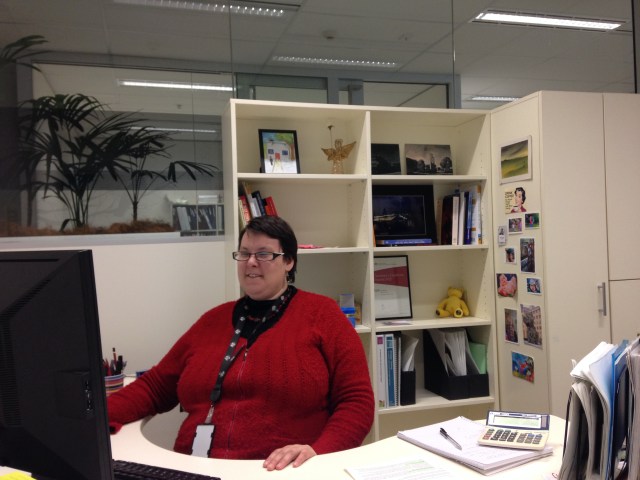
Jeanette at work


Nope. I’ve got nothing….

‘I’ve got nothing.’ That’s what I thought when I started writing this post. I wondered if I should write about negativity and positivity. The image of half-filled – or emptied – glasses swirled around in front of my eyes. Nope. I’ll write about mental illness, I thought, or Mr Kitty. Maybe I can do one about my parents and how lovely and quirky they are? What about work? I always have something to say on employment. I think…

I codlin’t decide on any of these things. Apparently this is a common issue for writers, not knowing where to start. The blank canvas is too white, the decisions too hard to make. It’s not really  problem I have had much. An article is a half hour’s work with maybe an additional five or ten minuets of editing. I am decisive and clear-headed and know just precisely what I want, always. Lately this has not been the case.

I have been struggling with health issues for a while and one way it manifests is in my clarity and vision. I turned up two hours late for an appointment the other day. I had put the wrong time in my phone and not checked the reminder message from the doctor’s clinic. This is probably something others do from time to time but not me. This has never happened in my life. It shocks me. It’s like I am changing. I am left with uncertainty about my writing and speaking in the future. What happens if I forget to go to a talk in another state? Or even in Canberra for that matter. How long will this last? Do I have a health condition which can be effectively treated or will this be my lot, this fog of forgetfulness and indecision?

I have been taking quite heavy-duty medication for my mental health issues since 1995. I hadn’t really thought about it much before but now I’m wondering if maybe my future will involve me living less years than my past? How long do I have on this planet? Will I achieve everything I want and need to do? The medications have long term side effects – I only just found this out from my new doctor who has what sometimes seems an unusual interest among his peers – that of wanting treatment for mental illness to be sustainable over time and not to prescribe medications that cause permanent and disabling side effects.

Yes, I have discovered doubt about my capability and my very existence. I think about death a lot, wondering how long I have. I allow my imagination to take me into the abyss  and draw a picture of what lies beyond the veil – heaven, hell, somewhere with lots of cats and sparkly things. Who knows this stuff?

I have tried to make some strategies for addressing these things for myself. I shall share my initial thoughts with you. (One time I told my mum about my latest epiphany and she said ‘and I know you will share i with others. You’re good like that.’ – love my mum so much). Anyway, strategies….

  • We do not know the future. This is a good thing mostly but for anxious folks like me it can generate a need to fill that blank canvas of one’s story into the future with content. Often the content we fill it with is catastrophising and negativity. I try to constantly remind myself that I don’t know what come next and I should experience it when it happens ad go on from there.
  • There is no point regretting the past and what we did or didn’t do. All anyone has is what they have now, in this moment, and into the future. If we didn’t get a university degree or have a child, or save enough money to buy a house in the past, it isn;t really something we can go back in time and do. We go from now onwards. That is all anyone has.
  • Physical and mental health are in a constant state of flux. This is true for almost everyone, even people who see themselves as ‘healthy.’ You can get in a car accident going to work, you can contract an illness or injury. None of us know. All we can do is be prepared for the unexpected and approach any mental or physical health issues with that good old skill of acceptance. That is, to accept that the current sate of your health is how it is and then move on from there. I remember when I was in my twenties I made a very poor choice and spent months agonising over it. Filled with remorse I wished and prayed that it had never happened. When I accepted that what I had done had already happened and tried to move on from there and make more healthy choices then something shifted and I could start to heal.
  • This is important: You do not need to go through your life’s journey addressing all your problems and challenges yourself. Hopefully we will all have allies along our life journey. People who are positive enablers and who support and empower us to be well and do well. Often this will not be the same person or people. Try to be open to these people – or pets – in your life and be grateful for their presence.
  • All we can hope to do with our lives is to leave the world a little bit better after we leave it than it was when we came into it. That is all. Nobody – even the most famous person – will have an immortal memory. Just imagine how many individuals you can think of who were alive 1000 years ago. (for literary folks amongst the readers, I’m thinking of Percy Shelley;s poem ‘Ozymandias’).  If you aim for that, it is a distraction from the far more important act of helping others in the here and now – it could be your friends, your partner, your kids, your cat or dog (or spider for that matter!), colleagues at work or your grandma. It is as simple as that.

There. I wrote something. Time for a cuddle with the most important being in my life at the moment – that little black kitty who knows me as his human.

IMG_0202

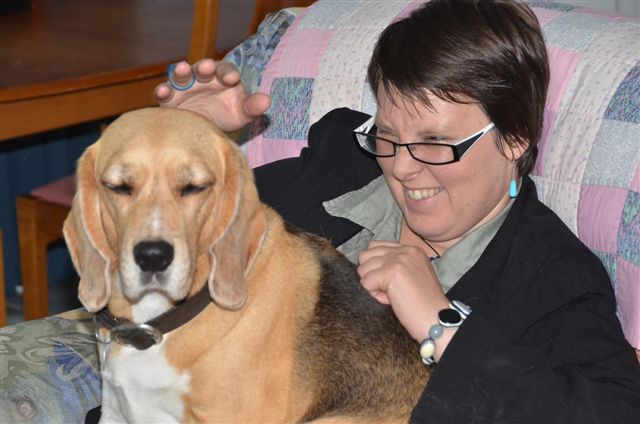
Dogs can be important allies too


A letter to my sixteen year old self

Trigger warning: allusions to sexual abuse

A while back a number of people wrote letters to their teenage selves in order to achieve a variety of outcomes, mostly based around closure and self-acceptance. I am having a year of hanging out with current and former Government Ministers, CEOs and Executives and Autism world notable folks and academics and I wondered what my teenage self would think about this. (As she was a communist she probably would have been a little surprised!) So I thought I would write my letter a few years after everyone else did theirs. Here goes…

“Dear little me,

You will be surprised to meet your forty-something self. I don’t really look much like you or think much like you. The things I hold dear are vastly different to what you do but I promise you and I am the same person as you. I have your memories, your family, your insecurity and vulnerability. I have your power – it will take you a while to tap into that but it is amazing. Twenty-five years later and you end up happy, well mostly.

Firstly I want to say what a lot of challenges you have faced and got through successfully. You have not led a blameless life – far from it. And you go to some dark places even now. But you manage to overcome all those insecurities and anxieties and be a force for good in the world. You are a socialist now and want to change the word. I can tell you that you do change the world – although in a far different manner to what you might expect. You change the world in the best way there is – not through momentous events and conflict but through connecting with individuals and being a good friend.

You know how sometimes you get very scared and anxious about supernatural things? How you ascribe meaning to coincidences? How sometimes you stay up all night with the light on, terrified the ghosts will come? In some cultures that connection and terror of the supernatural would take you down the path to being a shaman. In our culture it is treated with medication. It is called schizophrenia and some other names. It will be with you for ever I think but it won’t stop you from making a good life for yourself.

The other matter which I know is haunting you more than the ghosts, that is that people don’t like you. I know you want to belong more than anything. I am the only person in your life who knows the main reason you joined the socialist party was to find a peer group which would accept you, unlike the kids at school who mostly hate and abuse you. I know that you changed the spelling of your name and lost your English accent so people at school would like you and that both strategies did not work.  I also know your darkest secret, which you will not speak of for some years, I know what that horrible 35 year-old hippie man did to you. He stole your innocence – my innocence in fact. You need to know that this was not in any way your fault. I am very serious about saying that. You did nothing wrong. He committed a horrible crime. Sadly such men will be in your life for a  long time to come. I wish I could protect you. I can’t but I can tell you that these criminals’ evil behaviour is not your fault. The only blame lies with these men. You will heal and one day you will be able to help others heal too.

I’ll get off that topic and onto something a bit more pleasant. You know how you always get ‘A’s for English? How you love to write and create new worlds. How you love to paint and write poetry. Well, in fact you become an author and gain a Masters degree in Fine Art. One day you will have a show at the Australian Centre for Contemporary Art. Another day you will have a book published and then another…and another. You will reach many thousands of people with your writing and public speaking. Yes, you speak at conferences. You love it too.

This is a tricky thing to tell you about because I know how much you are committed to your socialist beliefs. But as we both know, you are not a true socialist, you just like to spend time with those uni students and their beer and weed and those protests where you get to let out your emotion which you struggle with some much. As you grow older, you have some truly awful experiences. You meet another someone who takes your innocence, your morality. I am ashamed to say you make terrible, terrible choices and end up in various malevolent institutions. You hover over death. You lose your faith and your courage. You are in a shadow world. I so wish I could save your from it. Thankfully you manage to save yourself from it, along with support from your amazing family and your own determination and wisdom. You are so impacted by this shadow world that it gives you a cast iron will to go as far from it as you can. After seven years of aspiration and good choices you join the public service. Seriously, you do! And you love it. You are respected at work, even though you are a bit ‘quirky’. You buy a little apartment and fill it with art – top to bottom! Yes, really, you own property. Someone even said recently that you ahed ‘impeccable taste’.

So as I write to you I am a very different you but I know I am still you. I feel your essence within me. We share the same memories. Take courage, for though your life is filled with terrible things it is also filled with wonder and amazement. You become a respectable member of the community. You have great friends who like you for who you are. You have all your quirks and foibles and things which your high school peers hate so much. But you own them and are a proud woman.

I’ll have to write to you again I think to tell you all about Autism. And Mr Kitty. You will love to know about him.

Go well little me.

Love from You”

IMG_0129


You can take the Autie out of the country…

I have just turned from a visit to friends and family in country Victoria. It was wonderful. Most of my friends know me as a city person. I moved to Melbourne when I was 17 and then to Canberra when I was 32. I have always been more comfortable in cities – i get lost less often as the streets are generally short and have handy things like names and numbers rater than the ‘RMB 1265′ denoting a royal mail box and corresponding number – that I grew up with. The city is urbane and has coffee shops and not a rural field day or tractor in sight. People in the city are supposed to be more sophisticated…. or something. However my first seventeen years were spent in country areas – firstly Devon and a small village near Cambridge in the UK and then the most beautiful place imaginable in Kergunyah in my teens. Keygunyah is a tiny town which boasted a post office and a swimming hole and  a lot of cows and not much else. I hated it.

As a teenager the country was my enemy. I was isolated, there were no shops or other trappings of civilisation. There was no public transport and anyway I lived about three kilometres up a dirt road which would probably not accommodate a bus. My school was an hours’ bus ride to the north. The bus was filled with knuckle-dragging bullies who delighted in making me feel small and embarrassed. They invariably smelled of BO and cows and had names like Jimmy and Bruce. I endured the hell of this bus ride where nobody ever stood up for me or was even remotely nice to me for six years. As I grew older, I identified with leftish political ideals and social justice. I saw myself as being gay and noticed things like the fact that Aboriginal people were often treated badly and that my school friend Simone who had come to Australia as a refugee from Laos was hated and teased simply for her Asian features and gentle accent. I decided that the city was a better place for a number of reasons. As soon as I was able, I moved to Melbourne to spend the next few years sipping cappuccinos and visiting the Vietnamese restaurants dotted along Victoria Street, Richmond, with my apparently far more sophisticated and decent socialist city friends.

For years I had this idea that the country would never be my home. I looked back on my time in Kergunyah with sadness and equated that beautiful place with all my teenage misery. My parents sold the property in Kergunyah over ten years ago and built themselves a house in what my dad called ‘suburbia’ (a small country town with around 4000 inhabitants, where there are street lights and shops and lots of tourists keeping the economy afloat and having a pleasant impact on house prices for those who own their own). The last time I went to Kergunyah I saw it differently. I felt like I was standing inside a painting. On one side, Mount Murramurambong towered spectacularly above a gap. On the other side the Kiewa Valley lay. You could see the procession of trees lining the riverbank and the mountains rising up on the opposite side. It was stunning. But I still thought the country was not the place for an Autistic advocate, someone who was ‘different’ like me.

My thoughts and opinions about all these things got themselves together and decided to change on the weekend of Australia Day this year. I had travelled to north east Victoria with an advocate friend and colleague to visit my family but also some mutual friends in the Autism world, one of whom was moving into his own place in the same town where I had reluctantly attended high school. The entire weekend was amazing. I got to know people I know much better and met others still who I really like and value. The most amazing thing though was that I made peace with rural Australia.  understood that my life would probably have been just as difficult had I grown up in Melbourne or Sydney. I noticed the beauty and vastness of the country, the silence punctuated only by the lowing of cows and  the occasional bark from Larry the labrador. As if on cue I started to relate to the needs and concerns of rural people – the terror of fires which can start from a tiny spark and destroy homes, livestock, crops and people, the connection to the land when your family has worked there since 1860, the disconnect between city and country thinking. I embraced my rural heritage (most of it in England) and realised that an Autistic person can succeed and be happy in regional and rural areas as much as they can anywhere else.

Some thoughts:

  • The only reason I wouldn’t live in a rural area is that I don’t drive a car. Although many towns do have a good bus or taxi service.
  • Another consideration around moving to the country is employment, as smaller towns tend to have less employment opportunities. Given that Autistic people can struggle with finding a keeping a job, this may be something to think about. However, there is a counter to this issue in that if you and/or your family are established in the town or area it may be easier to find a job than in the city as many jobs in the country are staffed through word of mouth rather than a competitive recruitment process (although this is not always the case).
  • The idea I had as a young person that country areas are more conservative is not necessarily true. The idea that city areas are more ‘progressive’ is also not always true. You will probably find likeminded people everywhere you are and you may also find people you disagree with everywhere too.
  • The internet means that you can communicate with people all over the world so living in  a rural area may not be isolating, even if your nearest neighbour is five kilometres away.
  • Country areas often live up to their reputation of being welcoming and friendly. However this can also mean that there is gossip and everyone knows about everyone else’s ‘business.’
  • Different people have different preferences around where they live For some people the city is the only place they would consider and for others they would never leave the country.  I think I could be happy in both.

DSC_6830


The enemy within the walls: Autism world trolls

The is a difficult and uncomfortable topic but it is close to my heart. It is widely known that Autistic children and adults are more likely to be bullied than many other groups. This has certainly been my experience as I was victimised for much of my first twenty five years and also on a few occasions after that. Bullying left me with very low self-esteem, a lack of faith in myself, trauma and anger— as it tends to do with others as well. I felt like I couldn’t do anything right, I tried desperately to fit in but with no luck. My ‘difference’ was apparent to everyone and for my young and vulnerable self, this  was not a good thing.

As an adult I gained an Autism diagnosis and clinicians helping me told me that many Autistic people experience bullying. From then on I assumed that Autistic people were virtuous and trustworthy but non-Autistic people needed to be treated with care as they could be violent, aggressive and discriminatory. Sadly it’s not quite that simple. As I grew older I discovered that Autistic people are subject to the same sorts of character challenges that everyone else is. So yes, there are Autistic people who are aggressive and discriminatory. Most of the Autistic people I have met and who I know are very kind and thoughtful and hate the very thought of upsetting another person. But unfortunately. along with the many, many kind and considerate and community minded  Auties, there are in fact Autistic bullies. The Autistic bully is a far less common phenomenon than the non-Autistic bully but it is still, as younger people rather aptly put it, ‘a thing.’

[I need to qualify this by saying that Autistic bullies are less common and that I am talking about actual bullying behaviour with the intent to belittle and harass, rather than behaviours which non-Autistic folks can misinterpret, like different body language, apparent ‘rudeness’ etc. Apparent anti-social behaviour by Autistic people – especially children and young people – is often unintentional and certainly not bullying.]

In my life as an Autism advocate I occasionally happen upon a troll on social media who is Autistic. They criticise people and engage in inflammatory conversations filled with insults and put-downs. They belittle others’ messages and launch personal attacks. They complain about others’ presenting style and message. These people can create division in our community and discourage people with a great message to share from saying anything at all.

I am not referring to robust debate or disagreement. I love to have a debate about something I say as it can open up new understandings for myself and others. I am more focussed on trolling and personal attacks which are pretty much the opposite of healthy debate.

I am actually quite afraid of these people who troll and hate. Every time I go to post a blog I worry if I will be shot down in flames and ridiculed. I worry that my motives will be questioned. When I see this trolling it catapults me back to 1987 with the mean girls in my Year 8 class. I feel guilty and embarrassed and think that everyone must hate what I have said. I’m just as likely to take down a post – after posting it in 20 groups – because of one cruel or insulting comment. Now I know part of that reaction is related to my own low self-esteem but part of it I am not responsible for. And victim-blaming is not my favourite activity, even if the victim is just me!

In my mind, this trolling is highly  divisive and can effectively stop some people from having a voice. If you disagree with what I say, please let me know and we can have a discussion. But please don’t insult and ridicule me – or anyone else – online. I’m pretty certain that my words about empowerment and supporting one another and the occasional mention of a little black kitty are hardly worthy of such anger and cruelty. In my mind, it is better to focus on others’ strengths and the useful things they are saying than promoting division and animosity.

Noble franchise meme


The object of my affection – all about ‘things’

I studied fine art at university. I remember going to an exhibition by contemporary artist Barbara Kruger which was an installation of advertising-type signs making commentary about social issues, especially consumerism. I bought a mug at this exhibition which said ‘you want it, you buy it, you forget it’ and ‘we are slaves to the objects around us’ on the other side. There is a home in the popular imagination for this notion – the issue that people want things that once they acquire they are no longer particularly interested in. Socialist philosopher Karl Marx had a name for it: ‘commodity fetishism’. According to the father of socialism (and OK, Herr Marx is maybe not the best source of factual information, but definitely a source of interesting ideas), people ascribe more value to objects than they do to more significant and worthy things (like relationships etc). This commodity fetishism, according to Marx, makes us somehow less human. All fascinating stuff no doubt, but my interest in this topic is around my own attachment to objects as an Autistic person.

Whenever I bring out my Barbara Kruger coffee mug, I always disagree with the sentiment. For me, many of the objects I have gathered actually are important and deeply meaningful. When I buy (or am given) something I really love, I get joy from it from the rest of the time it is in my life. Some of you might have seen me in a documentary, along wth some other very awesome Autistic adults, a few years ago. The documentary is called Alone in a Crowded room. At one point in the film, I show off some of my ‘nice things’, -a sparkly scarf, a little translucent glass ornament, a holographic purse with alternating pictures of butterflies and  flowers and some of the film director’s objects as I hadn’t brought enough of my own. I will admit that I still feel something of a fraud every time I see that sequence in the film because I have betrayed my own objects by pretending the director’s objects were mine….

…and I imagine that sentence might sound odd to a non-autistic person (and actually may sound odd to some autistic people too!). I have a different relationship with objects to the ‘norm’. I ascribe them with life and meaning which others may not. When I was a child, I would never input an easy sum to my calculator in case it thought I was an idiot. I knew logically that the calculator did not have sentience and wouldn’t really care if I entered 1+1, but it still bothered me. As an adult I tend to name my technology. I have had a procession of computer friends -Esmerelda the eMac, Molly the MacBook, Izzy the iPad 2, Stephanie the iPhone 6S and Alastair the MacBook Air to name a few. My devices are friends to me. I talk to them. I’m sure my colleagues at my responsible and quite formal job think I’m a little quirky Purky when I kindly utter words of encouragement to the printer or my PC. A couple of weeks ago my internet was slow at home and I uttered a plaintive and quite genuine cry of ‘why do you hate me Alastair?’ to my laptop.

I know this is probably a bit different but this is the world I inhabit. I also have a mental illness which plays havoc with my perception. One thing I experience a  lot of most of the time is visual hallucinations and disturbances. It can be a perfect storm of weirdness! People in photographs are alive, much like in the world of Harry Potter, I can become terrified that  all the things in my very thing-laden house will come alive and start to harass me or attack me.  I see lots of black cats in my house additional to the actual one and all the ornaments and things seem imbued with life. The main problem with this is that very few other people with my mental illness seem to experience it so it is hard to make myself understood when I access help. I usually manage to deal with it but I spend a lot of my evenings being quite frightened. My idiosyncratic relationship with inanimate things can be problematic but I still choose to have a house which is decorated like a cross between an art gallery, a very busy antique shop and the Spiegeltent!

Like many other Autistic people, I have a genuine closeness to many of the objects in my life. It is not a commodity fetishism-type relationship, as described by Karl Marx or Barbara Kruger in which once the object is attained it loses its value. The meaningful objects in my life  retain their meaning forever.  I find my close relationship with objects can be devastating when the objects break, are stolen or lost. When I was 23 years old my partner at the time stole pretty much every object I owned and left me. Even now there is some regret and sadness. ‘What happened to that painting of the poppies i did in hospital? Why did I only get to use that donna with the purple elephant pattern once? Will I ever find one like it?’ It is odd because while it was indescribably awful to lose all my things it did put it into perspective, even for object-obsessed me. I know that those things are replaceable and if lost it is not really a tragedy. I know that when friends and family members are ‘lost’ it is a far more significant and permanent loss. If my house burned down, by far the worst loss would be my little black kitty and I would probably risk my own safety to save the little furry boy. I’m pretty certain I wouldn’t risk my life to save my Tiffany lamp!. Objects are friends, but friends are friends too and in my mind, while many objects have their own character and value, the human and feline beings in my life have that additional spark of character  – a spirit and soul, that wonderful thing called life.

That’s all I have to say about this and thank you Alastair the MacBook Air for your assistance 🙂

IMG_1639