It’s OK to ask…

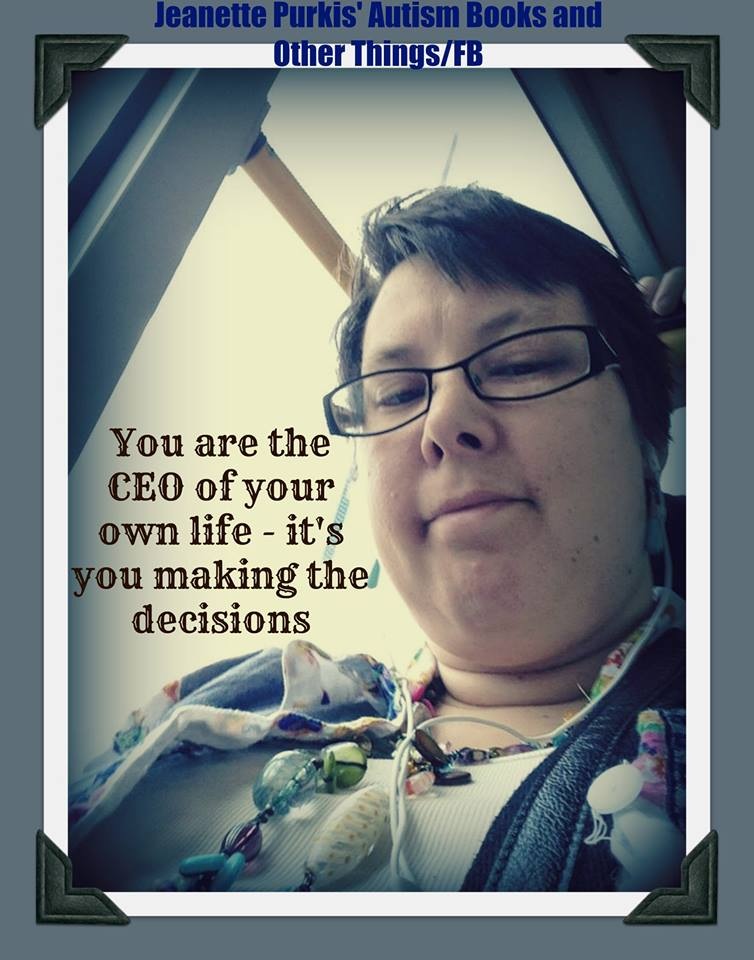
Independence is not something I am lacking in. I moved out of home at 17, got a job and went to uni. I had some serious difficulties in life and dragged myself out of them through determination, motivation and  faith. I now work full-time, own my own home and spend a lot of my free time assisting other people. I pride myself on being able to manage my own affairs. These are all good and laudable attributes but there is something I struggle with – I find it almost impossible to give up control and to ask for help.

When I was a child I was taught not to ask people to do things for me. It was rude and selfish and on the list of things to avoid. My understanding was that you only asked another human being for help or favours if you were about to die or were being robbed or something equally severe. I told a couple of teachers I was being bullied in desperation and their responses were quite unsatisfactory – apparently bullying was ‘character building’ and I would ‘look back fondly on your schooldays as the best days of your life.’ Evidently there was no help for me and I was on my own. I got on with doing everything without asking for assistance.

As a young adult I had some difficult experiences and ended up becoming quite dependent and institutionalised. I moved from not asking anyone for help to being extremely dependent and not being able to love independently and manage my own affairs. When I decided to change my life in the year 2000, independence was my aim. I wanted to be successful and accomplished and to not rely on mental health services, welfare payments or public housing, I achieved this and in 2008 I had a Masters degree,  a mortgage and a high-paid, responsible job. I moved cities and stopped seeing my psychiatrist and was delighted not to need welfare payments anymore and to instead paying taxes myself to support the poor.

This was all fine until I became extremely unwell with mental illness. It took me months to ask for any kind of help. I thought I could manage it myself. I was treating psychosis with cups or lap sang sou chong tea and Vitamin B tablets! Eventually I was encouraged to seek help by an anonymous counsellor on a support hotline I called not knowing what else to do. On the advice of the phone counsellor I called my mum and  somehow managed to explain that my life was broken, I was lost and needed help. I spent the next few years in and out of hospital, taking leave from work and relaying on income protection insurance through my superannuation fund to pay the bills. All the time was that spectre of institutionalisation and dependence which I desperately wanted to avoid. As soon as I thought I was feeling slightly better I would return to work, only to have to take time off again within a few weeks. I had a great rehabilitation case manager from the HR department at work. She was very supportive and respectful of me and my needs. She told me one time that I was amazing and  that most people would have asked to be pensioned off after such a  severe illness and so many extended periods of leave. This hadn’t even crossed my mind as my job was the beacon of success and ‘ordinariness’ that was motivating me to recover.

My health improved sufficiently foe me to return to wok full-time and within a few months I gave a talk for TEDx Canberra and had a book on employment published. I was a access story again and I saw myself as independent. I had learned to ask for help when things were life-tthreatening or extremely difficult but I still struggle with asking for help in everyday life. I worry that I will upset or offend my friends if I ask them for things.  Yesterday a friend asked me if she could help with my lounge-room curtains which are a bit frayed and sad. She then offered her and her husband’s assistance to do some other odd jobs around my house. I was very grateful as these jobs were on my list of things which I was unlike to ever be able to do myself and which I have resolved to just put up with. My friend’s offer brought home to me that I not only have difficulties asking people to help me but also that it doesn’t even occur to me to do so.

This all got to thinking about assistance and the fact that were are all interdependent with one another. I imagine I do things for other people which they appreciate so if they want to hep me it is not me begin rude or selfish, it is reciprocity.

Some thoughts about all these things:

  • If you need help, it is OK to ask for it. There are different avenues for asking for assistance, from your friends, partner or family to professionals such as accountants if you need your tax return looked at to psychologists if you have mental health concerns or medical specialists if you have health issues.
  • We are all interdependent. You cannot live your life without somebody else helping or supporting you and vice versa.
  • If a friend or family member offers help it is probably because they are willing to assist. It is OK to accept their offer, or not.
  • If someone offers help, even if you decline, express your appreciation.
  • The help that friends or family give you usually comes from a different place than the help that people who are paid to assist you (such as nurses in hospital, teachers, psychologists etc).   People who are paid to hep you are not generally your friends and they give similar assistance to other people too.
  • Independence does not mean never accessing assistance or asking for help. True independence is about living your life while accessing appropriate support.
  • You don’t know how your actions will affect others, You might just think you are being a friend while your friend finds your friendship comforting and supportive and it means the difference between them being able to cope with their life or not.  You may make a profound impact on others without even knowing it.
  • You may not realise that you need to or are able to access assistance. Try to be open to the option that there may be a person or service that can help you in various situations.
  • While asking for help be aware that assistance should be about empowering you to cope with issues rather than taking away your own power and agency and making you dependent.
IMG_1751


It’s your calling…er calling

A friend and respcted colleague asked me a question I have not been asked before today. He said ‘Jeanette, you have one shot at this. You are in the universe once. What do you think you should be doing with your one shot? I thought for a nanosecond and then replied ‘I’m doing it. My Autism advocacy is may calling. I love it. It is my passion.’ My friend said this was obvious when he heard me talk about advocacy. I get to do what I love which is a privilege.

I want to share with you my last day or so, doing my ‘calling.’ I spent yesterday evening and this morning in the regional Victorian town of Mildura. I was invited there by my colleagues who deliver  the Swinburne University Autism MOOC course. The event was a sort of launch of their programme in a non-online context (although the videos  created for the MOOC course – including my one of employment and the other on gender and Autism – are apparently still going to feature in the coursework.) This was my last speaking engagement of 2015. It was presentation #25 for 2015 for me – a busy year.

I’ll be honest – part of me didn’t want to go to MIldura. I spent last week helping my workplace celebrate International Day of Poeple with Disability. It involved a lot of meetings and emails and some public speaking. On Friday I introduced some videos (the excellent Spectrospective’ video produced in April this year by Amaze / Autism Victoria and some TED talks which included mine on resilience and Temple Grandin’s on different kinds of minds). Just before I went onstage in our  theatre at my workplace I was asked to give a brief presentation at the Happy Hour (in to hours’ time). I quickly dashed off some dot points and added one to acknowledge our CEO who let us know she would be attending. While public speaking and I are as friendly as close cousins and I am not intimidated by looking into a sea of expectant faces, I was concerned my lack of preparation would impact on the quality of my talk. Of course it went fine, but after that – and speaking to some staff at Australia Post HQ on Thursday –  I wasn’t all that excited about hopping on a plane and doing it again in a different location.

On Saturday morning I dropped the Mr Kitty person at the boarding place (‘cat prison’ according to my feline friend) and went out for coffee with my lovely friend Julie who gave me a lift. (I don’t drive, which is usually OK but for dropping off and picking up the furry boy I do need assistance by a friend with a vehicle). I felt tired. I didn’t feel like flying to a hot place and staying in another hotel. My life recently has seemed to be a procession of airports, hotels and conference venues. I don’t mind but I had just got to a point where I wanted to spend my weekend sleeping in and reading books and playing with the furry boy.

My weariness and ambivalence stuck with me until I boarded to plane from Melbourne to Mildura. I looked out the window and saw a beautiful patchworks of wheat fields and dams and  trees dotted about, all flat with no hill or mountain in sight. For some reason this got me excited. Then the album I was listening to on my phone stopped at the exact moment the plane got into the gate st Mildura airport – that kind of coincidence always makes me happy.

I was met at the airport by one of the local people. She was lovely. She told me all about the town with a sense of civic pride and fondness. I got to the hotel which was a splendid old building with three country pubs nearby and a clientele comprises almost completely of blokes in shorts and thongs (flip flop sandals for non-Australians). The best thing was the air conditioning – it was 41 degrees outside – dry, desert heat which feels like an oven. All of a sudden the magic returned. I was going to talk to people about Autism and change the world just that little bit.

The talk I gave today was about Autism and mental health – the topic of a new book due out next year penned by myself and Dr Jane Nugent and Dr Emma Goodall. Autism and mental health.  Improving clinical services to help them better understand the needs of Autistic clients – is very, very dear to my heart. I was a little anxious to give this presentation but I thought it was a great topic and I will probably be giving a similar talk several times after our books is released. The audience found my talk helpful – they bought most of my books. After lunch Chris Varney, Chief Enabling Officer and founder of the I CAN Network gave a great presentation based in his experience as an individual and the experience of the I CAN Network. It was a good mix – In a very simplistic sense, I sort of set up the problems in my talk and Chris provided solutions. The audience was not huge but they are engaged and interested. There is no feeling like speaking to a group of people about something you are passionate about. I found it hard to believe that I had had mixed feelings about giving my talk.

So when I was asked what my one aim, the thing I need to do is, I understood that I will probably be doing this advocacy stuff for a very long time. y calling has called and I have answered with an empathic ‘I’m all yours’.  I feel so honoured to get to live my calling.

12347872_10153778820411419_1127441914373568283_n

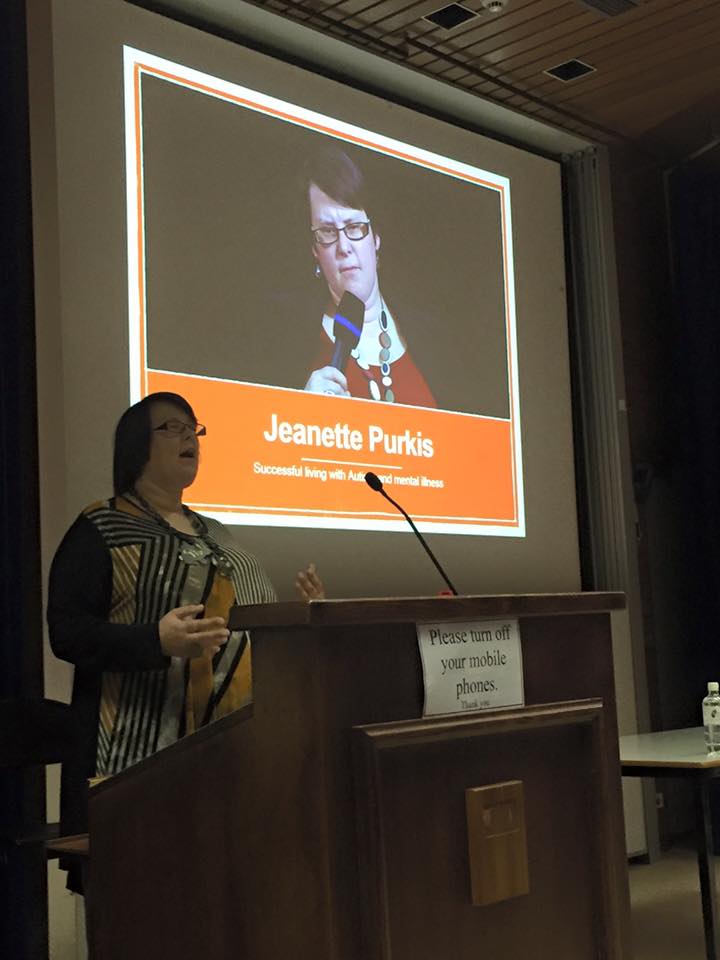
Me speaking about mental health and Autism in Mildura


Fulfilled lives – not one size fits all

I love when people challenge me and question my statements as it helps to broaden my horizons and build my understanding of life. An Autism parent advocate colleague posted this comment on an article I wrote about tips for parents from an Autistic persecutive. The point he was questioning was me saying that your Autistic children can achieve such goals was working, driving or raising children. Here is the comment:

As much as I respect my adult son’s abilities, I doubt that he will ever drive or raise children effectively. There is no place for him to study. He enjoys his own life and is pretty clear about his choices. I have met other autistic people like him.

This got me thinking about my message around achievement and empowerment. I am always Little Miss Positive and tell audiences that Autistic people can potentially do anything others do. I talk about achievement, resilience and independence. My position is based in my own history of great achievement out of terrible adversity and disadvantage. My default position tends to be ‘if I can do these things so can others.’

This raises the question of perspective and that rather fraught concept of ‘achievement’ or ‘success’. I am what you might call conventionally successful – I have a well-paid and respected profession, I have written a number of books, I own my own home, those sorts of things. For me, I live a fulfilled life, but my friend who wrote the comment has a son who is also fulfilled and happy without any of those conventional measures of success.

This makes me question how I present my message. I think this is one of the reasons parents in my audiences like what I have to say. Imagine you are a parent. You have a child and they are your entire world. As they grow older they come to the attention of educators and then health professionals and you suddenly join the ranks of Autism parents. The health workers and other parents have low (or no) expectations for your child. You feel really devastated and assume your child with never  be able to do all the stuff you value (playing football, raising kids, begin a real estate agent, or whatever). Based on the professionals’ words you think your child will be miserable and unfulfilled and disabled their entire life. You feel like you have to adduct your vision for your child. You go to a conference for parents of kids on the Autism spectrum and see this passionate Autistic woman called Jeanette take the stage and tell you about all the amazing things she has done. You think ‘If that woman who was extremely disadvantaged and disabled can be a public servant etc then my child can too.’

I suspect I may need to tweak the message or at least how I deliver it. My friend with the comment was right of course. Some Autistic children will not grow into home-owning, book-writing public servants. (Actually not too many non-Autistci kids will do these things either.) Some will not fall in love or have kids, they won’t drive and they won’t live independently. I need to reconsider how I present ‘successful’ or ‘fulfilled’. Fulfilled does not have specific criteria which apply to everyone. For one person fulfilled means playing Minecraft for another it means founding Facebook. Neither of these things is better or worse than the other. For parents, you and your child have not ‘failed’ if they don’t ever get a job or drive. I think the challenge here is not to impose low expectations but also not to impose expectations which don’t actually fit with the Auitstic person. If you judged my friend’s son’s happiness and achievement by his ability to work full-time or drive a car you would have it wrong. By all means empower and encourage and have the view that your child can do all the things you might value. However, just because potentially they can doesn’t always mean they will. It is often about gaining an understanding and respect for the wishes and ambitions of your child rather than those you may place on them. This is also true for parents of non-Autistic kids.

Of course this all takes us to that much-quoted adage that if you have met one Autistic person you have met one Autistic person. So to the lovely parents in my audiences, I am not saying your child has to do all the things I did to be fulfilled. What I am saying (I think) is to love and support your child whatever path they take and not to impose your own expectations and aspirations on them but instead to empower them to follow their own dreams.   JP meme jpeg


Finding a different kind of adult

I am forty-one years old. I work full-time in a professional job, I own my own home, I have a Masters degree, I am financially independent, I have written three published books. So why do you suppose that people often speak to me as if I am a little girl ? While I can’t claim to understand that I know what is gong through the minds of people who ask me if I ‘live at home with your mummy?’ or ask if I know how to order at a restaurant, I suspect it may have something to do with one of my attributes – the attribute of Autism.

I am far from the only Autistic person to experience this. I think we all get it to differing degrees. Sometimes it comes from a position of concern and care and at times from derision (like the triage nurse who had a go at me for reading Harry Potter which apparently was ‘for children’ when I was in the emergency room once in 2004. At the time Harry Potter was my passionate interest and one of the few things that gave me pleasure).

Autistic expression of identity can look different to its non-Auitstic counterpart. We are often interested in things non-Autistic people don’t care about and for some reason this seems to equate with us being seen as children. I like bright colours and sparkly things – I have visual processing issues which respond very badly to words on a screen but get excited by bright colours and sparkles. I wonder if this – and my open and honest presentation and easy laugh – maybe makes some people think I am less capable as an adult. I will say that they shouldn’t think that at all.

Autistic adults are so often seen as innocents, as children and sexless, neuter beings. If we are lucky this means only that we miss out on meeting potential partners and if we are unlucky it can translate into abuse or violence. I know probably hundreds of people on the spectrum well enough to know that we have all the sexualities and gender identities that non-Autistic people do. I have Autistic friends who are gay, bisexual, heterosexual, asexual. I have Autistic friends who identify as transgender, pansexual, sis gender and everything in between. Personally I identify as asexual but I have had sexual experiences in the past too.

I think the ‘children’ tag may come in part from our different communication styles which means that we as Autistic people are often open and honest and operate on one level whereas out non-Autistic friends have a more nuanced and multi-level communication style . Perhaps non-Autistic people are more like us as children (I don’t know, having  never been a non-Autistic child myself).  Perhaps this means that people see us as akin to children. I don’t know. I know it is very frustrating. I get it all the time. It also means that some people treat me like I’m an idiot who doesn’t know what’s going on. I imagine this must be even worse for Autistic people who do not speak as society does seem to attach a label of non-intelligent to non-speaking (which is often completely wrong. Many non-speaking people have exceptional intellect and sensitivity.)

I am never sure how to response to strangers who talk to me like I am a particularly unintelligent eight year-old. Sometimes I play up to it and then drop in a comment about some exceptional achievement I have had (because I am just a little bit evil!). I think this is another area which needs to be included in building Autism understanding, respect, acceptance and awareness. I say thins not only because it is frustrating for Autistic people to be treated this way and is very annoying but also because I think it may be robbing some of us of our potential. Imagine that an Autistic somebody goes to  a job interview and the selection panel misinterpret their Autistic mannerisms as them begin immature or incompetent to do the job? Even if that person was the best candidate for the position they would probably not get it. This misconception of Autistic innocents and children may be robbing us of a voice in society. It may contribute to us being discriminated against as we are seen as not begin capable of managing our own destiny.

There are so many domains of life which people do -Autistic and non-Autistic alike. We ARE capable and we need to change that perception around innocence.  I don’t know exactly what to do to achieve that change but I have added it to ‘the list’ of things I will try to have some impact on, with my advocate and passionate colleagues. And I will be wearing my rainbow handbag and sparkly shoes and big jewellery. That does not make me a child, it makes me my happiest and favourite manifestation of Jeanette. I have not been a child for many years and I am competent and confident as a different kind of adult.

IMG_2619-2

Shiny shoes!!


The best day of good days

Today I stood up on stage in front of 1300 people and told them a load of things from my life, all 41 years of misery and triumph, mistakes and masterpieces, loss and victory. I told them how I had been a teenage socialist, a criminal and drug addict, a homeless person with schizophrenia and a career public servant, author, autism advocate and artist. They laughed at (mostly) the right bits, they clapped – sometimes unexpectedly and I made both my mum and my dad cry (in a good way). After I had bared my soul to this multitude, they all got up and gave me a standing ovation. It was really quite amazing. I was speaking at Irabina Autism Services’ conference alongside Temple Grandin and Tim Sharp.

Add to the mix my most significant role model  – both as an advocate and as a human, Professor Temple Grandin – plus a dinner with said role model, my amazing support person, coauthor and friend, Emma Goodall, my parents and amazing artist Tim Sharp and his mum, and it really was the most perfect of days.  I can’t remember a better day ever, in 41 years of life. That is quite something to say about one day but it is well-deserved.

I was going to write about the difficulties i have in giving talks – the self-doubt, anxiety and fear. I did have some interesting manifestations of anxiety before giving my talk today, the most amusing of which was thinking that while my spoken words made sense to me that every one else was hearing gibberish and I would stand up on stage and talk like the Swedish chef in the Muppets!! I also spent a good three months worrying that I would get unwell with my mental illness or that Temple Grandin would be unable to attend and the event would be cancelled. The anxiety was interesting because I felt like I was in a plane coming in to land in bad turbulence. It was all chaos and anxiety just before landing; with the wings going up and down and the passengers thinking they were going to die but it levels out right before hitting the runway and ends up at the terminal with everyone happy and safe. I realised three days ago that it was a great honour and opportunity to present at the conference and not a punishment and that I have given a load of talks before and they have all been good. By the time I got on stage I had banished most of the nerves

In fact m talk was not just good. I think it may have been the best presentation I have ever given. About halfway through I realised that I wasn’t speaking to 1200 people, but instead that I was speaking to one entity – the audience. I was not lecturing, we were conversing. I looked out and 1200 people – my biggest live audience ever – were responding to me and giving me energy and encouragement. That is a lovely experience for any public speaker.

It was such an amazing day and I can’t talk about everything but my highlights were:

  • loads of people wanting photos with me mad me feel like a celebrity but it also seemed a little absurd and made me smile
  • My parents sitting in the front row and being applauded by everyone,. The fact that my parents were there was fantastic and they had a great time to (plus my dad tok a bunch of photos which I’mm looking forward to looking at)
  • Parents –  mostly mums – telling me how much my talk meant to them as they have children in similar situations to me as a young person
  • Listening to Temple and Tim’s very different but somehow similar presentations
  • Getting an extra 200 Facebook friends in one day!
  • Having my friend and support person, Emma, making my success possible through her great leadership and support
  • Meeting Temple Grandin
  • Having lunch AND dinner with Temple Grandin
  • Temple not only looking at my employment book in her spare hour between the event and diner but also telling me it is full of good tips
  • Meeting Tim Sharp and getting a drawing from Tim which he made for me
  • Feeling like I made a difference
  • Selling over 100 books plus pre-orders
  • Having a university friend from 1995 attend and discovering he is also on the spectrum and has two kids on the spectrum
  • Meeting hundreds of amazing people
  • Knowing that I absolutely killed it with my presentation (in a good way).

.To say the even was a career highlight is an understatement, It was amazing,

Thank you for sharing my happiness in doing this great and wonderful thing,I’m not sure if it will open any doors to anything but I don’t really care. It was the best thing I have ever done and that doesn’t really need any further actions.

IMG_2592-2

The speakers


What to expect when nobody expects anything – low expectations and Autism

OK, this does have a purpose other than just bragging but this is what I do with my life at the moment:

  • I work full time for th Australian Public service,
  • I have written three published books and contributed to four more
  • I have a weekly online radio program
  • I have spoken at literally hundreds of events, including TEDx Canberra and on this coming Saturday I shall be taking to the stage wit Professor Temple Grandin and artist Tim Sharp
  • I am on the Board of an Autism organisation
  •  I write articles for all sorts of publications and websites, including The Mighty and Naturally Autistic
  • I facilitate a women’s group
  • I have a Masters degree
  • I have a popular Facebook page where my individual posts frequently reach 30,000 people or more
  • I own my own home – the wonderful Whimsy Manor
  • I probably do other things to  but have forgotten them due to being so busy!

I am quite accomplished to put it mildly, but the amazing thing is not that I achieved all these things but more that I believed myself capable to do so.

I have Asperger syndrome and atypical schizophrenia. If those diagnostic labels  were all you knew about me, I wonder what you would think me capable of? Many people might think I would be unable to work, let alone all the other things. In fact this was the case in my past. I was unable to work or participate in society in any meaningful way. I spent some years where everyone had low expectations of me.

I didn’t get either of my diagnoses until I was 20. I didn’t go to school with a diagnosis and in many ways this was horrible and damaging. I had no assistance and was easy prey for every bully and bigot in the school. However I escaped one thing which plagues a lot of people on the spectrum – the curse of the low expectation.

Low expectations come from every quarter in society for many children and adults on the Autism spectrum as well as those with other diagnoses. Children learn more about their limitations than their strengths a lot of the time. The tragic part of this is that it is rarely committed in malice. Rather it often happens from a place of care. Parents may shield their child from all adversity and trouble and in turn end up with an adult who has little pride in what they can do and is anxious about doing anything difficult.

I do not usually place the blame with low expectations and their consequences at the feet of parents though. I think the parents are often responding to pervasive views in society which are almost unnoticed due to their prevalence. I hear it all the time. A friend told me about a kid at her child’s school who recently got an autism diagnosis and people knowing that ‘there is something wrong with him.’ Why do we equate difference and diversity with ‘wrong’? Then there was the caring if rather misguided volunteer at an Autism conference asking me ‘do you live with your mummy?’ (I am 41 and live in a house I am paying off which I bought seven years ago and am 16 years ahead with the mortgage. My ‘mummy’ can come and stay of she likes.) The people who tell me ‘surely you’re not on the Autism spectrum. You could pass for ‘normal’ and ‘your Autism can’t be very severe for you to do all the things you do’.

Thankfully I never take on any limiting or doubtful comments about my capacity and neither should kids on the spectrum and their parents. Here are some quick thoughts about low expectations, with no particular order (I would usually do an order but I just got back from Board meeting and I am about to give the biggest talk in my career in five days’ time so you will understand if I am a little less effective then usual at communicating my message).

  • Being given low expectations of their capability from a young age can set someone up for a life of not reaching the potential they might oterhwise
  • Low expectations are not just related to people on the spectrum. Many other diversity groups suffer from this too. Have you ever spoken to someone in a call centre who has a foreign accent and assumed they would be less competent than a native English speaker? Have you ever seen a woman in a non-traditional role and assumed she would be less competent in her job (or a man in a traditionally female role for that matter)? We need to challenge our doubts and prejudices and help people build their confidence regardless of what their particular identity is
  • Low expectations actually end up being imprinted on someone’s self-perception so they actually do often become a self-fulfilling prophecy. This can last an entire lifetime
  • If you are subjected to low expectations try to see them as a challenge to prove the person who has doubted you wrong
  • There is nothing to say that a person with diagnostic labels can’t achieve anything they put their mind to – if I did others certainly can.
  • A lot of low expectations come from people’s perception of ‘normal’. If they see someone stimming or flapping or meet someone who uses non-speech communication they tend to assume the person will be less competent. I have been known to stim and flap and I think most people would think that I am a high achiever. It is more about teaching people that the narrow definition of ‘normal’ doesn’t really say much about what people can achieve with their life
  • If you have low expectations of yourself you might find working to overcome them means you have a more fulfilled and enjoyable  life. Start by working on your self-talk and challenging every time you put yourself down. Also surround yourself with people who value and respect you, if you can. Find an role model you identify with.
  • Low expectations are completely unhelpful. By challenging them – either as the ‘giver’ or the ‘receiver’  – you are doing a very good thing.

11059875_840569759357746_7298864586145982601_o

Different, but definitely not less

In the lead up to my first ever presentation with professor Temple Grandin I chose one of my favourite Temple Grandin quotes to base this blog post on – ‘different, not less.’ This quote has resonated with me since the first time I saw it. The concept of being ‘different’ is close to many Autistic people’s hearts. I think there is a point in most of our lives where we discover that there is something called ‘normal’ and then the world we inhabit – ‘different.’ For me that moment came at age 11 when I started high school and for the first time in my life was bullied and abused and very quickly worked out that there were different groups of kids and I didn’t belong to any of them. For me this notion of ‘different’ and, more to the point, wanting not to be ‘different’, impacted hugely on my life for another 15 years. I hated my different self. If I had known how to not be different I would have jumped at the chance. Tragically I was not encouraged to be myself and to love who I am. Rather I was constantly told that my ‘different’ was weird and wrong. When I got a diagnosis of Asperger syndrome at the age of 20, I thought it confirmed my ‘different’ and I wanted nothing to do with it. The idea that there was a diagnostic label which confirmed I would never join that ‘normal’ group was like a curse. As I grew older and wiser I accepted the diagnosis and went about the business of accepting myself. Flash forward to now and I am an out loud and proud Autistic woman with a co-morbid diagnosis of atypical schizophrenia (and yes, that one took even more years of denial and angst to reach a point of acceptance).

So it worked out OK for me but what about others on the spectrum? Broader society still has this notion that there is ‘normal’ and then there is ‘different’. Sadly instead of using diagnostic labels to hep people understand themselves and access appropriate services, they often just turn that person into an ‘other’ and people end up feeling bad about themselves. Bullies can use the diagnosis as a confirmation of difference and therefore inferiority (much as I felt about my own Autism diagnosis in 1994).

‘Different’ means that there are therapies and treatments designed to make Autistic kids more ‘normal” Autistic behaviours such as stimming, flapping, different styles of play or not making eye contact as seen as aberrant and ‘weird.’ In my mind this is a very unhelpful attitude and such behaviours are natural and the only issue with them is that non-Autistic people find them confronting. I was talking to a former teacher about Autistic kids. She felt the need to tell me she had taught ‘heaps of them’ and was a really good teacher. She went on to describe how she would put her finger under an eleven year-old Autistic boy’s chin and make him look at her. I resisted the urge to do this to her and see how she liked it but I was horrified. Making eye contact isn’t even a consistent need for all non-Autistic humans. For example some Indigenous Australian cultures find eye contact invasive and it is considered rude and aggressive to make eye contact. So this former teacher was basically physically manhandling a student  – which I imagine he found very unpleasant at best – in order to satisfy her need for him to look at her. And not only did she think this was appropriate behaviour but she must have been pretty confident that it was a good thing because she told it to an Autism self-advocate!

As Autistic people we are given all sorts of messaging which says our ‘different’ take on life is wrong, or weird or deficient. We are given low expectations on our capacity from all quarters, including for some people their own families. Many of us internalise these low expectations and prejudice and struggle to value ourselves. Many people will not tell work or university colleagues about their diagnosis, (sometimes correctly) assuming that they will be discriminated against or ridiculed. I hid my diagnosis for many years, In fact I was less ashamed that I had been in prison that I was that I was on the spectrum.

Thankfully I have moved on to a better place. I love my ‘different.’ It is a great part of who I am. I sometimes find myself doing something which I realise is a bit interesting from others’ reactions and I don’t get embarrassed or care particularly. We need to build the confidence of young people and kids on the spectrum so that if others give them a hard time about their ‘different’ they will brush it off, knowing that they are amazing. I am different, not less. We are all different, not less. And what is this silly ‘norm’ that we are expected to conform to?

(and for fun, some of my favourite quirky things I do):

  • Name every computer I ever owned (current one is Alastair the MacBook Air)
  • Talk to myself but say ‘Mr Kitty’ at the end of each statement. This works whether Mr Kitty is present or not, e.g. at work
  • Eat the same meal for years at a time (currently veggie fried rice since 2013, with a short break for quesadillas earlier this years)
  • Have a spreadsheet for EVERYTHING!!
  • Boss my psychiatrists around
  • Always do an activity differently from how it is ‘supposed’ to be done
  • Listen to music whenever I am in the open air, including walking to the shops which are five minutes away
  • Name my cats after historic painters *’Mr Hieronymous Bosch Kitty Purkis II’ or Mr Kitty for short)  or philosophers (I had a Giles Delueze at one point)
  • Give 100 per cent in everything I do. half-hearted is not in my vocabulary

11043316_802276853187037_6636589104752091030_o

Pandora’s profile box – my struggles with recognition (from jealousy to ‘be less famous!!’)

Ok so this is probably the biggest first world problem in existence but it is something I have been wanting to write for a while and haven’t quite managed to (mostly because it is a big first world problem). Tonight I was reading posts on my Facebook page and saw not one but two posts from the ACT Government advertising an award ceremony I am the guest speaker at (via video link because I will be in Melbourne speaking with Temple Grandin that week!) I hand’t really expected much publicity about the awards speech and was taken unexpectedly. I was almost crying to Mr Kitty saying ‘I don;’ want to be famous, Mr Kitty. How do I stop it?’ Mr Kitty gave me a smooch and sidled off to finish his dinner,

Flash back ten years to a younger, thinner me who is waiting for her first book to be released. She is excited. Her mentor is Autism world legend Donna Williams so she is expecting her first book to catapult her into the limelight – much as her mentor’s first book, “Nobody Nowhere’ did some years previously. I did have a little media attention from various quarters when my autobiography. Finding a Different Kind of Normal, joined the cannon of literature by Autism self-advocates. I was almost obsessed with fame and recognition and it never seemed to eventuate. I am embarrassed to say this but I found myself being intimidated and jealous at the success of others. I would look at the book of the month on my publisher’s website and seethe, thinking ‘why isn’t my book there??’ Horrible times. Hateful, stressy, angry times. I made myself a smaller person by my jealousy. I knew if was not good form to behave this way and would try to talk myself out of my envy but it was almost impossible,

This went on until 2010. I would give a coupe of talks each year and wish fervently to be asked to do more. Something changed in  2010 though, something which was awful but actually had a lot of positives within it, even though I didn’t see it at the time.what happened was that I got really psychotic and spent the next two and a half years in and out of the psych ward, wondering if I would be able to keep my job and whether I would lose my house. I certainly didn’t spend much time thinking about fame or recognition or book contracts. I got to a point where I genuinely stopped caring about the renown of Autism world colleagues and started to understand that they were doing good things in the world and should be appreciated and respected for that. There was not really a limited amount of opportunities or awards. And I also discovered that one doesn’t have to do everything at once. Hopefully I have a life which will last more than six months so I don’t need to cram everything in at the same time.

This moment of acceptance seemed to somehow trigger off what the last two years has been about in my life – having the opportunity to speak to a wide audience about my thoughts around Autism and mental health. I got that recognition I so craved for…and I find it really tricky to manage. I am torn between feeling encouraged by all the niece feedback I get and feeling horrified to see my face in many corners of the internet. I have a  saying of ‘be less famous!!’ when I come across something by me online somewhere. I am only half-joking. There is also that saying ‘be careful what you wish for’ and I am acutely aware of this. To me, a public profile can have benefits in that it allows someone to get a good message across and to connect with people and to challenge deficits-based stereotypes of people on the spectrum or those with mental illness. But there’s some negatives in there too, like people treating you like something different to your perception (e.g. ‘should I call you Miss Purkis?’ or people who dislike you aligning themselves with you in case it might be useful at some point. I often feel that I am unable to be vulnerable in case anyone feels let down by this (and OK, I know, this is rather a vulnerable blog post…) While about 99.99 per cent of people I come across are lovely and friendly and just good people, I do occasionally happen upon someone who is consumed with jealousy  – like I used to be. Some fo these people are incredibly rude for no reason other than they saw me somewhere and think I’m a big snob. I’m not a big snob and I do have feelings so this is like a slap in the face and makes me sad. But it also reminds me of how I used to feel in the past so I try to move on and hope that person has the chance to get some recognition themselves if they want it.

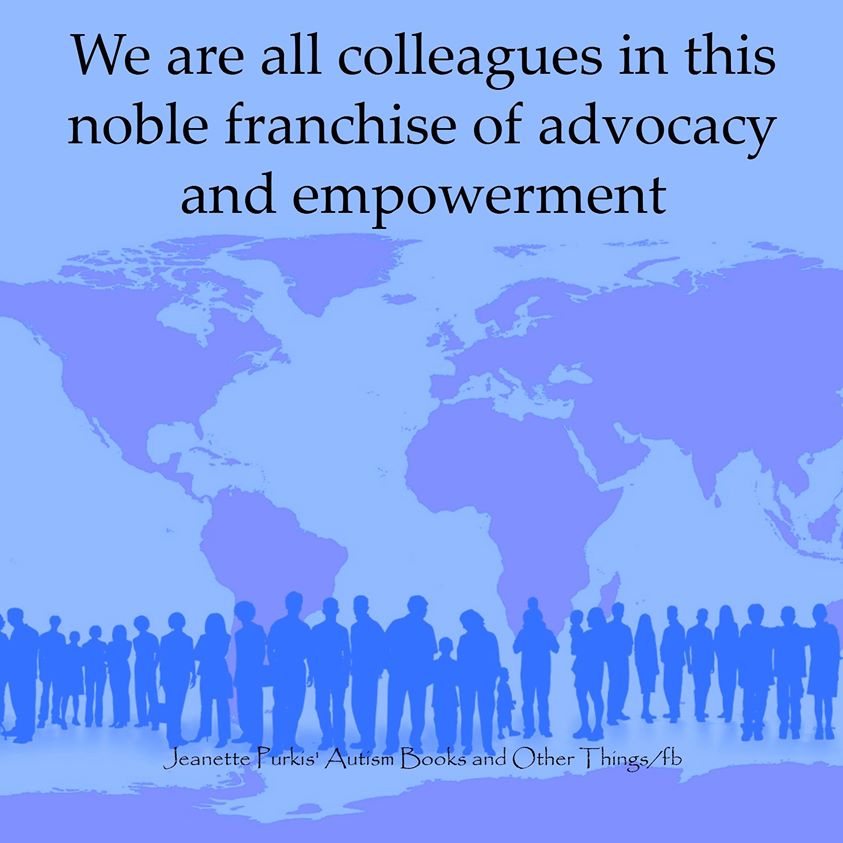
So yes, I’m a bg loud extrovert. I will take leadership when I feel the need and I am quite happy to say what is on my mind. I like the idea that lots of people get to listen to my message but I also want people to listen to other people’s good messages too. For that reason I always try to support others who are starting out on their journey – be that in public speaking or in studying or working. I have a meme which says ‘we are all colleagues in this noble franchise of advocacy and empowerment’ and I believe that is true. I see everyone doing similar work to me as a colleague. We are a team working for a similar outcome, not rivals or competitors.

Noble franchise meme

Why it’s OK to love differently

When I was diagnosed with Asperger syndrome in 1994 there was a prevailing attitude that people on the Autism spectrum were incapable or love, closeness and empathy. Apparently we only formed attachments to objects and characters in science fiction. The funny thing was that this didn’t immediately make me angry, which it certainly does when people say it to me now. As a twenty year old who had already experienced all manner of abuse and trauma, I didn’t really feel much inclined to love others or form close attachments. When I looked at my childhood there hand’t been a lot of overt outpourings of love and closeness to humans either. I struggled to grieve as a child, going through the motions of behaving in the way that I thought was expected of me to avoid people thinking I was a serial killer in the making.

When I look back I think the issue around emotional attachement  was less about my Autism and more about my alexithymia. Alexithymia is a condition which many Autistic people – and others – experience whereby we can’t access or feel much in the way of emotion. When my Grandpa died I certainly missed him and wished he was still around and there was definitely grief going on but I struggled to access feelings around it. I didn’t understand this particular element of what made me ‘me’ and instead was terrified that I was incapable of emotion or attachment. When I joined the socialist party as a teenager I remember trying to make myself feel anger at some abuse of human rights or war atrocities. My socialist comrades were great at being angry on behalf of some oppressed minority but my anger was far more cerebral than visceral. I couldn’t hate some world leader with a deep passion, even if I found their actions morally or intellectually abhorrent. I thought I must have my emotion switch permanently set to ‘off’ or at least ‘very low.’ When I got older I developed a mental illness. This resulted in all sorts of emotions but I was not conscious of them on any level. I know I felt ‘good’, ‘bad’, ‘nothing’ or ‘in crisis.’ These are still my basic emotional setting some twenty years later and I still struggle to identify and access emotions.

Now people have a much better understanding of how we experience emotions and know that Autistic people are capable of love, attachment and empathy but there are still stereotypes about our apparent lack of ‘normal human emotions’ floating around. So here’s me refuting this negative business which sees Autistic people as unfeeling robots…

  • Having difficulty accessing and identifying emotions is not the same as being incapable of love or empathy. Autistic people love people deeply but sometimes it looks a little different.
  • When my eldest niece was born, I held her at one day old and was overwhelmed by love and closeness and a wish to protect her from any harm. Just because I don’t often have access to that feeling does not mean I am incapable of it.
  • Love and attachment can be based in actions and thinking, not just feeling. I spend at least 30 hours each week doing largely unpaid work to promote understanding, acceptance and respect around Autism and mental illness. I never meet most of the people who are touched by my work, it does not have much material benefit to me and it can be exhausting, frustrating and infuriating. The main reason I do this work is the degree to which I care about other people and hope they don’t experience some of the negative things I did in my youth.
  • Autistic people have long-term intimate relationships and love their partner just like anyone else does. I have many friends on the spectrum who are in long-term committed relationships or married. My friend and fellow advocate Anita Lesko just married her fiancé Abraham Nielsen recently. Not only did the couple love one another enough to take vows of faithfulness and commitment, they loved their community enough to hold what was described as the world’s first all Autism wedding. All the guests and  the celebrant were on the spectrum. Some of the guests had never attended a wedding before (as an aside, a lot of Autistic people do not get invited to weddings. I am 41 and I have only been to three weddings in my life. I have a lovely friend who is on the spectrum too and she is getting married in February and I have the privilege of attending her wedding and seeing her and her soon-to-be husband exchange vows).
  • Autistic people are not necessarily ‘cold’ parents. Our community really suffers form these sorts of stereotypes. All the parents I know who are on the spectrum are fiercely protective and loving of their children. My mum is on the spectrum and her love for me and my brother is so evident I can almost see it emanating from her when I visit her.
  • I have a number of attachments in my life which bring me happiness. When I see certain people I am delighted just to see them. Some people email me and I am excited just to see their name pop up in my inbox. I don’t think that is an example of someone who has no attachment to humans.
  • Empathy for people on the spectrum can look a little different but it is still empathy. In my case, I have two sorts of empathy. The first is intellectual empathy. This means that I will find out a person’s likes, needs and preferences and ensure that I provide them with they might need. When they tell me they are sad, I listen and ask what they need. This is not an intuitive, feeling empathy but it is empathy nonetheless (at least in my humble opinion). The other sort of empathy I experience is a little more problematic, at least for me. This is what psychologists term ‘hyper-empathy’. This means that I will pick up on other people’s feelings without them even speaking. I feel their sadness or joy as much as if I were experiencing it myself. Of course this is something of a liability in psychiatric hospitals – where I occasionally find myself. Not only am I experiencing my own crises and misery but everyone else’s as well!
  • Stereotypes are rarely helpful. All Autistic people  – like the rest of the people – are individuals. What is true for me will not be try for someone else.

If you need me, I will be cuddling Mr Kitty, who I love very much!

DSC_6809

This is my Dad. I love my Dad very much


What is disability?

Disability – what’s in scope and what does it mean?

Apparently Autism is a disability, My schizophrenia is a slightly more complex label because apparently (and who decides these things?) a mental illness is a health condition which can be disabling but isn’t of necessity a disability. This makes me think that most of the time my illness is not disabling because I can go to work and stand in front of 1000 people and tell coherent stories illustrating messages in a meaningful way. However, when I am unable to leave the house, think I am dead and in purgatory, being punished by God for challenging him with my arrogance and the television is talking to me telling me to leave my job…well, you get the picture. When this stuff is happening I am disabled by my schizophrenia.

Gee I’m confused already and I’m the person writing this!

Many people – including me – struggle with the ‘disability’ label. Autism advocate, speaker, author and one of my role models Wenn Lawson sees Autism as a ‘diffability’ or different ability. This makes sense to me as the disability tag comes with some difficult connotations. Disability is often associated with a deficit or lack of ability to do something. This in turn often leads to low expectations of the person with the disability label. These low expectations come from all quarters – family, society, workplace, school, and the person with the label themselves. Low expectations often lead to low performance, dependence, lack of confidence, low self-worth. A person who has been seen as having a disability since childhood often grows up knowing more about what they can’t do than what they can.

Thoughts on disclosure

If a life of being told what you can’t do and having people doubt your competence is what having a disability leads to it’s no wonder that many people choose not to disclose to others that they have a diagnostic label. People not disclosing their diagnosis has a few effects. One of them is to compound a person’s self-stigma and confirm that they should not talk about the diagnosis lest people discriminate (and often people do discriminate and this can drive non-disclosure in the future). When a significant number of people do not disclose their diagnosis it can serve to make people with health conditions less visible in society. As an ‘out’ person with schizophrenia I am all too aware of this. I have met many other people with psychotic illness during my career who have come up to me and quietly said ‘I have schizophrenia. Please don’t tell anyone.’. Many pf these people are highly competent and excel in their chosen profession but I am the only person in the workplace who knows that they have a mental illness because, as a mental health advocate and ‘out’ woman with a mental illness, I am the only person they have apparently felt they could tell.

Disclosure is a really tricky concept. Many people do not disclose their health condition to their workplace because they (often rightly) assume they will be disadvantaged in recruitment processes or in career advancement and promotion.  Disclosure is an person’s own decision and is for them to make through consideration and thought. It saddens me that there is still such a prevalence of people not disclosing their health condition in the workplace due to concerns around discrimination or bias because in an ideal world, people would not be so terrified to talk about their health condition in a work context. In fact, in many ways, people who are able to disclose to their employer benefit because they can take advantage of things like workplace accommodations and adjustments. Also, for a person with a mental health issue, it is less stressful to be unwell and ask for time off if your boss knows you have an illess and how it impacts on you.

I will relate a little story, because that’s what I do. When I was 35, I had been working in my professional job in the Australian Public Service for just over three years. I got very unwell with psychosis and needed to spend a lot of time on leave and in hospital over the next few years. I had not disclosed the specifics of my illness to my manager but she did know I had an illness. I decided the best course of action would be to tell her what I was experiencing in more detail. My disclosure meant that nobody was assuming my extended time off work was for any reason other than my illness. My manager put me in touch with the human resources area and I got a rehabilitation case manager who was wonderful. The case manager helped me to access insurance I was entitled to so I didn’t miss mortgage payments and kept my little home. Being me, I used to visit my colleagues at my office every time I got a leave from the hospital because I didn’t want to get disengaged from my work. Two weeks after I returned to work from my most recent hospital stay I was given an award from my CEO because of my work in the disability network at my workplace. Soon after that I was back working full-time and (so far) my mental health has been manageable since then. Now my example of working together with managers and colleagues to maintain my good mental health is in my little grab bag of stories to illustrate living well with mental illness. I am very fortunate that I have a lot of self-confidence and value myself and so was able to disclose to my workplace.

Thoughts

  • You are responsible for how you approach, view and describe your disability, health condition, diffability, difference etc
  • Popular perception of diagnostic labels is often unhelpful and inaccurate
  • There is discrimination and bigotry all over the place. Plan for how to address it
  • Low expectations and deficits-thinking is not an accurate reflection of your capacities, but if you let it, it can become a self-fulfilling prophecy
  • Reflect on your skills and accomplishments frequently
  • Everyone has human rights. There are some rights specifically related to disability and health conditions
  • Disclosure is your own choice and decision. Consider what the pros and cons are for each situation in which you might have to consider disclosure (job interviews, starting relationships etc)
  • You have peers in the broader disability community. It can be really helpful to connect with them. You might find people with a different diagnostic label have a lot in common with you
  • For all the deficits and low expectations there are many  examples of people succeeding with a diagnosis. It can help to find a few role models. (Some of mine are Professor Temple Grandin, Dr Wenn Lawson, Glenys Purkis).

IMG_0699