A parent’s guide to autistic pride

A good friend who is a non-autistic parent of autistic kids asked autistic people to write out some thoughts for parents in relation to Autistic Pride Day on 18 June. I thought this was a good thing to do. My responses to her questions have been adapted into this post. As an autistic advocate of over 13 years’ experience I have seen a lot of changes in the autism world. When I started out in 2005 a lot of parents were very heavily focussed on the negatives around autism and would express – often in front of their kids – about what a burden it was to have an autistic child. Thankfully this has become a much rarer occurrence but there are still some misgivings which can occur between autistic advocates and non-autistic parents. I think connecting with parents – and particularly non-autistic ones – is really important. The biggest influence on a child’s life more often than not is their parent/s. Autistic pride is a really important topic for all families with one or more autistic members and probably more broadly in society, so I thought I would write this post. I hope you find it helpful. 

Autistic pride is premised on the notion that autistic people are valuable, worthy and an important part of human society as they are as autistic people. This does not mean they will not experience difficulties with some areas of life or that they don’t need support but it does mean recognising and fostering their strengths, talents and interests and supporting them to like and value themselves.  

Despite there being a lot more awareness and understanding of autism in recent years, we are still discriminated against. This is demonstrated in a number of settings from the still appallingly high rates of bullying of autistic kids in schools to the very low employment participation rates and low educational attainment statistics.

Autistic pride is a great way to counter this. If a person is genuinely proud of who they are and sees their autism in a positive light, as part of their character and personality, it helps them to navigate the world better. This is relevant for all autistic people – those who use verbal speech and those that don’t, those with all cognitive abilities and accomplishments and those with any additional ‘labels’ as well as autism. It is a quality that parents can play a huge part in fostering and supporting.

Pride feeds into a bunch of very useful attributes like self-esteem, self-confidence, resilience and independence. Even better, it allows us to value ourselves in the face of a world that often does not respect or value us and to educate others and advocate for other autistic people too. Someone who is filled with a sense of pride and self-respect is more likely to navigate life well, be fulfilled in life and achieve their potential. Without that sense of pride and given all the barriers stacked against us, it can be very hard to be who we want and need to be. Pride is great at helping to level the playing field for autistic people. It is one of those qualities which is pretty much always a good thing. The example that a person who is proud of who they are sets for others is fantastic and it also demonstrates a model of viewing autism through the lens of pride. This will almost certainty impact on neurotypical people and change their understanding of autism for the better.

What positive, proactive things can parents and other adults in an autistic young person’s life do to help foster that sense of pride?

There are a bunch of messages and actions non-autistic parents, and other adults can do to promote and foster a sense of pride in autistic kids and young people. These include:

  • Understanding that autism is a different wiring of the brain and not due to a deficient or ‘broken’ brain. 
  • Understanding that autistic communication is as valuable and effective as non-autistic communication – just put a roomful of autistic people together and take notice of how they don’t have the kind of miscommunications as they might when communicating with non-autistic people. Viewing communication this way and having a sense of needing to learn to ‘speak autistic’ is a key part of understanding autistic young people and fostering a sense of pride.
  • Reading and viewing work by other autistic people – there are advocates who are children as well as adults and they often have some very useful strategies and understanding too. 
  • Make sure your child has access to autistic people as possible friends and also adult role models and mentors where appropriate. Adult autistics can be great translators and interpreters for kids and kids interacting with autistic adult role models is a very powerful way to build their self esteem and sense of pride.
  • Don’t punish a child for ‘autistic’ activities like stimming. And don’t fixate on or insist on eye contact, or on things perceived as ‘poor social skills’ that are just a bit different (e.g. parallel play at later ages than that at which after neurotypical kids might stop doing it). 
  • Encourage kids. Take an interest in their interests. Challenge and stretch them within their capacity so they will be proud of themselves for overcoming challenges. 

Thoughts on some ‘therapies’ to avoid

  • Parents of autistic kids, especially newly-diagnosed kids, want answers and want to help their child in whatever way they can. This is of course completely understandable but it is important to be aware there are lots of charlatans peddling pseudoscience ‘cures’ and ‘treatment’. Often these view  autism as an ‘epidemic’ or something that a person can recover from. If any individual or company talks about ‘cures’ and ‘recovery’ it is a good idea to avoid these at all cost. They won’t help your child and they will probably do more harm than good.
  • At the same time, beware of ‘evidence based’ therapies that are centred around compliance. This includes things like Applied Behaviour Analysis (ABA).
  • It is very rare indeed for a parent to intentionally do something harmful to their child. Unfortunately some ‘therapies’ which are marketed as being helpful and enabling your child to get along better in the non-autistic world but are in fact focussed on conditioning your child to act ‘less autistic’ (including ABA). This alone can have a huge negative impact on how your child views themselves.
  • This sort of ‘therapy’ does not support autistic children to develop into happy, fulfilled autistic adults. Instead it works to forcibly make a child seem less autistic. We don’t need to make autistic children try to look less autistic! We need to support them to be themselves and if anyone has an issue with their stimming – or whatever – well that person needs to be educated. There are a lot of documented cases of trauma in autistic adults who went through ABA as kids. I am certain their parents did not intentionally subject them to this knowing it would cause trauma. It would most likely have been promoted to those parents as a therapy to make their child somehow ‘better.’ Sadly this kind of thing rewards kids for doing often very stressful and unpleasant things like eye contact. It can also remove some of the child’s effective coping mechanisms. For example stimming is used by many autistic kids as a means to self regulate and address stress. You can imagine the impact that removing that one strategy  might have on a child.
  • These kinds of ‘therapies’ do not help kids to develop pride and value in themselves. In fact they could be seen as representing the enemy or antithesis of autistic pride.

I speak with parents every day and have given countless presentations to parent groups but I am n to a parent myself and my perspective in this piece is that of an autistic adult who has only relatively recently developed a sense of pride in who I am as an autistic person. If I had that sense of self-worth and pride as a kid going through all the horrors I did, I know it would have made a huge difference. Pride is a gift you can support your child to attain. 

Thank you 🙂

11393415_944223065627817_1751216756096907277_o


Online groups – unpacking some of the difficulties

Lately I have had a few messages from autistic people who want to get involved in advocacy but are afraid to. They perceive a lot of the online groups as being unwelcoming and fear they will be attacked or unfriended for expressing an opinion different to that of the group. This is not a good thing and something I felt I should have a think about. Some members of our community apparently excluding other members of our community doesn’t sound like a good thing at all. A little consideration made me realise that this is a very complex issue indeed. In this post I’m going to have a go at unpacking some of the issues and suggesting a few things which might help.

Debate and discussion: friend or foe?

Opinions ands approaches differ between people. In principle this is a good thing and robust, respectful discussion should be encouraged. Some people really enjoy a good online debate and find it helps them to refine their own thinking and understand others’ perspectives. I am one of these people. If we have a respectful discussion I can learn some really useful things and different perspectives but I won’t learn anywhere near as much from just getting affirmation and praise. However, when I was younger I was terrified of anything which might be described as a disagreement or conflict and took it very personally. Everyone is at a different point on their own journey and has different views. So where a robust discussion is enjoyable for someone who enjoys debate, someone who is anxious around disagreement will probably find robust discussions very challenging and feel attacked. Different preferences in this area can mean that one person will find an online group stimulating and invigorating and another person will find it very challenging.

Some groups can come across as quite purist. If a member expresses a dissenting opinion  it can be pounced upon. There is nothing ‘wrong’ with these sorts of groups per se and they can serve a useful purpose but if that is the first group a person trying to find their way in the in the autistic community comes across it can have a negative impact, especially if the new person expresses a dissenting opinion.

Where is the ‘line’?

Some things are absolutely right or absolutely wrong. A person coming onto my page and expressing anti-vax opinions and promoting those views to my online friends will not be on my page for long! However, some things I see more as grey areas. Issues around how a person identifies are a grey area to my mind and need to be determined by the individual themselves. But for some people and groups, how a person identifies (eg ‘I am autistic’ or ‘I am a person with autism’) ARE part of that not negotiables list. I draw the line in a different place to others and we all do. Understanding that is really important. Your line and the group’s line may be different on various things. 

Some disagreements in groups are not meant to be upsetting or invalidating but some people can experience them as such. For a person who dislikes disagreement, some of those sorts of discussions are very distressing and they can feel afraid to contribute to discussion. Others involved in the discussion may not be aware that this is the impact.

Just say no: problematic groups 

There is the issue where some groups are in fact genuinely problematic. These can result in people being shamed or unfriended for expressing a dissenting but not harmful view or hounded in group conversations.  Some of these groups quite forcefully assert a sort of ‘preaching  to the choir’ sort of thinking. I see these as being quite ideological which is not my approach to life. I don’t really want to get involved in these kinds of discussions so I usually just leave those groups. My rule of thumb its that if I feel frightened about posting something then that group is probably not one I want to remain engaged with.

Some thoughts on interacting with online autism advocacy and empowerment groups 

  • Online groups offer an amazing opportunity to connect with other autistics and to effect change on a variety of levels.
  • Each group has a different purpose and ‘flavour’. Have a look around and try to find a group which is more closely aligned to your interests, likes and experiences.
  • People perceive things differently and what might be experienced as an attack by one person may not be intended that way.
  • If someone unfriends you because you express a dissenting opinion, I wouldn’t worry too much as you probably don’t want that person on your social media anyway!
  • Most people in the various groups are autistic people themselves with their own set of experiences and challenges. They are probably not intentionally trying to make your life hard. A discussion with a group admin if you have concerns can help to defuse any tension a lot of the time, even if it seems hard to do. 
  • If you are a group admin, think about how your group can support people just entering your online community, if you haven’t done so already
  • Social media groups are supposed to be empowering and supportive not divisive and exclusionary. If you are in a group which you find problematic or toxic or that you are not getting anything positive from, my advice would be to just leave.

IMG_0449

No more ‘so what’ – How autistic passions can change the world

I was on a number of flights earlier this week. One of them was the Regional Express flight from Adelaide to Port Lincoln. The plane seated about 20 people. There was only one flight attendant – a man in his early thirties who evidently loved his job. He was friendly, courteous and professional. As someone who loves their work, I could feel a strong affinity with this man and his care and diligence. Reflecting on this I imagined that no careers teacher anywhere has ever said “If you work really hard and apply yourself you can be the flight attendant on the Adelaide to Pert Lincoln flight’. We are conditioned to value high powered professions with a lot of responsibility or prestige. When I was a high academic achiever at high school my teachers told me I could study law or medicine. At the time I couldn’t think of anything more awful and instead elected to study Fine Art. 

This concept of one job or skill being more or less important than another is pervasive. It goes throughout our society. Even I do it sometimes! Autistic people often have skills which are prodigious but attitudes around autism condemn them to what I once saw described as ‘so what’ skills. That description came from the mother of an autistic adult who had what would probably be described as savant capabilities around  calculation and mathematics. Because this man could not impress employers at a job interview and was not geared for working in an office, his incredible skills went largely unnoticed and were seen as a mere curiosity.

Autistic people often possess high level skills and sadly they are often missed by anyone who might benefit from these skills. I should state that employment is not the only route to fulfilment and if some one does not hold a job that doesn’t really say much about their character, especially for people who may have little interest in employment. However, if people want to work or share their skills in another way they really should be encouraged to and be able to do so. I know so many autistic adults who want to work and are unable to due to a variety of reasons. 

I gave a presentation at an event on Thursday and Dr Wenn Lawson was one of the other speakers. Wenn talked about the interests and passions of autistic people. He said what does it matter if someone loves a particular online game or air conditioners or whatever. Why are we told those things are not helpful? They are helpful for the person so why should anyone else care?

Our passions and interests are so often seen as a waste of time and an obsession. Our skills tend to not be viewed as something with a great possibility, both to us and to the broader world. My passionate interests are cats (since age 0) and autism advocacy (since 2012). I have had a number of very happy and self-actualised kitties and my expertise in autism is utilised by people and organisations all over the world. If I am required to provide my qualifications or background in autism there is no conventional thing I can pinpoint yet I have a nuanced understanding of autism which people tell me helps them a lot. My expertise comes from a range of things: My own experiences, thousands of conversations with autistic people and their family members, partners, service providers, teachers and policy-makers. I store information from all those conversations and they inform what I think and say. I do not generally read a lot about autism other than blogs and news articles, I don’t attend conferences that I’m not speaking at, which suggests that my expertise is mostly formed by my own and others’ personal lived experience. I am an example of an autistic person whose passionate interest has been picked up by others and seen as very valuable. So why don’t many other autistic people have this kind or experience? 

A well-known autistic commentator said recently that autistic people who are unemployed should basically ‘get off their butt and get a job!” This statement was almost the opposite to the way I understand unemployment and autism. Autistic people have struggled with employment for a very long time but I see that most of it is related to factors outside of their actual capability to do the job. Not only do autistic people often possess prodigious skills in useful areas but we tend to have some very handy soft skills such as a work ethic, loyalty, honesty and determination. If we are unemployed it is very rarely because we are being lazy and if we are alienated and disengaged it tends to come from outside factors influencing our motivations and self-confidence rather than an inherent laziness. I have worked in the area of autism and employment for several years and almost every autistic person I speak to says they want a job or to work more hours. 

In recent years in Australia and some other countries there have been organisations marketing autistic  talent in supporting employers to employ autistics and to support autistic employees to work. Most of these organisations are in the corporate sector and in IT but not all of them are in those sectors. I think it is great to see this and I long to see more of it as it is only really a handful of positions filled by autistic staff at this point. The principles some of these organisations such as the Dandelion Program and Specialisterne align quite well with my own. However I want society to change how we view autistic talent and skills so that out is no longer a talking point that an autistic someone got a job but is just business as usual. 

We need to work on changing attitudes so nobody thinks an autistic person’s talents and interests are ‘so what’ skills with no benefit to the autistic person whose skills they are or to anyone else. This thinking goes right to the heart of the difficulties we experience as autistic people: where our interests and passions are called obsessions, where the assumptions  about young people’s futures are all negative and filled with a belief that the person will fail or won’t manage at anything because they don’t ‘fit in.’ Gee, I am seen on occasion wearing cat ears on the bus with my suit! I definitely don’t fit in, but I am fulfilled in my career because my value is recognised. The deficits model of autism is taking us away from living our potential and following our passions. 

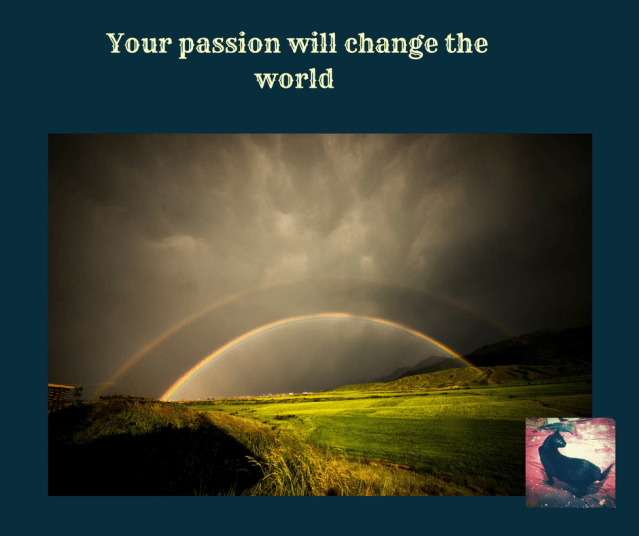
I have a meme – pictured here – which I often send to autistic young people and it simply said this: ‘Your passions can change the world.’ Let’s work for a world where we not told ‘so what!’ when we do something amazing but ‘How do you want to use that skill because its awesome!’

Your pur passion will change the world

I won’t be the ‘tame autistic’ – The need for real Autistic involvement not just ticking a box

I was asked to speak at an autism event last year. The organisation hosting it told me they have one presentation on autism each year and it was a great privilege to be asked to speak there. I prepared my talk and travelled to the town the talk was in. The neurotypical organiser asked me something I have never been asked before and hope never to be again. They said ‘so what are you going to wear tomorrow Jeanette?’ I was very tempted to say I would be naked due to my respect and love for nature but restrained myself. At the talk the same person asked my how to ‘manage militant politically correct autism activists?’ I suggested that listening to them was probably the best idea given the way things are now and that those who attack ‘political correctness’ are more of a worry as they are essentially fighting for the right to be disrespectful. I did not hear from the organisation who asked me to speak again.

This illustrates something I have noticed over my advocacy career: the idea of the ‘tame’ autistic advocate cast against the role of ‘militant activist.’  While I deliver my message in quite a gentle way, I never want to be ‘tame’ and part of some divisive attempt to separate autistic people and alienate us from one another.

If an organisation wants an autistic speaker they should be prepared to be challenged and learn from that person and their peers. My concern when I am seen as the ‘tame autistic’ is that the organisation maybe wants to just tick the ‘we got an autistic person at our event’ box. If that is the case it makes me concerned that the organisation is not looking to learn anything at all so there is probably not much point me being there. 

The context to this is simple as far as I see it. Autistics are a stigmatised, oppressed, bullied and unappreciated minority. We have been this for ages but we didn’t have much of a voice until recently. Many of us experience post-traumatic stress from a variety of traumatic events and triggers, including for some from ABA – supposedly a ‘therapy’ for autism!  We spent our lives being discriminated against, hated and disrespected but now we have a community and our voice – lots of voices actually! We want our message to make a difference. We want a world where the kind of misery we have experienced doesn’t continue to happen to us or our children and the next generation.

People booking autistics to write and speak need to know this. Yes, I am a gentle person and I try to include everyone when I speak and for it to be meaningful for allistics and autistics alike, but those oppressions  and aggressions in the previous paragraph? Yes, I experienced and continue to experience those too.  I am not a ‘tame autistic’ and never intend to be one. Those that want such a speaker or writer have missed the point as far as I am concerned. Change is clearly and definitively not about ticking boxes. It is about listening to our perspectives and learning from us, whatever we may be wearing! The organisations who complain at speakers for being to ‘bolshie’ are the ones who need our thoughts and words and messages the most. 

Mostly I speak for the audience rather than for  the organisation booking me so I have endured some unhelpful things from organisations but I am very tempted to put together a checklist of ‘why are you booking an autistic speaker’ and also ‘what will you do to ensure they are included, respected and supported along with autistic attendees at the event?’ If an organisation is seeking autistic input it really should be genuine. 

Imagine booking an engineering conference but asking everyone involved in building bridges to speak and not engineers. Sure, you will get some idea of what a bridge is and how to use it but not the key message.  We are experts in our lives. This doesn’t mean every autistics speaker can present on any topic related to autism because we cant;. What it does mean is that we are likely to share a number of attributes and experiences with other autistics which allistics / neurotypicals do not. We will notice things others are completely unaware of.

The really good thing in all of this is that being respectful and inclusive is helpful for everyone: An organisation supporting autistic kids is almost certainly going to see a difference in their work when putting into place the ideas from actually autistic people. If you are working with autistics then it is essential to gain the views of autistics who have used similar services to the one you are offering. It just seems so obvious to me. And if the people you seek advice from challenge or disagree with you? Well take the opportunity to learn from that. This is good, useful feedback which will improve the service you are offering.

There is a ways to go with this but we do seem in a better position to support organisations to move beyond wanting a ‘tame autistic’ to tick the box and instead valuing the vital contribution that autistic people have.

10294977_799382020143187_8989493424462827214_o

Shared from ClickAbility – ‘My Wonderful World of Work’

“When I was a child, my dad had a market garden. Times were tough and he worked long days to keep us all fed and clothed. He even had lights in the greenhouses so that he could work after dark. Some days I would only see him at breakfast and dinner. The main lesson I took from this was that you need to work hard to survive.

I left home at 17. In order to fund my independent living, I got a job. This was in 1992, in the middle of a major recession. I went to a lot of job interviews and ended up getting a job in a fast food restaurant. That ingrained work ethic from my childhood meant that I was highly proficient at a job I actually hated. I was promoted to junior manager….”

View the full post at: clickability.com.au/blog/my-wonderful-world-of-work/ 

IMG_0593


Gender identity – thoughts on being ‘out’

I have known within myself for some time that the two options for gender that I spent so long thinking were the only ones didn’t quite work when it  came to how I saw myself. I was a called a girl and saw all that entailed in our society. For a long time I thought that the constructs of gender were false and imposed upon us for whatever reason. I met very ‘girly’ women and thought they must have been brainwashed or something. I have always been noticed and singled out by school bullies – yes, even an adult – for a number of reasons. When I was a kid the gender stuff just got added to all the other stuff but when school children have felt the need to publicly criticise my adult self as I walk past, the ‘insult’ is always the same ‘Are you a boy or a girl?’ I always wanted to say ‘I’m not either, I am me’ but instead looked at the ground and prayed they would go away. I occupy the space of a different gender – something I often thought of as a third gender which doesn’t fit neatly into the male or female expression – for my whole life. My choices in my dress sense and hair and other external expressions of identity change every several years. I spent my teens and early twenties with shaved short hair and wearing check flannelette shirts and work-boots. Bus drivers used to call me ‘mate’. In the last six or so years my outward expression has been about sparkly and shiny and colourful. This is a conscious part of my work as an autistic advocate but it is an expression I imagine would perhaps be considered more ‘feminine’ but I don’t really know. When I wear what I like to call a ‘frock’ it feels like I am playing stress ups rather than being genuinely ‘me.’ My comfort – ‘being me’ – clothes are pants and t-shirts and runners with big jewellery and a coloured wig or hat. I am not at all questioning or unsure of my identity. I know who I am. My gender is ‘Jeanette’.

Despite knowing who I am, I haven’t really formalised or articulated my thoughts about my own gender identity until recently. I have some great friends who are trans, gender fluid and part of the gender diverse community. I have been discussing these thoughts about who I am in terms of gender identity for some times and have received some great support and encouragement. The other day I announced my wish to be referred to as they / them rather than she / her. I put it on Facebook, just like that. It has been the start of a very fertile time of thinking and consideration and reflecting on who I am.

I posted this the other night: 

I recently publicly affirmed and declared that I identify as being of non-binary gender and that I prefer being referred to as ‘them/they’ to being to as ‘she/her.’ It has been incredibly liberating and opening new possibilities to my understanding of myself and others. It makes me feel sort of young, like I am discovering more about myself than I knew was there. I am wondering why it took me so long to get to this point of identifying and understanding. There is a lot of contented happy wandering through life tempered by occasional worry and uncertainty.

Oddly enough the uncertainty is around something I would jump right on if heard someone else say it. I keep wondering if it is a ‘phase!’ – like the parent of a teen who brings her girlfriend home in the 1980s might have said!  I find that really absurd. I am being discriminatory against myself! I counter that one by reminding myself of how liberated I feel having come out and the fact that I am 43 years old, so probably ‘phases’ aren’t part of my age group’s experience! (And the ‘phase’ idea around edgier and sexuality is pretty silly and unhelpful, not to mention kind of bigoted anyway.) 

Because I have known that I am non-binary for a while I thought coming out would be almost like a formality. I didn’t anticipate what it would mean. My identity has just blossomed into something I didn’t know was there. I feel like a plant which has been growing slowly in the shade and all of a sudden it gets put in the sunlight – it was getting by before but now it is just blooming and reaching its potential. I know that there are some other more specific descriptors of gender identity which I am not sure whether I belong to yet so will need to find out more about them. While I am thought of as an expert in autism and a bit less of an expert in mental health things, I feel very short on expertise around gender beyond my own experience and those that friends have described to me and written about. This kind of thing is very exciting. There is more to discover about me. 

Embracing my me-ness is like unknown territory in many ways. I think it also brings me closer to a lot of friends which makes me happy. Because I have a profile in the autism and autistic community it seems to be a lovely thing because I am hoping it will be relatable to other gender diverse autistic people. There are actually a huge number of us, both anecdotally and in research evidence. It also opens the conversation around gender diversity to people who might not otherwise think a lot about it.

I keep asking questions which I can’t easily answer: Should I keep running my women’s group? (My thinking is that as long as none of the members of the group have an issue there shouldn’t be a problem. I am definitely all for feminist principles and empowering women and have facilitated the group perfectly well since 2011!). Should I change my name? I am wondering about this. I would quite like to but I think I should let that one sit a bit longer and see how I want to approach it. Will I have to justify myself or defend myself for deal with more discrimination as an ‘out’ non-binary person? Maybe, probably. I don’t know but I do know I will be using my identity to support others who may face discrimination where I can. 

I am liking my unfolding identity. It is a huge adventure and I’m not quite sure where it will go but I am glad I took the step to tell everyone. It is like the first chapter of the book, just after the introduction…

IMG_4863

‘Too nice’: avoiding the traps of exploitation and manipulation

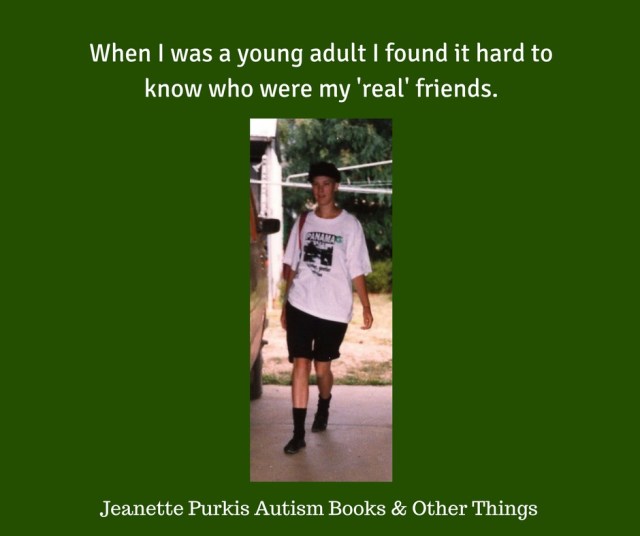
When I was nineteen I worked at a fast food restaurant as a casual employee. This was my only income. My employer would roster me on for one or two shifts a fortnight and then, knowing how horrified I would be and stressed that I was about to lose my job, they would call me in every single day to do a shift. I remember my anxiety every time the  phone rang at three pm as it was always my boss, but it never occurred to me to decline the shift or even to just let the phone ring out. This was 1993 – long before ordinary people would have mobile phones! I genuinely couldn’t work out that I was being played so would be delighted to get all these shifts, even being happy to do two all night shifts on the weekends. Looking back I imagine my managers thought I was some kind of fool for not realising that I was being played. In fact I wasn’t a fool but I was a person who used different ways of communicating and interpreting communication than my employer did. 

I am writing this post because someone asked me to. I don’t generally do that. This is not so much because I am some arrogant princess thinking only I can come up with good blog post ideas but simply because a lot of the topics people want me to write on are largely beyond my knowledge so I would not write a very ‘real’ post and it might be more like a literature review or case study! However, the topic of autistic people being taken advantage of, manipulated and duped is sadly something all too common in my experience.

I think every autistic person has probably experienced this or still experiences it. There is an actual concrete reason that we tend to be taken advantage of and it starts with the difference in communication between autistic people and neurotypical people. Autistic communication is generally on one level. We are honest, up front and do not often do things like manipulation and deceit. We generally do not lie although many autistic people are capable of lying if they feel the need but usually it doesn’t come naturally.

Neurotypical  people (or ‘allistics’ if you prefer) operate differently in how they communicate. Their communication tends to happen on more than one level. Mostly this doesn’t result in them being predatory or unethical and just results in some confusion when they meet an autistic person who operates differently. However there are some people who prey on others and when they come across an autistic person who sees things on one level and doesn’t realise others don’t and they become aware of the difference then predation can occur. It can be seen as the difference between visible light and infrared light. If you can only see visible light then it is hard to imagine what infrared looks like, even if you are aware it exists. I am forty-three and have been taken advantage of so many times I have lost count. I am better at working out that people are capable of doing this but I still struggle to see it happening until after it occurs. One thing which can happen – and which is certainly true for me – is that I have become hyper-vigilant about these things and often refuse to trust anyone I don’t know well, even people who are not trying to take advantage of me.

Some circumstances this kind of exploitation commonly occurs in include:

  • People cold calling or approaching you about products for sale or in some cases charities seeking donations. Autistic people not only tend to struggle with realising they are being taken advantage of financially, they may also not feel able to practice assertiveness. I know one older autistic woman who would talk to scammers who called her on the phone thinking they were genuine software company staff. While she probably did an unintentional good service by taking up their time and meaning they weren’t calling others, it does seem a little like making a cup of tea for a burglar you surprise going through your jewellery box! 
  • Many autistic people are thoughtful and respectful and polite and don’t want to be disrespectful which can exacerbate this issue. Others find practicing assertiveness almost impossible.
  • In some intimate relationships, autistic people can be manipulated and taken advantage of by their partner. This often takes the form of emotional exploitation and being controlled but can also involve  abuse and violence.
  • People involved in criminal behaviour can convince autistic people to carry out criminal activities in return for approval and ‘friendship’. If they are caught, an honest autistic person can take all the responsibility not realising they have been set up.
  • Schoolyard and other bullies often use this promise of approval and friendship to convince autistic people to humiliate themselves publicly or online. 

The more I know about all of this the more I find myself viewing everyone through a lens of cynicism. This is not a good place to be in either. We need to be aware of the potential threats and ways to avoid being victimised but also to remember that it is a fraction of neurotypical people who behave this way. 

Some strategies which can help include:

  • Compare notes with autistic friends and peers. We can learn from each other about situations which exploitation can occur and support each other to stand up to them and avoid getting involved 
  • Remind yourself that you do not HAVE to do things because others tell you to. If something feels wrong it probably is. 
  • Do some training or practice around assertiveness. I used to think it was impossible to learn assertiveness but I have learned to do it a lot better now. It can take a while but it is  a great skill in this – and other – areas.
  • Everything you do to support your autistic identity, build your self-worth and self-esteem is going to go towards equipping you with the skills and confidence to avoid being taken advantage of
  • Reflect on where exploitation has happened to you or people you know. Think about what would have helped in the past situation. Keep a record of this and if a similar situation rises use the strategies you have identified
  • And if it does happen, work through the issues and feelings but don’t ‘beat yourself up.’ You were not the person in he wrong and it was not your fault. As with all setbacks, try to learn what you can from it, get what support you need and move forward, 

My final point is to remember that this behaviour is in  no way the fault of the autistic victim. These issues arise as the result of a person or group of people intentionally taking advantage of a communication difference for their own gain. 

fullsizeoutput_626

‘Please don’t smash my toilet!’ – Autism and accessing mental health services 

This is a post about services. Could you imagine how you might react if you called a plumber and they came over and were so inept that they made the issue you needed fixing worse? Or if they turned up and smashed up your the toilet? And could you imagine if they denied that anything wrong had happened even if it was obvious to everyone that it had? You would rightfully be pretty pissed off I imagine. You accessed  a service hoping it would help address something serious and instead it made matters much worse. That is very poor service delivery. Yet when many people – and many autistic people particularly – access mental health clinical services the metaphorical smashed toilet is all too often what they experience.

I will preface this piece by saying that I know there are some great mental health workers and my concerns are more directed at the mental health system and attitudes than individual staff members.

In many of the times I have sought help for my mental health issues, a number of factors have combined to effectively smash my (metaphorical) toilet. Autistic people trying to access mental health services share similar stories with me quite often, as do their parents and others who love and care for them. Crisis phone lines are a frequent source of misery and angst. For someone in crisis it is hard enough to bring yourself to make the call. It is anxiety provoking, especially for people who dislike or have high anxiety around using the telephone. In my experience the common horror stories people report after using crisis support services centre around them being treated like they are a child or that they are just wasting the clinicians’ time. I’m sure this isn’t intentional on their part but being on the receiving end makes many people reluctant to use these services even when they are actually in danger. Psychiatric wards are another place where invalidation happens on a regular basis. Autistic people are frequently misdiagnosed and as diagnosis trends to determine treatment for mental health issues, this can result in inappropriate and ineffective treatments and can even be dangerous. Stereotypes around autism are frequent. I remember a psychiatrist in hospital once telling me I was ‘too cool to be autistic’. While this was probably a throwaway line it horrified me. I had written a book on autism and gave talks at conferences and at schools. Surely my T-shirt and Converse sneakers wouldn’t preclude me from autism advocacy?

Most of the issues I have experienced in psychiatric services are focussed on a  poor knowledge of autism by mental health clinicians. Autistic communication can be ignored or be incorrectly seen as a symptom of a mental illness. Autistic people frequently get seen as manipulative when accessing mental health services. This is preposterous given that autistics tend to operate on one level and many are incapable of deliberate manipulation! Being labelled as manipulative in clinical psychiatric settings is not a good thing.

Autistic people can be utterly baffled by what is going on in clinical settings. The experience can be invalidating and traumatic for a number of reasons including being verbally or physically attacked and bullied in clinical settings – and not always by fellow ‘consumers’ (and when someone comes up with a less offensive term which encompasses ‘consumer’ without the ickiness please tell me. I’ve been trying to find one for years!!). People who have hyper empathy can find hospital settings overwhelming and horrific as not only do they feel terrible anyway but they are also surrounded by other people feeling awful and feeding into their mood.  If autistic people have meltdowns in clinical settings and staff do not understand what is going on this can result in a lot of misery and even legal sanctions. There can be a lot of inconsistency in mental health care, particular in hospital settings. This can add hugely to anxiety. Autistic people may respond differently to expected with medications. Being in a hospital setting for anyone usually seems to result in invalidation and condescension. But for autistic people this can be a huge issue. The frustration at trying to tell a nurse or doctor that something is upsetting or stressful or that they have misunderstood a vital part of your description of what is a problem for you can be off the scale.

Going into a mental health clinical setting is often highly disempowering. I have always felt like I was thought of as difficult in hospital. But I think  a lot of the issues outlined here could be more effectively addressed if clinicians in crisis teams and psychiatric wards knew a lot more about autism. If there was better understanding of autistic ways of communicating, more listening to people’s experiences and what is difficult and what we need to be done differently. Psychiatry is unfortunately a profession which has a lot of hierarchy inherent within it. I think everyone would benefit if some of that hierarchy was revisited and a more collegiate, listening approach taken where people accessing services were respected and listened to.

I think that a lot of the metaphorical toilet-smashing comes from ignorance and a lack of understanding the needs of autistic people accessing mental health services. Last year I gave a talk to a room full of psychiatrists. They absolutely loved it – which was good. The issue I saw was when all of them that spoke to me said ‘I love this emerging work you are doing Jeanette’, to which I replied ‘I have been doing this since 2005.’ We need more understanding of autistic experience in mental health services – a LOT more of it. Simple as that. If we don’t then the experiences that myself and so many others have when trying to access help will be as useful as that smashed toilet.

My mental illness is just one of my attributes. I don;t know why I would ever feel ashamed of it


‘You don’t speak for me….’ Autism, advocacy and representation 

I had a bit of a personal criticism of my work today. The complainer saw my work as somehow gelling autism and mental illness together. Apparently I have no right to ‘speak for’ autistic people because my mental illness somehow muddies the waters or cancels it out. Or something. I have had a few of these criticisms which are pretty unhelpful and I won’t waste my time or yours going into the ins and outs. Going beyond the criticism and trolling aspect, these comments highlight an issue I come across which relates to more people than just me: The idea that advocates and activists are ‘speaking for’ autistics and that they should be required to satisfy some criteria to be worthy enough to do this.

There are a few versions of this and they come from some very varied quarters. They include:

  • ‘Parts of your experience (e.g. mental illness) disqualify you from speaking for autistic people because your experience  is not ‘truly’ autistic
  • ‘You are nothing like my autistic child. You cannot speak for my child’.
  • ‘You are not (or alternatively ‘you are too’) political enough to speak for autistics.’
  • ‘Your autism is pretty mild. I don’t think you should get to make commentary on autism given how successful your life is.’

Massive Oh Dear at all of these! They are all quite offensive and invalidating and oddly enough I have been on the receiving end of all four. The main issue in all of them seems to me to be the same: there is some quality of autistic-ness which autistic people speaking about autism need to satisfy in order to be allowed to speak on behalf of the community. These attitudes are really unhelpful and discourage some autistic people from doing or saying anything in advocacy,

In fact, underpinning all these statements is the idea an individual speaks for all autistics or on behalf of us all. This is complete nonsense. When I – or I imagine any of my colleagues – get up on stage to speak on autism I’m, fairly certain we are talking about our own knowledge and hoping that others can relate to that. I have never said and I will never say that  I speak on behalf of anyone, autistic or otherwise. I can’t. I am not them. Sometimes people say they are happy for me to speak on their behalf which is very lovely and affirming but I never actually consciously think I’m speaking for another person or people. I share what I know and hope that others can pick up useful things from it.

Beyond the logic of the thing, the statements outlined above all come with a good whack of prejudice and / or ableism. They are not respectful. Considering how difficult it is for so many of us to speak up and be heard, having others trying to shoot us down in flames isn’t very useful for anyone.

The more autistic people who speak publicly, write, engage in decision-making and do all the other things which are part of advocacy and  / or activism, the better.  However some people are put off after seeing trolling and harsh criticism levelled at their peers and colleagues.

In terms of my own representation, being criticised for speaking on mental illness and autism when a lot of my personal experience and professional experience relates to autism AND mental illness is a bit baffling. Intersectionality – that very helpful idea that people experience discrimination related to the intersection of a number of attributes. So for me, any intersectional groups are Autistic person, person with schizophrenia, woman, and person who identifies and Queer / asexual. The idea that one should ‘just’ be autistic in order to speak and write confuses me. Should Autistic people with other, different intersectional experiences not advocate either? I think the more of us there are speaking from understanding informed by our different perspectives then that is a really good thing as it will help with inclusion and more fulsome representation.

Finally, I have to wonder who it is that gets to decide what advocates say and do and who they ‘should’ be. My work was borne out of an autobiography which thrust me into the autism world in 2005, when I knew very little about anything and Q&A sessions after my talks filled me with terror as I was worried that I couldn’t answer all the questions.  I had no ulterior motive then and I don’t have one now. I did what I do to help make things inclusive and respectful and to try to help improve some of the huge disparities and disadvantages we experience. I imagine that most of the other advocates out there have a similar motivation. To be criticised and told essentially that I am not ‘pure’ enough to talk to people about autism is just insulting and rude.

I don’t really don’t represent anyone other than myself. I am at a point in my life where trolling and keyboard warriors result in anger and blocking rather than me turning their nastiness inwards. However these experiences will be putting other people off saying anything and making them fearful to speak out at all. I don’t like to think of that. It is as if the people criticising those for representing ‘wrong’ are themselves speaking on behalf of all of us and silencing voices of others who could make a positive change. Noble franchise meme

‘Do what I say not what I do’ – addressing perfectionism

There is a Simpsons episode where Homer is unsuccessful in a job interview. The successful candidate goes in before Homer and is asked the question ‘What are your weaknesses?’ He responds with ‘Well, I’m a workaholic and a perfectionist…’ Presumably the meaning here being that the candidate’s weaknesses are actually big strengths. I actually am a workaholic and perfectionist and can report that sometimes those qualities are a good thing but often they aren’t.

I have been talking and writing about the dangers of perfectionism for some time. Perfectionism is like a mixture of anxiety about change, anxiety about performance and fear of failure. Perfectionism can stop people form doing any work at all for fear it won’t be good enough. Some people won’t take on  new challenges because they might do it ‘wrong’ and some will not try new skills or activities – even leisure ones – for fear of not being proficient. I struggle playing games with family because there is a perception I am supposed to be very good at word games and trivia. What usually happens is that I am indeed very proficient but I’m also very stressed which can manifest as being pushy and competitive – not much fun for anyone really.

Perfectionism is a common quality for Autistic people. I can’t speak on behalf of others but a lot of my own perfectionism centres around a need to have some control and knowledge of an uncertain and confusing world. I have immense perfectionism around social situations and if I get it ‘wrong’ I am filled with regret. When a social situation goes ‘wrong’ I blame myself and become highly anxious. I feel like I have failed in some fundamental sense. I go through extreme anxiety and sometimes meltdowns, I feel I need to sort it out instantly and apologise to the person or do whatever I think I need to in order to ‘fix it’. Mostly perfectionism doesn’t stop me from doing much as in addition to perfectionism I have a strong dose of determination and motivation which makes me take on challenging things which I am know I won’t be instantly proficient at. However when I was younger my perfectionism limited my capability to work and also resulted in a major episode of mental illness.

I was just getting my life back together after some years of misery. Everything was a challenge and I was desperate to make the ‘right’ choices so I could have a better life. I hadn’t worked for many years but my aspirations involved working in a full-time professional job and I kew I needed to work up to that ad build my employment confidence. One of my housemates in supported accommodation got me a casual job washing dishes at a restaurant two nights a week. It was not a responsible job at all. The worst outcome of an error would probably be that one of the diners might sent back a dirty knife I had missed. That was it. But in my mind I was desperate to be completely perfect at my job. I was terrified I would make an error that would somehow put the restaurant out of business. My anxiety grew to an immense level to the point that I was highly anxious all the time. Anxiety like that triggers psychosis in me and that it what happened. Not only did that jeopardise my future as an employee, it actually put my life in very real danger. I did end up building my employment confidence armed with the knowledge that if I started getting this feelings of high anxiety and perfectionism about an activity I was doing I should tread very carefully.

So I have known since that time that perfectionism is rarely your friend but it is so hard to practice what I preach with this one. The odd thing is that now it probably looks like a positive quality to anyone who isn’t me, but for me I still struggle with it. I said to a manager I was working wth recently that I was a perfectionist which ‘is good for, you but not so much for me’. This is usually true. I rarely make mistakes at work and on the rare occasions that I do I alert anyone who needs to know and go and make amends. The issue for me is that I am always in state of controlling my world which  – as I tell other people – is largely impossible and so quite stressful. I try to ensure every singe thing I do or say is ‘perfect’. It adds a level of anxiety to my life but means I am very accomplished. Most of the advise and thoughts I share with people in my writing and presenting are things I know and do but managing my perfectionism is a definite work in progress.

There are some strategies I use to help address these things:

  • A sense of perspective is often the enemy of perfectionism. Think about what the worst outcome of an error is because usually our fear is much greater than the situation requires
  • If you feel that if you weren’t a perfectionist about your work or interactions wiht people or whatever you worry about, and that you would be terrible at it and make careless errors, reflect that you are not going to get complacent or careless by letting go a little control. We don’t generally do things we do not want to do. The difference between perfect and terrible is a long distance indeed and it is highly unlikely if you are not perfect that you will go to the other extreme.
  • Work to address anxiety in your life. Anxiety feeds perfectionism so the less of it you have the better. There are a large number of strategies to work on anxiety including mindfulness, psychotherapy, berthing exercises and distraction. The other benefit of this is that it will help reduce your anxiety generally, which has to be a good thing.
  • Appeal to your logic and reason. It actually isn’t possible to be perfect in most of life’s endeavours. If you aim to do the best you can rather than perfection, through the lens of logic, that is essentially the same thing but in terms of your thinking and approach, doing the best you can do is  a much healthier aim than absolute perfection.

IMG_2892

Awesome is a fine aspiration and it definitely isn’t perfection!