Do you see what I see? Navigating the non-autistic world

Most people experience the world through a bunch of different ways of ‘seeing.’ They see subtle facial expressions and nuances in a person’s body language. They see the hidden meaning within a conversation. When they see faces of people they have met before they register that person’s face as a unique set of features. When they reflect on their inner world they can feel and articulate different emotions. They are aware of when there is some kind of pain or physical discomfort. They know if they are sick and when they are sick they can usually pinpoint which part of the or body the unpleasant feeling or pain is in.

I can’t really do any of these things. Autistic people have our own ways of ‘seeing’ which tend to differ form the non-autistic ones, but we usually spend a lot of time with non-autistic people and we can feel our different vision is somehow wrong. It isn’t wrong, and it is vital to keep our pride in who we are and respect for our divergent identity. However, I have found that navigating he non-autistic world often requires some understanding of their kinds of vision.

Over the years I have improved very slightly at these things but those forms of ‘seeing’ are mostly beyond my knowledge.  Many of my Autistic friends share this difficulty in seeing things like emotions and facial expressions and faces. One of the most difficult things is that non-autistic people often have no clue that anyone in the world doesn’t see things like they do.

If I look at my life, I have done quite well in my chosen areas of work and socialising than one might imagine was possible. But this is a learned experience. When I was younger I was completely baffled by the world. I saw a different picture to that of others around me. On some level I was aware of this. As a child I worked out that there was meaning in eyes and facial expression by deducing it from descriptions in novels.

I struggle with things which many would take for granted. A practical and rather yicky example of this is that I didn’t work out until I was in my teens what the sensation just prior to vomiting felt like. I apologise to may dad’s car/s. In fact my mum tells me that if I said I didn’t feel well as a child it meant it was probably something serious as I could never work out what feeling unwell felt like.

In my twenties my inability to see my emotions led to some very dangerous places. I was traumatised by various events when I was twenty-one so self medicated with drugs. When I was sober I had no control over what came into my mind but I knew exactly what being stoned felt like so I associated being stoned wiht ‘safe’ feelings. Drug use combined with anxiety about my impending eviction and homelessness meant that I developed a mental illness that I still have 22 years later. But had you asked me how I felt the day before I went to hospital to gain my schizophrenia diagnosis I would probably have said I felt OK. I was completely unaware I was unwell.

Looking at my issues with seeing various things others seem to find glaringly obvious it surprises me that I managed to function in society at all. I find it hard to unpack a journey over time, to understand how I used one skill to scaffold another and move into a more fulfilled and pleasant place. I know that I did because I am in a different world to my teenage and twenty-something self. I know a lot of other autistic people who share some or all of my difficulties in ‘seeing’ what is apparently obvious to others and are living the sorts of lives they want to.

It can definitely be done because it has been done many, many times over. There is that school of thought that suggests Autism is of necessity a deficit and that Autistic people will never manage to do, well, all the stuff that a lot of my Autistic friends do!

I am deliberately using the motif of seeing in this post. The reason for this is that if a person has a vision impairment they will use means other than seeing to navigate their way through the world. There is a ‘deficit’ which is compensated through strategies other than seeing visually. I can’t speak for everyone here but in my case I have also used my own means and ways to navigate a world much of which I can’t ‘see’.

I think each of us probably uses a slightly different set of strategies to navigate the non-autistic world. My straggles have changed over time as my life has changed. The main approaches I use now are:

  • to be upfront about my Autism, This means people aren’t seeing an inexplicably strange non-autistic person. It adds to their knowledge of me and gives them the opportunity to ask me questions if they are unsure of what I do or say. Knowledge is power – and sometimes that knowledge might just be that I struggle with certain sounds or smells.
  • I am very fortunate to have quite an incisive intellect. I can deduce what is happening through context, even if i don’t ‘see’ it. This is particularly evident when I don’t recognise a face or in being able to find out what emotions a person is feeling and why.
  • I am kind. This is not just a random attribute. I choose my character in about 2001 as I didn’t like who I was back then. Being kind and generous was a choice. One benefit of this is that people tend to be more ready to listen and understand an odd but kind person.
  • I trust the judgement of others when I know my own judgment might be off. Sometimes this involves some discussion.
  • I love and value myself as I am. Just because I don’t ‘see’ everything going on around and within me, I am still a person who aims to be generous and helpful who is quite good at writing and lots of people say my words have helped them.

IMG_1285

‘The researchers are into the absinthe again….’

What in the holy flying crap is this?? Read some of the article and got to the bit comparing Autistic people to dogs – and not for the nice reasons and thought ‘hmm, the researchers have got into the absinthe again”

That was me on Facebook this evening, somewhat baffled and upset by some very dubious research (I use the term very lightly in this instance) relating to Autistic people apparently being less ‘domesticated’ than the non-autistic folks. There was a comparison to dogs at one point and physical features pointed out using a crude diagram apparently of an autistic boy with arrows pointing to all his apparently ‘undomesticated’ features.

As an Autistic person I see this sort of this stuff way too often. It goes hand in hand with other unhelpful advice – charlatans preying on parents of Autistic kids whose need for information and support they exploit with expensive ‘cures’. One example was the $35 per litre camel milk which will ‘make your child more neurotypical’. The inverted commas are because the is actually a quote form someone who had somehow got a PhD and was a paid sponsor at a conference. The same  person beseeched conference delegates to forgo antibiotics in pregnancy! So if you have bacterial meningitis and you are pregnant, apparently you need to die or your child might be autistic (which presumably according to this speaker was worse than dying)! Sadly this is the tip of the ice beg with dangerous and unproven ‘cures’ from chelation to bleach enemas apparently somehow magically ‘fixing’ Autistic children. Some of these things are outright violence on defenceless kids and about as likely to ‘fix’ autism as eating Mr Kitty’s whiskers!.

I think there is one main reason for these charlatanism, ’cures’ and dodgy research. Now I am usually someone who describes her little cat-loving, book-writing self as an advocate rather than an activist – but when it comes to this sort of thing I do have good reason to pop on my activist hat. The reason is that these ‘cures’ and related things come from a very nasty premise, that Autism is some horrible curse which means parents will never bond with their child, that the Autistic person will be a burden and it is all so tragic and that Autistic reality is just this big, puzzling, strange world of freaky weirdness. ‘Your child will never say I love you!’ these folks shriek. ‘

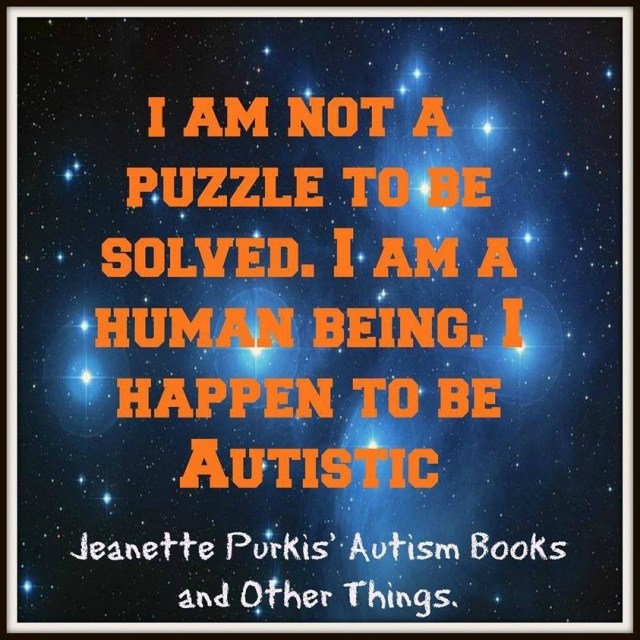
This is all pretty fraught territory but it shouldn’t be. Autistic people are not broken. We are not fundamentally unfathomable. Certainly Autistics and their families can go through some pretty challenging, unpleasant stuff. So can non-autistic children and their families. If we start from the premise that a child is never going to be able to express ‘normal’ emotions (I’m not sure what these are, but anyway…), that your child will be a drain and a burden and you will be supporting them forever and ever…. well I feel this is coming from the wrong direction. Yes, Autism can be challenging – very challenging at times for the Autistic person and those that love and care for them too. But if this deficits model is our basis we are denying autistic children and adults the ability to reach their potential.

Another issue with this model is perception. I have autistic friends who use non-speech communication and require support people for daily life but they aren’t por sad little burdens, they are advocates and students and working to make things better – rather like I do I guess. If your focus on the difficult stuff you might miss someone’s potential.

I have a friend in the US who is an advocate and employment specialist. His name is Patrick Schwartz. When he describes people that he places in jobs he will say ‘This is Ben. Ben has as an attribute Downs syndrome…’ or ‘This is Jeanette. She has as an attribute Autism and schizophrenia…’  An attribute, part of the person’s identity, not a curse or a burden. Patrick finds engaging and meaningful work for so many people who were described as unemployable. He does this by shifting the focus from deficits to strengths. What CAN a person do? What do they enjoy? Make a spot or find a job they can do.

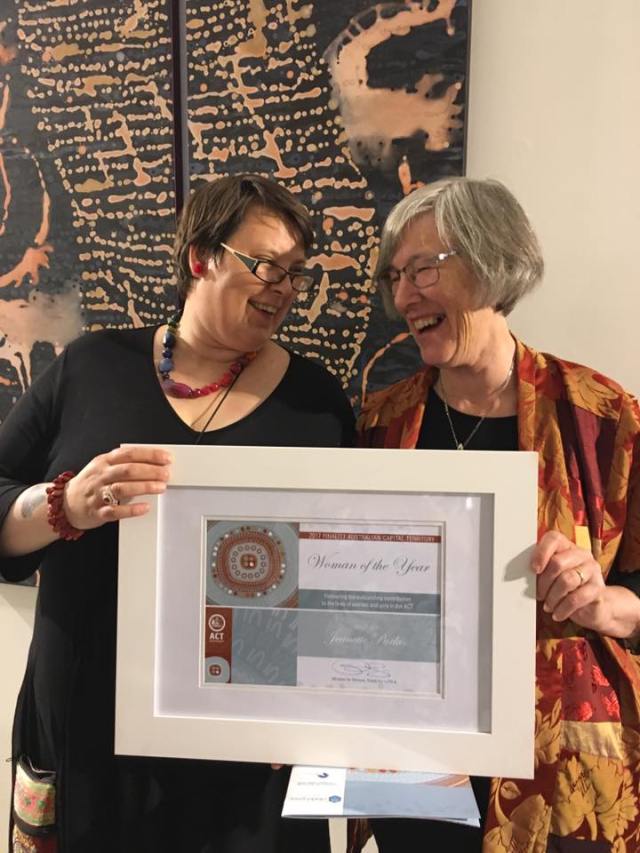
My mum once told me if I had been diagnosed as a child that my family would have been much more hands on and might have been less keen to let me move out of home and study and find work. In fact if you look at that time in my life then shortly after I moved out of home, I found myself with the ‘wrong crowd’, in prison and was soon a homeless drug addict with schizophrenia who deliberately went to prison thinking in a delusional state that it would cure my depression. This poor broken little me spent the next five years in and out of hospitals, prisons and crisis accommodation. I was a whopping great ‘burden’ if you think like that. However I got the right support to make positive choices. I now sit writing this in a home I own, having come home after a day at work as a middle manager in the public service. I am looking at my beautiful cat and beyond him the bookcase full of all my books and magazines and DVDs of me doing advocacy stuff. A week from today I will be at an awards night with my mum – the same woman who I imagine thought I would die and would have no future but the grave – my mum will be in the audience watching me as a finalist – and maybe the winner – of the Australian Capital Territory 2017 Woman of the Year award,

So the research and the dangerous and just simply ineffective ‘cures’ for Autism, the dangerous anti-vax  foolishness telling the world that essentially it is better your child die from a preventable disease than be Autistic, all the things stacked up on the side of deficits / burden  / Autism is a tragedy. I hope I can be seen standing opposite that encampment of idiocy and prejudice saying “We are valued. We are worthy. We are different. Learn our language not silence it.”

img_0148

Social communication – being a ‘different not less’ exchange student

If you read the Diagnostic Manual for various brain-related things including Autism, the DSM 5, – which I wouldn’t really recommend unless you need to. It’s not exactly light reading. Anyway one of the criteria for a diagnosis of Autism is in the statement below. There are cuter qualifying statements related to it:

Persistent deficits in social communication and social interaction across multiple contexts…

Regular readers of this blog will probably know I have some issues with the purely clinical concept of Autism contained within some of the diagnostic descriptions. I understand that the diagnostic criteria are there in order to provide thresholds of ‘disability’ which translate into funding for services, which is actually a useful thing if clinicians keep that in mind. My concern as always is the deficits basis which sees Autism only in terms of what Autistic people apparently have trouble doing and where we apparently ‘deviate’ from some ‘norm’ – which is undefined and unclassified. It fits that picture that Autism is something broken, an affliction which needs ‘solving’. As an Autistic self-advocate I recognise that some elements of Autism can be challenging and hard to live with. I also understand our great potential and how Autistic people who are supported and included and viewed as their own unique and valuable self rather than a burden, is probably considerably more likely to lead a fulfilled life. I also know as an Autistic adult, that many of the issues related to Autism stem from our interactions with the non-autistic world and its inhabitants.

Anyway today I was thinking about friendship as it related to Autistic people and thinking of the DSM 5 criterion around social communication and Autism and how it is quite firmly planted in the territory of ‘Autistic people do social communication ‘wrong.’’ I actually don’t believe that we do social communication ‘wrong’ but I believe there is something like a different culture between Autistic and non-autistic people and social communication is major point of difference between those two cultures.

So instead of a deviation form an imaginary social ‘norm’ it would probably be more helpful to think if you are friends with  a non-autistic person (or an Autistic one, depending on where you ‘sit’) that you are an exchange student learning the customs of the other person’s ’culture.’

Autistic people are considered to be between more than one in 100 in the population. This figure has grown over the past thirty years due to many things, such as greater understanding of Autism and changes to both the diagnostic criteria and how those are applied. Whatever the prevalence rate is, we are a minority in a world where many of those who live within the majority have no little or understanding of Autistic communication. To them we are maybe seen as quirky (when people are friendly) and ‘weird’ (and insert other more hurtful insults here) – for those who are judgemental and unsympathetic.’Cross-cultural friendships happen between Autistic and non-autistic people a lot – and sexual and intimate relationships too. In the deficits model, the non-autistic person might be seen as being kind for being friends with the Autistic person  – and I’d better not go down that track because it makes me rather angry to think of myself and my peers as ‘charity friends’.

In the deficits model of social communication I AM weird. I communicate very differently to how the non-autistic folks I know seem to. I don’t do eye contact as it is very unpleasant and I feel like I’m looking into the person’s soul which makes it hard to have a conversation with them. I don’t ‘get’ facial expressions or body language unless they are very marked (such as the person is crying). I join conversations midway and take every discussion on an interesting tangent and then forget where it started! If the conversation is a train, I inadvertently derail it every time! I am insecure and paranoid – probably more due to a history of bullying than any inherent Autistic traits. This is challenging though as I often have to reality check with a friend in case I think they don’t like me any more. I forget details about people’s life which are often important ones. I have to be reminded of who people are due to my prosopagnosia / face blindness. I am, as I like to say, a bit of a quirky Purky!

So those are my social characteristics which might seem a little odd to a non-autistic person. Let’s not just stop on the quirkiness aspect though. As a friend I have been told I am loyal and kind and will go out of my way to help those i care about. I almost never tell any kind of lie or dishonesty. If I do something I think might have upset a friend I will bite the bullet and tell them and I very rarely judge someone and when I do I take myself to task about it.

The odd thing about my positive friendship qualities is they are shared – in some form or anther – by most of my Autistic friends. People who are meant to have social communication deficits are so often kind and loyal friends. My social deficits are around things I can’t help very much – how my brain is wired in terms of interpreting facial expression and body language, that sort of thing. These deficits exist certainly but they are tempered by those very positive friendship qualities I, and apparently a large number of other Autistic people, have

The other thing to know is that non-autistic people can have some pretty difficult social deficits themselves. For example I am yet to meet a ‘two-faced’ Autistic person. I am also yet to meet an Autistic person who knowingly manipulates others to get their own way. In my life Autistic people have rarely done anything which has fundamentally upset or hurt me. So the people who’re supposed to have the social deficits have not been deficient. Not wanting to be a separatist or anything, but pretty much all the main damaging, violent and hurtful things which have been done in the context of my life have been done by non-autistic people. Of course Autistic people are certainly capable of violence  and malice and loads of other unpleasant things but it hasn’t really been something I have encountered.

So in terms of social deficits I think the DSM 5 has missed a few important points. Autistic people are not deviating from some ‘norm’ of positive social behaviour. Instead we form a separate social culture ourselves in which we tend to find it easer to find friends who understand us. The social differences in my mind really are like being from a different country with different customs and a different language. One is not better or worse than they other, they are simply different. And lots of people like going on a  cultural exchange to other countries to see what it is like and try the food and things. So maybe we can look at Autistic culture and social communication like that.  Back to the old ‘different not less’ statement again (thanks Temple 🙂

img_0521


Stop! Impostor!  – Interpersonal anxiety and impostor syndrome 

I wrote a blog post on this topic not too long ago but a number of people have been asking me about it and I have noticed some issues with myself too so I thought it might be worth a new post.

The title refers to a phenomenon known as impostor syndrome. What it means is that people who look confident and capable on the face of things are actually struggling with the idea that they are not able to do what they do. They doubt themselves and often wonder just when someone finds out they are just pretending to be proficient.

This is very common in professional arenas and particularly – although not exclusively – with women. Along with professional impostor syndrome is another, similar but different guise – what I think of as  interpersonal impostor syndrome.

While it is important to understand the professional type of impostor syndrome when we are in the workplace, I think the more pressing one can be the interpersonal one.

Impostor syndrome in interpersonal relationships can involve:

  • People  thinking they are essentially unlikeable and nobody actually likes them, even though they have caring friends
  • Reading additional and incorrect meaning into interpersonal  interactions
  • Significant self-doubt
  • Being hyper-vigilant around friendships and relationships – a sort of interpersonal perfectionism where people avoid dong or saying anything which might be interpreted as confrontational or critical
  • Joining peer groups and ‘cultures’ in order to be accepted, even if the person does not share the views of the group
  • Catastrophising around friends’ actions and misreading responses.

I know that I fit many of those attributes. Here is an example of something related to impostor syndrome which happens to me much more often than I would like.

I have a friend who I know mostly from social media who I really respect. She is a writer and a great disability activist. I love her writing and her work to make the world a better and more inclusive place. I would never knowingly say or do anything to upset this friend. We often like and comment on each other’s posts on social media. One day I commented on my friend’s post and a little while later I sent her a direct message. Only a few hours later I hadn’t had a response to comment or message so I panicked, I worried I had said something really rude or mean inadvertently (and yes, I know that is pretty much impossible to do but it is a frequent worry of mine!) I got so anxious that my friend thought I was horrible that I dug out her business card and called her on the phone. Of course I hadn’t done anything terrible, she was busy and hadn’t got to her social media yet. I felt pretty foolish and was very grateful she understood. For me – and I imagine many others who experience this interpersonal impostor syndrome, even though we know our friends or our partner wouldn’t simply stop talking to us, the anxiety can make our irrational thoughts seem very real.

These things tend to come from somewhere. If I look at my formative years, I was bullied throughout high school and subjected to abuse and violence as a young adult and was given a lot of negative messaging about my character, my capability and other attributes. I was taught through this invalidation to dislike myself, to feel anxious and ashamed, to worry that even close friends would suddenly distance themselves from me if I did something ‘wrong’ to upset them. I think for a lot of people in groups which tend to be disadvantaged – in my case Autistic people and people with mental illness – we get so much negative reinforcement and criticism that it amazes us as to why anyone would even consider being our friend.

There are some strategies which people can use around this. One is the simple reality check. If you can, find out what others see from their probably more objective viewpoint outside of your anxious brain.

One thing that I do is to use logic with myself when I am filled with doubt and interpersonal anxiety. What does the evidence show me? Were my comments on my friends’ Facebook post filled with anger or judgement or intended to be hurtful? If not it probably isn’t that. Also step outside of yourself and remember that other people do things differently to you. Some people might use social media or email differently to you causing you anxiety that they are not aware of – and why would they be?.

Find some strategies to deal with interpersonal anxiety. Things like mindfulness and cognitive behaviour therapy or deep breathing can be helpful with anxiety. Remember that anxiety is a response to a situation but it can move beyond that and became a more general, amorphous thing which permeates other areas of your life. If this is happening, addressing the interpersonal anxiety may not make the anxious feelings go away. So having means to address anxiety more generally is a good idea. Finally, work on your self-confidence and positive self-talk. This is often a long-term strategy and can be difficult but it really helps. Once you know that people like you because you are likeable, that is a very good thing. I know I am still on there journey towards that point.

11059875_840569759357746_7298864586145982601_o


When my brain is a pain – mental health strategies

I have what I think most people would describe as a good life. I am employed, accomplished and have a wonderful cat, along with many other fine attributes. But my companion for the past 22 yeas has been the poor behaviour of my errant brain with its resident mental illness. I am a high achieve with mental illness, which is a bit of a privilege for me. I am one of many people who gives an example of a life lived well with mental illness. As I am also Autistic I feel that I am in a very good spot to support and empower others with similar challenges.

My mental illness has been given many names by different doctors but when I unpack it involves the symptoms of mood issues (either depression or elevated mood / mania, which might sound enjoyable but usually involves hardly getting any sleep, spending money on unnecessary and sometimes puzzling things, being incredibly irritable and always having the threat of terminally damaging my reputation). I also have episodes of psychosis and ongoing psychotic symptoms like visual and auditory hallucinations, delusional thinking (e.g. ‘I am dead and in purgatory’) and ideas of reference – meaning I see personal significance and often prophesy in things like adverts and news articles. Since I was diagnosed with schizophrenia in 1995, I have had countless stays in many different psychiatric hospitals, residential services and therapy courses.

In my twenties my mental  illness pretty much destroyed me and any hope I might have had ta the time. I was aggressive, confused, disempowered and self-destructive. Yet now I am quite good at managing my illness and what comes along with it. I have somehow taken on a great deal of insight and self-awareness. I own my illness and am not ashamed of it and I know countless strategies which enable me to live a fulfilled life.

I imagine that some people think because of my unusually large workload and my proficiency at writing and public speaking that my illness is ‘mild’ (who invented that unhelpful little word??) In fact a few years ago, while working in a professional role and outwardly ‘living the dream’, I had the crisis team and my case worker come and take me to hospital a number of times and was placed on a mental health treatment order on one occasion. Even now I regularly speak to the crisis team, Lifeline and my psychiatrist and take high doses of a number of psychiatric medications, without which my life would be extremely frightening and unpleasant. My mental illness is far from mild but I have strategies I use to address it and make it manageable. I often suffer but it does not stop me from living my life.

My main mental health strategies fall into the categories of:

  • My own attitudes and thinking
  • Taking medication as prescribed and seeing my doctor to change anything in regard to meds
  • Regular visits to mental health professionals – in my case my psychiatrist – and my GP
  • Being willing to ask for help when I need it
  • A wide rage of practical strategies including distracting myself with enjoyable activity (this means my work), self-soothing / stimming, challenging negative thinking and paranoia
  • Mr Kitty – he is both good for long term, ongoing mental health ‘maintenance’ and in a crisis too
  • Strategies for a crisis – knowing who to contact, what to do and understanding it will pass
  • My advocacy and my paid work. These are both a distraction but also a strong protective factor. For example if I have suicidal thoughts, a helpful tactic is to reflect on what a terrible sort of  legacy that would be for all the people who read my writing on mental health or look to me for support and empowerment against their own mental health demons?
  • Address Autism-related issues where possible. Sensory issues and meltdown are bad enough but when I am in mental health crisis they can present a perfect storm of misery and overload. Looking after my levels of sensory and other stimulation, ensuring I have enough solitary time and having friends and colleagues who understand my Autism is also a great mental health strategy.

I choose to be open and honest and quite a bit vulnerable at times about my illness. This is a  conscious choice When people hear ‘schizophrenia’  or ‘psychosis’ they can get quite upset. Unfortunately the media and popular culture often incorrectly use the term psychosis as an interchangeable word for psychopathic. This is not only completely wrong, it is very unhelpful for people like me because I have to explain I am not a psychopath when I am unwell! These days I am actually very vulnerable when experiencing psychosis and  – sadly, because I know this from experience – I am much more likely to be a victim than a perpetrator of violence.

Over time and experience, I realised how important it is for mental illnesses to be seen as a health issue rather than a character flaw. People with mental illness do not get it because they are ‘weak’, people who engage in self-injurious behaviour probably aren’t ‘doing it ‘for attention’, and even if they are it goes much deeper than that simple and judgmental statement. Psychosis doesn’t mean psychopath (stupid media!), many people with mental illness can and do study, work. have families and relationships and all the sorts of things others do. Despite a lot of good work being done to address stigma in recent years there is still a lot of stigma and assumptions around mental illness.

After having worked in a suit-y office environment for ten years, I can cite a number of occasions where colleagues – some in management positions – have told me they have schizophrenia or bipolar. It is said almost as a shameful thing or an admission of fault but it shouldn’t be. I will not be ashamed of my illness so if you are on my social media you will probably see some posts about how things are hard or I am struggling with my errant Jeanette brain. It doesn’t mean I am less able to advocate for others or that I can’t do my work. I find the opposite of that is usually the case. It does mean I  have had a difficult life at times and still do, that I have been invalidated and gaslighted, often by services which are supposed to be helping me and that I have to be constantly aware of my mental health. I think it probably also means I am able to be quite compassionate and kind. Unlike some chronic overachievers, I do not judge other people by their outputs. I spent many years making no outputs at all other than entries in my hospital file, and I know a person’s character is far more important than what is listed on their CV. \

My mental illness is just one of my attributes. I don;t know why I would ever feel ashamed of it

Let’s change the world….just a bit

I have never thought of myself as someone who wants or needs power. I could not think of anything worse for me than being an elected official in high office, responsible for making decisions which impact the whole country or the world. ‘Best left to the experts’ has usually been my approach to that. Lately I have been paying more attention to world affairs than usual. For the first time ever I have thought about how good it would be if I could spread the message of inclusion, respect, kindness and my own brand of what I call ‘gentle power’ around the world and make things kinder and less frightening. These thoughts are odd little day dreamy fantasies which will never result in any action on my part. Even so, lately I have felt powerless and redundant and that I need to do more.

On Monday something happened which got me reconsidering my feelings of powerlessness, thanks to a lovely person who told me that she was still in the world because of something I did. Of course what I did was only a part – I can’t take credit for her positive choice. I spent all of the next day reflecting on the idea that something I did and said had resulted in somebody being in this world who wouldn’t otherwise have been. I reflected on how happy I was but also how responsible we are to the people we share our lives with in whatever way – significant or minor.

I thought abut this notion of responsibility for those around us. I go through life with a smile on my face mostly. I try to be kind to everyone. I choose to be thoughtful and helpful where I can. This isn’t because I’m a saint. It s because I spent five years of my life taking – from society as a criminal and a recipient of a lot of tax expenditure, from my family by causing them endless, unimaginable stress and worry and from individuals by being aggressive, demanding and needy. This shadow me did so much taking that that when I decided to change I made a couple of choices. One was that I would no longer take but give and the other was that I would understand how human beings ‘worked’ as well as I could and make sure that every interaction I had was positive and helpful. I think mostly it worked. Every day many people at my workplace  – which employs around 2000 people – smile and say hello. I have to not focus too closely on comments on my social media because people are frequently telling me how I have helped them and I don’t want to get a big ego. The world at the moment is a really lovely place to be me and I owe this largely  to making those positive decisions about my direction many years ago.

And this takes me to the changing the world conundrum. People who espouse gentle power do not generally take on positions of world leadership. I will never change the whole world with one big pronouncement or action and I really don’t want to. But the other day I helped to change the world for one person and those who know and love her by my actions and care, meaning she made the excellent choice to stay with us. I only know of this one case of me being influential in such a decision but I now wonder if that has been the case for others too. I won’t ever know and I don’t desperately need to.

So yes, I changed the world. We actually all change the world by being in it. We change the world for our family and for those we love. We change the world for our pets and our colleagues and people we see in the supermarket. I know it sounds trite and there are any number of silly movies about this idea but it is actually true on some level. When I decided to no longer be a criminal and a negative person I decided that I wanted to just do to other people what I would like done to me and conversely to not do things to others which I wouldn’t want them to do to me. That is a simple – and in my case very effective – premise.

And that’s what I do to change the world and that is meaningful. Leave it how you found it, do no harm and just be good to people. I found once I started to help not hinder it wasn’t all that difficult and my life since then has been a lot happier, meaning I have gained benefit too.

I’ll finish with a thought I had in conversation with my Dad a while back. We were talking about what to do when there is evil in the world. We discussed Nazi occupied Europe and I said that people who hid those trying to escape from that horrific regime did not change the geographical or political world but for those they hid, they changed their entire world. So let’s go change the world.

IMG_1639


Autism and employment – making work work better

I will start this post on Autism and employment by saying we don’t do employment for Autistic people well. So many Autistic people are unemployed, underemployed and / or work in unsuitable jobs.

Thankfully, on a personal level, i have made a career for myself in the professional world. This post will be a mixture of reflecting on how I got to where I am  as well as strategies which might help others in their employment journey. I recognise that Autistic people often face significant barriers to finding and keeping a job and just building job readiness skills is probably not going to result in employment where the recruitment processes (interview particularly) and the workplace is not ‘Autism-friendly. It is usually more complex than people just needing a positive attitude and some determination.

This week marks my ten year anniversary of being a public servant. My work history started in 1992 when I was 17. I worked in a  fast food restaurant. I hated the work. I didn’t know what to say to my colleagues outside of work. I was there two years and was promoted to a junior manager role. Then a new store manager joined who was a creepy abuser and he subjected me and other colleagues to sexual violence. Not knowing what to do, I quit my job. My life at that point went rapidly downhill. A few years later and I was in a desperate situation as an ex-prisoner with severe mental illness. I had made so many errors and poor choices that I was determined to change. I enrolled in university and started looking of work.

I had a huge degree of perfectionism and was terrified of making a mistake. A fairly easy dishwashing job in a restaurant resulted in some much stress and perfectionism that I became unwell with psychosis. I didn’t give up though. Over the next few years I did what I would now describe as ‘controlled challenges’. I took on incrementally more difficult employment situations and gained confidence. After building my confidence I applied for a graduate job in a Government Department. I had been undertaking study while preparing my employment journey and applied for the graduate job with a Masters degree in Fine Arts. I completed all the recruitment criteria and I was successful. In my whole life I had never worked in an office and I had significant barriers to employment. I moved interstate to take up my job. The change was very scary but I was moving from a world of  poverty, misery and a lack of choices to what I imagined would be middle-class heaven.

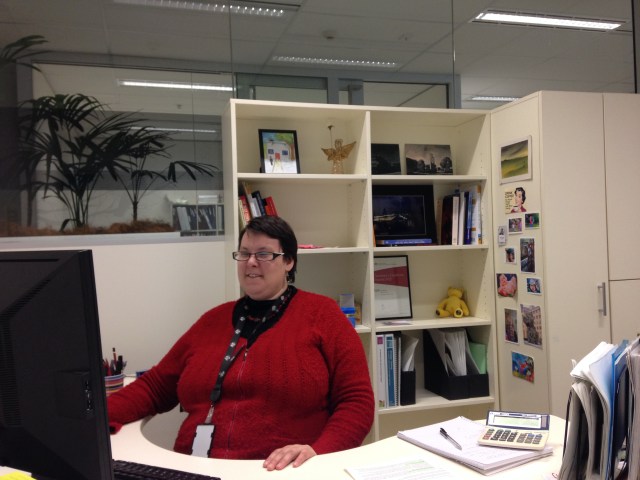
I loved my job in the public service as soon as I started. There were challenges but there were huge benefits too.It must be good as I have been there ten years and have been promoted twice – to the level I am happy to stay at. My world of work went from woeful but I now think it is quite wonderful. I love that I am a visible Autistic person with mental illness who has professional role. While there are a good many of us, not everyone is ‘out’  at work (which is often understandable due to concerns of stigma) and for some people they are told a lot of negative things about their capability to don’t think to try and join the workforce.

Some the issues for autistic job seekers and employees include:

  • Anxiety – sometimes worsened through unpleasant and invalidating experiences in previous jobs
  • Lack of willingness by employers to hire Autistic staff
  • Lack of understanding of Autism among managers and staff
  • Communication misunderstandings
  • Intersectional disadvantage  and discrimination (i.e. Autistic person belongs to other groups which face disadvantages such as non-English speaking background, gender diverse, Aboriginal and Torres Strait Islander background, or Queer)
  • Sensory issues – non-autistic colleagues and mangers often have no frame of reference for sensory overload and may dismiss sensory concerns
  • Applications – difficulty ‘selling yourself’
  • Interviews Interviews Interviews Interviews!! A job interview favours a confident extrovert. Many Autistic people are neither of those things and find it difficult to wear their ‘cloak of confidence’ and pretend to be confident
  • Interpersonal issues
  • Discrimination and bullying
  • Being perceived as odd or incompetent due to presentation and communicating differently
  • Executive functioning difficulties – these can make it hard to manage timeframes and deadlines and prioritise work effectively
  • The ‘hidden curriculum’ – unwritten roles for workplace social behaviour which non-autistic people seem to know intuitively but we don’t!
  • Understanding how to navigate workplace hierarchies.

Some strategies

Some things I have found helpful in the workplace include:

  • In applications and interviews, practice and research. Research the company you are applying to work at. Know what they do. Look at things like their mission statement and annual report to get an idea of what they place emphasis on and then use that knowledge to promote yourself as a good fit with that company.
  • With interviews, preparation is the key. Know that a job interview is likely to be difficult but not impossible. Usually if you have made it to the interview stage the employer is convinced you can do the job but just wants to get to know you. As Autistics we can assume everyone will dislike us but this does not always have to be the case. Practice your interview technique and knowledge of the job with a friend, partner, family member or in front of a mirror. In my case Mr Kitty gets to be the boss if I need to prepare for an interview. This will help you to create a ‘road map’ in your mind  and hopefully be better prepared and less anxious at the actual interview.
  • Consider whether, when and how much you will tell you employer about your Autism. There is no ‘right’ way to do this and it is your personal choice. Give it some thought and work out a strategy. You don’t necessarily need to stick to the strategy but it can inform your thinking.
  • Have someone you can talk to about your job and any issues which come up. Preferably this should be someone you know outside of work. You don’t want to spend half an hour venting about the boss to a colleague and find out they are friends with one another!
  • When you start a job you will not be as competent as when you have been there for a while. You will learn on the job. We often expect to be proficient at something the instant we start doing it but this is not how it works. Your manager will not be expecting you to be perfect in your first couple of weeks. Try not to be a perfectionist and tell yourself you will improve.
  • Reality check. Often we can become anxious at work about something  we did or said. This anxiety can become significant and impact on how we do out work. If possible, when you start being worried about something you did or said ask your manager or the person who saw you say or do that you are worried about, whether they are OK with it or if you upset them. You can even say ‘I’m just doing a  reality check…’
  • If there is such a thing where you work, you could get involved in the disability staff network or similar group. This will put you in touch with other employees who may have some similar concerns and experiences to you.
  • There are now some Autism-specific employment programs which are quite good. In Australia – and around the world – there is an organisation called Specialisterne which aims to make 1 million jobs for Autistic people worldwide within ten years. They provide jobs in a variety of industries. In Australia we currently have a number of Specialisterne jobs in  IT areas like software testing and cybersecurity and also a program in agriculture. They tailor their recruitment processes and management to be more suited to Autistic styles of communication. These are jobs in open employment, not subsidised places. If you think this is something you would like to do check it out!
  • Finally, try not to doubt yourself. You might question your employability or ability to secure and keep a job which works for you. This is understandable given some of the prejudice around Autism. However many Autistic people who thought they would never work – like me – have found good employment ‘fit’.

IMG_0699Professional me

‘I’m sorry, I have no idea who you are!’ -living with face blindness

We had a new Branch Manager start at my workplace yesterday. Being an outgoing Jeanette I mentioned to her executive assistant that I would like to meet her if she had a moment. I introduced myself and told her a bit about what I do in my job and outside of work as an Autism self-advocate. Even though our meeting was very positive and pleasant, I left filled with anxiety. I was not anxious about having a new manager or about how things might change or even that she might not like me. My anxiety was much more practical and conventional: I was worried that the next time I saw my new manager I would have no idea who she was.

I have a condition called prosopagnosia, also known as face blindness. It is more common among Autistic people than others and it can be very difficult. When I was a toddler my mum, my brother and I travelled overseas and my dad stayed behind. Apparently when we were greeted by my dad I had absolutely no idea who he was and was afraid of the man with the beard and didn’t want him to go near me.

Prosopagnosia  can vary in how it impacts a person. I have a relative who can recognise people in the real world but gets endlessly frustrated while watching movies as he can’t pick which character is what.

I used to be incredibly anxious about being seen to be ‘weird’ in regard to my lack of the ability to tell one human face from another. I didn’t realise that other people experienced similar difficulties and thought everyone would be rude and judgemental if I explained to them that I hadn’t known who they were. This was tied up with my lack of self respect and my having no positive Autistic identity. At that time I thought my Autism was almost something to keep as a secret and anything I viewed as being related to it – like my face blindness – probably needed to be kept to myself as well.

In 2006 I was exhibiting as part of artist collaborative group called Space Pork Adventures at the Australian Centre for Contemporary Art (or ACCA to its friends). Any artists among you will know that was a pretty big deal. ACCA is a public gallery which holds shows of internationally renowned artists. It was certainly a new world for me – at the time a public housing tenant, social chameleon and long-term unemployed person who felt intimidated by anyone with a job. One of the curators from ACCA was working with our artist group. She was a twenty-something woman who wore trendy clothes and rode a pushbike. At the same time I had another prestigious thing going on. My first book, an autobiography called Finding  Different Kind of Normal, had just been released. As a result of this I was also in the middle of being one of four Autistic adults filmed in an independent documentary which ended up being screened nationally  on ABC TV. [The film is called Alone in a  Crowded Room and it features Dr Wenn B Lawson, Akash Temple and James Treffry – and me – and is wonderful. It is available as a DVD on the Sensible Films website…. and I’ll stop plugging things now!] The filmmaker was a young woman who looked remarkably similar to the young curator at ACCA. I was definitely in aspirational territory and wanted to make a good impression with all these employed artist type people and was scared I might get one mixed up with he other. I attended the opening of the exhibition at ACCA and spent about twenty minutes talking to a young woman. I knew it was either the filmmaker or the curator but had no idea which one! I had this conversation with no idea of which person I was speaking to. I kept looking for cues to indicate whether it was my curator colleague or my filmmaker friend. I never worked it out but the next time I spoke with the filmmaker she said it was her that I spoke with and she had wondered if I had difficulty recognising her after we parted.

After years of trying to figure out who people were, I realised relatively recently that it is actually OK to tell people you have an issue with facial recognition. I  think it is probably better to tell people as they understand. People do seem to have a habit of making assumptions about others’ perceived ‘oddness’ and often what they fill the gaps in their knowledge wth is less pleasant than if you explain the real reason to them.

This is my usual response when I don’t know who someone is and I am aware I probably should:

“I am very sorry. I am not being deliberately rude, I have face blindness. I’m not sure who you are. It is because the part of my brain which processes inanimate objects is what I use to process faces. It is quite common, especially among Autistic people like me. If you tell me who you are and where I know you from I will remember you. Thank you.”

I would not have been able to say that to anybody when I was younger and didn’t own my Autistic identity and I wasn’t connected with the Autism community.

When I was embarrassed about my differences I was unable to explain to people something which made me look more ‘different’  – it formed a sort of a catch 22 situation  of not recognising people. I am much happier to be able to explain and usually people are fine. And for those that aren’t fine? Then I suppose it lets me know that I need to focus attention on representing for all things Autistic and educating them.

So if you see me at an event and I don’t know who you are, I do apologise. It’s just how my quirky little Jeanette brain works. And it is perfectly OK and not something to be ashamed of. And if you have face blindness too? Well I hope you found this blog post helpful. And you are most definitely not alone.

img_2483

Reflections on identity

Today I was in my parents’ home in Beechworth. I had travelled here to spend today with my dad as, after 31 years in Australia he was going to get his Australian citizenship. This might seem like a neat little thing – adult child goes home to celebrate citizenship ceremony with lovely Dad. In fact it was a difficult but beautiful time and it got me thinking around identity in all its forms.

Australian identity

I was registered as an Australian citizen by my mum – herself an Australian living in England at the time shortly after I was born. I still have UK and Australian dual citizen. When I moved to Australia as an 11 yer old, I felt more at home here. We moved to a country area and I lived on a dirt road with country people. School was hard. Everybody seemed to hate me – I had a silly accent, I dressed ‘wrong’ apparently an I had an imperceptible air of weirdness which all the kids picked up on and that I could not rid myself of no matter how hard I tried. While I loved Australia, I hated the isolation of living in the country where I could only escape if a parent drove me somewhere.

At age fifteen, for a variety of reasons I became a teenage socialist, reading Karl Marx on the school bus. I joined the International Socialist Organisation. They told me that everything I had learned about Australia was wrong. Mateship was apparently a toxic myth, we were all part of a racist ‘colonial settler state’ and even our Labor government at the time was complicit in exploitation and victimisation of vulnerable people. School history lessons certainly became interesting!

As a socialist, I hated Australia Day, bush music, the flag and related things. When my parents asked me to buy some Australiana-themed gifts for my English relatives I flatly refused! As years went by I stopped being a socialist and in getting older I have become much less hard-line about things. I will speak out about prejudice and discrimination where I see it, but I don’t blame country people and their doings with all the evils of oppression.

Today is Australia Day – quite a fraught date in our nation. For those outside of Australia, Australia Day marks the European settlement of Australia commencing form 26 January 1788. For a lot of Aboriginal and Torres Strait Islander people this date marks a day of sorrow and anger at the loss – sadly often quite intentional – of their cultures and lands to the settlers. We do have a shameful past – and sadly sometimes a shameful present – in relation to the First Peoples of our nation. I am acutely aware of this.

Today was an event I would never have thought I would enjoy, least of all feel emotional about. There was a ceremony for new citizens – including my Dad. There were speeches by the Mayor and a wonderful Australia Day Ambassador who had migrated here form Malaysia many years ago. He had an even more impressive CV than me!

We sat near the front. There were some entertainers – a lovely young woman singing, a intense-looking folk musician who came by himself and sang beautiful, sad songs and an outgoing fellow singing bush ballads and getting the kids singing and dancing. In the past I would have sat in the audience biting my tongue to keep from complaining about all the nationalists and things and feeling very out of place! Today I participated in the singing – even doing the dance moves for ‘Give me a Home Among the GumTrees.’ I sat between my parents. If you don’t know much about me, my parents were the two people the stood by me through every awful experience and poor choice I committed in my twenties. Their love for me is tangible. While we singing and clapping i was trying hard not to cry from all the things competing for my emotional attention – my dad becoming Australian like my mum, my brother and me, all the people from their town that I know and who were there for my Dad, even coming to terms with my own personal history. For the first time since I became a socialist in 1989 I actually felt Australian. I have never had much of a sense of national identity as English or Australian but today I did. Not the kind of identity that excuses errors by one’s country and its people, but one which enables me to love where I live and hopefully hold it to account if it does something unhelpful – sort of like a friend.

Autistic identity 

I had another experience of identity today and that was my Autistic identity. I have been quite confident in my own Autistic identity for many years but today got me thinking about Autistic identity as it applies to me and others.

I had morning tea with three women – all mums of Autistic kids here in Beechworth. Two of them came to a presentation I gave in 2015 and the other I hadn’t met before. We got take away coffees and sat in the same park where my Dad became a citizen this evening. One of the women had contacted me and asked to catch up. She asked if we could talk for ten minutes but I thought coffee would be a better idea.The four of us sat on a park bench and talked for two hours. I don’t think I talked as much as I usually do. Like parents everywhere, sharing stories and concerns about their kids is a very  important thing, particularly if their kids – and they – might be having a hard time.

We had a great conversation. The woman I sat next to hadn’t come across much that I had done. I often have the extrovert’s folly in these situations and introduce myself loudly and list a bunch of my accomplishments but I’m getting better practiced with my communication with groups so refrained from doing this.The woman asked to see the copy of my mental health book and spent a long time looking – not flicking through it but reading the foreword by Wenn Lawson. I noticed her doing this but didn’t say anything. The she said ‘Wenn says Autism Spectrum Condition. I like that. I’m never keen on disorder. It’s not that. it’s a difference’. We discussed that and she bought the book.

My own identity certainly focusses on my strengths not deficits. I don’t use the term ‘Autism Spectrum Disorder’. I don’t feel all that ‘disordered’ – more misunderstood in my difference. I call myself Autistic. I introduce myself to almost everyone as ‘I am Jeanette. I am an Autistic self-advocate….’ It works for me.

Today got me thinking about identity though. Twenty years ago, my identity did not include ‘Autistic’ or ‘Australian’. Today it does. But nobody else can or could bestow upon me an identity. An identity is what we choose for ourself. It is us coming to terms with being who we are. I know some people will correct those who say ‘I am a person with Autism’ – but it is not wrong – it’s how they identify. If it works for them and is how they understand themselves, it is not mine or anyone else’s business. I never told my dad he should become an Australian citizen. His identity as English was presumably that is how he viewed himself. Then he decided to become Australian. Him being English or Australian – like me seeing myself as Autistic – represents our own sense of identity. Unless someone identifies in a way which is damaging to their sense of self or is hurting others, it is their ‘them’.

I am a happy Autistic, Australian, Asexual, author, public speaker, public servant and advocate who has atypical schizophrenia and is human mum to Mr Kitty.

img_4722

Beechworth’s new citizens – plus a politician or two


Criminal justice and Autism – A personal reflection

Today a friend and advocate colleague asked me for a quote on how Autism – and attitudes surrounding it – contributed to me being involved in criminal acts when I was younger. This is what I gave her:

“As a young woman I was very naive. I didn’t yet have my Asperger’s diagnosis and was desperate to be accepted. I was targeted by a criminal ‘boyfriend and committed crimes to gain his approval. I went to prison I became a social chameleon in order to survive. I was such a convincing social ‘actor’ that I identified with being a criminal so spent the next few years in and out of prisons. More understanding about Autism – and a timely diagnosis – may have kept me out of prison and spared me and the victims of my crimes from a lot of misery. I m doing well in life now but five years of my life were lost.”

These days I might be the least criminal person in the country. I pride myself on my ethics and community involvement, in my volunteer work and my will to make the world a kinder and more inclusive place. I have not committed a crime since 1999. But between 1994 and 1999 I committed plenty of them. I don’t often talk about this. I find it shameful and I hate to be defined by it but being asked for my thoughts on the topic made me realise other people are currently in the same sort of situation I was and their parents, kids and others who love them are most likely going through the kind of misery and anguish my parents did.

I will preface this piece by saying I do not condone crime or acts of violence. I do not make excuses for my own behaviour. While there were extenuating factors, I also had a choice. The notion of personal responsibility applied to me and other Autistic people as it does to others. However there are elements of Autistic experience which can push people in the direction of criminal acts and these people – like twenty-something me – do need assistance, love and support like any other people.

1994 I am  a twenty year old socialist. I have been living independently for three years. I experienced bullying as a child and teen, as well as sexual and other violence on many occasions. I had very few friends and was desperate to be loved and appreciated. I met a man  through the socialists who was really nice to me and we became very close. I thought he was ‘naughty’ as I saw him spraying graffiti and doing things like that. He was confident and interesting and said things I thought validated me. He told me about some other things he wanted to do – more serious crimes. At that point I know it was wrong and I didn’t want to do it. But I also knew that if I did it I would gain the man’s approval and the way he talked about crime, nobody would be scared or in danger. He made it sound like going to work. I was conflicted. He started talking about very scary things. I wanted to leave him but I knew all his plans. I really believed if I don’t go along with him I would be killed.

1994. My mum is driving home from work and hears a news item about a criminal man and his partner, a Jeanette Purkis of Richmond in Melbourne having been arrested for a robbery. This was in the days before the world wide web and mobile phones so it was hard for my parents to work out what was going on. They drove to Melbourne and stayed with my mum’s relatives. My mum’s step-grandma  – a wealthy lady who lived in a ‘nice’, leafy suburb, said to my mum ‘If it was my daughter I would move to Peru!’ My mum now says she thinks the relative was serious.

My parents suddenly got thrown into the world of crime and prison. My parents are kind of Aspie themselves – my mum now diagnosed as being on the spectrum and my dad sitting somewhere in hid own  ‘quirky’ space. They didn’t know where to turn to for assistance or support and spent much of the time I was involved in crime feeling left out from Autism parent groups etc. If you meet a parent of someone who is in jail, remember that the people who love the offender didn’t commit a crime themselves and may be really struggling.

1995 I was released from prison but I was so damaged by the experience that I self-medicated with drugs. Getting and using drugs was my passion in the same way that Autism advocacy is my passion now. This was Not Good.  My lovely parents had funded sessions with a psychologist specialising in women and girls on the Autism spectrum but  was oppositional about the diagnosis and high most of the time so I stopped going. My next meeting with psychology and psychiatry was was an impatient in psychiatric ward where I was diagnosed with schizophrenia. I do not know how much my anxiety and drug use contributed to me becoming unwell but I do know that Autistic people can be more susceptible to drug related issues. I have now been taking anti-psychotic medication for 22 years. It seems I will need to for the rest of my life and I definitely have a mental illness in need of treatment.

Autistic people can be more impacted by various substances including alcohol and prescription drugs as well as illicit drugs. I’m not sure what the solution/s is to this but I do know that drug and alcohol dependence are not something someone wakes up and decides to do. Addictions seem to happen where there is trauma or something important missing for a person. So that would suggest the solution starts before the ‘don’t do drugs. m’kay!’ talk at school but actually goes to supporting children and young people to live a life whey they are supported and kept away form trauma and invalidation. (OK, I know that’s really hard in this world of ours but a good goal to work towards).

1999 I have been in prison on and off for years, I have nothing – my possessions are letters an cards from family and some not very good drawings I’ve done. I am incredibly unwell with my mental illness and have been given huge doses of an older anti-psychotic drug called Largactyl. I have been self harming in some pretty severe ways for years. I should have died many, many times. To say that I didn’t like myself is an understatement. I asked one of the nurses in the prison if they still did lobotomies as I thought that would be better than inhaling the hell that was my minds the life I had somehow made for myself. I had lost my identity – social chameleon and acting is good for an Autistic’s survival in prison but because it is so necessary and urgent to be convincing it can come at the cost of  person’s identity – it did for me.

However a few months after that I was a free woman, exiting the prison gates for the last time in February 2000. Six weeks before I was supposed to be released, I was planning to continue my recidivist existence as, while I hated it, it was what I knew. Then I had an argument with the scariest person in prison. I was already in what was known as the ‘management unit’ due to my acting out and aggression so there was nowhere else for me to go. In the name of my safety the officers left me in my cell which – had around the same surface area as my bathroom in Whimsy Manor – for 23 1/2 hours a day. I got to walk around the yard by myself for half an hour a day. The only contact I had with people was the nurses dispensing my medication which took less than a minute. I think I had a visit or two but that was it. Anyone who knows me well knows I am extroverted and love talking and sharing ideas with people. This awful solitude for six weeks got me thinking. I thought if I committed another crime then I would be by myself for as long as my sentence. It could be for six months! My life as an institutionalised recidivist was not something I wanted any more. I was propelled from my negative world by a negation. Of course I did a lot of work to became the me I am now than just not wanting to be in prison, but it does illustrate that some Autistic people are very practical and logical – as am I. So while there was an ethical imperative to not commit crimes and victimise people, that was not the first point on my journey to being as free as I am now.

I’m not sure if this is helpful to you but it is quite a cathartic thing to wrote. I have better go and cuddle Mr Kitty and reflect on how my life is amazing.

11046731_802262049855184_5926989556036969386_o