Mountains and molehills – why I ‘sweat the small stuff’

’Don’t make a mountain out of a mole hill!’ That was one of those confusing sayings when I was a kid. I worked out that it meant I shouldn’t get really upset about little things and make them seem more troubling than they were. For an autistic person, there is a flaw in that reasoning.

Some people’s ‘mountain’ may be another’s ‘molehill’ – what is signifiant to one person may be largely irrelevant to another, and vice versa. For Autistic people, we often ascribe meaning to things non-autistic people see as irrelevant. For an autistic child, a change in the routine of class may cause a meltdown whereas the non-autistic children in he class may not even notice. In that situation, a teacher who is not experienced in working with autistic kids might be annoyed with the autistic child’s response. S/he may even discipline them for poor behaviour but to the autistic child the change was a big, stressful thing.

Understanding what is important to an autistic person and what will impact them is a really important part of being our friend, partner or a supportive teacher or clinician. I have some examples from my experiences with psychiatry which hopefully illustrate this issue as it is experienced by an Autistic adult.

I shall set the scene. I am a forty-two year old author and respected member of the autistic community. I live in a house which I purchased eight years ago. I am a ten year veteran of the Australian Public Service, I have spoken in front  of many large audiences, including for TEDx canberra in 2013. I have a Masters degree and a number of major awards, including ACT Volunteer of the Year. I am seen as intelligent and articulate. I am considered ‘successful’ within the autism world and the wider community. People who don’t know me well are often surprised that I struggle with many things others might not notice.

I have a mental illness which is fairly well managed at the moment. However, I still need to see a psychiatrist regularly. My two most recent psychiatrists have been lovely – respectful, kind and treat me as an equal. However I had to leave one of the and I am struggling to stay with the latest one. This is not due to any poor clinical behaviour, mistakes or rudeness by the respective doctors. The reason is logistics.

The psychiatrist I left last year worked in public mental health clinic. It was one of those awful places when all the doors were locked and the reception staff sat behind a glass screen which went right up to the ceiling. (I was always tempted to ask them to count my coins or deposit a cheque!)  The whole setup smacked of paternalism and control. The waiting room was tired and sad – magazines from ten years ago lay unread and the walls were plastered with black and white photocopies of factsheets on mental illness, This was not what put me off though, unpleasant though it was. The final straw was when the lovely receptionist who was always there went part-time. The change in and of itself was not the issue. The problem was that the two receptionists who shared her job were gatekeepers of the worst order. They would not take messages. The final straw came when I was required to obtain a Working with Vulnerable People card as part of a voluntary job I was doing, Because I take medication I was asked to get a letter form my treating doctor who had prescribed it. There was a very short deadline for this information so I asked the receptionists if they could provide the general email address for the clinic so I could forward on the email. They flatly refused and said I had to mail it. This caused a lot of stress. I had to ask the ACT Government which issues the card for an extension. The thing that really upset me was how insulting – and arbitrary it was. I am a middle manager in the public service. I have access to email addresses for any number of high level people and in my almost ten years in the Service I have NEVER sent an inappropriate email to anyone. But I guess once you walk into a public mental health clinic you lose your identity a little. I knew I couldn’t attend this horrible disrespectful place. My only option was to go private – which costs me $310 each visit but is nicer in a load of ways.

So after the officious prejudice from the public system I started seeing a private doctor, This was fine until  few months ago when I called to make an appointment and got a recorded message saying my doctor had moved. There was a number which I called and got through to a receptionist in a new clinic who booked me in. They didn’t have EFTPOS set up so I had to pay the account after the fact when the receptionist sent me an invoice. They also didn’t have their diary online yet so I couldn’t book a new appointment. A couple of weeks ago I got quite unwell and needed a psychiatrist appointment. In fact  I had called the crisis team and they had strongly recommended I make an appointment. When I called the number I had got through on before, I got the sounds of a fax machine! I thought to call the number for the previous clinic. It gave me a new number which I called…..and got a recorded message saying the clinic was open form 9-5. But I called at 2:00pm! I tried two more times with no luck. Now I have no psychiatrist appointment, am kinda unwell and will be decidedly irritated if I have to get really unwell and go to hospital or some other nastiness because of logistics!!

So, maybe I am ‘making a mountain out of a molehill’ but it is a very real issue to me. It’s funny because when I have complained to the two doctors about this sort of issue I got the impression they had no idea how stressful and at times insulting it was for me. Maybe they thought it was part of my mental health pathology to be bothered by apparently small things.

Basically, out of all that annoyance to Jeanette, the message is to listen to autistic people and respect that if we say something is  bothering us – or if we can’t do it in words but explain through behaviour and evident stress – then please believe us. One person’s mountain is another person’s molehill. It isn’t ‘right’ or ‘wrong’ – it is just our experience.

11043316_802276853187037_6636589104752091030_o

Reflections by a (grown-up) Autistic girl on Yellow Ladybugs in Canberra

In 2009 I went to a conference on women and girls on the autism spectrum as a speaker. On the second day, the only people in the room were women and girls on the spectrum. For the first time in my life I genuinely understood on a fundamental level that I am an autistic woman. I also saw how amazing the other women were and realised that it was OK to be autistic. I had found my culture. I felt like I had come home. I was 35 years old.

Back in 2016 and I just spent over two hours at trampolining centre Flip Out with seventeen ‘yellow ladybugs’.Yellow Ladybugs is an organisation which provides social activities for girls on the autism spectrum. It was founded in Melbourne by Katie Koullas – a mum of autistic girls and a legend at using her skills in public relations for the purposes of autism advocacy and generally a very cool human being. After the diagnosis of one of her daughters, Katie noticed there were few opportunities for autistic girls to meet in a safe space and have fun together. Yellow Ladybugs is also an advocacy organisation, putting in submissions to Government and the UN to promote the rights of autistic women and girls. The organisation is one of my absolute favourite things in the world.

Today’s event was the first Yellow Ladybugs event in Canberra. It was organised by a number of people – Alison, Sharon, Melanie, Karen (and sorry if I missed anyone off here – I’m not so good at remembering people and it was a pretty stimulating morning!). I went along as an ambassador.

I got a lift with Alison and we had a really lovely conversation between my home and the venue. Alison parked the car and I went in, clutching the attendance list and some very wonderful social stories written specifically for the event. There were a couple of women with their daughters, some of whom were wearing the distinctive and very beautiful yellow t-shirt with a graphic of little ladybugs in the shape of a heart. One woman came up and introduced herself. ‘I’m new’ she said.  We found a reserved table for our group and things got started.

It was quite loud, with music and the bouncing sounds from the trampolines mixed with the noises of children having fun. All pleasant noises but potentially overloading for autistic kids (and Jeanettes!). The girls seemed to be managing well with the noise so I relaxed a bit. I didn’t want any of the girls to have a negative experience.

Someone came and asked me to do a quick introductory speech – I hadn’t been asked before then so was a little concerned. A  worried looking woman asked me what I was going to say. I instantly knew what the issue was. It turns out she had not had the Autism ‘talk’ her daughter with and the girl didn’t know about her diagnosis. The mum didn’t really want her finding out from me talking about autism t this event! I reassured her that we call the girls ‘yellow ladybugs’ and that is all we say. In fact speaking to a room full of young girls basically should involve the elements of ‘Hi girls. Nice to meet you. Have fun bouncing. I’m a yellow ladybug too – look at my t-shirt. I have kitty earrings. Have fun girls’.  Thankfully that is just what my speech consisted of!

After my brief speech the girls went and bounced on the trampolines for a bit. I wasn’t sure if adults were allowed to bounce. I would have liked a go but it turned out I had other – probably more important – things to do.

I brought some of my Jeanette books and a magazine with me in it and a lot of business cards. I would not have done this in the past, thinking it was presumptuous or pushy or something, but today I did. The books were great as they opened up a number of conversations. I spoke to all but three of the mums and had some really interesting conversations. I shared some of my own experiences and things I know and have learned through my work in the autism community and managing my own life. I think all of the mums got some value out of our conversations – and I know I did.

One thing I realised quite recently is about the ways other people view me, as an autistic person. My feeling has always been that I come across as a braggy, confident, extroverted, overachieving ego-monster. (And i accept that I might for some people). I am surprised that people see me differently to this view. I am an overachiever but how valuable is an autistic adult overachiever to parents of an autistic child? My accomplishments can be their child’s accomplishments. My understanding of the world which enables my achievement can translate to their child’s life and how they relate to their child. So, in that context it made sense that my books were very popular.

Most of the parents I spoke to thanked me for my work in the community. Of course my work in the community has many rewards for me but heartfelt thanks from parents is one of the nicest rewards I can receive.

I am motivated by the kinds of things that I see at events like today’s. The woman who introduced herself and her daughter with ‘I’m new’ and i got talking towards the end of the event. She said that her daughter had never had a friend but today she met a friend and they played together  for ages and swapped phone numbers. The mum apologised for being teary. I said ‘I’m teary too’ and I was. When I see events like this for young girls I always reflect on my own life. I went through hell as a teenager and young adult, mostly due to bullying and also being told by almost everyone in my life how I was unable to do things and must be a sort of wrong and broken girl. Despite this I have achieved great things. Imagine these girls today, girls whose parents have some understanding of their particular challenges and  their skills. These girls who this morning walked into a room full of other girls who ‘get’ them, unlike many of their peers. Girls who are told positive and affirming things, living in a world where autism is much better understood, a world where there are supports – despite there still needing a lot to be done. How much more are their journeys through life going to be changed for the better with all this as the backdrop to their experience?

I imagine them having the experience I did in the room full of other autistic girls, only they are having at at 8 or 10 years old instead of 35. They have access to their autistic identities. They are likely to get to ‘come home’  to their culture in their formative years where it can influence their life for the better. That is why today was magical for me.

15181341_826612344145462_997509726664112605_n

A matter of culture – Why different isn’t less

I am a forty-something Autistic woman. I was diagnosed when I was twenty, way back in 1994. I was given a diagnosis I didn’t understand, a word I had never heard before ‘Ass-ber-gers’.  I thought it meant all the bullies who made my school days a misery had been right. The diagnosis would mean that everyone would bully and victimise me, I was officially ‘weird’ – it was written in my DNA and in my mind. Needless to say I didn’t take to this new piece of diagnostic information very well.

As a child I recall occasional friendships with people who seemed to ‘get’ me better than others – the boy who was passionate about different castles in England and built scale models of them, the girl I sat next to in English class who collaborated wiht me on science fiction and fantasy stories. We made up characters for the stories and a whole imaginary world. There was a group of boys in high school whole reimagined shakespeare plays as comedies (and they were absolutely hilarious too!)  Through the benefit of hindsight, I recognise a number of my school friends as probably being Autistic themselves but there was no word for my own little quirky ‘type’ when I was at school in the 1980s.

I eventually accepted the obvious – that I was an Autistic woman – and started on my own Autistic Odyssey. This would have been in 2001 – a time when understanding around Autism was still not widespread. Everything I read about Aspergers or autism was focussed on perceived deficits. The idea of Autistic pride was a as remote as the surface of the moon for me for many years. I would tell selected people who I thought were less likely than most to run me out of town carrying pitchforks and torches! (or the equivalent in judgement or rudeness). When I disclosed – sadly ‘admitted’ might have described the process more accurately  – it was in whispered tones with much justification and apology on my part.

In 2005 I was still something of a self-hating Aspie but something happened which changed my world fundamentally. I met prolific and influential  Autistic author Donna Williams who became my Autism world mentor. I learned about ‘stimming’ and that being sensory seeker who loves sparkly things was not uncommon in the Autism community. In fact I learned there was an ’Autism community’ and that I could belong to it if I wanted to. Donna helped me in a another, very significant way too. She suggested I write my story. Apparently of all the Autistic autobiographies, there was nothing approximating my tale of poor choices, prison, drug and alcohol issues and eventual redemption. I wrote the book. It took four weeks to draft, two to edit and three weeks for the publisher to say a big, emphatic ‘yes please Jeanette! Have a contract.’ I was very happy and absolutely terrified as I didn’t think I knew a lot about Autism.

The book opened a large number of doors for me, including a bit part in the production which is Autism advocacy. As years went on, I learned about Neurodiversity, Autistic Pride, the idea of ‘Different not less’ and ‘Nothing About Us without Us!’ While Autism had always been presented to me as a negative, something in need of treatment and fixing, here I was meeting other Autistic people who saw their differences and quirks not as something to hide bit as a source of pride. I loved this. I had feared my diagnosis would result in ridicule and bullying, but what it did was the opposite. Being proud of who I am made me able to value the Jeanette that the bullies hated for no good reason. I reclaimed my identity.

However this blog is not just a fond memory of me learning to value myself – although that is certainly a good thing. It is about a thought I have had for a while – the concept of the value of Autistic culture. I get to go to a lot of big Autism conferences at the moment, which is challenging and very enjoyable. At these events, there is a ‘quiet room’ where Autistic delegates and speakers can go if everything is overwhelming or they just need some time to regroup in a quiet and hopefully dimly-lit environment. I tend to spend most of my time at conferences in the quiet room, except the bits where I’m speaking.

A while ago I noticed something, after seeing groups of several Autistic people together. We are told all our lives that our social communication is deficient. We apparently have ‘poor social skills’  and ‘poor communication.’  I will refute that here and now as complete rubbish. We don’t lack communication or social skills – we lack neurotypical or non-autistic social and communication skills. When I am in a room for of Autistic people, there aren’t really communication ‘mistakes’ – we understand each other.This is because we use a similar communication style. It is like a language. Imagine that Autistic people are all speaking French, and non-autistic people are speaking Italian. When French speakers are with other French speakers they understand one another. However if they wander into a room full of Italian speakers, they will struggle to be understood. Autistic communication isn’t deficient or wrong, it is simply not non-autistic communication. Because most humans are non-autistic, they tend to assume that any deviation from communication in the way they know it is ‘wrong’. It isn’t. Autistic communication is understood by Autistic people because we are speaking the same ‘language.’ You would never say that Italian is a superior language to French – they are simply different. The same needs to be understood about Autistic communication

A lot of Autism ‘therapies’ and intervention are based around teaching autistic people to speak non-autistic ‘Italian’ better. I will say to non-autistic  people. But Italian speakers can learn French. By that, I mean that it does not have to be one-way. Non-autistic people can learn Autistic styles or communication and interaction,

I attended a great conference recently which was probably the most inclusive and respectful one I have been to. The international keynote speaker was the wonderful Steve Silberman, who wrote Neurotribes. (I would suggest reading his book if you are interested in the sorts of issues in this blog too.) Steve said that the Neurodiversity movement is the civil rights movement of the 21st Century. I tend to agree with Steve. I think what we need to do is instil in Autistic people that sense of pride and self-worth but we also need to try and teach non-autistic people – especially those in places of influence over autistic people’s lives – to speak a bit of our Autistic language.

11289587_846906952057360_4546062650575153305_o


An open letter to everyone: Being human 

I give a lot of talks about Autism. Often people in the audience remark that I seem to be talking more about being human than just speaking on Autism. Given recent changes in the world and the fact that I think I do have some useful thoughts, I drafted this open letter to everyone on thoughts about being human and doing it well. Here goes…

Genetically, we are thousands of times more similar than we are different. Focussing on difference and particularly being prejudiced or judgemental because someone is different to us is not only very rude and unhelpful, it is also foolish. We are all a bit the same and a little bit different.

On that note, prejudice on any demographic characteristic is just stupid. Has a racist met everyone from the country whose people they don’t like? If not, how can they form an opinion about the whole nation? Does a homophobe know all people who identify as Queer in the world? No? Then please, none of the sweeping generalisations.  Prejudice seems to be based in ignorance and fear and stirred up by people trying to deflect blame away from themselves and onto a scapegoat. Foolish and mean and incredibly dangerous in the wrong hands.

We are one of many creatures on this earth. Even though we have built some cool stuff, make some nice sculptures and invented beer and other good things, it is important to remember we are part of the Earth. And yes, apparently we are made form elements from within stars – not really a point in my little manifesto here but a very beautiful fact.

Money is a means to an end, not an end in and of itself. I feel that money comes and goes. Unless you are poor and need money to be able to find appropriate housing, food etc, try not to think about it too much.  When it is spent it is gone but some more will come along soon enough. Whatever Pharaoh thought, you cannot take your money beyond the grave. And nobody in 100 years will remember you have a nice car (or whatever).

Your family does not need to be your biological family. In fact, for some people, biological family are not really family at all. If this is the case for you, it is OK to find yourself a ‘true’ family, composed of people who care for you and respect you and who you care for and respect.

Everyone, from the most senior national leader to the person begging on the street, is born, lives and dies. There are no exceptions to this,

It is true that ‘none of us gets out of this alive’. You can view that as horrific or you can view it as a motivator to do the best you can while you’re here. I aim to leave the world just a little better than it was when I got here. Not a big goal but quite a meaningful one.

We grieve because we love and I think maybe we love because we grieve.

It is OK to make a mistake, make poor choices or fail. Absolutely everyone does it. Don’t beat yourself up about errors – instead recognise it and then try to make some value from it by learning for the future, Adversity can be entirely negative or it can be both negative and useful if you use it as a learn gin opportunity, a /teacher; if you like.

Your mind is a beautiful palace. Fill it with good things.

We all view life through the lens of our own experience. This is why it is so important to listen to other people. You can ask for clarification if you like.

Music, art, theatre, wine, chocolate: none of these are essential to life but they make it richer.

Judging people based on body shape is a terrible thing to do but it happens a lot. You do not know why someone is overweight so assuming they are simply lazy and gluttonous is not only very mean but it may be completely wrong. Whichever, shaming someone is unlikely to help them lose weight!

The beauty in a person is within their mind and soul, not their looks or their figure. I would rather spend my life with someone outwardly ‘unattractive’ than an outwardly ‘beautiful’ person with a hateful heart, or even who was just really boring for that matter!

Everything changes. Each moment becomes another moment. A somewhat scary thought but also a good thought for those facing difficult times. Life is a journey which can take some very odd turns.

Never assume what you have in your life now will stay the same. I went from being prisoner to a student to an author to a government official to a homeowner in eight years. I never stopped –  just kept moving on and trying to make the most helpful choices,

The future is not predestined. I’m pretty certain of that. So the choices you make now create your future. Nothing is set in stone. It really is all up to you. I say ‘you are the CEO of your own life – it’s you making the decisions.’

Life is the greatest gift you have. Please don’t throw it away. Make the most from it. Even if things are hard now, you really don’t know what’s around the corner. Cherish the treasure which is your existence.

Mr Ronnie 3 October (1)

My final point: cats are the best!

“I messed up!” – Autistic communication and assumptions

I was in Melbourne last week, giving presentations on Autism. When I was done I went to visit a close friend, Alex* (not her real name – don’t worry she didn’t do anything terrible, I just prefer to de-identify anyone I put in my writing)!

Alex and I have been friends for many years and she is one of a tiny number of people who knew me before my autobiography was published and I went from being an unknown poor person to a published poor person….thankfully followed by published employed person and then to all the things which make me who I am right now.

Alex has the dubious honour of being someone I feel conformable enough to have meltdowns in front of. This is not very good for her because my meltdowns generally involve me getting stressed and defensive and sometimes very angry and rude and insulting to those around me. Alex is a beautiful person though and can see beyond my anger to my terror and distress. On one occasion I was in full yelling and swearing mode – via Facebook messenger – and Alex wrote one thing: ‘Are you OK Jeanette?’ I think at that point I realised just how much she liked and valued me. The meltdown sort of eased at that point and when I got back into being the positive person and proponent of ‘gentle power’ that I usually am. I thanked Alex for seeing beyond my stressed, overloaded self and into the person she has known for years.

When I was in Melbourne last weekend I did something while in my right mind, consciously and intentionally, which was a pretty bad ‘sin’ for an Autism advocate.

There has been a lot of (mostly very useful) discussion around Autism and gender lately. A number of authors – Autistic and non-autistic – have written about different male and female ‘types’ of Autism. Women on the spectrum tend to have some different attributes to men on the spectrum. This does not apply to every Autistic person of course. And when you factor in gender identity differences as well as the more typical (‘sis’) male and female genders then defining Autistic traits for different genders can be difficult and even at times quite unhelpful.

I don’t think I mentioned that Alex is also Autistic. I have a number of the typically ‘female’ Autistic traits  but Alex – in a  lot of respects – fits the more ‘male’ Autistic characteristics.

I spent much of my teenage years and early adult life being a ‘social chameleon’ – trying to fit in with peer groups and individuals, hiding my Autistic identity as much as I could. This is apparently something a lot of women on the spectrum do in order to navigate the world and try to avoid discrimination and victimisation. My friend Alex is not a social chameleon in any sense of the world and has never been one. She is 100 per cent herself all the time. What you see is always what you get. This is one of her qualities which I really like. She will challenge me and question what I say, which I am very grateful for.

It was this quality that resulted in me doing  something which I am still feeling ashamed of now. I did something I frequently advise non-autistic people never to do. I viewed my friend Alex through a non-autistic lens. I interpreted her statements about a mutual friend as being insulting and rude. And if a non-autistic person had said them, they probably would have been. In fact Alex was genuinely interested to know something  about the mutual friend and her experience of the world. I thought Alex was being intrusive but she was being curious. No offence was meant. Imagine her reaction when I berated her for doing something which would have been offensive if a non-autistic person had done it but in fact was completely innocent.

I learned a lesson that day. Even Autistic people, – and sadly many times published authors and sought after public speakers on all things Autism – can make unhelpful and incorrect assumptions about other Autistic people’s motivations. I could make an excuse. I could say my misinterpretation of Alex’s motivation was due to my spending time in the neurotypical world. I will not let myself off that easily though. I have been telling audiences this lesson for many years and the fact that I messed it up myself is something I am not proud of!

Thankfully Alex and I have talked through this and I have come to a better understanding. I will not make this mistake again. But if I could make this error in the first place, then it follows as to why this is such an issue for non-autistic people, some of whom know very little about Autistic experience and communication.

So what do we need to do to address this?

  • If in doubt of anyone’s motivation, ask and listen. Assumptions are the mother of misunderstandings.
  • We should all build our understanding of the fact that all Autistic individuals are individuals. Just because someone shares a diagnosis with you may not mean much more than that. We are all beautifully, wonderfully unique and individual.
  • If you make a mistake around assuming meanings try not to beat yourself up over it. Apologise to the person and add the experience to your library of other experiences where it can become wisdom.
  • As we all go through life, we can not only learn to ask and listen before making assumptions but we can show others this example too.
  • Many non-autistic people have very little knowledge or understanding around Autism and Autistic communication. Imagine that when they meet an Autistic person – they will probably struggle to question their own assumptions. We can help them on this path with examples and shared knowledge.

And I am really very sorry to Alex for my poor performance at being human. Thank you for forgiving my very large and unhelpful error and helping me to build my own understanding. It seems that a person is never too old or accomplished to screw up royally and learn a life lesson from it.

11043316_802276853187037_6636589104752091030_o

A story about Autism and criminal justice

One Friday I did something I haven’t done since 1998. I attended a police station. Done worry – I didn’t do anything horrible but it was a situation worthy of discussion I think.

If you have read my autobiography or seen the documentary with me in you will know that the respectable person who writes this post was definitely not respectable in the past. Due to naiveté and falling in with the wrong crowd’ and then my untreated mental illness symptoms resting in me acting on intrusive thoughts commanding me to commit violence and self harm, I spent three and a alf years as a prisoner.

My life a that time was some kind of shadow existence. I hated myself and didn’t have any hope at all. Thankfully in 2000 I got some help and started to see things differently. I set myself on the path to my current self – accomplished, community-minded and positive. The journey was far from easy. I spent many years terrified I would return to my criminal ways. Thankfully I didn’t. My resolve and the support I received from family, friends and professionals enabled me to move past that life. I gained a bachelors, honours and masters degree, wrote a book, joined the public service, gave a TEDx talk, wrote some more books and built a public profile in the autism community, I was as far from criminality as one could get. My sense of ethics and responsibility is now so highly developed that it s hard to imagine I am the same person I was 20 years ago.

So, why was I at the police station on Friday? The reason was actually paperwork. Mr poor frazzled mum got an unexpected call from a police Sergeant in September asking if she could tell me to contact her colleagues to complete a court order to collect my DNA which was issued in 1998. Apparently police officers get behind in their filing too! When I spoke to the Sergeant she told me it was a formality and I had done nothing wrong (which I knew, due to me not having done anything wrong!).

I won’t lie, I was a bit stressed at the prospect of going to a police station. The good old Jeanette paranoia went into overdrive. Were they were going to lure me to the police station with the innocuous request of completing their paperwork and then frame me for some terrible crime? Thankfully my logic beat the paranoia (mostly). When I got to the police station I was taken back to the late 1990s by the smell. It smelled like every police station I had ever been in – a mixture of cleaning products and the leather jackets worn by the officers. I announced my presence to the man at reception and was shortly introduced to the woman who would collect my funny Jeanette DNA. She shook my hand firmly and thanked me for coming in. I was led to an interview room. Unlike in the past, the door was left open and not locked. I looked at the papers on the desk. The officers had evidently printed every page of my website. I had sent the Sergeant a link to my website. I wondered what they thought when they saw the video of me on Canberra local news talking about receiving the ACT volunteer of the year award. It was immediately apparent that the Sergeant and her staff thought I was a very decent person.

The whole experience was surprisingly very affirming. The sergeant said as I left that she was certain she would never see me again. I agreed. I gave the station a signed copy of my autobiography which thought might be helpful for them. I walked out the door and the Sergeant shook my hand and thanked me profusely for coming in to give my DNA.

As I left the police to their difficult but presumably rewarding work I reflected on my own history, Meeting those very respectful and impressed police officers seems to me to the final nail in the coffin of criminal me. I now feel I have truly left the past behind. Of course I regret the poor decisions I made and their impact on people around me but I am no longer any shackled to my history. I have paid my dues and (cliche alert!!) served my time. I’m done. Now I can be the person I was supposed to be.

Just some thoughts around criminal justice system involvement and Autism:

  • Autistic people can and do become involved in the criminal justice system. However, it is important to note that the vast majority of Autistic people do not become involved in criminal activity and for those that do, it is often for minor crimes for which they were not the instigator.
  • Often Autistic people can be influenced by criminals to commit crimes. This can come from the Autistic person being in a  place of social isolation and thinking criminal friends are accepting them and offering genuine friendship.
  • Women – and some men – on the Autism spectrum are often prey to predatory people – either as victims or accomplices We tend to be trusting and a little naive. This can result in us being used and exploited by criminals.
  • Some Autistic people can become institutionalised and feel contained or ‘safe’  in various institutions. If this institution is a prison they can become recidivists.This was part of my own reasoning around being in prison in the late 1990s.
  • Autistic people involved in crime often have very different reasons for it than non-autistic people. In my case I was very kind and sweet but also violent. This can confuse people working wth us.
  • Autistic people can struggle with understanding the consequences of their actions. When combined with involvement with a criminal partner or friend can result in criminal activities.

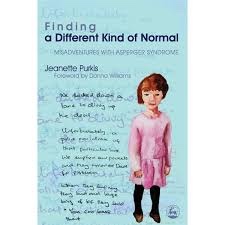
My book Finding  a Different Kind of Normal looks at a my experiences around criminal justice system involvement – Finding a Different Kind of Normal

autobiography-cover


‘All that you have is your soul’ – Playlist for a hard day

My life has always had a soundtrack.  Music has the power to change my mood, evoke memories and inspire me.

I have a diagnosis of atypical schizophrenia and an Autism Spectrum Condition. I have an intense creativity coupled with a lot of fear and confusion and sadness. The first 25 years of my life were horrendous. Abuse and bullying were the norm for me. I got involved with some dangerous people when I was in my twenties and spent time in prison. At the age of 26 I decided my life needed to change and started on the journey to who I am now – an author, artist, disability advocate and professional employee.

My top seven songs for managing a day in my amazing but difficult life are:

Mozart’s Requiem. The  may seem a depressing choice but it isn’t. To me it is a sublime and beautiful piece of music. It has been in my knowledge since I was 13 and first saw the Amadeus movie. It was the first CD I bought when I moved out of home. I see it as perfection crystallised in music. Listening to it helps me to contact the divine within me and know I can get through life.

Life’s for the living by Passenger. This song has become the song I play when I’m flying – which I do a lot but always find scary. It gives me something to focus on rather than my fear. I now associate the song with feeling safe and in control. I can also listen to it when I’m not 20,000 feet in the sky and it has the same effect.  The song says to me that we are here on this Earth once and we should make the most of it, whatever obstacles are in our way.

The Internationale by Billy Bragg. I am not a far left activist but I used to be. The Internationale was sung at the conferences of the socialist organisation I belonged to as a teenager. I see it as optimistic and positive in the face of difficult odds. I most definitely do NOT want a socialist revolution now but do enjoy a trip down memory lane to a time when I had purpose and certainty.

The Midnight Special. This is a song about being in prison and missing all the people in the outside world. I spent three years  in prison when I was in my early twenties. I also spent some time in the forensic psychiatric ward. Once, one of the nurses brought along his guitar and we had a sing along. When we sang The Midnight Special it was just beautiful. I was transported to a different place in my mind. I love the song to this day because it reminds me that whatever is going on in life there is always beauty and you are never really trapped if your mind is free.

Brandenburg concerto by JS Bach.  My friend Penny and I went to an exhibition at the National Museum which included a video of a performance by a chamber orchestra. Penny wanted to hear the Brandenburg Concerto because she used to play it on her violin. Penny is an incredibly positive and supportive person so now I associate this piece of Baroque music with her.

California Dreaming by The Mamas and the Papas. This is another song which evokes memories of a happier and less complicated time in my life. When I was in my final year of high school my fellow students and I got into listening to a lot of rather eclectic music, including California Dreaming. I did an art course for my final year so the kids were mostly a bit odd and quirky like me. It was the only year of school where I felt I had friends. I was top of the year too and really enjoyed the course. It is always nice to be taken back to that time through song because it was before my illness started and before I became involved with the ‘wrong’ peer group and what came with that.

All that you have is your soul by Tracy Chapman. I gave an interview on ABC Radio a while back and the presenter asked me what music I would like played after my interview. Without hesitation I said All that you have is your soul by Tracy Chapman. It is a bit of an anthem of my life, albeit a rather gentle one. It tells the story of a woman who has lived a hard life but come out of it wise, strong and insightful. I see the character in the song as being like me. It reminds me that there is always hope and that adversity and trouble can teach wisdom and insight.

img_2764

Activism and advocacy – The road from then to now 

I have been a diagnosed Autistic person for more than half my life. This post is some observations of where we were, where we are now and where we might be headed in terms of respect and Neurodiversity and other good things.

When I was diagnosed in 1994, literally nobody i knew had heard of ‘Asperger Syndrome.’  I thought it confirmed that I would be a nerdy geek that everyone would bully me for the rest of my days. I was understandably more than a little reluctant to embrace my new ‘label.’ My mum was told that Asperger’s was incredibly rare and about one in 25 people diagnosed with Asperger’s were women. Apparently i was incapable of love, empathy and thoughtfulness and I didn’t like hugs.

Fast forward a couple of years to 1996. I had acquired a mental illness diagnosis and was in the psychiatric hospital. The chief doctor there had come across some young men on the Autism spectrum. They were bookish and conservative. I was an extroverted, purple-haired artist who smoked weed. Plus my Asperger’s diagnosis had been given by a clinical psychologist rather than a psychiatrist (I will not infer from this, but I will mention the psychologist was a young woman who had what were unconventional ideas a the time – she was vindicated by the weight of reality catching up with most of the arrogant male psychiatrists and is now very much a respected clinician. Yay for the young women with unconventional ideas!!). The upshot of this was that my Asperger;s diagnosis was not taken into account and I was misdiagnosed with borderline personality disorder.

A few years later I signed up wiht an employment service provider which worked with Autistic people. The predominant view at this service seemed to be that employment was A Bad Thing for Autistic people. Most of the jobs clients of the service got were within the service itself.

In 2004 I was asked to enrol in a teaching and facilitation course with a bunch of other Autistic adults. Once we had completed the course we would be able to give talks at schools. That was not the best thing I got form the course though, One of the participants  was bestselling Autistic author Donna Williams – I still can’t imagine why she was there because it wasn’t like she needed assistance to do public speaking! In terms of my life though, Donna’s presence was, well if you believe in these things, I think it was destiny. Dona became my Autism world and literary mentor. She told me I should write my life story. A few people had suggested i do this but when a (at that time) nine times published author thought I should write a book, I thought it was probably time to do so.

The book was published of course. I don’t think I would be here writing this blog if it hadn’t been. The book was accepted by Donna’s publisher, Jessica Kingsley Publishers, and my life changed beyond  recognition. I went to a lot of autism events. What I noticed most was the disconnect between what I experienced and what the non-autistic ‘experts’ said about people on the spectrum. Also a lot of parents I met seemed to act like that had been dealt a dud hand in the offspring lottery – sadly often in front of their children. I felt defensive and uncomfortable at these events.

My life took a major turn in 2007 when I moved to Canberra to be a Government official, middle class person and  owner of lots of bright coloured, shiny jewellery In terms of inclusion for Autistic people – or conference speakers at least -things seemed to be changing a little. I was often the ‘colour and light’ at Autism events. They would get the ‘serious clinician person’ to do the whole day and then Jeanette would get fifteen minutes to relate something form my lifted experience. At the time I thought all this was pretty cool though.

In 2013 I was asked to give a talk for TEDx Canberra and then in 2014 my book on employment for Autistic teens came out. I discovered the Autism world properly then. I found out there was a mentoring organisation mostly run by Autistic people called the I CAN Network, there were lots of researchers who seemed genuinely interested in Autistic perspectives.  The concept of ‘Neurodiversity’ was floating around. I liked it.

A couple of years later and we are in an odd place I think. Almost everyone – whether they identify as part of our community of or not – has had some exposure to ideas around Autism  – media articles, family members or friends on the spectrum,  seeing Autistic celebrities or even TV characters like Sheldon Cooper in the Big Bang Theory. In the actual Autism community, there are a bunch of passionate activists and advocates. I like to imagine I am somewhere within their number. Autism organisations led primarily by non-autistic people are increasingly being taken along with attitudes around Neurodiversity and inclusion – with varying degrees of success and commitment. In the wider world, I keep seeing (and sometimes contributing to) articles in mainstream publications about the value of Autistic  employees but there is an employment  participation rate for Autistic Australians of only 35 per cent. One of this year’s bestselling books worldwide is the excellent history of Autism and Neurodiversity, Neurotribes written by non-autistic journalist (and very awesome guy) Steve Silberman. Damaging nonsense about ‘Autism epidemics’ and vaccines and causation – while understandably very unpopular in the Autistic community – have somehow resulted in their own awful ‘movement’. In some countries ‘treatments’ which purport to ‘cure’ Autism but are actually dangerous and harmful to kids are sold. Abuse and bullying are rife – often in settings which are supposed to be supportive.

There is a term used by politicians which is a ‘patchwork economy’. I think we have a ‘patchwork’ sort of world in relation to Autism. I do think that in my 22 years as being a diagnosed Autistic woman things have improved a lot. But alongside Neurodiversity and respect, there is this subculture of ‘cures’ and anti-vax and charlatanism. There is still a very strong whiff of tokenism and disrespect in some organisations which are meant to be assisting us but don’t seem to want us to be at the table making decisions. And decisions on Autistic people really should have Autistic people largely involved – and listened to – in making the decision. So we are definitely not there yet, but I am beginning to get some idea of what ‘there’ looks like. Just finishing off with some oft quoted statements – and for good reason. If these principles were adhered to, my life would be a lot easier as I imagine would the lives of a lot of my Autistic peers and colleagues:

“Nothing about us without us”

“Different, not less”.

10294977_799382020143187_8989493424462827214_o


‘How can you not hear that??’ communicating sensory difficulties

I’m not sure if this is the case for anyone else but the older I get, the worse my sensory sensitivities are. I used to be able to eat almost anything and it all tasted good and had a texture which didn’t revolt me. Now I am anxious about going to restaurants in case they have nothing I can happily eat.  I eat exactly the same dish every night unless I get take away, in which case I usually order the same dish! (Except for pizza. I think it’s pretty hard to make pizza horrible). To the horror of my vegetarian, vegan and health conscious friends, the things I am able to eat mostly come from the meat group or the sugar group! I am only 42 so worry that if I get old I might only have one thing I can eat!

I also have an increasingly heightened sense of smell. I have always had an acute sense of smell but it is getting ridiculous. The MC at the event I spoke at yesterday was running around all day and was evidently concerned he might be a bit stinky. I watched in horror as he liberally squirted himself with some foul deodorant thing. It permeated the room for hours! And public toilets are possibly my least favourite place at the moment. I work in a big office building and going to the bathroom can be a disturbing and overwhelming experience. It’s not that my colleagues are gross. They aren’t at all – it’s that my smell is incredibly sensitive so any unpleasant smell is magnified beyond normal levels.

And the one I have not experienced much before but which I find I get quote a lot these days is a variety of auditory sensitivities. The sounds of construction work are the worst. That noise results in an almost murderous rage. I have to be somewhere else if construction is going on. I also hate water sounds indoors and any unidentified mechanical humming sounds. Sometimes I can feel a building trembling in time to some machinery sound. It’s horrible.

I’m pretty certain my Autistic readers will all be reading this and thinking ‘yup. Sensory stiff is nasty.’ Although their sensitivities may be different to mine. Most Autistic people seem to have heightened senses. For some these can be pleasant but for many they are negative and can be highly upsetting.

I think one of the worst thing about sensory issues is the lack of understanding that the wider world has about them. For me, some sensory experiences are completely overwhelming and either cause furious anger or severe anxiety. When they are happening I find it almost impossible to concentrate on the things going on at the same time.If I am at work in a meeting and there are construction sounds nearby I will not be very attentive to the discussion in the meeting. It would probably look like I was not paying attention. I don’t think anyone else would be thinking about the background noise. They may not even be aware of it but for me is  is boring into my brain and making me want yell and swear and run away but none of those things are appropriate in the workplace. Of course I have a very supportive and lovely employer so if sensory issues were impacting my performance at work I would feel very happy to tell my manager who would consult with me about the issue and we would work together to resolve it, But not everyone has that kind of workplace nd some people are ‘suffering in silence,’ so to speak.

Imagine if you are a person who has not disclosed their Autism with their manager and a significant sensory issue comes up. You have to do something  about it so you try to explain to your manager what the issue is. They have no frame of reference for what you are saying. It is a situation which s completely outside of their experience. That usually means that the person – no matter how kind or supportive they are – has very little way to understand your experience and empathise with you. They might ask something like ‘You can hear the fluorescent lights buzzing? Have you been smoking weed or something?’  That lack of understanding tends to lead to a lack of taking your concern seriously.

Another issue is explaining your need for the station to change  to people who are themselves the cause of sensory issues – the neighbour who plays music with booming bass which drives you to distraction, for example. In a neighbour situation, it can be horrific. People have sold their houses over this sort of issue. In fact raising noise or other issues with neighbours can also result in conflict and blame which can compound one issue with another,

Remember that your experience is correct. Just because other people haven’t experienced it does not invalidate it. Articulating what the issue is and thinking of some strategies to address it can be useful. For me, I often play music or the TV when I am at home and there are noises which upset me. If it is overwhelming and this is feasible, I will leave the house. The toilet situation at work is beyond my powers to fix – you can’t really ask people to stop going to the toilet! I tell myself I have to go there and that I will only be in the cubicle for a little while, which doesn’t address the experience but which helps me to cope better. With he food sensitivities, I look at the menu of a restaurant I am going to online the day before and research any ingredients or processes I haven’t come across.Then I know what to order and am much less anxious But this stuff is really difficult. I would like to to see more information for non-autistic people about sensory issues and what they mean to people experiencing them.

IMG_2652

I love my own way and that’s OK

Ten tears ago i was filmed for a documentary about Autistic adults shown on the ABC, along with three other Autistic adults. At the time the film was made I was transitioning from being very poor and aspirational to being a middle class, well-paid public servant, There is a lot of footage of me in and around my former public housing flat (which was as grim as I’m sure you are imagining it right now). In one scene I was talking about my difficulties feeling love with a partner, I said ‘I think I would only go out with an Autistic partner because at least we would understand one another.’

That statement was actually a very difficult thing for me to say at the time. I had never felt much love for human beings, at least not in an emotive way. In the few sexual relationships I had I usually just found my partners confusing and slightly irritating. I certainly didn’t feel anything like love, I believed I must be a broken human being to be devoid of this characteristic which has inspired poets  and artists for generations. I failed the autism self-advocate test because I actually did believe I was deficient and broken as an Autistic person. Apparently I couldn’t feel love. I thought about what a horrible person was not to feel love I really wanted to be able to but even when I tried to understand what love felt like, I couldn’t get it. As far as I saw it, my Autism stripped love from me and meant I was incapable of the feeling. (It was ten years ago. My attitudes around those sorts of things are completely different now). I felt less than human, like the android character Mr Data in Star Trek the Next Generation – a machine, and functional as a human in all aspects except that he lacked emotions.

Thankfully I have the wisdom of ten years experience to challenge some of my own unhelpful thinking around the issue of Autism and love. I discovered I am asexual and aromantic a while back. This means that having a partner for me was more based on my wish to do what other people did by having a partner than in any desire for love or closeness which I don’t get from sex or romantic intimacy. The reason I didn’t feel love for my few partners was simple – I didn’t love them. You can’t really manufacture love.

Another thing I discovered was that I have immense love when my first niece was born. I was overwhelmed by it. It was like nothing I had experienced, And then a couple of years later my second niece came into the world and then my nephew. I felt love for those three beautiful little people. I also felt love for my mum – lots of it – and my dad. I love some of my friends too. And I’m sure Mr Kitty occupies an entire part of the bit of my brain which feels love and closeness. There is nothing like the bond between a Jeanette and her cat after all.

My love for people is not some kind of overwhelming thing which I feel all the time. There really aren’t any metaphorical fireworks. It is a sensible emotion, sitting somewhere between joy and care. It is reliable and sensible. I suspect that most people’s love might be like that. What we see in movies is probably an exaggeration but a lot of us see that as the benchmark. In fact I think for Autistic people seeing those sweeping emotional portrayals of love in films and books can be really confusing, Like me, they worry that they are cold emotionally because they don’t feel the need to lay down their life for someone or write ‘I love you!’ in the sky!

Another thing I have realised offer the years is that I am filled with love. I know this because I care so very much about all the people who come into my life through my autism advocacy. My love for the community is largely practical. My workload looks something like this:

Paid full-time job

Writing about Autism – articles, books, blogs

Messaging people – friends and those who have some questions they want me to respond to or want my support

Drafting,practicing and delivering talks

Mentoring people

Women’s group and other facilitation and support.

Making up a new meme for social media every day.

An average week’s activity with an output at the end is between 75-85 hours (I recorded it over a few weeks!). I am intentionally very available. I try to respond to every message I get, whether I know the sender or not.

When I pull that apart, all of those thousands of hours i have put in have come from love. There can be no other reason to it. My motivation is mostly Autistic young people. I see them and I want to assist them on their own journey as much as I can. I had no support around Autism when I was young and it was really horrible. I would hate for anyone else to have to go through what I did.

So yes, I don’t have a partner and a bunch of my own kids to love but I have lots of love in my life.

I think the stereotypes around Autistic people lacking love come form a place where the Autistic experience of love is not understood and thus dismissed. Like all stereotypes it has come form place of misunderstanding and unwillingness to listen to the Autistic view.

Here is a poem about these sorts of things that I wrote last year.

 They don’t grieve, do they?

I was told by the doctor that I don’t grieve.

‘Autistics don’t grieve.’ she pronounced

‘You don’t feel love

or empathy.’

So why then did I feel like my world was ruined and gone

That part of my soul was missing when cancer took Val to a place I couldn’t follow

If it wasn’t grief?

What was the rush of joy which filled me full of closeness and wonder when I held my brand new niece in my arms

if it wasn’t love?

Why then have I spent years doing endless unpaid work to assist others

if I am devoid of empathy?

Maybe the doctor showed me that she lived in a world devoid of love and empathy.

Maybe I should help show her my love

my empathy

My grief

To make her whole?

IMG_0671

I have lots of love for this kitty!!