My place of safety – a base for overcoming adversity 

Emma Goodall and I just had a book published to support parents to help build resilience in their autistic kids. One of the key concepts we articulated in the book as an essential part of building resilience is that of a ‘Place of safety’

Building resilience needs to start from a solid base. A child needs to have a place they can go to – physically or through their imagination and memory – where they feel safe, supported and have some sense of control and agency. Parents can help create this kind of environment for their child and ideally, beyond that friends and relatives and the child’s school. Self-confidence and, through it resilience, often begins when the child has their own ‘place of safety’. Most people are more confident when surrounded by people who believe in them and when they have a positive sense of self and a belief in themselves as capable people. These things are a ‘place of safety’. E Goodall and J Purkis Parents’ Practical Guide to their children aged 2-10 on the autism spectrum

This is not just for autistic kids – everyone needs this space of being validated and respected as they start their life’s journey.

One of the great things about a place of safety is that it enables the young person to build their self-esteem and self-worth. It helps them to understand that they are someone who is loved and cared for. This can give them support and protection as they travel through life.

A place of safety is sometimes with people other than family members as some families are toxic. this can more more difficult to establish given society;s expectations that family is always  supportive na deposition place. I have et so many people who desperately wanted their family to be a place of safety but it wasn’t.

I want to talk about my own place of safety.

I was born in the 1970s – a very different world to now. There was no Asperger’s diagnosis, the focus was on disciplining ‘naughty’ children and the word ‘parent’ was only ever used as a noun and never a verb.

I have a family who I think it is reasonable to say are fairly quirky and neurodivergent. Home was  a supportive and happy place but there was clearly a mismatch between  parenting wisdom at the time and what was needed to support my development. From what I am told there was always someone quick to judge my parents – and especially my mum –  for ‘doing it wrong.’ However my perception was that family life was positive and supportive and validating – definitely a place of safety.

For me, the place of safety was tested and challenged relentlessly, mostly by school bullies. One of the beautiful aspects of a place of safety is that it validated\s the young person. Validation means that you are treated in a way to suggest you have value as a human being and have the right to be yourself. There is an opposite to this – invalidation. Invalidation is where a person is treated as if they don’t matter. They are treated like they are unimportant. Invalidation can take many forms – violence and abuse and for autistic kids and young people it often is delivered via the school bully or bullies. Bullying is clearly a form of invalidation.

In my childhood and teen years, all the good work of my family and the place of safety it had given was stripped away by years of bullying and violence. My confidence and self-worth had all but disappeared by the end of year 12. I was so invalidated that I wanted and actively sought out negative experiences – the company of dangerous people and criminals and all that entailed.

This resulted in a place where there waa s no safety at all – psychological or physical. I was the most vulnerable of people. I continuously sabotaged my life and deliberately made really poor choices. The pace of safety seemed to be a lost thing. but something was going on which I was unaware of but which helped me to change my life. My family simply never left, never disowned m or distanced themselves from me. Whatever terrible things I did they would still be there, filed wiht love. I was the most wretched human being who everyone expected to die – a prisoner, a drug addict, untreated mental illness persuading me to do destructive things. But every month my parents were there to visit, buying me a packet of cigarettes despite them being health conscious, putting money into my account which meant I had a radio in my cell to keep my sane as weeks turned into months and years. My grandma in England wrote me a letter each week and  always responded. I have a box of her letters in my bedroom waiting for me to be in the right place to read them.

Through their staying in touch and engagement my family were reintroducing the place of safety into my life. I didn’t really notice it at the time but what it did was keep me connected with a positive and kind world. In 2000 when I changed my attitude and with it changed my life  I was not alone. So many people I knew at that time lost their connection to family and friends but I didn’t for which I am very grateful.

Over the 18 or so years since me deciding to change my life, the place of safety has not been forgotten. If anything it has grown. My place of safety is a vibrant and changing thing and it is a great thing to cultivate. My place of safety includes family members and friends and even outputs like my TEDx talk.  The place of safety is a great thing to give children to help them on their path through life. It does help with the acquisition resilience and self worth. And it is something which a person can carry with them through their life. You can make conscious choices about who and what you want in your pace of safety. It can provide a great buffer against  invalidation.

The place of safety can be applied at different times in life. As the story I told demonstrates, the place of safety can be reintroduced later in life. I can be continuous or  it can be something in childhood which doesn’t carry on into later life. I know for me it is a really useful way of thinking about how I overcame adversity and built the life I have now, which is rewarding and meaningful  – most of the time at least!

img148Little me – living with my supportive family was a big positive
Anxiety: Some thoughts and strategies

‘Oh so i’s just anxiety?’ I have heard these words before and they always confuse me. There is no ‘just’ about anxiety. Anxiety is an experience which I think is common to the vast majority of autistic people and it is not always well understood.

I have generalised anxiety – which means I am stressed a lot of the time and it can be about anything and sometimes I can’t pinpoint a cause at all. In fact for me the event causing the anxiety is usually less distressing than the anxiety itself. My brain has an annoying quirk that if I am anxious for long enough the anxiety chemical in my brain turns into psychosis chemicals. So if someone dismisses my experience of anxiety I get quite upset because for me a psychotic episode could do a range of unpleasant things form me being terrified for years to not being able to do my work.

The reason I am writing about anxiety is to share some strategies which help me to address it. Different anxiety and mental health strategies are of value to different individuals and not everything works for everyone. I always see the task at hand as being to discover some strategies which work well for you and go with those. There are some strategies which tend to work better for autistic people. These strategies work well for me and hopefully they will give you some ideas if you don’t already use them.

Strategies:

  • Seek help. This could be a family member or friend or a psychologist or counsellor or other health professional.  As many autistics have alexithymia or emotion blindness and struggle to be aware of their emotions, having someone who can see you from the outside can be very helpful, not only in giving assistance to work through the anxiety but also by being able to alert you to the fact that you have anxiety in the first place.
  • If the anxiety is about a specific situation or change then learn as much as you can about the situation. Autistic people tend to benefit from a ‘road map’ for new things. The road map means learning as much as you can about the situation. Each event which is ‘ticked off’ the list of new things can lessen anxiety.
  • Meditation / mindfulness. Some people find tis incredibly helpful and others find it infuriating, The idea of mindfulness is to see your mood or anxiety as transitory and know that it will change. The idea of mindfulness is around ‘being in the moment’. The ethos of this is basically don’t dwell on the past or worry about the future but instead focus on what you can do in the here and now. This can be a great way to address anxiety. There are mindfulness exercises and many resources on this kid of thinking and approach.
  • Stimming / positive sensory expertness. I have a number of sensory things I use when I am anxious. I have a fibre optic lamp that I take to bed with me if am anxious and play with. I have fidgets for when I’m out in the world. I find these really helpful. Also physical movement like rocking is a great strategy for de-stressing.
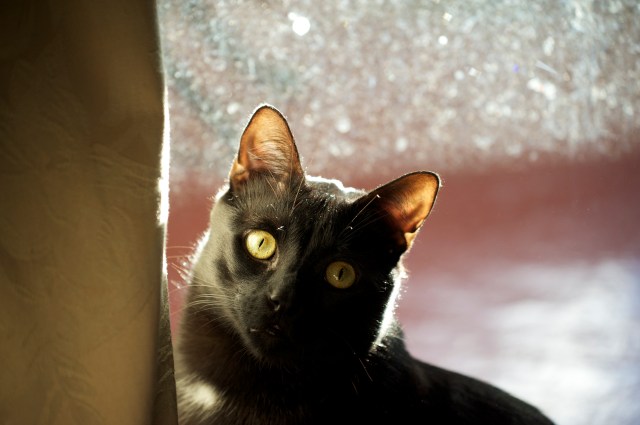
  • Pets. Mr Kitty is the best mental health strategy I have. Cuddling him makes almost every worry go away, at least while I am cuddling him. I know I am not alone here and that may other autistics – and neurotypicals – benefit from cuddle  time with their non-human friends. Before I got Mr kItty I was vey anxious and unwell with psychosis and depression too. Within weeks of adopting his furry little self my life changed for the better thanks to the addition of my little black shadow. Pets are awesome!
  • Distraction. This one is a skill from dialectical  behaviour therapy. It basically involves focusing on something other than your anxiety. While you are focussed on the thing you are doing it is harder for anxiety to get a hold on you. You may need keep practicing distraction repeatedly although sometimes the first time you do it will banish the negative feelings. Find distractions that work well for you and that you enjoy doing,
  • A very, very simple but effective strategy is deep breathing. If you mostly experience anxiety as a physical experience then strategies which work on the physical manifestations of anxiety – like deep breathing – are likely to help. There are different deep breathing techniques. The one I use is to consciously stop thinking, then breathe in deeply and hold it for a few seconds and the breath out. You can do this as often as you like.
  • Being aware of your anxiety, out it in perspective and understand you are in control. This is a difficult one to master and may need some practice. It probably warrants an example. In 2013 I was about to give  a talk for TEDx Canberra. I was terrified. I had never been so anxious about a talk. I thought I would get on stage and to know what to say. I was going to ruin the TEDx brand and disgrace myself to a roomful of hundreds of people! The day before the TEDx conference we had a rehearsal in the venue. I was even scared at that and then I had a wonderful moment of clarity, I realised that I was in control of what I did and said. I had prepared myself and practiced my talk and I know what I was saying. I will still anxious but that sense of agency carried me through. I was the boss. If I choose not to let the anxiety win, then that would be what happened. And the talk? It went well. It remains one of he best talks I have done to date. If you look closely at the video I’m sweating but what I said was clear and helpful and my delivery was good.  Here’s a link if you want to see me being anxious but in control. https://www.youtube.com/watch?v=pqdGb4TraFk&t=7s

Anxiety is something which so many of us experience. When people invalidate our experience of anxiety if can add to the problem. Telling people to ‘stop overthinking it’ and similar statements can leave us doubting ourselves and feeling we shouldn’t discuss our anxiety. In fact anxiety is something it is important to talk about. It is not a weakness. Anxiety is something to learn to manage and people who experience it need support not blame. For autistic people being told you are worrying about nothing is incredibly unhelpful. Autistic people need to feel supported to discuss and seek help for their anxiety and other mental health issues.

And finally a shameless book plug….Dr Emma Goodall, Dr Jane Nugent and I wrote a book on autism and mental health which has more detailed information on the ideas in this post.https://www.jkp.com/aus/the-guide-to-good-mental-health-on-the-autism-spectrum-34026.html

WJP_3428

My most effective anxiety strategy, Mr Ronnie Kitty Purkis

Un-therapeutic therapy – Why forcing eye contact does more harm than good 

This morning  I was reading an excellent blog post by a friend about picking the best therapist for your autistic child (link: https://sidautism.blogspot.com.au)

The post has a list of positive qualities in therapists and also a list of negative ones. This is important for a number of reasons. Some therapies for autistic kids are decidedly unhelpful and very likely to do more harm than good.

One of the contentious areas when speaking about therapies and autism is the sort of therapies which aim to make autistic kids seem somehow ‘less autistic’. The premise of this seems to be something like their life will be easy if they aren’t noticeably different.

Sadly this is an approach which can leave autistic kids feeling invalidated and doubting everything they do. Some experience trauma from these kinds of therapies into adult life. Autism is integral to autistic people’s identity, experience and understanding. It is not a separate bit of the person which can be removed or otherwise ‘fixed.’  And you definitely can’t ‘fix’ autism through teaching autistic people not to stim or to make eye contact. The reason for this is that autistic people’s stimming and not making eye contact are there for a reason. Eye contact is generally very unpleasant and stimming is a vital part of managing stress, social situations and helping autistic people to focus and some other things too. So autistic kids may be able to ‘look neurotypical’ (whatever that means) but they are likely to struggle a lot more in their daily life. These therapies send an unspoken message to autistic kids that their autism – and as such them – is lacking and lesser than the ‘norm’.

I just want to focus on one element of this issue for this article: making eye contact.

Autistic people usually find eye contact very unpleasant. I have heard people say it causes physical pain, it is like lasers going in their eyes or like the other person can see right into you. For me I find I can see into the person’s very soul if I make eye contact. It is horrendous and I never do it for more then the millisecond it takes me to realise I have accidentally looked in someone’s eyes. I only learned what colour my own eyes were a couple of years ago and finding out caused me a lot of stress as I had to look in my own eyes. I was concerned I might not be able to pull away from my own gaze in the mirror.

However the neurotypical world – or the English speaking western version of it at least – seems to see eye contact as something essential to communication. Not making eye contact apparently means you aren’t listening or that you are being sneaky. In fact, eye contact as a cornerstone of respectful communication is not the standard around the world. Many cultures see eye contact between people of different social standings or ages as being highly disrespectful and aggressive. You don’t even have to go all that far to find this different view. Many Aboriginal cultures in Australia consider eye contact very rude in certain contexts.

I was a school student many years before the Asperger’s diagnosis was available. I went through school looking at my books or my feet. Teachers would  tell me to look at them when they spoke to me. Amazingly to my mind, they thought this was a prerequisite for me to be able to listen to them. I was a LOT happier and more able to take in information from a conversation while looking at the floor or another point in the room than directing my gaze at the teacher’s eyes. I was instructed to look at people so much I learned how to do it without doing it. Even now, when I remember, I will look at the general direction of a person’s face – around the nose usually – when we are conversing. Lots of people seem to find that comforting. I often find my gaze has shifted without me knowing during the conversation and the person I’m talking to gets all flustered and looks a where I was looking as if there were a swarm of bees there or something! It is tricky this business of trying to look ‘ordinary’. The only being who I know the colour of their eyes is Mr Kitty. For some reason I’m very happy making respectful eye contact in non-verbal cat communication with Mr Kitty – in fact I understand cat expressions and body language about 10000 times more than I do that of humans.

I really struggle when an autistic child is forced to make eye contact. They actually often find it much harder to listen to what is being said because making eye contact is so unpleasant and disturbing. So the autistic kids who ‘succeed’ at that sort of therapy therapy are probably actually less able to pay attention!

I think that these kinds of things which focus on making autistic children appear less different are more about the appearance to others than the actual welfare of the child.

I would so much prefer that the world we live in didn’t involve some people feeling the  need to make autistic kids look less autistic but instead promoted their qualities and strength and humanity and understood their differences. I can’t see how this is so hard to achieve but I do think that therapists and educators forcing autistic kids to make eye contact and address ‘behaviours’ which hurt nobody but just look ‘odd’ is part of the things which hold back inclusion and respect for autistic people.

IMG_0147


Autism and toxic friendships and relationships

This week I said goodbye to a friend I had known for a long time. I sent her a message explaining why I needed to distance myself and was blocking her. It was a very hard thing to do but it had become apparent that our relationship was not based on mutual respect and that she had become a toxic presence in my life. I did not do this lightly but it got to a point of no return. I won’t go into detail because this post isn’t really about my friendship. It is about understanding, identifying and managing toxic friendships and relationships for autistic people generally.

Autistic people can have significant challenges around managing toxic friendships. A friendship may start out toxic or become that way over time. For people who may be isolated and lonely, the offer of friendship can be a welcome thing and it may be hard to accept that the friendship is toxic. In fact a toxic friendship or intimate relationship is usually much worse than having no friend or partner but it is a very hard call to distance yourself form the one human being in your life, even if their presence is damaging to you. We may not realise a relationship is toxic and think this is how relationships and friendships work. Our lack of confidence and self esteem may make it hard to understand that our friend or partner is not in fact a friend.

Some examples of what happens in toxic friendships or relationships include:

  • Abuse – physical, sexual or emotional
  • The relationship having one person doing al the ‘taking’ and the other doing all the ‘giving’ – this is also described as a lack of reciprocity
  • Gaslighting – this is where a person tries to make you doubt your own knowledge and experience
  • Invalidating you – treating you like you do not matter
  • Dishonesty
  • Manipulation
  • Telling you not to see friends or family or intentionally sabotaging  your relationships with others
  • Being hostile to and/or belittling your other friends or family members, especially those that supporter defend you
  • Pressuring you to do things you do not wish to and / or which are harmful
  • Belittling you
  • Frequently blaming and criticising you
  • Controlling behaviours such as in an intimate relationship one partner controlling the money and spending

This is not an exhaustive list and there are other kinds of toxic behaviour not listed here.

Autistic people can struggle with seeing issues in relationships and articulating that there is a problem. This has been my experience many times over. I have had an uncomfortable feeling about the person and felt like I didn’t want to spend time with them but I couldn’t work out from this that the relationship was doing me more harm than good. One way to spot toxic behaviour is to be aware of your reaction when you meet a person or see communication from them online. If you are highly anxious or afraid when there is contact with the person, more often than not this is a sign that the relationship may be toxic.

One challenge of dealing with toxic people is that autistic people – and others – often lack assertiveness and the ability to set boundaries. Even if we are aware the person is toxic then actually setting this boundaries to enable us to keep our distance can be close to impossible.

Autistic people can also misread the behaviour and intent of toxic people. Because we tend to operate on one level in communication it can be hard to understand that many other people don’t and that what they say in their words and acts can be very different from what is going on in their mind. If someone is outwardly nice to us we may not see that they have an ulterior motive.

It is important to note that toxic people do not have to be neurotypical. Autistic people can be toxic as well.

If we have determined that a person is toxic and decided to leave the friendship or relationship we can have fear of their reaction. This can include catastrophising and worrying about specific situations in our minds which are in fact highly unlikely. We can be highly anxious at the prospect of unexpected contact with them and this can lead us putting up with a toxic relationship. In my experience when I have seen toxic people that I have distanced myself from unexpectedly it has been very unpleasant but nowhere near as unpleasant  as staying in the relationship.

Strategies

This is a very difficult area of human communication. Non-Autistic people also have issues wiht this. Some strategies which may assist include:

  • Trust your ‘gut’. That niggling feeling that something is wrong is almost always a sign that something is  wrong. to everyone has this gut feeling although for some people it develops over time.
  • If you know a relationship is toxic and you want to distance yourself from the person put in  place a strategy for leaving – consider things like what do you plan to say to them before you leave if you plan to say anything? What and who are you going to use as supports? If you need to move locations how will that work? Do you have somewhere safe to go to (if you you need to move to escape the toxic relationship)? How will you manage your mental health after you leave? How will you respond if the person is aggressive – physically, emotionally or verbally/? Do you have a person you can talk to for practical or emotional support?
  • If your other friends tell you a friendship or relationship is toxic, take this on board. Often others are more objective judges of toxic relationships than we are ourselves
  • If possible, talk wiht a friend or support person about your concerns
  • Leaving toxic friendship or relationship often results in the person who left feeling a range of things which may include relief, fear, empowerment. self-doubt, loneliness and many other emotions – often at the same time. Emotions like this are quite natural but you may need to work through them over time to recover from the  toxic relationship or friendship
  • It can take some time to ‘get over’ the toxic relationship. Many such relationships cause trauma, even where there is no physical or sexual abuse involved. That trauma needs to be worked through.
  • Know that it is better to have no friendship or relationship than one which is toxic.
  • Remember that you do not deserve toxic treatment. Nobody does and you have the right to respected love and support.

You should not have to be scared of your friends. Your friends should not abuse or threats you. A friend does not make you do things which are humiliating. Just because someone says they

Why I love my tribe

A long time ago I didn’t have an autism diagnosis. I felt very alone, like I was the only person like me in the world. Some years later I gained a diagnosis of something called Asperger Syndrome which I thought meant I would be a social outcast forever. I interpreted the diagnosis – made in 1994 when there were very few services and less understanding of autism – as being a condemnation to eternal nerdiness and justification of everything the bullies at school said about me.  It took me another seven years to accept my diagnosis. I wrote a book about my life and still I felt isolated. Most of the autistic people I met were older men who liked technology and I didn’t feel lot of connection.

In 2009 I attended a conference as a speaker – my first autism conference. The topic was women and girls on the autism spectrum and I found myself in a room full of fellow autistic women and girls. This was the moment that I stopped feeling alone in the world. This was my moment of finding my tribe. I felt such an amazing feeling. I felt like I had come home after a very long time away.

Since 2009 I have a lot more autistic friends – of all genders but often women. The world has changed in some significant and some subtle ways. Social media seems to be the most meaningful addition to social life from my perspective. As a writer and advocate I love the ability to share ideas and books widely and have conversations.The social side of social media is often great for autistic people too. Many of us prefer typed communication to spoken or face-to-face communication so things like Facebook and Twitter are obvious places for autistics to converge.

I have met many people who have become friends and colleagues on social media. I belong to many online autism groups run by autistics . Today I attended a lunch organised by on of the groups I belong to. I had already met most of the guests but there were a couple of new faces. We were at the restaurant from 1pm until after 5pm, mostly just talking and sharing experiences. I left with the intent of catching  a train to the friend I am currently staying with and found that most of the people from lunch were still talking outside. I was offered a lift and spent a very pleasant half hour catching up wth someone I rarely see in person but communicate with regularly with online. Today’s lunch epitomised what I see as my experience shared with autistic friends – meaningful conversation, shared understandings and connections and feeling able to be ourselves without fear of criticism or bullying. We outnumbered the staff in the restaurant which amused me and the staff were in fact really nice. As is usually the case when I am among my autistic peers, I felt I could be myself and I think probably everyone else there did to. For people who so often feel we need to mask who we are and deny our own identity, we have a great time being ourselves.

Of course autistic people do not all get along and, similar to neurotypical people, not all autistics are respectful, thoughtful or kind. I have a moderately lengthy list of autistic people I have blocked on social media over the years. I should note that the reasons for blocking people have never been the stereotypes of ‘poor autistic behaviour.’  The fact that we have a tribe does not mean all the members of that tribe are people I want to spend time with, but having a tribe has been such a helpful and empowering thing for me.

These days autistic young people and kids are often able to find their tribe and get the benefits of belonging to their autistic peer group at quite young ages. I am so happy to see those connections happening between autistic young people. I felt completely alone for so long but I think that sense of isolation and otherness is less often the case for young people now.

it would be great if all autistic people and access to an appropriate diagnosis and the chance to connect wit their neurodivergent peers.

My experience of finding my tribe had a huge impact on my sense of identity as an autistic person. I felt I didn’t need to hide who I was and act and mask and pass. This was a big step for me as I spent most of my teens and young adult years trying tone someone that I wasn’t. Along with finding my tribe came my growing sense of pride in who I am.

IMG_5467

Why I talk about Autism and resilience so much

In 2012 I met a young autistic man. We will call him Adam. Anyone who has been to one of my talks on employment, education or resilience  will probably have heard this story. When I told Adam I am autistic, work full-time in Government administration and – at that point – had one published book he said ‘You’re lying. That isn’t possible.’ I was keen to defend my integrity but then realised that in Adam’s world at least, an Autistic person couldn’t do those things. Adam and his parents had been given a deficits-based view and it was clear Adam had not been allowed to undertake all that many things which challenged him. At 21 he had a year nine education and had not engaged in any study in the preceding six years. He had gone onto the disability pension as soon as he was eligible, at the age of sixteen. I saw Adam and felt for him. I thought that he had been done a big disservice by all the deficits thinking, the fear that if something was hard he would be upset or have a meltdown which must be avoided at all cost. It was almost as of the things which had bee done with the intention of caring for him and making his life more pleasant as a child had in fact backfired. At the time met Adam I had always believed that an early autism diagnosis was a positive thing, helping autistic young people know their identity and get the supports they needed to navigate the world. But the world Adam navigated was his bedroom and the virtual worlds in online games. I do not criticise Adam and I know that life is complicated and people can struggle to engage with the world for a number of reasons. All I knew was that I wanted to help create a world which autistic young people could be proud of who they are and take on and overcome the challenges they need to engage in life in the best way for them. At that moment of realisation my work in advocacy began in earnest.

I interpreted the main issues Adam  was facing as a lack of being allowed to take on challenges and risks and to be supported through those. The primary issue in my mind was that lack of capacity for resilience was holding people like Adam back. This became a big motivator for me and still is what drives my passion. My Wonderful World of Work book was written as a direct means of addressing the issue I saw around resilience and autism.

Resilience to me is about being able to take on challenges, work through them and come out the other side with confidence an mastery. and that confidence and mastery can translate across and into other challenges and areas of life. This is not a quick process and it does not stand alone. Things like self-esteem, confidence and independence  are all related to resilience.

One thing to clear up about resilience though. When someone tells me that – usually an educator – has told them that their autistic child will not be bullied if they ‘get some resilience’ it makes my blood boil. The person saying that is not speaking about resilience or anything close to it. What they are doing is dismissing and invaliding that child’s experience, They are blaming the victim. No matter how a child became a bully, the victim of that bully’s poor behaviour is not responsible for the bullying behaviour in any way. That is NOT resilience.

Genuine resilience has a range of benefits to autistic children and adults.

I am interested in this for a number of reasons in addition to Adam. One of them is that I used a process of controlled challenges to build my own capacity to work after being outside the labour force for almost ten years in my early adult life. I didn’t articulate or understand that I was ‘doing resilience’ and it was quite intuitive – it just  seemed like a good approach at the time! I went from having a severe experience of perfectionism at a dishwashing job resulting in mental health issues requiring hospital. My issue was the perceived level of responsibility at work. Even though the worst mistake I could make in the dishwashing job would probably be to send a dirty fork out, in my mind if I screwed up the whole business would go broke. At the time this happened I didn’t for one moment think I would never be able to work, despite that seeming the likely outcome or my problematic work history, Instead I thought ‘I can’t work now, at this moment in time’. In the next five years I built my work resilience  by working as a volunteer in a gallery, building confidence from that to having a very small business doing video editing for my art school colleagues, building confidence from that to work in a charity and then after six months of that and the publication of my first book moving on to a full-time professional role. I had built my resilience  for work from being terrified of the tiniest amount of responsibility to working in a corporate role with lots of responsibility. I have been in my corporate workplace for almost eleven years now and  have even more responsibility at work and in my advocacy work too. I rarely think about the responsibly, just do what I need to do.

This should be seen in the context of challenges faced by Autistic people in completing study and finding work. This example shows me managing my individual issues with work though resilience. However there are also broader social issues and disadvantage which me getting a job didn’t and couldn’t overcome. Addressing these issues does require a broader approach than expecting individual Autistic people to work through their individual challenges.

And there is a bit of an ulterior motive for this post. (Cue shameless book plug!) My friend, colleague and co-author Dr Emma Goodall and I have a book for parents to support their autistic kids aged 2-10 to build resilience which is coming out next week. It is one of two, with a book for parents of kids and young people aged 11-20 years expected next year. The books are really practical and written from a strengths-based perspective. Their focus is on understanding and supporting autistic kids to navigate the world and become fulfilled adults reaching their own potential, whatever that may mean for them.  Here is a link. I think you can preorder if you are keen: http://www.jkp.com/aus/the-practical-guide-to-resilience-for-parents-of-children-on-the-autism-spectrum-book-1-2.html

And here is one of the best talks I ever did which thankfully was filmed and put on YouTube – my 2013 talk for TEDx Canberra. Please excuse the use of terms like ‘ASD’ and ‘Disorder.’ Things have changed a lot in the Autistic Pride movement since then., Despite the dated terminology it is a good talk.  https://www.youtube.com/watch?v=pqdGb4TraFk&t=7s

IMG_0245

This is me speaking at TEDx Canberra

Autistic with attitude – how our thinking shapes our life

Twenty or so years ago I was very unwell, in a dark place. I hated myself and wanted no part in the future, A psychiatric nurse set me what was then an impossible task. She asked me to write down five pages about my ultimate goal and the steps I would take to achieve it. The is actually quite a useful strategy for some people who are depressed but to me it was an unattainable task. I didn’t even have a positive goal – most of my thoughts on the future centred around me not being in it.  The five pages lay blank and the nurse had to rethink her approach to encouraging me to be a bit more positive and future-focussed.

Fast forward twenty years and I am in a bad space again. Mood issues, some pretty odd experiences that my history tells me relate to psychotic illness – people insulting me in public, seeing ghosts where there (hopefully) are none, believing I am dead and everything happening is in the afterlife, that kind of thing. Yesterday I had a bit of a vent about a colleague at work which threw me into a spin – can I trust myself or will I damage my reputation with aggressive or rude behaviour?  After work I was in the supermarket complaining about someone in front of me in the self serve line leaving me with 15 cents to pay before realising it was the cost of the bag  I had just scanned five seconds previously! So as I went to bed last night you can imagine that I was more than a little anxious and uncertain. I started to unpack the issues and thought that I have had a diagnosed mental illness for 22 years and mood issues and psychotic symptoms are actually something I manage all the time. I also told myself that instead of worrying about the future I should focus on looking after myself in the present and that if the worst thing I was experiencing was some symptoms I have a lot of the time then that was far form the worst thing that could happen.

These two scenarios paint a picture of two very different people even though they are the same individual. The key to this change is two very different attitudes to myself and the world. The younger Jeanette actually wanted and sought out negative experiences. Oddly enough she felt safer in prisons and hospitals than she did in the ‘real’ world. If I remember correctly that version of me was never positive but somewhere along the line she gained some very positive thinking and a more useful attitude.

People used to say to – and about – me that I needed to see things differently, to take responsibility and look out for myself rather than destroying everything I had. These statements were not helpful to me at the time but when I did decide to change my approach they formed an important part of my understanding that people cared about me. I can pinpoint the moment that my attitude started to change. I was in a residential  mental health program. The difference between this program and supports I had before was that I was trusted and respected by staff at this place. Instead of being seen as a ‘management problem’ I was viewed as being someone with potential and who was worthy of support and care.

My embryonic positivity grew incrementally and blossomed to where I’m at now.

While it is pretty much impossible to acquire a high level of self-esteem and positivity about ourselves right away, it is something which we can build on through life. It often starts from us and those around us thinking that we are valuable and worthwhile as we are.

Your attitude about yourself and having the view that things will improve or at least be manageable in the future is a strong protective factor for mental health and wellbeing. Some tips on how to get this kind of positive attitude if you don’t already have one include:

  • Notice when you put yourself down or criticise yourself, both internally and in the words you use to describe yourself. Every time you insult or criticise yourself challenge it and replace it with something more positive instead regardless of whether or not you believe the positive descriptions of yourself at first.
  • Advocating for yourself and your rights and / or the rights of others. If you have been bullied or criticised for being autistic then do everything you can to increase your sense of pride in who you are and your rightful place in society. This is something you can enlist the support of other autistic people and advocates to assist with – even if you don’t connect directly with them, you can read their words.  For autistic people, a sense of identity and pride is a great foundation for a positive attitude about yourself.
  • Focus on doing things you are good at and that you enjoy. For those of us who are autistic this often relates to our passionate interest. Think about what makes you good at what you do and why you enjoy it.
  • Sometimes it can help to ‘fake it until you make it.’ This means that if you make decisions or actions based in a positive view, even if you don’t feel like doing it, this can sort of trick your brain into shifting into a more positive space. You may need to do this many times. Even if you don’t quickly acquire a  more positive attitude you will have a repertoire of positive acts to draw on when you think about yourself.
  • If possible surround yourself wth people who support you and want you to do well rather than those who will drag you down.
  • Be aware that a positive attitude will not stop negative things happening but it is likely to enable you to deal with them better.
  • Try to see yourself and what is going on in your life as a moment in your journey. We can find ourselves extrapolating out from a negative experience so that we think everything in the future will be negative. Using the example of my mental illness symptoms, there is a big difference between assuming all the misery will last forever and get worse or thinking that I am unwell at the moment but I have some agency to improve my health and it will change over time.
  • Reflect on things to be grateful for in your life. Some people keep a journal and write down two or three things to be grateful for each day.

11289587_846906952057360_4546062650575153305_o

Yellow Ladybugs and Cooking Circles: empowering autistic girls

I spent this afternoon at a Cooking Circles event with Yellow Ladybugs – two organisations which are in Canberra and whose work I really value.

Cooking Circles is a women’s empowerment project which builds connections between women through the shared experience of preparing and eating food together. I have been to a few of their other events and really enjoyed myself and had some amazing conversations. Yellow Ladybugs is a support and empowerment organisation for autistic women and girls. They put on regular activities for autistic teens and younger girls. They are primarily led by parents of autistic daughters and many of the parents have a diagnosis or identify as autistic themselves. Both organisations effect social change through connections between individuals. Both organisations are very powerful in this respect and make a big difference.

My role in Yellow Ladybugs is as an ambassador for the Australia-wide group. In Canberra my role is essentiality being an autistic adult for parents to talk to and share thoughts and to be a sort of unofficial aunty for the girls. Yellow Ladybugs is one of my favourite things in the world. Girls socialise with other like-minded peers, they  connect with their ‘tribe,’ and can ‘be’ in a space where everyone is supportive. Girls can be themselves at these events free from bullies or teasing. I always think about my childhood and how most of the experiences I had in social space outside of my family were not very autistic-friendly at all and anything I did which was out of the ordinary would result in bullying, me being disciplined or my parents being shamed. Of course these things still happen but the level of understanding and respect for diversity around autism is changing in a good way and I see organisations like Yellow Ladybugs as being at the forefront of that movement for change.

Today the girls were making Japanese bento lunchbox-inspired creatures from rice, vegetables and nori seaweed. There were some amazing creations and every time I looked at the table there were lots of small people looking intently at what they were doing. Some of the women organising the event and some helpers were in the kitchen cooking up rice and dessert and washing a seemingly endless stack of dishes!   offered my assistance and was reminded that my value was in talking to people. I’m happy to do my more intangible ‘work’ so got back to talking with parents and girls.

I have always witnessed lovely, heartening exchanges at Yellow Ladybugs events. This time one of the mums told me about taking her daughter for the autism assessment and asking her if she knew what it was all about. Apparently the girl looked all worried and said ‘oh no, Please don’t tell me that I don’t have autism!’. When her mum assured her that the outcome of the assessment was that she WAS on the spectrum the little girl was so delighted and relieved and said ‘I knew something was different and now I know what it is.’ I am still a bit teary as I write that. I think of what learning my own autistic identity cost me, how I hated the very thought of being ‘officially weird’, that I didn’t accept my diagnosis for seven years. Just thinking about that girl and her autistic identity coming so naturally because presumably in her mind it was not at all shameful or a reason to judge yourself as I had brought home to me the importance of the work we are doing.

At the end of the event the were three little girls playing together. Their mums told me they are friends in the world outside of Yellow Ladybugs. I had a great conversation with the girls’ mums, talking about all things autism. The parents are always the people I speak to most, sharing my thoughts and experiences, offering support and examples of how I have overcoming challenges in my life.

When I started on my autism advocacy journey parents would frequently talk about their child as if the child wasn’t right there in front of them. Autism was spoken of like a curse or a tragedy and the parents would say how hard life was because of their kid as if the kid couldn’t hear them. I always think of how those kids must feel, knowing their parents think of them as more of a burden than a gift. Autism can be hard for a number of reasons but when I hear people airing their angst right in front of an impressionable child it breaks my heart. Thankfully I see this less and less. It is not OK and I hope to see a world where this is as frowned upon as hitting children for discipline is now.

At the start of Canberra Yellow Ladybug events the ACT YLB committee often ask me to give a very short speech.  This basically involves me welcoming everyone, telling the girls that it is their event and to have fun and briefly mentioning whatever the activity is. Today I added a bit. I introduced myself as a ‘grown up Ladybug.’ I am an autistic adult woman. The sorts of things I experience are common to autistic children and young people as well. At these events, the girls see that they are not isolated or alone, there are other girls – and women – who see the world through a similar lens to them. Cooking Circles is about women’s empowerment and Yellow Ladybugs is really about autistic women – and girls’ empowerment. Today’s event was a great mix of approaches and collaboration between two organisations aiming for similar goals. I enjoyed it immensely and it was quite different to the other events I have attended. There were lots of girls and most of them seemed to be enjoying the day and socialising with their peers. Imagine if every autistic woman had this sort of outlet from a young age? Being supported to be who you are, being in ‘Autistic space’ and having adult role models as well as your parent/s that support and respect you? Yes, let’s do that.

Thank you to Yellow Ladybugs and Coking Circles for creating such a space to encourage pride, inclusion and engagement. IMG_0487

Respecting difference: Autistic language and culture

A few years ago I was at an autism conference in the quiet room, along with many of the other autistic delegates. We were having this great conversation. I hadn’t ever had such a good conversation with a group of more than a couple of people. Usually when I am in a group of people I don’t know when or how to ‘break in’ and either interrupt or sit there waiting for a cue which I never notice. But in this discussion there was an amazing flow of ideas and sharing of thoughts, We ‘got’ one another – not just with the topics we were discussing but it seemed at a  much deeper level as well. At that point I realised that I knew  how to speak a language that I hadn’t thought of before: I was ‘speaking Autistic.’ I imagined that if a neurotypical person came into this room they would struggle to break in to the conversation, the topics might not interest them and they would feel like an outsider, as I often do in conversations with people who are neurotypical.

I realised at this very significant patin my life that Autistic people  have in a sense a culture of our own. This is why I sometimes capitalise the ‘A’ in Autistic. Neurotypical people are a culture as well, with their own language andcustims. It is like we speak Spanish and they speak Bulgarian. Neither language is better or worse than the other, they are simply different.

From this I also thought that the reason our Autistic communication has not really been defined in these sorts of equal terms until very recently has been due to not only our minority status but on how autism up until very recently was only viewed as a problem, a deficit and an ‘affliction.’ The DSM-5, the diagnostic manual  used in most English-speaking countries to inform autism diagnoses, describes Autistic communication as

Persistent deficits in social communication and interaction across multiple contexts, as manifested by all of the following (currently or by history):

Deficits in social-emotional reciprocity

Deficits in nonverbal communication behaviours used for social interaction.

If you have an autism diagnosis you have most likely been assessed against this or the predecessor of this manual, the DSM IV which, while the diagnoses are different, the deficits-focus is just as evident. The diagnostic literature is strongly based in the medical model of disability. It gives a person a ‘label’ which enables them to access support services and healthcare and things like that. If that is all it is used for then that can be very useful. Autistic people in current societies face discrimination and our experiences can be very challenging. Being able to access services can be incredibly helpful.

However, there is a catch. A diagnosis is not only the means to access support services. In the case of autism  and many other diagnoses – it is an opening to a sense of identity and with that, one’s ‘tribe’ of Autistic peers. There is a clear reason that many Autistic people use identity-first language (‘I am autistic’ rather than ‘I have autism’). Many of us understand autism to be an integral part of who we are. We do not see it as an add-on but as part of our very self. While this is not true for all Autistic people, it is for a great many.

So between the medical model on the one hand and the Autistic identity (sometimes described as ‘Neurodiversity’) model on the other, where does our communication sit? As with any culture, our Autistic ways of communication – our ‘language’ if you like – are vital to what makes us who we are. Unlike many languages though, for a very long time few people have  seen autistic communication as anything but disordered or deficient. For people who do not use verbal speech, this ‘othering’ and dismissing their language can be even more severe.

A very short while ago in the scheme of things some Autistic people started to challenge the ‘you are all broken and defective’ sort of view and declared that we are different not less. Our communication styles are also different not less. Much of the communication difficulty experienced by autistic people stems from that gap in communication between neurotypical and autistic ways of expression. One of the most challenging things for me involves explaining to people that there are different ways of communication to start with!

So to get back to my room at the conference in Autistic space. I realised that I have spent my whole forty-three years of life trying to learn to ‘speak neurotypical’: trying to work out hidden meanings in conversations when I only operate on one level, trying to suss out whether the compliment I gave my boss because I liked her dress had been misinterpreted by my colleagues as something other than was meant, trying to figure out what facial expressions mean when they change so quickly. …And I wonder what the world would be like if more people realised that Autistic is like another language which can be learned by neurotypical people too. I love that I have discovered my Autistic culture and fellow Autistic compatriots. It is a strong position to stand in after so many years of being told I was getting things ‘wrong’ when in fact I was just using a different language.

And when I think about it, the advocacy work I do with neurotypical people form different walks of life is like a lesson in Autistic language and culture. I like that.

img_0148

A ‘gentle manifesto’ – Autistic advocacy and representation

Until very recently, the prevailing view in society has been that autistic people are incapable of doing much at all and needed even the most basic decisions made on our behalf. Ideas of Autistic Pride and Neurodiversity would have seemed almost universally preposterous until quite recently.  Virtually all the discourse and thinking on autistic people was told by neurotypical  people. This is the background which still informs a lot of people’s thinking in our current world.

Along with countless autistic friends and colleagues and neurotypical allies, I stand against that view. I see that autism is more a difference than a a series of inherent deficits Many of the challenges we face are not intrinsically related to our autism but to our experiences intersecting with and trying to navigate what is often a very hostile world. We hear the stories of bullying, violence and victimisation and horribly they continue.

But this post is not about doom and gloom. It is about representation, about advocacy, about the need for us to be heard and to take our rightful place in the world. In recent years in a number of countries there have been campaigns, led by Autistic people to change the way we are viewed. An example is this blog. I am one of what is now a vast number of autistic commentators talking about autism and other things. However I do  feel that my autistic friends and colleagues, all the bloggers, vloggers, advocates and activists are still at a disconnect with the wider world. The job as I see it is to close that attitudinal gap.

It is vital to see beyond our borders to the experiences of people in other counties. What is true for Australia where I live is not in other places and vice versa. The task of autism advocacy is international.

The is my list of areas I really want to see changed:

  • One of the things we are up against as a community is what I call legacy attitudes. By that I mean the sorts of thinking of neurotypical people who have been ‘doing for’ Autistics since forever. They carry these views with them. Changing legacy attitudes can be very hard as they can be very ingrained and challenging them is like challenging the person’s core beliefs. I find some of the neurotypical people who are new to providing services to autistic people are actually way ahead in their views around Neurodiversity than some of the people who have ben involved for years who are holding on to views which are thankfully becoming discredited.
  • Organisations which provide services to autistic people – children and /or adults – need to consult with autistic people at every stage. They need to have autistic people on their board and those autistic people need to be actually have their views heard and taken on board. I have been the token autistic person in a lot of settings and it is useless in terms of making change and very frustrating and upsetting for me.
  • Attitudes around people who do not use verbal speech really need to change. The invalidation of people who use augmented and assistive communication needs to be addressed. Not having a verbal ‘voice’ should not mea the person has no voice.
  • There needs to be an understanding that autistic people are actually the most proficient experts in being autistic (I know. amazing hey?!!).
  • The information we get when participating in consultations and projects needs to be accurate and include everything we need to know to inform our decision to participate or not. A Facebook friend recounted being invited to consult on what seemed to be an excellent web design project. Then at the last minute she and her autistic colleagues were informed that the funding for the project was from an organisation known widely as being invalidating and damaging to autistic people. Information on the funding body should have been given at the outset.
  • Respect, respect, respect. I have friends from other demographic, intersectional type groups who experience similar sorts of issues that I see around Autism. Respect is the key to meaningful engagement and relationships. True respect I think comes from the point where people view me – or whoever – as having the same value as them.
  • An end to the assumptions of incompetence, infantilising and dismissing Autistic perspectives. An adult is an adult, regardless of their interests or presentation. As a speaker and author I am often on the receiving end of this. The classic is when my keynote presentation  is announced with ‘And now Jeanette is going to give her little talk…’ This paternalism might  seem innocuous but it goes to people’s basic attitudes around Autistic people.

I think  we are at a bit of a turning point now. There is more representation of autistic people in decision-making bodies, a lot of the research conferences and events have a number of autistic speakers (although it should be noted that there are some problems with representation and respect in a number of the events which need to be addressed).  Attitudes in wider society are beginning to change.  We do have a very long way to go still.  We need to address the underlying attitudes that drive the issues we face. We need to move past the ‘doing for’, the paternalism, the lack of respect for us and our experience.

I am not a revolutionary. If this is a manifesto it is a gentle one but these are my thoughts. It takes all kinds to make a difference. I am happy to do everything I can to help make our world a place where autistic people are valued and respected.

10294977_799382020143187_8989493424462827214_o