Mr Kitty on how to look after a Writer Public Speaker Human

My name is Mr Kitty and I live with my human. Her name is Writer or Worker or Lovely. She is the best thing – along with cat food of course. I remember before I met my human. Life was cold and wet. There was nowhere warm to sleep. I huddled up in corners and garages and dry places when I could. I didn’t have any home and no humans cuddled me. I had to kill my food. I didn’t know if I would eat or not. My life was cold and scary. Other cats and dogs chased me so I got angry when I saw them and hissed – they might run away then.

One day I was near some houses. There was a delicious smell of fish which I went to investigate. It was in a bowl in a wire box. I ate it and then I was trapped. I was so scared but after some time, when it got light a human came and brought me inside. She seemed surprised it was me, like she expected a different cat. She scratched me behind my ears and called me ‘sweetie’. It was nice. Another lady came and took me to my human’s house. This new human looked at me and her face was kind. Then she picked me up and held me tight to her chest. She scratched behind my ears and talked softly to me. I snuggled in and purred. At the moment we belonged to each other. She was my human and I was her Kitty.

My human goes out every day. She gives me cat food and I watch as she goes out the door. She comes home ages later with cuddles and cat food. I used to worry that she wouldn’t come back but she always does. Sometimes she is tired when she comes home. Sometimes she is sad – so sad I can sense it. I always give her cuddles and purrs then and it makes her happier.

My human is Public Speaker Advocate Writer. She spends a long time on the computer making and practicing her talks. I sit at her feet while she works. She will bend down and pat me and I smooch her hand. I think she needs my support to do what she is doing. She always has cuddles for Kitty.  She holds me like a baby and I purr and purr. So nice to be safe and warm and with cat food every day.

People come to my human’s and my house a lot. They always want to talk to me but I don’t aways talk to them. The other humans smell like cats and dogs and guinea pigs. I like the other humans but I don’t know them as well as my human. Sometimes I smooch them or stand on their laps and they are really happy, just because I said hello to them. I think I could try to talk more to the other humans but I don’t always trust them.

I am my human’s kitty and she is my human. You get one of us then you have the other one too. We are closer than anything. I know she won’t bring other pets into the house and she knows she can trust me to be loving. Sometimes she gets annoyed when I ask for cat food by biting her feet and knocking her human phone off the desk. She says ‘you’re a little bugger! Good thing I love you or I’d turn you into cat meatballs!’  But I know she doesn’t really think that. It is like a game we have.

My human goes away a lot, Her friends come over and she puts me in a carrier and then in the car and we go to the cat boarding place together. I used to be scared at the cat boarding place but i like it now. the humans there love Kitty but i always make sure they know I am in charge. I is Kitty after all.

I am always happy that my human wanted me to live with her. She says I am the most beautiful and unexpected gift. She tells me I am the best thing in her life. And I think the same. Kitty needs his human  but human needs her Kitty a lot. I have a big job looking after my human but I like doing it.

IMG_5847

Why I don’t have ‘high functioning’ Autism…’

A colleague told me many years ago that a fellow employe had told her ’Jeanette shouldn’t say she has autism. She is very mild’. Aside form the inherent rudeness in such a statement about me to a third party, that little statement encompasses one of the most significant issues Autistic people can face: ‘Mild’ and ‘high functioning.’ These are labels applied to us, usually by non-autistic people, which apparently describes many Autistic people’s experience of Autism on their behalf and often ascribes a bunch of judgements and assumptions along the way.

The idea of high or low functioning Autism probably started to gain traction when Asperger syndrome was included in the DSM IV diagnostic manual which was published in 1994. I was diagnosed with Asperger Syndrome shortly after that. As I went through life and more people learned about Autism and Asperger’s I got given the ‘high functioning’ label. There were expectations with my ‘high functioning’  which I quickly noticed were very different to the expectations given Autistic people who had more need of support with day to day life and / or those who did not speak.

To my understanding there is no clinical descriptor called ‘high functioning’ and ‘low functioning’ Autism although some diagnosticians use them as a sort of rather unhelpful shorthand.

So why do I – and many other Autistic people – struggle with the high or low functioning labels? Well I can’t speak for others but my issues are many and varied. I will use the example of a friend who has tow Autistic sons. The younger son does not speak much and requires assistance for practical things. He is a lovely boy. His older brother, also a lovely boy, is more like me – articulate, speaks a lot and doesn’t need assistance for most practical things so much, but struggles with anxiety and being bullied. My friend says that almost universally, her younger son is underestimated and her older son has his difficulties dismissed. These functioning labels and the expectations which so commonly go along with them are really unhelpful for her sons. They mean that the younger boy is likely to struggle to get the opportunity to do all that much even if he is capable and the older boy will be expected to not ask for – or be given – much assistance, even when he needs it.

My thoughts on some of the specific issues in this are:

  • Functioning labels privilege experience. The experience of the ‘low functioning’ person is usually viewed poorly and the skills of the ‘high functioning’ person are praised but their challenges missed or dismissed. For some people they may be twice exceptional / gifted but be utterly miserable, destroyed by anxiety, the cruelty of others or self doubt. Gifted people still need support. The fact they have unusual skills in one area does not necessarily equate to the capacity to manage other elements of life. I spent some time in gifted programs when I was in primary school but I ended up in jail when I was 20.That may be an extreme example but for me all I thought about being gifted when I was informed about it was that bullies harassed me at school because I was a nerd. I wanted to have less intellect so I could be like the other kids but there I was reciting poems about the end of the world in year seven!
  • Functioning labels can also be used as a divisive thing. I have been told on a few occasions ‘You can’t speak for my child. You are high functioning.’ (thankfully this doesn’t happen a lot). I prefer to support commonality rather than focus on division. And no Autistic advocate really speaks on behalf of another Autistic person. We share our experience and knowledge in the hope that others – Autistic people, parents, clinicians, educators etc – will draw some insight and awareness from our knowledge.
  • Low functioning labels in particular can be incredibly misleading. Many non-speaking  Autistic people are highly intelligent. And many non-speaking people describe the experience that before they had an effective method of communication, they were observing the world and experiencing things as others who speak do. I am horrified to imagine what some people must have witnessed in terms of put-downs, insults, disrespect and ableism said right in front of them.
  • I always think functioning labels come from the basis of  ableism and discrimination. The functioning labels model seems to be based on deviation from a notion of ‘normal functioning’. In such a model a non-autistic person is the yard stick for measuring Autistic capability. In this model presumably there is the ‘norm’ represented in the neurotypical person, then the ‘Aspie’ who seems more ‘normal’ and then the ‘low functioning’ person who supposedly is the least ‘normal’ of the three, on the outer edge of capability. I’m sorry, but from a perspective of neurodiversity and inclusion and as someone captured in this model this horrifies me. What is this ‘normal’? And why am I and other Autistics based in terms of deviation from this? In my mind, we all have skills and attributes and difference is certainly not ‘less’.

One issue with the functioning labels is that many people find them a neat shorthand to describe their child, their student or client or sometimes themselves. I think though that this shorthand is problematic as the high and low functioning descriptors don’t exist in the diagnostic literature, Now bear with me here. I do not subscribe so much to the medical model of disability so I am aware a description in a diagnostic manual does not actually define our experience. But the clinicians and from them educators and all others who support Autistic people at some point in their journey have the diagnoses listed in the DSM 5 diagnostic  annual. So if they use this additional ‘high functioning’ or ‘low functioning’ which isn’t in fact defined anywhere people think it is official. But there is no definitive list of high or low functioning . The descriptions are arbitrary and subjective. Each person applying these labels is just applying them based in their own individual beliefs. So while the medical model of disability is problematic in describing our Autistic experience, the functioning labels are even more problematic as there is no way to determine what they actually mean other than the ‘feel’ or ‘vibe’ of the person applying them!

I would love for us to get rid of the functioning labels. Each Autistic child or adult is a unique individual. We fit within the broader umbrella of the Autism spectrum but beyond that we are all different. Rather than clarifying understanding of how best to support us, the functioning labels are likely to do the exact opposite.

11043316_802276853187037_6636589104752091030_o

The dignity of risk: or why I really don’t like deficits thinking 

I am going to start this Autism-related post with a mental illness example. Bear with me, I promise I’m not conflating anything and I know that Autism and mental illness are not the same thing (you would be surprised how often people feel the need to point that out to me as if as an Autistic woman I am somehow letting the side down by having schizophrenia!). It’s just this example demonstrates the attitudes around deficits thinking quite neatly and in a different context to my usual one.

In 2012 I was living in a residential mental health service. There was a lovely young woman who saw me as a bit of a role model. She would politely knock on my door and ask if it was OK to ask me a question, which I would always respond to the best of my ability. One day she knocked on my door and told me she had just been diagnosed with schizophrenia. ‘What does it mean? she asked. ‘Will I have to stop doing anything? Can I work?’ Having met her very critical, judgey father and knowing how the mental health professions tend to treat quiet young women with schizophrenia I responded with ‘It doesn’t have to mean anything except what you decide. People with schizophrenia work and raise families and study and everything else. Life is often harder but don’t listen to people telling you what you can or can’t do. Only you know yourself.’

Deficits thinking, an assumption of incompetence: these things cross different groups. Autistic people get a lot of deficits talk, assumptions  and negativity around our potential too. When I applied for two graduate public service jobs in 2006 – one of which I was successful in – a wide range of people gave me deficits thinking about the apparently preposterous idea that an Autistic person could work in Government administration. One friend who is Autistic even told me I shouldn’t bother applying for the jobs because they weren’t autism friendly. I think I responded with ‘Well I had better make them autism friendly then!’ These attitudes run so deep.

Deficits thinking and an assumption of incompetence can have the following impacts:

  • There is a concept in disability advocacy and service provision called the Dignity of Risk which means respecting a person’s autonomy and self-determination to make choices for himself or herself. Deficits thinking and assumptions of incompetence can also result in controlling or paternalistic behaviour form services, family and carers. It is hard to build your independence when everything you do – decisions and choices about living your life – is controlled on your behalf without asking your wishes. This often happens to people who require more day-to-day support and / or do not speak but can happen in a variety of settings and to different degrees of magnitude.
  • Deficits thinking and assumptions of incompetence vary in scale and scope. Autistic people who are living independently and working can still experience these unhelpful attitudes.
  • The self fulfilling prophecy effect. This is when deficits thinking and an assumption that Autistic people are incapable of certain things means that Autistic kids and young people especially are often not challenged or stretched. For example if 16 year old Tracy wants to take driver education but her teacher and / or parents don’t want her to in case she is a careless driver or they believe the process of going for her licence will be too stressful, then she doesn’t get a chance to try. So when she doesn’t drive it may be assumed she was unable to rather than that the truth being that she didn’t have the opportunity to try.
  • People can internalise the negative messaging around the capability  and lack of confidence in themselves. This messaging come from all over the place – popular culture, in accessing disability or other services, or from friends, peers or family members. They think there is no point applying themselves to anything because they have no chance of succeeding. This is one of he worst kinds of self criticism and can effectively keep someone from achieving what they would like to.

I will finish with another example from the book of Jeanette.

I was not diagnosed  with Autism until I was 20. I had lived out of home for three years at the time of my diagnosis and was residing in the Women’s Prison in Melbourne. For many years every decision was made for me. I was institutionalised. There was no dignity of risk but just counting days and months and years in a hellish world.

After five years of this I was living in supported accomodation for people with mental illness. There were fourteen of us in a crumbling mansion. There were staff there during the day. We were not allowed to drink alcohol in the house. We had to attend all the group meetings, we had to do gardening once a week. I was accepted to University while living in this accomodation, which was described as psychosocial rehabilitation. In order to be allowed to stay in my accommodation and study my uni course I had to make sure I could attend at least one meeting at the house. I had to provide receipts for my food. The social workers were much worse at maths than me and there were always arguments about my receipts where I tried to convince the staff I was not fraudulently claiming amounts – stressful and infuriating all at once. It was the only accommodation option I had.  Poverty plus disability ad mental illness apparently means no choice where you live.

Flash forward a few years in the Jeanette narrative. I own my home, I work in a high level job. I willingly support so many other people. I am an author, pubic speaker, active social media commentator. Could you imagine somebody telling me that I can’t have a glass of wine when I get home from work? Could you imagine someone in authority over me saying my job, which I have loved almost every day since I started over ten years ago, was too difficult and stressful and force me to quit? Could you imagine if I applied to speak at a conference and the organisers told me it would be too stressful for me so they would decline my application? No. It would be foolish and quite insulting  but I have been in each of those situations – and sadly many similar to those – in the past.

Just as it would be foolish to underestimate my capability, it is a terrible and unhelpful thing to assume others cannot achieve their goals, that they should be shielded from any challenge or difficulty despite them wanting to do it. We will never know our true capability ad potential until we experience it. Enough of this. Really, enough. It’s high time to see people’s potential and not focus on what others assume they can’t do,

the-choices-you-make-now-create-your-future-nothing-is-set-in-stone-it-really-is-all-up-to-you


Mentoring and me

I was a teenage socialist and then a visual art student in my late twenties. When I was younger, networking and mentoring seemed to be something completely divorced from me and all I stood for. I saw leadership as some kind of mildly distasteful and mysterious thing that happened in corporate Boardrooms among entitled, suity men.  I didn’t know what mentoring meant. It seemed bound up wth nepotism and secret handshakes, that sort of thing.

And then one day I found a mentor, just like that. My mentor was not corporate or suity or a man. She was the late and most wonderful Autistic women author, artist, musician and advocate, Poly Samuel who was also called Donna Williams. Our mentoring arrangement happened organically, a seemingly unintentional relationship which gave me more than I can begin to quantify. Our relationship essentially gave me the life I have now. Writing was involved – Polly was a many times published author and I had never written anything save high school short stories and university essays. Polly told me to write my own story. This appealed to that incredibly strong motivation of mine to do good for the world, to atone for poor choices and poor behaviour in the past. I wrote the thing. It was like nothing I had done before. Polly was there, always available. She was a very hands-on mentor. Her style was more based in friendship and encouragement than conscious leadership. More than anything I remember days in her art-filled home talking about autism, the universe  and everything. Polly owned her home. I lived in public housing. Homeownership was a dream beyond my imagining. Polly’s little wooden studio at the bottom of her garden was magical. We painted there together a few times. She had her books and art everywhere. There was a mobile of sensory marvels which had been part of a documentary about her for Japanese TV. Polly was a strong leader in the autism community and she showed me a side of life and autistic identity which I loved and aspired to.

Sadly it took many years before I realised how precious a gift Polly had so freely given me. I can only say I thanked her before the end but this was not enough to my mind.

That book I wrote with the support and mentorship of Polly was published over eleven years ago. My life now mirrors Polly’s in may ways. I have a list of publications with my name to them,  I own my own home and it is filled with art and objects from my advocacy career too. I am an established Autism advocate, speaker and author. And I too mentor some Autistic people, mostly young women. I have a semi-official mentoring relationship with five people at the moment. I am rarely as hands on as Polly was by I think my mentoring style also starts from the position of friendship more than leadership. Some of my mentees live locally and we are in regular face to face contact, others are further afield and we connect online or when I am visiting the places they live – or they come to Canberra. I absolutely love that when I suggest someone comes back to Whimsy Manor that so many people are happy to come and spend time with Mr Kitty and me in my lovely home. My house is Autistic space. There is no intentional judgement, you can do or say whatever you wish as long as it is not hateful or blaming. Art, Neurodiversity, stimming, genuine conversations, passionate interests, pets and space are regular – and welcome –  topics of conversation.  If you – or I for that matter – have a meltdown it will be met with support and kindness and the offer of some time out with or without Mr Kitty. I wonder if I modelled my recent life on Polly’s world and mentoring. I love what I have here at Whimsy manor and in the autism community and hope that my mentorship can support others in a similar way as Polly’s did for me.

Some thoughts around mentoring and leadership are:

  • Mentoring is not instruction. I see it as a supportive but reciprocal relationship. I learn as much as anyone that I mentor does.
  • The aim of leadership is to create more leaders. Supporting mentees in their work is a given. I want them to achieve everything they can and if that means they surpass my accomplishments then I will be a very happy person.
  • I tend to think everyone can benefit from a mentor, a coach and / or a ‘critical friend’.
  • If you see somebody doing things you admire and aspire to and they are open to the suggestion, consider asking them to be your mentor.
  • Tall poppy syndrome, jealousy and competitiveness are counterproductive in terms of gaining skills and finding a mentor. Successful / fulfilled  / accomplished people got that way for a reason. If they can share some of their thinking and advice with you that is awesome but this is very difficult if one or other of you is jealous of the other!
  • There is always going to be someone better at doing the things I do than me. This is good. If I can I will connect with that person and share ideas and ‘pick their brain’.
  • A mentor is not only someone who can help your career. A good mentor can support you managing your life well and building things like resilience and independence and confidence.
  • While most of my mentors in recent years have been Autistic, there is no rule that says your mentor has to be Autistic if you are yourself.
  • Mentoring is a lovely thing to do. It is reciprocal which means both parties are getting a benefit. It also essentially builds more and more leadership skills within the Autism community which has to be a good thing.

IMG_3779.JPG

Musings on life the universe and everything at the end of my 42nd year

Tomorrow I will turn 43. Birthdays are a funny sort of thing for me, as I imagine they are for many people. A time to celebrate but also to take stock and look at all those years and what you have to show for yourself. My birthdays as a child were an exciting time. I was the youngest in my entire family and also the youngest in my year at school. I hated being young and wen I was five thought my primary school teachers were patronising and infantilising me!

When I was a child we rarely got new toys or clothes. My dad worked the land so the generosity of my gifts was usually determined by broader economic conditions and things like the spring weather or the price of tomatoes in France.  All I knew was that when I was seven I got all these beautiful things which I treasured. I still have some of them now. Even when I was a young adult I liked receiving happy messages, cards and gifts to celebrate me. I didn’t get celebrated much in my youth, possibly due to my puzzling passionate interests and socialist politics.

My early adult years were a negation of any celebration of me, a fall to the depths of misery, poor choices and shameful actions. I spent my birthday in 1997,1998 and 1999 in prison. Family visited and people sent me cards. I remember wondering why my usually respectable brother had sent me a card with a design of marijuana leaves on it and then realised a criminal friend had very similar handwriting to my brother! I admit I was a little disappointed. Prisoners live on letters and cards and occasional phone calls with those who they love. For prisoners the confinement would be infinitely easier with their family around – their kids especially. I always thought the punishment element was mostly composed of that enforced absence from people who care for you and the shameful reason for it. Thankfully I have no children. My tenuous connection to my parents was the thing that meant I eventually changed life for the better and had no more birthdays in prison after 1999.

I don’t know how things happened the way they did. It seems worthy of a daily celebration that I changed my life so completely that I have now largely forgotten what i was like to be the person I was. Nine years after my 1999 birthday I had a professional job, a Masters degree, a mortgage and a published book. Now, nine years after that time I have a few more books and have become a role model, a mentor, someone people respect and seek out for assistance and advice, and for some reason, the recipient of a wide variety of awards, most of them for leadership.

Tomorrow I will be forty three. My birthdays in recent years have been big and impressive, My eight year old self would have been wide eyed at all the cards and presents – and things with a black cat motif – that I tend to be given. My home is my haven now – a little comfy cave of nice things and Mr Kitty and enjoyable, rewarding work and visitors and chaotic perfection. For the first time in my life I love my home. I understand what ‘home’ means and am so grateful to have one. Somehow I became a public figure. I am frequently sent emails inviting me to dinners with influential people, I speak to rooms full of medical professionals and they listen to what I say. How on Earth did I get to this? Are there other ex criminals who are nominated for Australian of the Year?  I keep expecting it all to turn out to be a dream or for everything to fall apart and find myself homeless, poor and cold in the Canberra winter, hoping that wherever Mr Kitty went to they are looking after him.

I guess birthdays prompt thinking on another thing: something I fear greatly – the idea that out time here on Earth is limited and at some point we will all say goodbye and go wherever one goes. When I started on my Autism advocacy journey I had an amazing mentor who very very sadly is not here any more. She instilled in me a sense of pride in my Autistic-ness. She taught me that to stim is a fine thing and to be unusual and unlikely is a thing for pride and enjoyment, not ridicule or shame. My resplendent mentor Polly instilled in me the basis for my Autistic identity and I imagine that my Autistic identity is probably doing similar things for people I know and mentor. I know that Autistic people and those with mental illnesses like schizophrenia (which I have) tend to live shorter lives than those without and that I am overweight and unfit. I am constantly aware that there is some urgency in my life. I don’t do death or grief well. I find it hard to say goodbye and let the person free. I want a ‘telephone to heaven’ to be able to talk to those I care for who are not here. Gee, I got morbid this time didn’t I? But I think the meaning of my pondering on age and identity and marking your existence through time with an annual celebration. I think these refections get to the point of who we are. I feel I need to use every moment I can to support others. I got a chance – fifty or sixty chances – to stay around and get to to where I am now. I am grateful but I am driven. Life is a huge, great, wonderful, shining gift. I will keep this in mind tomorrow when people message me and call me and wish my all the best for being a year older, and a prime number year and similar things. And I will be eternally thankful to everyone sharing this amazing things that is my life. Happy Sunday, happy life, happy journey to everyone!

IMG_5308

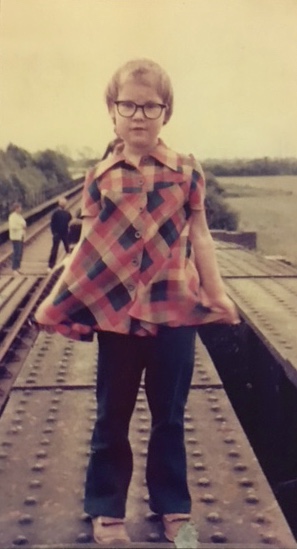
Me aged five


Unlikely journey: How I got from woeful to wonderful work

I spent my day at work interviewing for entry level positions at my workplace. It was my first time on an interview panel at my workplace and it brought up a lot of memories and feelings. I joined the department through a similar process myself over ten years ago. This is the back story to my becoming a professional corporate suit-wearing Jeanette which will hopefully touch on some useful thoughts and strategies around employment and life more broadly….

In late 2000 I was living in supported accommodation for young people with serious mental illness. I have a  schizophrenia diagnosis in addition to my autism one. I was delighted to live there as it was a step up form a dingy boarding house for homeless women and before that prison. As a result of my naivety and inability to spot dangerous people, coupled with trauma, self hatred and anger at everything, I spent the time between 1994 and 2000 in a hell of prison, drugs and mental illness. My concept of the future was the coming Thursday. I was self-destructive, violent and only focussed on negative things. I was probably not somebody you would like to know or to be.

By the time I got to the  accomodation for people with mental illness I was in an odd sort of transitional phase. I wanted positive things but was unsure how to get them. I remember clearly sitting in the room where the little gold pay phone was after finishing a conversation with my mum. ‘I want to be ordinary!’ I thought. What I meant by ordinary was to have an education, a professional job, a mortgage and a suit. My focus had evidently shifted from negative to positive. I told nobody of my plan, thinking they would ridicule me or respond negatively. I was accepted into university and started my bachelor of fine arts in March 2001.

I was an engaged and successful student My first semester results featured mostly high distinctions and distinctions. I wondered if maybe I could get a job if I was doing so well at university. A friend who worked in restaurant got me a job trial as a dishwasher. I was so proud to be employed even for two evenings a week. I passed the trial and soon had regular hours. I started to notice something though – every time I went to work I would be anxious. The anxiety increased with each shift. I would repeat song lyrics in my mind endlessly at work.   I thought if I made a mistake the restaurant would go out of business. Soon the anxiety was with me everywhere I went, whatever I was doing. Nothing would relax me. I did not realise how damaging this constant high anxiety was but after just a few weeks I was seriously unwell wiht psychosis, went to hospital, had to quit the kitchen job and take a special consideration to ensure I could stay at university. My reflection now is that the most telling thing about that series of events was that not once did I think ‘I will never be able to work.’ Instead I thought ‘I can’t work now.’

I spent a couple of years desperate to work but still too anxious to try. When I felt ready to work I took on a volunteer job and worked up from there. I now give a lot of presentations on resilience and I would describe my approach to finding meaningful work as putting in controlled challenges to build my employment resilience.

I worked a few hours at a tiny business I had editing videos for colleagues at art school and I had a job a couple of days a week collecting coin donations for the AIDS Trust. Then something happened which changed everything in my life. I now refer to it as my point of no return. I met the late, and wonderful autistic author Donna Williams / Polly Samuel at a course in late 2004. I was in between completing my honours and commencing my masters degree and the course was through an autism employment service. The qualification would enable us to speak at schools. At that point I didn’t know much about the autism community. I didn’t know that  Donna was a highly respected author and role model in the autism community but we got along very well and she become my mentor. With her support I wrote my life story – urgently over a four week period. For me it was catharsis. It was accepted for publication and my life changed. The biggest difference was in my self confidence and sense of self worth. An author was an exceptionally valuable role to have, especially as I loved reading and books and authors had been my ‘friends’ through horror and often friendless years at school.

Three months after the book came out I decided to apply for my professional ‘ordinary’ job. I looked at some online career sites and found two jobs I thought I could do – one in the Victorian Public Service and the other in the Commonwealth Public Service. Pretty much everyone I knew – including my psychiatrist – told me I couldn’t do it for a variety of reasons. I had to supply some additional information due to my unpleasant personal history and the poor choices which came with it. This meant I had to wait a little longer to find out the outcome of my application. In the past that awful anxiety would have taken hold and broken me but I had built some resilience and self confidence,

When I found out my application had been successful I was delighted. At this point I was living in quite a depressing public housing estate with a stalker living upstairs from me and making my life awful. The whole place had a hopeless, ‘end of the line’ sort of feel. Even though I worked a little I was unable to afford a rental on my own. I needed a full time job. Because my exiting new job was in another state I could leave the stalker and the misery she caused behind.

When I started my job:

  • I did not know one person in the  city I moved to
  • Almost all the other graduates in my workplace had academic backgrounds in economics, law or international relations. I had a Masters of Fine Art
  • Almost all the other graduates were in their early twenties. I was 32,
  • I had never worked full-time and worried I wouldn’t have the physical stamina to do it
  • I had never used Excel. When I explained to my supervisor I couldn’t use it I thought he would send me back to Melbourne . He sent me to an Excel course instead. I am now known for my ‘big spreadsheets’
  • I thought I was the luckiest girl in the world to the such an amazing job. I still do.
  • I walked into the big swanky shopping centre in the middle of town and thought “Nobody’s going to be mean because I am poor’ closely followed by ‘Yay! I can buy nice things!!’
  • I didn’t fully realise what an amazing an unusual opportunity I had.

I now reflect on a few interesting points in this story

  • My determination and positive view that I could achieve played a big part in how I got to here. I didn’t have a lot of self doubt along my journey
  • Things could have gone one way or the other many times, It was not inevitable that my future should have turned out as positively as it did. There were thousands of decision points
  • I was aspirational. I still am. An aspiration is like staking a claim on the future. It is an anchor point.
  • I have never wanted or had a ‘dream job’. I worry when people talk about very specific goals because they are much harder to attain, with a higher chance of disappointment. And in life, focusing only these disappointments can lead you down some unpleasant paths
  • If you find a good mentor which is willing to share their time and energy, that is a wonderful thing. Mentors and roles models are a really important part of my life and I greatly appreciate their work and support.

Secretary's award.jpg

Thoughts on Intersectionality, inclusion, privilege and unconscious bias

I was in a conversation today discussing unconscious bias. It was made particularly interesting – and somewhat disappointing – when someone said ‘I mean I get jealous of the things Indigenous people get…’ I did call her on it, albeit gently. I told her that as an Autistic person with a mental illness there were some things I ‘got’ as well but it was to redress imbalance in society and barriers to participation and inclusion which people face. I pointed out that a lot of that is perception and misunderstanding of how services work and even so, she probably wouldn’t want to have the reasons to be eligible to ‘get’ things which Aboriginal and Torres Strait Islander peoples do – intergenerational trauma, dispossession, the discrepancies in life expectancy and domains like employment, physical and mental health, as well as bigotry and discrimination.  She was saying what she thought at least but it got me thinking about these kinds of things.

I think I’m just going to go with a paragraph or two on each of the topics in the title and unpack them a bit, at least to my own understanding.

So…..

Intersectionality

I will describe this in two ways.  The first is in relation to a conversation I had online a while back with an Autistic man in the US. He was complaining because apparently some ‘feminist’ had challenged him on the fact that he had twelve white male admins on his Autism advocacy group. The man wrote on social media for all to see ‘Autism has no gender…’ I was appalled and raced home to dash off a speedy blog post which I think was titled ‘Autism has a race and a gender and a sexuality and a class….’ Ad what I was writing about was intersectionality.

What intersectionality is all about is the idea that people experience different kinds of disadvantage and discrimination. As an Autistic woman with schizophrenia who has a history of institutionalisation  and socio-economic disadvantage who identifies as somewhere along the non-binary gender spectrum, I have a number of lenses of difference and potential for disadvantage.

Essentially discrimination and disadvantage can be compounded and exacerbated by belonging to different intersectional ‘groups’, as can our experience of the world and how we present to others. This is a very impotent concept, particularly for people who belong to intersectional groups. However it is a vitally important concept for everyone to understand – our families, friends and colleagues, organisations providing services to us, educators, employers, clinicians and so forth. If people in our lives don’t understand intersectionality it can result in the kinds of disadvantage we try to avoid. This is not just a concept which people facing disadvantage need to know about it. Everyone needs to know about it or those disadvantages, prejudices, micro aggressions, exclusions and service failures will just continue and so many people will struggle to lead fulfilled lives where they are respected, understood and included.

Inclusion

I think everyone has an idea of what constitutes inclusion. Inclusion is tied up with the concept of  diversity. Many people think it is a sort of nebulous thing where everyone is nice to each other…. Not quite. Inclusion can be seen as a radical concept. The opposite to inclusion is exclusion. I see this everywhere as an Autism advocate – issues in services and programs, assumptions and prejudice in all sorts of places where it shouldn’t be. Advocacy and activism challenge this sort of thing by promoting inclusion. Inclusion is on one level about ‘doing alongside’, in consultation and collaboration with, and not ‘doing for’. I think that inclusion is best driven by the people who are excluded. Inclusion can be challenging and uncomfortable but through that, understanding and acceptance can emerge.

One thing to be aware of is that people who face disadvantage are not necessarily inclusive on all issues. I sometimes meet people who seem to think diversity stops at whatever disadvantage they themselves have. I have seem disabled people with apparently  great disability politics show a lack of respect for other groups. Tying in with intersectionality, I think it is vital that those of us who are in one or other potentially disadvantaged group to understand and respect the needs of other groups, otherwise I tend to think ‘what’s the point?’ I decided many years ago that I was singled out and abused because I was ‘different’ so I have a responsibility to support others with ‘differences’ – whatever those may be.

Privilege

This is a tricky one which is quite often misunderstood. There a number of different sorts of privilege – a typical one is wealth.  Many people identify White privilege and sis gender, male heterosexual privilege. However the tricky part is that people can belong to a disadvantaged  group at the same time as being privileged in another area. That US Autism group admin who thought Autism had no gender would in my mind at least, fall quite neatly into male privilege despite being Autistic. But it gets more complex. Privilege is not in and of itself a bad thing. The issue tends to occur where there is no awareness of privilege by the person who has it. In my case, despite living in poverty for most of my adult life, I am now a well-paid professional who owns property. I consider myself very privileged in terms of socio-economic advantage. However I am always aware that I have this privilege and keep it in mind when talking to and working with people who are socio-economically disadvantaged. Hopefully there will be no ‘Let them eat cake!’ from Jeanette.

So in essence, privilege is inevitable for some people but if they are aware of it and make allowances and learn the perspectives of others who are not privileged it is much less of a problem.

Unconscious bias

This one is a tricky thing indeed. It refers to people being biased or bigoted but being unaware that is the case. A statement like ‘Even autistic people can be taught social skills so they can communicate properly’ demonstrates some pretty significant unconscious bias, but I bet if you challenged the (in this case imaginary) person who said it, they may struggle to identify what the issue was.

Addressing unconscious bias is often difficult as calling the person on it can backfire if they genuinely can’t see what the issue is. More wholistic interventions to change thinking and understanding around autism (or whichever attribute the bias relates to) can be helpful. We are actually seeing this a little in messaging around autism.

When I started doing advocacy  in 2005 there was a huge amount of unconscious and some deliberate bias, particularly paternalism – in every forum I attended. The idea of Autistic people being involved in the design and delivery of autism services and events was a long way off. So while things are for from perfect nowadays, I see less unconscious bias form non-autistic people than I did in the past. And the thing which is working to challenge that unconscious bias is advocacy and activism being driven by Autistic people ourselves. I think that holds true for other groups: addressing overt and unconscious bias is best driven by the people directly impacted who have first hand knowledge and investment in the issues. I recognise as well that there are some wonderful neurotypical allies who also have a strong investment in empowerment – usually as partners, parents or children of Autistic people. It is nice to view through twelve years of hindsight that things have improved. We still have a huge journey to travel but I do hope one day to realise my dream of being completely redundant as an advocate because I”m not longer needed (at which point I will switch to mental health advocacy which needs a lot of attention!)

IMG_0390


An adventure in non-autistic space: Why I love speaking to new a audience

A few weeks ago I logged on to my laptop and saw an email from an unknown person. The subject line said ‘letter for award’. Given that I wasn’t a finalist for any awards I was a little intrigued. I opened it and found out that Toastmasters District 70 was awarding me with a Communication and Leadership award. The District 70 Director selected me for the award after seeing me give a talk a few years ago and then doing some Googling….and there does tend to be quite a lot of me on the internet at the moment!

The awards ceremony was in Western Sydney. It seemed such an interesting experience to receive an award from an organisation I only knew of peripherally and to to have a night out – a proper adventure I thought, so I agreed to go along. I was asked to give a thirty minute presentation on my life story.

I reflected that the weekend prior I had been in Melbourne at a peer research workshop for the Autism Cooperative Research Centre with predominantly autistic attendees. It was ‘Autistic space’ and quite wonderful. I could be exactly myself as could everyone else. I thought that the Toastmasters awards night dinner might be the opposite of this – a scary notion of ‘neurotypical space plus one Autistic’.  Plus I didn’t know anyone who would be there. Even the person who gave me the award was someone who knew me from being in the audience at one of my talks and not someone I knew well.

I got the bus to Sydney and a cab to the venue. It was one of those huge rugby league clubs in suburban Sydney. I signed in as a guest and found the function room the dinner was in. I introduced myself to the woman outside the room. ’Hi I’m Jeanette, the guest speaker.’ She advised me matter of factly that they were setting up and I should wait outside. I  was a little surprised but figured I wouldn’t be a lot of help in setting up the room!  Soon afterwards two of the other people attending the event turned up. I got a very warm hello and conversation. Then the incoming district Director turned up and introduced himself and said how much he was looking forward to my talk. The woman who selected me for the award arrived and we went and got coffee, only to be met by two of the other Toastmasters. I’m not sure what demographic I had expected to be there but I was surprised by the diversity the group. It was very friendly and everyone knew each other. I felt like I had been welcomed to someone’s family dinner. In fact I have never been in a friendlier room full of complete strangers. The sound people miking me up were lovely and one of them was a woman and there was a curtain so that I could maintain my dignity – such as it is – when dropping the battery pack for the mic down my top and attaching it to my belt.

I was actually nervous about giving my talk. Not so much around talking to a room full of people – I do that all the time. I was anxious about the content of my talk. This often happens when I do the life story talk with non-Autism world people. What if they all just judged me and gave me evil looks and didn’t talk to me afterwards because of my poor choices and abject lifestyle in my twenties? Then I remembered that the main value of my story is how what I do now exists in relation to my difficult past. After my talk I got lots of compliments including from someone staying at the same hotel as me who told me how good my speech was as I ate breakfast! Mine was certainly not the only award as most of the people in the room got awards for their good work as leaders in the organisation. I am very happy I decided to go to Sydney, collect an award and meet some warm, inviting people.

But this is not just a nice story about me getting an award and meeting lovely people.  I think the key point of interest in this story is the idea of Autistic advocates and individuals engaging with a mostly non-autistic audience and one which has little experience or understanding around Autism. I’ll have a go at unpacking them. Here goes…

  • Speaking to audiences who know very little about Autism makes me feel wonderful because I am spreading the word and introducing them to my own Autistic reality and broader Autistic experience and thinking around neurodiversity which may well dispel or challenge stereotypes and assumptions. I think that is quite a worthwhile thing  do, even if it can be little bit nerve wracking!
  • As Autistics we can expect non-autistic people to all be judgmental or hostile. This can mean we approach new situations with this thinking. Many of have experienced bullying and bigotry so this is understandable.  But it is not always the intention of others to be hostile or rude, and ignorance – which can be often be addressed without too much effort – can be confused with outright bigotry.
  • I do speak at quite a few non-autism world events, It is challenging as many people have some unhelpful thinking but the beauty of me speaking in these forums is that I can start to address that unhelpful thinking. I would much rather people listen to me or another Autistic person talking about Autism than someone who shares their unhelpful thinking, This does mean  I often feel like I am ‘taking one for the team’ but it also allows me the opportunity to support people to change their thinking or see the world in a more inclusive way.
  • Outward hostility from non-autistic people at events is unusual in my experience. Often what happens is that someone comes out with some offensive statement  and understandably I get annoyed and respond in the heat of the moment. This usually means I ‘lose’ that person and have no chance of engaging them in the future. If a person’s statements were from hostility and bigotry, anger is definitely warranted, but what if they were simply ignorant and repeating the views of their parents etc? I know autistic people who are ableist against themselves because of internalising societal and parental ableism. Sometimes thinking and attitudes are more complex than they first seem.

same but different-2

A rare visit to Autistic space

{for Sylvia}

I just got back form Melbourne where I attended a research academy organised by the Autism Cooperative Research Centre (‘CRC’). I am on a reference group with the CRC and spoke at their participant day in 2014. They have always struck me as an inclusive and respectful organisation which takes cooperation very seriously.  Their work involves  funding research projects on autism and they also co-produce research with autistic and non-autistic peer researchers.

A couple of weeks before the event I started getting anxious. No matter how much I try to deny it or ignore it, I have a significant profile in the Autism community in Australia. What if I started name-dropping or butting in with pointless stories about giving a talk for TEDx or writing books or some other braggy thing? Would I need to somehow prove myself with a room full of Autistic people? What were others’ expectations of the event? Was there any point me doing the academy when I already work the equivalent of two full-time jobs? Was I taking a place someone else should have had?

In fact I didn’t need to worry. When I arrived I was met at the airport by two of the CRC staff and two academy participants who had just flown in too. We talked and got a taxi and my anxiety lessened as I realised it was OK to just be myself.

The interesting thing about this event was that it was Autistic space – meaning that most people were Autistic and that the ‘norms’ were set by us. I have only been in Autistic space like this at three events, including this one, and it has always been sort of hard to describe. The best I can do is to ask you to imagine you are an expatriate living in a country where you had to learn the language and you aren’t very good at languages. The country you live in also has customs which seem odd and even offensive to you but if you question them you are shouted down and judged. Then one day you find a club for expatriates like you. When you go in you feel immediately more relaxed and comfortable. You can speak your first language and practise your customs with no fear of blame. Of course the difficult thing in that analogy – and the real situation of Autistic space – is that you still live in the other country so once you leave the expatriate club you are an uncomfortable  minority once more. Autistic space is where nobody judges and in all three experiences of it I have had, has been almost entirely kind and supportive and not interested in hierarchies or status. It is basically pretty amazing and makes me feel as if I have come home after a long and difficult journey.

I had a couple of helpful epiphanies at the event. One was around the medical model of disability. If you don’t know about his already, there is a medical model of disability and a social model of disability. The medical model is based on diagnosis and deficits and basically ‘fixing’ people. The social model is more based in the concept that what disables people a lot of the time is from a social basis and disability is beyond just medicalisation. Autistic people are often faced with the very deficits-based notion that we are broken and need a fix or cure. I always knew this in terms of external parties reinforcing that thinking and that in turn impacting on autistic  people’s self-worth and identity but I never understood that some Autistic people actually internalised that about themselves. Even when I rejected my diagnosis it was because I thought it validated bullying and prejudice. I have never seen myself as broken on in need of fixing. This understanding helped me to not only understand my own advocacy and how I am happy to talk about my Autism to anyone willing to listen, but also the difficulty those who have internalised that medical model must go through.

In the workshops and sessions at the academy, I felt an overwhelming sense of respect for our opinions from the non-autistic  members of the project team (which was 50/50 Autistic / non-autistic). It was not tokenistic but based in the view that our Autistic perspectives were essential to the work of research on topics related to Autism. At one point we formed groups with researchers and looked at a research question and unpacked  it, sharing our perspectives in a very helpful dialogue. I think everyone involved made connections which will continue beyond  the event. On Sunday we had dinner with CRC Board members and then had a wonderfully enjoyable trivia night with everyone – including the Board.

I made new friends and consolidated existing friendships. The event was so valuable for that reason alone, but there was also some more professional networking done – which I find often overlaps with friendship in my life.

I will recount an anecdote which I think quite neatly sums up how I experienced the event and Autistic space. For the dinner with the Board members I decided to dress up. I don’t do cosplay in the usual sense – inventing a character or avatar and putting together a costume to express that. Instead I sort of cosplay myself. On Sunday I was happy and wanted to make an impression….I wore an orange patterned caftan with different coloured rhinestones on the front, my gold sequin Converse sneakers, lots of shiny jewellery and my orange ringlet wig (think Little Orphan Annie meets Janet Frame in Jane Campion’s ‘An Angel at my Table’). I walked to the dining hall – we were staying on campus at a university. I walked past a couple of students. I’m not good on facial expressions but I could tell the two young women  thought I was a little strange. I didn’t care at all what they thought and embraced my difference. I walked into the dining hall and the CEO from a major organisation greeted me warmly and remarked that I was wearing a new wig which he hadn’t seen before. We discussed a talk I am doing for his organisation and had a good laugh together. I had dinner at a communal table with academy participants, program staff, researchers and a couple of Board members – including an Autistic friend I don’t see often but love catching up with.  I sat there among my peers, colleagues and friends and knew that I am one among many. We have a strong community and incredible potential. I never do ‘us and them’ – instead I try to do ‘bringing along with’. This event was very much in the camp of working together and bringing along with. And while it is probably unlikely that I shall ever spend my whole life in Autistic space, the research academy showed me that we don’t have to always speak the non-autistic language. We can also teach non-autistic people to speak our language, with all the depth and wisdom which comes with it.

13533362_1053817438032976_3989541842259093121_n

Please don’t ask me ‘How do you feel?’ ‘Emotion blindness’ and Autism

The image accompanying this post is me signing a book at a launch event in 2012.I look very happy don’t I? It might surprise you that two days after that image was taken that I was in the psychiatric ward for six weeks with severe depression. Was I putting on a brave face? Actually no. I was unaware that beneath my happiness for signing a new Jeanette book lay a depth of misery which I had simply not noticed. Like many others on the Autism spectrum, I have a condition known as Alexithymia, or emotion blindness. It doesn’t mean I don’t have emotions but that I cannot articulate them and struggle to notice them. In my case I only feel a few emotions and even then only when they are at a heightened state. It means I don’t access what I am feeling unless it is severe and even then I often can’t work out what the feeling is, just that it is unpleasant.

In the six week hospital stay after my book signing event, I remember sitting in the hospital psychologist’s room and crying. The psychologist told me I was really depressed and I denied it, despite the fact that everyone in the place could tell I was depressed. For a person with alexithymia, being asked by a mental health worker – or anyone for that matter – ‘how do you feel?’ is about as helpful as being asked what the temperature on Venus is at the moment. It is almost impossible to respond to that question in the way it was intended.

Autistic people experience alexithymia at higher rates than the non-autistic operation. It can compound existing difficulties. It can mean:

  • Autistic people being unaware that they need to seek help
  • People not being able to articulate what they are experiencing because they are unaware of it themselves. This can lead to mental illness conditions or symptoms getting very serious before anyone knows
  • Autistic people’s level of distress being misjudged and treatment in mental health services not being appropriate for the person. This can include being denied treatment  as the person does not seem particularly distressed or speaks about their experience and feelings in an atypical or unexpected way
  • Clinicians and support workers having no idea of what their client is going through and treatment being unhelpful as a result
  • Making it difficult for Autistic people to understand their own mind and identify when they need to seek help
  • Compounding stereotypes of Autistic people being emotionless or ‘cold’.
  • Many Autistic people are taught small talk type responses to questions. Often they may learn that when someone asks them ‘how are you?’ or ‘How do you feel?’ then the answer should be ‘good’ or ‘well, thank you.’ This can be an issue when someone has alexithymia and they think the ‘right’ answer is ‘good’ even if they have some awareness they are struggling.

Recently I have become aware of my alexithymia and what it means. I do not feel a lot of emotional response to things. The most common emotion I am aware of is stress and from that overload.I can tell a meltdown is coming on when the stress turns into anger. I don’t feel much but I observe how I am acting: avoiding other people for fear of yelling at a them, not going online for similar reasons, a tension in my forehead and a sensation of adrenaline in my head. This means that after many years of being at the mercy of overload, I now get more of a chance to leave the situation and take time to de-escalate.

I am also getting better with understanding my mood, not so much by feel but by what I observe myself to be doing. If I am up at 3 am on a work night, talking loudly to myself and Mr Kitty and writing very quickly – and very well, then that is a fair indication I am elevated or getting hypomanic. Once I know this I can physically slow myself down by going to bed and listening to classical music. Conversely, I can tell I am having a depressed mood when my house is messy and I cant imagine  being able to clean it. When this happens I know I can take action to help improve my mood – do something productive or energetic like having shower and going to work when I don’t really want to or writing. With both the elevated and depressed moods I also rely on friends and family to assist by telling me. If my mum says ‘Jeanette your mood is high as a kite!’ I thank her because she is a more objective observer than me and her observation is helpful.

If someone asks me ‘how do you feel?’ I usually can’t answer but I can work it out with some strategies. It is important to be aware of alexithymia and Autistic people, especially for parents of younger kids and teens. There are strategies to manage it but often someone isn’t aware that they are not aware of their emotions.It is a tricky one and certainly deserving of more information than exists at the moment.

IMG_0166