A beginner’s guide to changing the world: Making it matter!

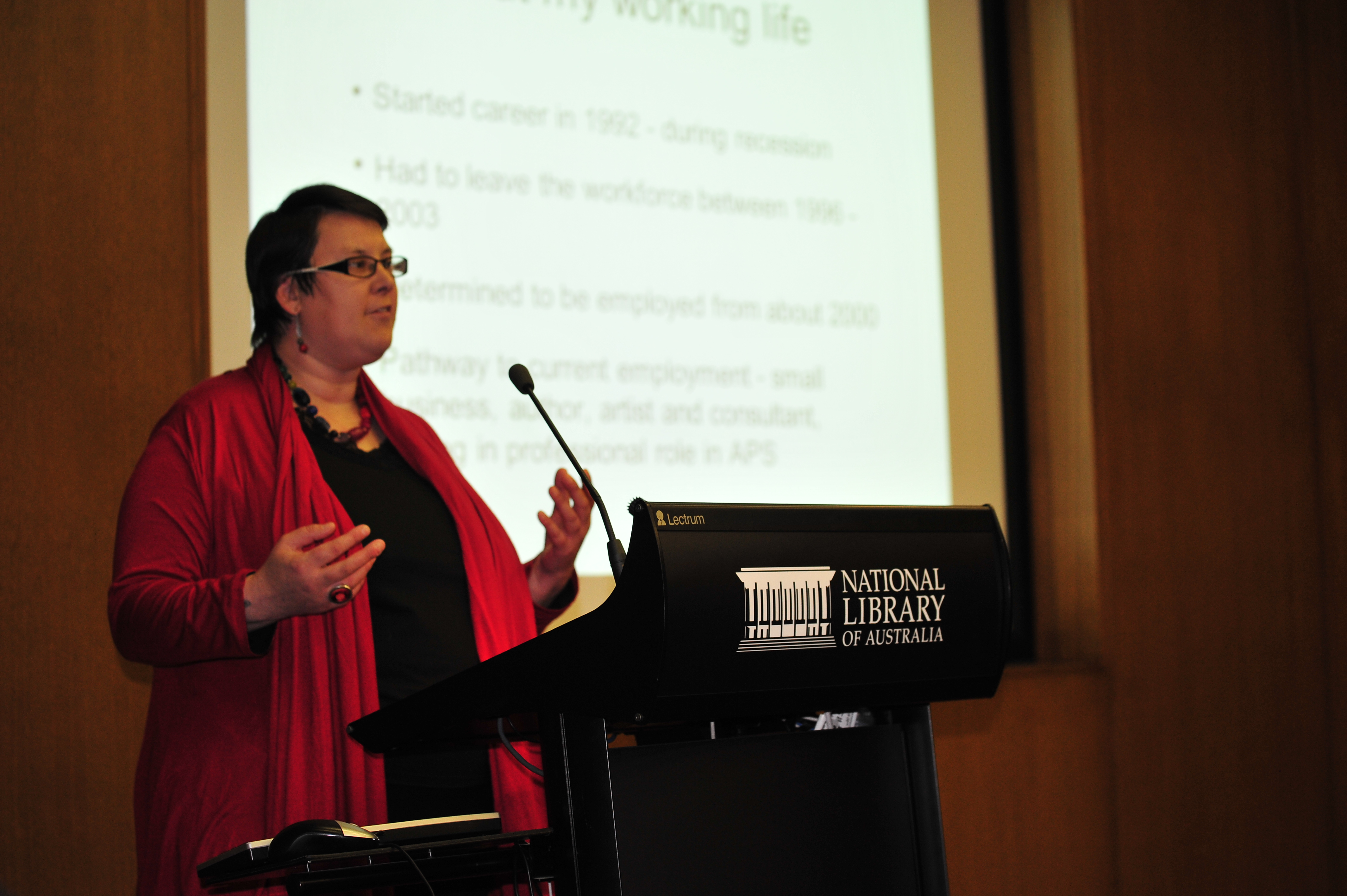
These days I find myself giving a lot of conference presentations. It’s always a little nerve-wracking and exhilarating when I am about to take the stage. To steady myself, I utter the mantra ‘OK, let’s do it. Let’s go and change the world!’ I should qualify this by saying that my audience is more often measured in numbers closer to 100 than 1000. I have never ‘gone viral’ anywhere and my TEDx presentation from 2013 has a modest 2500 or so views on YouTube. But the important point about changing the world is that often quality is better than quantity.

I was not always an incrementally world-changing, conference-presenting, Autistic overachiever. Twenty years ago I was a homeless criminal druggie messed up person who most people would have judged as being on a short path to an early death and shameful memory, loved only by my family (and probably only a few of them). Obviously something happened to change my life. Actually it was a few somethings. I found myself a recently-free woman in February 2000. I had decided that a new millennium should equal a new life – the only time I have ever made anything approximating a new year’s resolution. I decided I wanted to be ‘ordinary’ – the get an education, a job, a mortgage and a suit. But more importantly I decided to put back some good in place of the thoughtless and impulsive acts, the pain I had inflicted on those close to me and on the wider society. This was quite a challenge. I didn’t really know how to be ‘good.’ So I went back to my Sunday School theology from so many years ago. I understood the idea of ‘do unto others what you would have them do to you’. That seemed a good basis for ethics and morality. So if I was doubtful as to whether something was ethical, I would run i through the ‘do unto others’ test. If I wouldn’t want another person to do that to me, I didn’t do it. Surely this was something of a tenuous link to ethics but it worked for me. I didn’t know good and evil at first. I had little connection to other humans but this rather logical approach to ethics really did work.

So that was my first conscious effort to change the world for the better. As time went on I achieved more things than any single person should be allowed to. One of those achievements was to write an autobiography. At the time the book was released, people told me that it would help other people and make the world better for Autistic people involved in drugs and crime but this was meaningless to me. All I cared about was that I was an author and that little fact changed how I saw myself. I was still rather selfish and self-focussed.

Years went by and life changed. I don;t know where the connectedness came from but almost as if by magic I started to care for others. All that making myself ‘do unto others…’ now made sense to me in a moral way, much as others described that they felt. I wanted to help people. I wanted to change the world.It suddenly mattered that my book was helping people. I wanted to change the world. At first I thought I needed to have a huge audience. However, after observing my friendships I soon realised that the important thing is not to reach a lot of people, it is to reach people.

These days I spend a good proportion of my time trying to make the world better. I don’t know if I’ve somehow ‘cancelled out’ the negative acts of my past – I don’t really think that’s how it works. Whatever the reality, I feel that my past experiences have given me a huge drive and imperative to help others to avoid the kinds of disasters I found myself in when I was younger.

When I tell myself to change the world at conferences, it is a little tongue in cheek, but there is a lot of truth to it too. Life in the past twenty years has somehow become less about me serving myself and more about me helping others. And I love it. It’s almost addictive. I figure the main test we need to pass in life is to leave the world a little bit better when we depart than how it was when we enter. So lets’s do this thing. Let’s go and change the world!
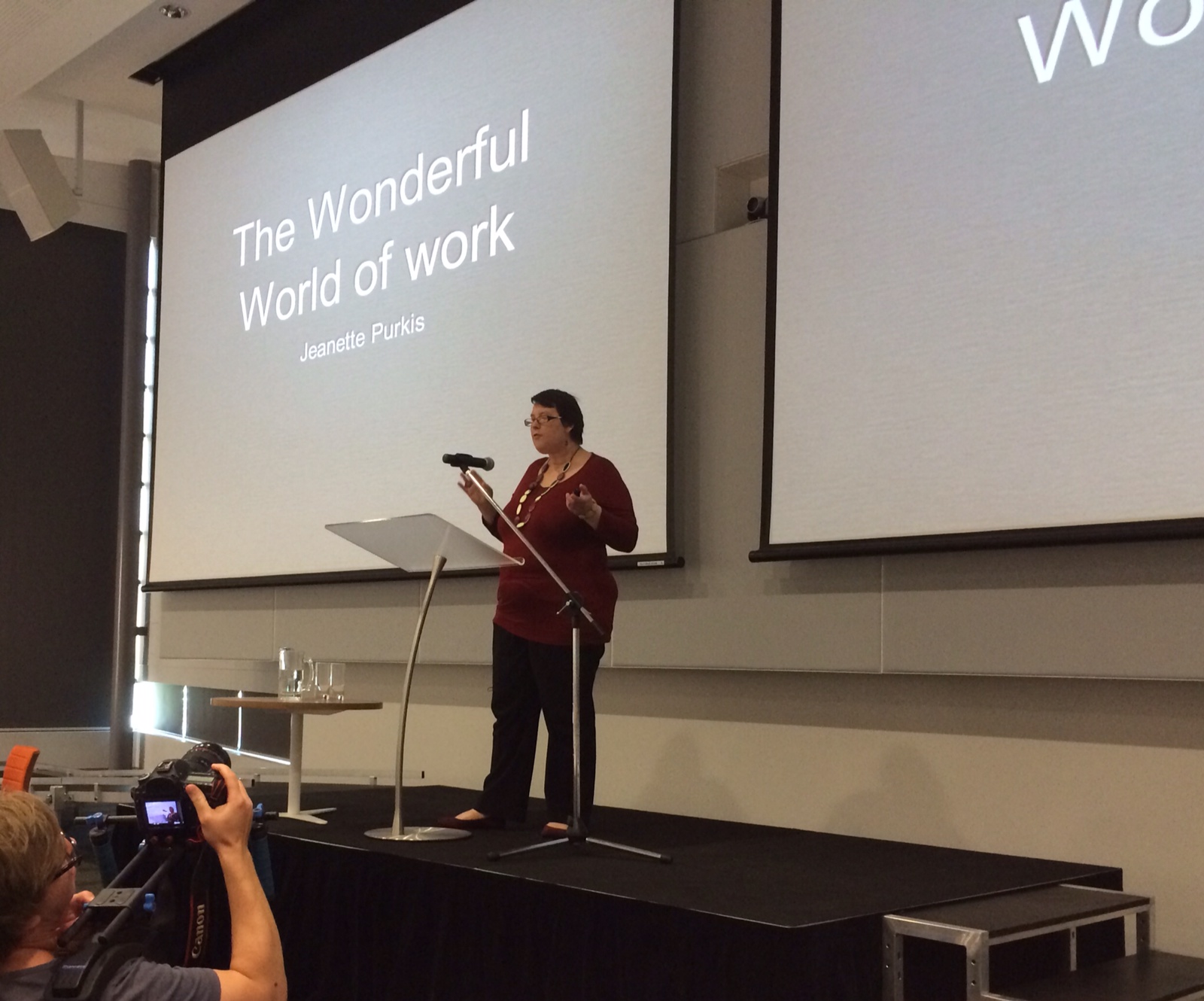
IMG_1322

Me changing the world, just a little bit

Do you like me? Why nobody will be universally popular and why that’s OK

Most of you may know this, but I’m an Autistic lady with a mental illness. I have had a lot of people over the years be rude, abusive, bullying or just plain exclude me. As a young woman I was very insecure and wanted to live in a world where everyone liked me. Of course that is impossible but I certainly tried. I was the world’s most adept people pleaser and I learned to get on everyone’s ‘right side’. By the time I was in my thirties people did like me but often because I’d done everything within my power to get them to like me. I hated confrontation and I hated the idea that people might reject me. I was known for being thoughtful – but this was mainly due to the fact that, in true Autie style, I learned and memorised everybody’s likes and dislikes and put this knowledge into practice. I would remember how everyone took their tea or coffee, I would remember if someone mentioned what kind of music they liked and then play the music they liked when they came over. I was known as a very nice person but this was not a true reflection of my feelings or character – I was just trying to be popular.

Then I did something slightly foolish: I wrote my autobiography. This book set out some of my views, my likes and dislikes. It also very gradually and incrementally put me into the Autism world spotlight. People started to care what I thought. They would share my statuses on Facebook. People asked for my opinion. What on earth was I to do? What if my new friends disagreed with my opinion? What if I offended them? This is an ongoing issue as I am so geared up to be appropriate and do and say what will please others, I sometimes struggle to even know what I think.

Something happened today which prompted this post. I was on social media, as I often am, and I clicked on a link to a quite well-knwon Autism page. I was informed in no uncertain terms that I was ‘permanently banned’ from this page. I honestly could not imagine what I might have done to warrant such a severe sanction in Facebook land. I was also initially very upset. I felt rejected. I wondered what I might have done to offend whoever ran this page. I was fairly certain I hand’t argued with anyone from the page or said anything offensive. A number of my very lovely Facebook family responded when I posted about my disappointment to be excluded from the page. One of these people – a very wise and accomplished author and advocate whose opinions I value very much – suggested that it really didn’t matter what those people thought. I felt that this was good advice, not just for this situation but for life. This promoted these thoughts:

  • You can’t be liked by everyone. That is perfectly OK. I don’t like everyone so it makes sense that not everyone will like me.
  • I know that my own issues make me more prone to wanting to be liked by everyone but I can overcome this.
  • Rather than focusing on the people who don’t like me, I should instead be grateful and appreciate the friends I do have.
  • If people reject me it may be saying more about them than it is about me.
  • The other thing I’ve been thinking is that it’s actually OK yo disagree with friends. Good friendships can withstand disagreement and if a friend isn;t able to let  a point of difference in opinion exist between you and them, they may not be much of a friend.
  • It’s hard for those on the Autism spectrum and those with other conditions or differences to find friends, so the ones we have are very important and we don’t want to lose them. But I feel quality rather than quantity is the key factor in friendships. To me, a few close friends is better than a lot of people who don;t know you well and don’t value and know you.

So don’t be too upset when certain people reject you. You probably don’t want those people in your life anyway. And if in doubt, cuddle you cat or dog or other friend – they love you unconditionally. 🙂 JP

IMG_0202

Jeanette with a lovely friend who also happens to be a beagle

The semantics of respect – words can hurt you

I’m fairly certain that the other members of my family probably think I”m some kind of ‘PC thug.’ I’m seemingly forever picking them up on what I consider inappropriate language. Just recently I had a lengthy conversation with my brother about why the term ‘Siamese twins’ was somewhat problematic. I know for a fact that some of my family members think my concern with semantics is completely nonsensical and if their intent was not prejudice or discrimination then why should they worry about whatever words are acceptable at the moment?

The issue of semantics and respect is a very complex one. In this post I will attempt to make sense of some of the issues and present a case for respectful and responsive use of language.

I should start by saying that I am very keen to respect others from all backgrounds and communities. If I were to be seen as prejudiced or discriminatory, I would feel terrible. Respect is probably the top of my list in the elements of  communication and interaction with others. The key issue in what words are OK to describe a particular community seem to me to be whether or not that community has adopted the language themselves. This is a fairly good indication that if people from the relevant  community use a word then it is OK to use. As an example, many people on the Autism spectrum use ‘I am Autistic’. However, it is also important to be aware of personal preference. Some people like one description and other prefer another. I’ll stick with the Autism example here. I am happy to be described as ‘autistic’ but others would prefer ‘person who has autism’.  If in doubt, most people probably won’t mind if you ask what their preference for a description is.

In the mental illness and disability worlds many people don;t like to be described using language that puts their health condition first or that takes away their power and agency and suggests they are some kind of victim (think ‘person who uses a wheelchair’ as opposed to ‘wheelchair bound’). In addition, some terms for mental illness conditions are misused to the irritation and detriment of people who experience the condition. Think of the term ‘psychotic.’ This is used throughout society to describe some one who is violent or evil while in fact psychosis is a set of symptoms that mean someone loses touch with reality. It has nothing to do with violence or evil and in fact, met people experiencing psychosis are terrified and far more likely to commit violence against themselves than anyone else. For people who experience psychosis – and I can say this from personal experience – this misinterpretation of the condition is very disempowering and results in me having to explain to half the world what the correct meaning of the term psychosis is.  Another misused word from the mental illness world is ‘manic’. Parents will say their children are manic, but unless the children are in an elevated state of mood, stay awake for days or weeks on end and/or have a diagnosis of bipolar disorder, it is unlikely that they are manic at all, they probably just had too much sugar.

Essentially using the accepted and respectful term for such things is not about wrecking free speech or being a PC thug (whatever that is), but rather it is about showing respect to people who may face discrimination in the world due to their membership of a particular group (or ‘club’ as I like to think of it). I often say to people that if they met an African person they portably wouldn’t use an offensive racist slur to describe them, so why is it such an issue for people from other groups. It really doesn’t take long to ask how someone likes to be referred to or learn about different communities.

The funny thing about certain people’s reaction to my concern with respectful language is that I’m sure they don’t think  that they are being disrespectful. One person who I won’t name insists on using the ‘R’ word as a description for people with intellectual disability. When I take this person to task they fail to see the issue. For me, using respectful language is an important part of communicating well with people from different backgrounds and communities. Although I sometimes feel like I am fighting an uphill battle, I will continue to do my best to fly the flag for respectful language.

WJP_3428

My cat, Mfr Ronnie always uses respectful language – ‘purr’ is welcomed by almost everyone

Why I stopped agonising over whether I am a ‘proper’ Autie?

As a person with Autism I often encounter ignorance and profoundly unhelpful attitudes from others about my Autism. Comments like ‘oh, but you don’t look Autistic’, ‘You could pass for normal you know. You don’t really need to say you have Aspergers’ or ‘Your autism can’t be very serious if you can speak. I mean you’ve got a job. Are you sure you’ve got Asperger’s?” These kinds of things certainly serve to annoy me and guarantee that the person saying them is off the Christmas list (or my Facebook). However, in the past, these sorts of thoughts and attitudes made me challenge and question my diagnosis and whether or not I was a ‘proper’ Autie. They eld to confusion and self-doubt. This post is all about myself and my fellow Autistic people being proud of who we are and debunking the concept that there is any such thing as a ‘proper’ Autistic person.

I received my Asperger’s diagnosis when I was twenty by the amazing psychologist Vikki Bitsika who nows heads up the Autism unit at a major Australian university. For various reasons I denied or questioned its validity. A few years after my diagnosis I found myself in a psychiatric hospital which was ruled by an arrogant and unpleasant chief psychiatrist in much the same way as Mordor is ruled by the Dark Lord Sauron (in Lord of the Rings). This chief psychiatrist told me and my parents that I did not have Asperger’s as I was diagnosed by a clinical psychologist and apparently only psychiatrists are capable of giving diagnoses (which I later learned was utter crap, incidentally). So once more I was questioning my Autism diagnosis.

As I moved through life, I met lots of people who all seemed to have an opinion on my Autism. Here’s a list of unhelpful things they said which led me to question whether or not I was a ‘proper’ Autie:

  • You have empathy. Autistic people don’t care about others
  • You have a sense of style. Autistic people don’t care what they wear
  • You don’t have any savant skills do you?
  • You don’t like maths, computers, trains, engineering, space, etc etc
  • Hardly any women have Asperger’s. You’ve probably got borderline personality disorder
  • You’re too cool to have Autism
  •  But you have a sense of humour
  • You don’t look Autistic
  • Oh, that would just be your mental illness.
  • Everyone’s on the spectrum somewhere, You’re not special
  • You’re such a good friend, Autistic people are terrible friends
  • I saw that TED talk Temple Grandin did. You’re nothing like her. Do you like cows?

All of these statements are somewhat unhelpful to say the least. I can attest that I am a good friend, empathetic, have a sense of humour, am extremely ‘cool’ an am rather different from Dr Temple Grandin. However, I am still Autistic. These sorts of statements come from a place of ignorance. It took me years to work out that I really was on the Autism spectrum and not to be fazed by these sorts of comments.

One thing I learned over the years is that there is no such thing as a ‘proper’ Autie. We are all ‘proper’ but also different. In fact Autism is a condition which does not determine or affect every element of a person’s life. There is a saying that ‘If you have met one Autistic person you have met one Autistic person’. We are all individuals and all distinctly, beautifully, amazingly different. No person – Autistic or non-Autsitic – has the right to deny someone on the spectrum their Autistic identity. The only person who can say whether or not a person is on the spectrum (other that the Autie themselves of course) is the clinician who diagnosed them. People saying that we are ‘not Autistic enough’ (or whatever) are being ignorant and insulting. Given that many of us put on our ‘game face’ to the world, people other than our immediate families of partner may not see the impact of Autism on our lives, so to claim that someone is ‘not Autistic enough’ is inappropriate and invalidating to ay the least! I feel that the solution is building acceptance and understanding around Autism and for those of us on the spectrum to promote inclusion an challenge such ignorance.

For me, I have no doubt that I am on the spectrum now. Most people in the Autism world who have met me say that I am quite an ‘obvious’ Aspie. This makes me happy. when others make ignorant statements like the the ones listed above, I try to gently explain how what they say is not furthering any positive agendas and should be challenged. I value my own Autistic identity and try to share my experience with the world to hopefully make a little difference where I can.

IMG_0699

Me inadvertently challenging some stereotypes by daring to work! 🙂

‘You’re just gong through a phase…’ The many and varied stages of an atypical life

“You;re just going through a phase.’ I’m sure every teenager has heard that from a parent or relative. It’s as if their experience is irrelevant or not worthy of acknowledgement. But we are all going through one phase or another during our lives. Life tends to be a series of phases. This article will look at the phases of my own life – a woman with Autism spectrum condition and atypical schizophrenia.  Hopefully others will be able to relate and draw some understanding around their own – or their children’s lives.

1-12 years – problem child and nature kid

I was born in an era with Asperger syndrome and Autism were either not known of or were misunderstood. I went to school with no assistance whatsoever. I was a ‘difficult’ child. I wouldn’t let my father come near me as an infant. I was unhappy, angry, at times violent, and unaware of the kids of relationships an friendships that other children have.  I loved nature and brought all sorts of creatures home as  potential pets (much to my mothers’ annoyance concern), including stray dogs, birds, mice my cat had attacked, lizards and on one occasion, a fat green toad. I had a fierce and unusual intellect and was told by some educational functionary that I had an IQ in the Mensa range. I read every book I could find. I loved extreme sensory experiences like looking at the sun through closed eyes and spinning in endless circles. I had a few friends.

Teen years – communist, rebel with one or two causes

My teenage self experienced bullying and victimisation, I have no self-protection skills, was an obvious outcast, but was leader of the ‘nerds’ at school, a straight A student who never studied for exams. At age 14 I left the fundamentalist church my family attended and joined the International Socialist Organisation. I had no sense of boundaries or limits, I was angry and defensive, clinically depressed (but nobody picked up on this). I fell victim to a number of sexual predators due to my naiveté and trouble saying ‘no’. I left home at 17 and joined the adult world. Somehow I was independent but that came with issues. I was not the average teenager and had wisdom beyond my years in some respects and was completely confused about other things that people took for granted. My teen years were all about discovering and asserting my identity.

20-29 – Into the void and other the other side

At the age of 20 I found myself in prison due to some idiotic acts with my older, psychopathic boyfriend. I was diagnosed with Asperger Syndrome in 1994 and schizophrenia on 1995. Needless to say I ignored bother these ‘labels’. I sent five years in Hell – drugs, crime, homelessness, mental illness. I made a dramatic change when I was 25. I decided to be ‘ordinary’ – get an education and a job. I enrolled in uni and set about making a good life for myself. I was clever, contrite and tried to learn about life as a respectable member of the community. I had no money and was unable to work. I lived in public housing and longed to escape to a more middle class world. I have issues with m relationships with family. My twenties were all about learning the limits and building life skills.

Thirties – starting to be successful

When I was 30 I wrote my autobiography. My view of myself started to change. I got my Masters degree and started work as a graduate public servant. I became middle class quite quickly – both in my bank balance and attitudes, I started my work as an Autism advocate but not many people seemed to take much notice of the girl who wrote the Autism and prison book. I had an episode of severe mental illness when I was 35-38. This gave me a lot of resilience and appreciation for how good my life was. I got Mr Kitty – my best protective factor against mental illness and a good feline friend. I gave a TEDx talk. Suddenly people were noticing me and I wasn’t sure how I felt about that. My thirties were about consolidating my character and understanding myself and my limitations.

Jeanette in her forties – the next chapter

I have been 40 for six months and so far I love it. The best thing I have learned so far is that I don’t really care what others think of me. I wish I’d known that when I was in my teens and twenties. I think 40’s is about building on everything I have learned and really getting my career – both my paid work and my advocacy – humming along nicely and building my friendships and relationships with others.

img108

Little me – don;t think she knew what was in store for her

Autism – not just for kids

Last Christmas I went to my parents’ lovely house in regional Victoria for the annual Purkis/Smith family celebration. Before my brother, his wife and my lovely nieces and nephew turned up, my mum gave me a little card she had made herself on the computer. My mum is the queen of thoughtful little gifts which have little monetary value but which have a high sentimental or spiritual value. This gift was no exception. The card was simply a piece of folded paper with a photo of a butterfly on it. Inside, my mum had written something wonderful: she intended to get herself assessed as to whether she was somewhere on the Autism spectrum. Delighted, I put my mum in touch with a good friend and fellow author who is a psychologist and qualified to conduct the assessment – Tania Marshall. Tania booked my mum in very quickly and before long my mum told me that she was on the Autism spectrum – although maybe a little ‘milder’ than me. My mum has since told me that she got the diagnosis for me. As I say, my mum would win the Olympic gold if there was a ‘thoughtfulness’ or ‘love for your daughter’ category.

This is not so much an article about adult diagnosis. Rather it is about dynamics between Autistic kids and Autistic parents.  For me, I have suspected for some time that some of my close family members may have Autism. My mum has always had some amazing interests – fungi, insects, orchids. In fact, my mum knows the Latin name of almost every plant she comes across. According to Professor Tony Attwood, an internist in nature is a very common Autistic trait, especially for women and girls. This was true of me when I was a kid too.

My mum’s diagnosis has made me think a lot more about what her life must have been like. For those of you who don’t know me well, I spent the first twenty five years of my life making every mistake a young woman could –  I went out with inappropriate and often dangerous partners, I got involved in crime through some of those people, I had a drug problem, I joined extremist socialist groups. Some of this was probably as a result of my Autism and some was most likely due to all the bullying and victimisation I experienced and my subsequent low self-esteem. Needless to say, my poor parents had no idea why I was doing these things or how to help me. I did not have an Asperger’s diagnosis until I was 20 and in prison, so my mum and dad saw a child who apparently had ‘everything going for me’ – intellect, talent, motivation –  but who sabotaged herself at every turn.

One thing which makes me sad even now is how other women especially treated my mum. Surely such a deficient daughter must me the result of poor parenting? I seemed to spend many years gaining extra ‘mums’ who thought I would be better off if they were my parent. In fact one obnoxious woman even said this in front of my mum.

Thankfully I am now a relatively happy and successful Jeanette. I own my Asperger’s and schizophrenia diagnoses. I even provide support to others in similar situations. I bet my mum would have enjoyed some support for all of us as a family. My mum was never a bad parent. She loves me and my brother so much it’s hard to fathom sometimes. Sadly due to general ignorance around Autism in the past and the unfortunate habit lots of people have of judging the parenting skills of others without knowing all the facts, my mum has had a bit of a rough trot.

I attended the Aspect Autism in education conference earlier this year and one of the speakers talked about a program she is running for parents who are on the spectrum in Victoria. I was fascinated by what she had to say. At the end, I made a comment about my mum being an Aspie and how she was the perfect parent for me, in part due to our shared Aspiness. Everyone  clapped and I was glad to promote the value of parents on the Autism spectrum. Here’s a few reasons that I value and respect  my mum, love having an Aspie parent and would’t have her any other way:

  • We understand each other and always have
  • My mum and I are like a little club
  • She is always honest with me
  • As a child and teen I could tell my mum anything and she would listen and understand
  • My mum never called me ‘weird’ or put me down for being different
  • My mum is like my best friend and always will be
  • We share some common interests and understanding.

DSC_6710

A sunflower. It’s full of life and love and beauty – like my mum

Murder is murder

Trigger warning – content discusses murder of children

Recent tragic events in Cairns where eight innocent children were murdered by their mother (allegedly), got me to thinking about another set of cases where parents murdered or tried to murder their beautiful, innocent children. Over the past few years there have been a number of highly-publicised cases of mothers murdering their Autistic children.  Unlike the case in Cairns, when Autistic kids were tragically killed, the media and other commentators sympathised with the mother. ‘Autism is hard’, they said ‘A tragedy…’ This is not acceptable. To me, murder is murder and blaming the victim – or their Autism – is appalling.

Just imagine if a parent killed a child with severe asthma because looking after them was ‘too difficult,’ or a child with type 1 diabetes. There would be an outcry. So why do we as Autistic people rate as less than human? Why is killing one of us apparently an understandable – if tragic – response from a parent? I suspect that there are a good number of reasons for this. Obviously, as with any crime there is an element of the personal responsibility or agency of the perpetrator. It is a very small percentage of Autism parents who murder their children. There is also a significant influence from social attitudes around disability and Autism more specfically. Apparently Autism is ‘a tragedy’. Anti-vax types who believe (erroneously) that vaccines cause Autism would prefer to risk a dead child than an Autistic one. When I tell people I have Autism they often look at me sadly and often ask me unhelpful things like ‘do you live at home with your parents?’ There is a general lack of respect for the positives that Autism brings. We – and especially when we are children – are seen as some kind of alien, an ‘idiot savant’ perhaps, not quite human. All of these things combine to make us an easier target for violence.

There is also often a lack of support and other services for Autistic people and their families. I’m obviously not saying that a lack of services justifies murder – or course it doesn’t – but it may exacerbate other issues around lack of value and personhood for Autistic children.

The saddest thing to me in all of this – other than the absolute tragedy of young people full of potential and worth being murdered by the one person who they should have been able to trust – their mother – is the reaction from many media outlets. Respected media commentators sympathise with the murderer – they seem to see Autism is a mitigating factor for guilt. This is appalling. Murder – and murder of a child especially – should be met with the full force of the law. Media outlets should not blame the victims and tacitly excuse the gravest of crimes.

Obviously this is a very fraught issue and parents who commit these evil acts are not in a good place but a few things should happen to help address this situation:

  • Autistic life should be valued to the same extent that other human life is valued
  • Media outlets who have issues around victim-blaming should change their attitudes and gain some experience of the value that Autistic people bring to life
  • Societal attitudes around Autism need to shift from the negative to the positive. Autism is not ‘a tragedy’.
  • Parents should be supported to love, care for and value their children and supports provided if they are experiencing difficulty.

DSC_6830

Stop the victim-blaming. They are innocent beautiful children who deserve a future.

A very merry Jeanettey Autie Christmas

I spent the first eleven years of my life in England. For anyone who hasn’t been to England in wintertime, it is cold. Snow, ice, frost, low dark skies. It all lends itself wonderfully to Christmas (for some reason, because I would imagine that Jesus was born somewhere warm). Christmas was a magical thing for me as a child, mostly because there were lots of sparkly, shiny things, we got presents and ate magically festive food. It was also a time when my parents – who were usually quite frugal given the tough economic times – would buy my brother and I gifts. These would mostly be placed in a stocking – not one of those red and green Santa Claus ones you get now, but one half of one of my mum’s pantyhose. I’m still not sure why but every year there would be a satsuma (or mandarin for my Australian readers) right at the end of he stocking. Some years we would visit cousins and aunts and uncles, which was always chaotic and fun. I was the youngest in the family so the collected aunts, grandparents and older cousins all doted on me. There was also something to do with Christianity which mostly involved kisses from older members of our Christadelphian church and of course the Christmas story, For an Autie, having the same carols, nativity story, food and the obligatory school play was very comforting. Little girl me thought that Christmas was a pretty good thing.

My parents – especially my mum – were far more focussed on the religious aspect of Christmas than the food, gifts and sparkly things. My brother and I were told from as long ago as I remember that when we turned 16, there would be no more Christmas gifts. And my parents kept to their word as far as I recall.

As I grew older I liked Christmas less and less. In fact I spent Christmas in1994, 1996, 1997, 1998 and 1999 in prison, which was pretty awful (although far worse for fellow inmates who had kids waiting for them on the outside). By the time I started to change my life for the better, I had very little affection or warmth towards that particular day on 25 December. I thought the traditions were pointless, the decorations tacky and you really wouldn’t have wanted to get me started on Carols by Candlelight! (‘has been non-celebrities, awful singing etc).  I didn’t feel desperately close to my family and Christmas seemed to make me extra sensitive to their perceived put-downs and rudeness.

A few years on, we had a new addition to the family – a wife to my brother, my sister-in-law. This diminutive but forthright addition to our little clan loved Christmas. I distinctly remember thinking ‘oh crap! I’m going to upset her by being a combination of Ebenezer Scrooge and the Grinch who stole Christmas.’ I suspect I wasn’t the only one. My mum is a complete aescetic in a lot of ways. Material goods have very little impact on her happiness. For years our only Christmas presents to one another had been charity gifts (you know the sort of things – goats for people in developing countries and so forth). With the arrival of my sister in law and her family into our lives, and quite soon afterwards three small Purkises, our Christmas culture had changed. Oh how this Autie hates change!

However, this Autie, as well as hating change, is thoughtful and considerate – or at least tries to be. I didn’t want to be the person who was miserable at Christmas, who ‘accidentally’ told her nieces and nephews that Santa Claus was fictitious (and inspired by Coca Cola advertisers apparently). Change – while unpleasant and challenging – is also a part of life and I was very happy about the inclusion of the new members of my family. I realised that I had to turn my ‘bah humbug!’ into a ‘goodwill to all!’. This necessitated a change to who I was and how I thought. That sounds a bit tricky, but some years previously I had gone from begin a criminal, homeless, negative, druggie person to a university student then author and then public servant. So surely changing how I felt about Christmas should be easy. And actually, it was. Last year I decided that I would not entertain negative and paranoid thoughts about family members. If in doubt, I could talk to my nieces and nephew who love their Aunty. I would keep in mind all the positive aspects of Christmas. I never quite managed to watch carols by candlelight, but when strangers wished me ‘Merry Christmas’ in shops, I would smile and reciprocate the greeting. And in fact, I discovered many positives: sparkly things, tinsel and baubles are awesome, seeing kids’ opening their gifts and being amazed and excited is awesome, family are great. Just think of how difficult Christmas must be for people who don’t have a family or a relationship with family members. And I really love carols and the Christmas story.

Yep. There will be no more bah humbug from me, but a very merry Autie Christmas to all who celebrate it, happy Festivus to those who don’t and all the best for the new year for al the good people of the world. Thanks for reading, sharing, commenting and liking my blog these last few months. I look forward to hearing from you in the new year. :IMG_0593)

Ok, so not Santa Claus but happy author pic, just cause, well, it’s my blog and I think that scarf is pretty festive 🙂

A weighty issue – self-image, mental illness and body weight

Those of you who know me or have seen photos of me will know that I am somewhat heavier than medicine recommends. When I was in my teens and early adulthood, I could eat anything I chose and stayed at an (Australian) size ten or twelve. I never worried about ‘watching my weight’. If I wanted chocolate I ate it. I have a fast metabolism and a lot of anxiety and I suspect that the combination of those resulted in my apparently enviable body mass index.

When I was 21 I was diagnosed with schizophrenia and told I would need to take anti-psychotic medication for the rest of my life. So far this predication has been correct. I still take a relatively high dose of a couple of anti-psychotic medications.  For those of you who haven’t come across such things, a side effect or pretty much all of these drugs is that they cause you to gain – and retain – body weight. When I was 22 I wore a size 10, at 24 a size 16 and now, at age 40 I wear a size 20. For many people, this additional weight might result in self hatred or misery. For me it doesn’t. I have never judged myself based on my looks. If I am happy with what is in my heart then I am happy with what I look like too. I don’t think larger people are lazy or undisciplined or ugly. Your body is merely a receptacle for your soul and if your soul is beautiful. As far as I’m concerned, it hardly matters what the body it reside in looks like.

Sadly, I suspect I may be in a very small ‘club’ in relation to these views. Most people seem to judge others based on how they look. People insult and judge bigger people. They think carrying extra weight is an indication of greed, laziness, a lack of pride in oneself and so forth. These kinds of attitudes can be torture for those of use who are a bigger size. For me, I don’t particularly care. As I stated before, I value myself for what’s in my soul, not what’s in my jeans. However, for other people, these kinds of judgements can be a torment and a curse. They can make people feel guilty, worthless, ugly and depressed.

Our society places so much value in what we look like. And not just around weight but also age, skin colour, facial features or physical disabilities. This is one part of our world which I find it difficult to fathom. But all these ‘norms’ of appearance results in a multibillion dollar industries around making apparently ‘aberrant’ people look ‘good.’ People feel they have to conform to norms of behaviour around things like eating. Woe betide the person – and particularly big people – who have an extra slice of cake at a work afternoon tea. If one is big, there is an intrinsic expectation – often unspoken – that you should be watching your weight and going to the gym. We are supposed to feel guilty and want more than anything to lose weight.

Personally, I am sick of all this crap. And remember that I am writing this from the perspective of someone who doesn’t judge myself based on these criteria. Imagine how people who are influenced by these expectations and genuinely judge themselves negatively because of their weight.

Yes, there is a weight range in which one is more likely to experience health issues like diabetes and high blood pressure. This is a Health Issue, not a character or personality one. I will continue to love and value myself. And as I said on Facebook recently, if my worst characteristic is that I am fat, then I must be the most awesome person in the world! Love yourself, value what’s inside and yes, lose weight for health reasons or because you want to but not just because the world dictates that people must look a certain way. You are all so amazingly beautiful, wonderful humans. I know this without needing to look at your body or your face. What’s in your soul, your heart, your being is ultimately what matters.

WJP_3452

Me being big, beautiful and awesome – launching a book in 2014

“Physician, heal thyself!’ – why I don’t want to be ‘cured’

I attended a conference on Wednesday of the week just gone. The organisation which hosted it was a research body funded by he Australian Government. They are great people and have a strong focus on inclusion and making use of the wisdom of people on the spectrum to inform the design of their research. They have staff members who are postdoctoral students who are on the Autism spectrum. Put simply, this organisation ticks all the boxes in terms of my involvement. My presentation was very well-recevied and the managers and the CEO enthusiastically posed for photos with me afterwards. Presumably the pictures will be featured somewhere in their newsletter or website.

After the ‘nice’ conference, there was another event at the same venue. This event included a speaker from Autism Speaks and an academic who receives funding from said organisation. If you are fortunate enough to have not encountered Autism Speaks (or Autism $peaks as some people write it), they are an organisation which does not seem to value the perspectives of Autistic people. There are no Auties on their Board and a lot of their literature focuses on the ‘need ‘ for a cure for Autism. Apparently, someone typed the search criteria ‘what do Autistic people hate?’ into Google and Autism Speaks was one of the top hits!  I don’t want to get into a debate about individual organisations, however. What I’d like to look at is the concept of a ‘cure” and why Autism advocates like myself find it somewhat problematic.

So, what is Autism? Is is a disease? A mental illness? Is it all negative? Are there any ‘good’ attributes around Autism? Do Autistic people identify with Autism as being part of our character? The answers to these questions often vary depending on who is being asked them. For me, Autism is an integral part of who I am. Many other Autistic people feel this way too. If you removed my Autism, I would cease to be Jeanette. I like being Jeanette – she’s awesome and writes books! So if somebody said to me ‘here’s a cure for your Autism. It only costs a dollar’, I would decline politely. However, where these things can get tricky is that some parents of kids on the Autism spectrum only see the negative attributes or they see the way the world reacts badly to their child and victimises or discriminates against them. Many of these parents would be delighted if they could ‘cure’ the Autism issue. I understand their perspective, even if I don’t agree with it.

Here is a summary my thoughts around ‘cures’ (keeping in mind that there are lots of interests and opinions about these things in the world and many will disagree with what I say):

  • I am a successful, strong, wise, positive person with Autism. I am proof that Autistic people can overcome difficulties to achieve great things.
  • Diversity is great. ‘Curing’ Autism and other conditions, illnesses etc would water down diversity and create a homogenous human race. I couldn’t think of anything worse. Diversity teaches people about others’ perspectives.
  • If somebody ‘cured’ my Autism, I would lose a whole bunch of amazing attributes. I would miss them.
  • Often the bad experiences that Autistic children and adults experience are more around the world not being Autism aware than any actually issue caused by Autism.
  • Autistic people form a culture. This may be a little controversial, but a ‘cure’ could be tantamount genocide, particularly if Autism could be detected before birth and parents-to-be decided to terminate Autie babies.
  • It would seem that many influential thinkers, writers, scientists etc in history may have had Autism spectrum conditions (Einstein, Newton, Mozart etc). Dr Temple Grandin once said that if there were no Auties, all the non-Autistci people would be still sitting in a cave, socialising! We need Autistic people and divergent thinkers to solve problems in all areas of life. Rather than begin a drain on the community, Autistic people often make amazing contributions.
  • If we spent all the money and effort that is being spent trying to ‘fix’ Autistic people and make us neurotypical on trying to value and include people on the spectrum instead, that would be a much better allocation of resources,

Just some considerations for you to consider…

IMG_0438

One of my Asper-powers is writing…here’s a little bit of proof 🙂