The friendship of non-human things

When people talk about a friend, they are usually talking about another human being. Occasionally they will be talking about a cat or a dog or a snake or a horse. But mostly people’s friends are human friends.

I love humans  – well a select few of them anyway – but a lot of my friends throughout life have been inanimate, intangible or feline. When I was a young girl I had few human friends. Most humans of my own age didn’t want to spend time with me. Apparently I was a nerd, weird, stupid and ugly. But every girl needs friends so I looked around for them where I could. I discovered a wealth – a veritable treasury – of friends in literature. Books and their characters were my good friends for many years. Book characters also taught me about how humans operated and this helped me to understand how people in the non-book world worked. As a teenager I read every book I could find. Some were typical teenage fare – Judy Blume, tacky teen romance books – but others were from a deeper place. I read political books about injustice, a variety of poetry, biographies of artists and writers, science fiction books taking me to entirely new worlds. My resect for the authors of these books was vast. I wondered if one day I might write something myself and see my name picked out on the cover of a book, which of course I have been privileged to see as an adult on more than one occasion. As a teen I penned short stories and sent  them to magazines with an adult readership;. I was lucky to receive a rejection slip and mostly they just disappeared into a vast chasm of ‘no’.

When I left home I discovered another friend: movies. Given that it was 1992, most of my movies came from the local video store. At that time I was a socialist and loved arthouse and political movies, usually ones with horrible endings where people died at the hands of their oppressors. I cared more about the characters in my movies than I could for many of the flesh and blood humans in my life. The films I watched reflected my mood. As I was very depressed and negatively focussed I suspect that I watched every tragic film produced in the 1990s and some time before, from Pink Floyd’s impressively depressing concept video ‘The Wall,’ to such nuggets of negativity as ‘The Reflecting Skin’ and a film I forgot the name of but which ends with a teenage girl blowing up herself and her entire family after her child abuser father returns home from prison (fun times!!)

Another friend of mine throughout my life has been music. Music can be a fickle friend whose age is hard to place. When I was a child, most of the music I liked was from the past – my parents’ stash of folk records from the 1960s which I carefully placed on the record player and gently lowered the stylus. As a teenager all my music was political – Billy Bragg, The Pogues, Kirtsy McCall, punk rock from the 1970s. As a young adult my musical preferences were influenced by popular culture of the time and the choice of my peer group – mostly drug addicts and criminals. As a nineties young person I loved anything that could be captured within the category of ‘Grunge’. I also enjoyed things like the work of the Velvet Underground and Lou Reed. And strangely – for this seems to happen to most of us – I stopped paying attention to new music from the age of about 27. Recent technology has brought a range of amazing options for listening to music, from places you can download almost any song which exists to services where you can stream the same thing. I now stream a lot of music on my computer and phone and strangely I keep discovering new music which I actually rather like.

Of course the most important non-human friends I have had over the past forty years have been the kinds of friends who have whiskers and tails and say ‘miaow!’ I have had a good number of cats in my life, starting with the extraordinary mouser Smokey, then my little witch’s familiar Sensei, then Monty, Liberty (who I only had for a short while as part of a pets in prison programme in my younger and dodgier years), the quirky character Tilly the tabby and my latest feline friend, Mr Kitty. A cat can be the best friend you can have. A lot of people in my life tell me (in what they think is wisdom), ‘oh, but you’re single and you won’t have kids so Mr Kitty is good for you’, as if my little black furry fellow was a substitute for a human partner or child. A cat is not a substitute for nothing. A cat is a cat, with his own personality and wishes. I do not have him as a substitute for a human friend or partner. I have him because I love every part of him in all his catty glory.

So friends do not need to be human. I have human friends too and they have their place in my life, but the other sources of closeness I have – authors and their books, films (happier than the ones I used to watch) and music, and of course friends of the kitty variety, these are good friends too. In the past I had a very small number of human friends but the friendships I had with other things – intangible things like the characters in a book, the singers of my favourite songs – these relationships were important in my life too.  I am fortunate to be blessed with an abundance of great human friends now but I am so glad that when human friends were hard to come by, I had my intangible and my feline friends to keep me going.

WJP_3428

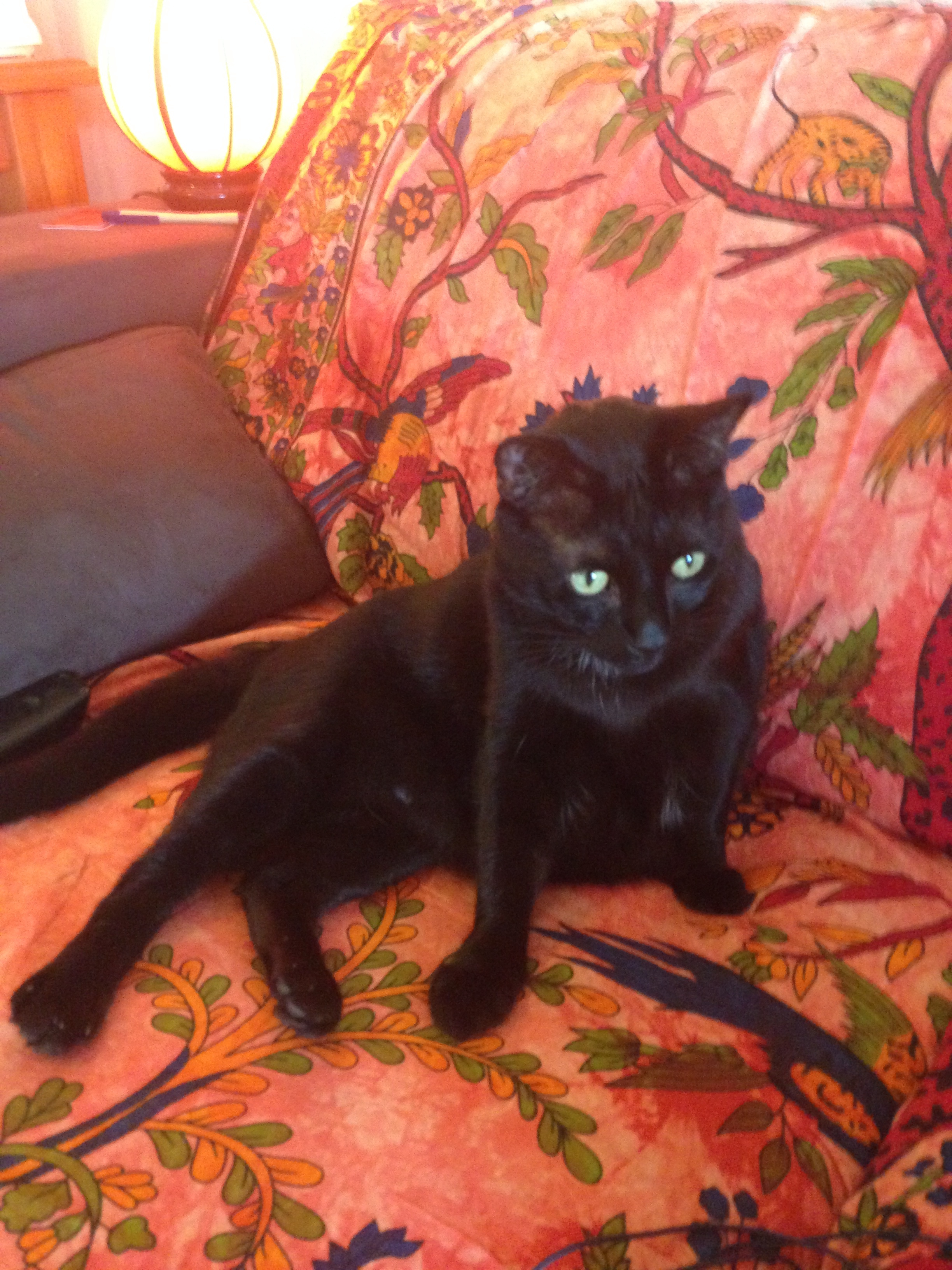
My current favourite feline friend, Mr Kitty
Links for I CAN Network following episode of Jeanette’s Autism Show featuring Penny Robinson

Dear readers,

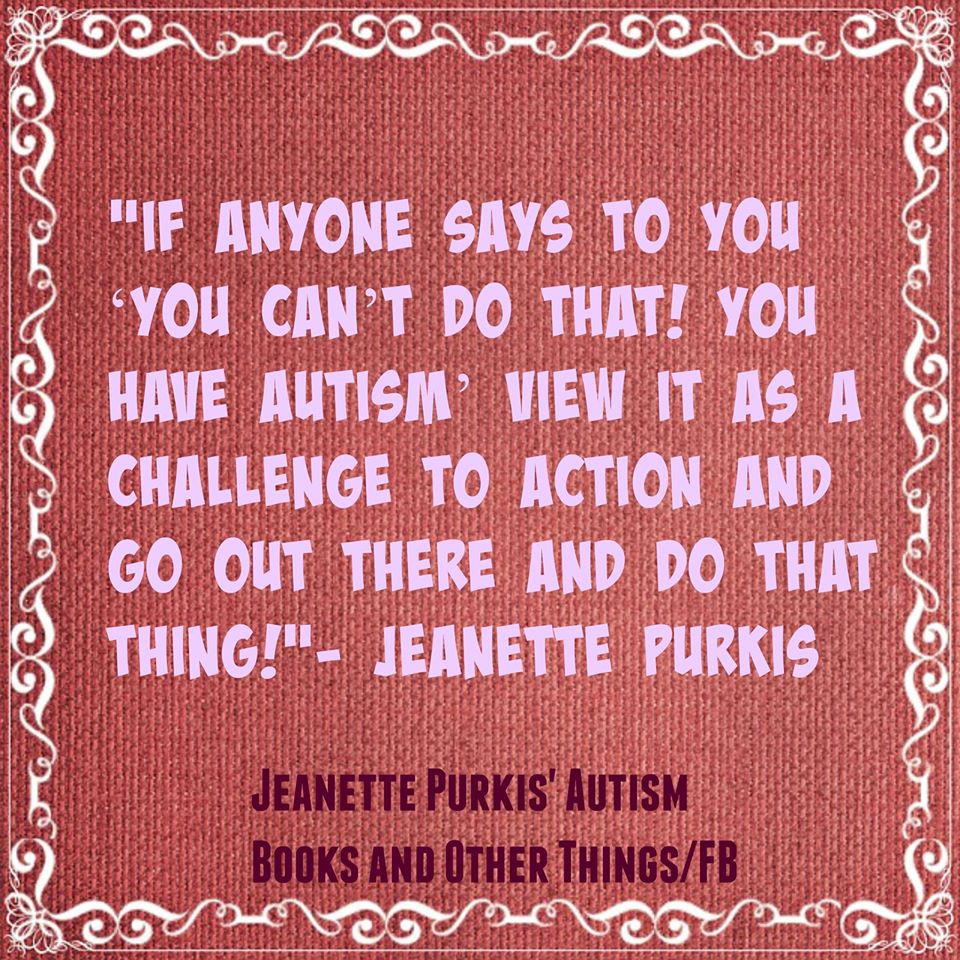
This is not my usual blog. Instead it is a list of the links for the I CAN Network. The I CAN Network is a fantastic Autism organisation run by people on the spectrum and working to rethink Awetism in terms of ‘I Can’ rather than ‘I Can’t’. I CAN hosts mentoring camps for Autistic young people and works in schools, among many other good things. They are pretty much my favourite organisation at the moment.

I interviewed Penny Robinson  – Ambassador for, one of the founders of the I CAN Network – yesterday on my radio show. We discussed that I would put all the relevant links in one spot and post them to social media and I thought that the blog format would be a good way to approach it.

So here goes…

\Website: http://icannetwork.com.au

These playlists include:
  • The TEDx Talks done by Chris Varney, Tim Chan and Jeanette Purkis (recently added).
  • Various information videos, produced by the I CAN Network, including our #AWEtismRethink video (1500+ views) that explains what I CAN is about.
  • Talks given by I CAN Network speakers, including myself, about working successfully, higher education, anxiety, and our individual journeys.
Annual report, titled Game Change, released on World Autism Awareness Day this year: www.icannetwork.com.au/gamechange.
Crowd funding – so I CAN Network will be able to train more mentors: https://chuffed.org/project/ican.
They also have hoodies for sale (I have one and they are very warm and comfy – support a rethink on Awetism in style).
And finally…last night’s episode of my radio show, where I interviewed Penny and we talked all about the network. http://www.blogtalkradio.com/positivelyautistic/2015/05/16/positively-autistic–jeanettes-autism-show
Enjoy…
10856779_802275386520517_4048630183775738456_o

Accessing help is hard when you don;t fit the stereotype – professionals with mental illness

I work full time in the Commonwealth Public Service in Canberra. I have done this since 2007. I have a very good income, an education and a mortgage. I wear suits to work. Money is not an issue for me and has not been an issue for a good while. I also have a severe mental illness.  When I moved to Canberra in 2007 I decided – after years of seeing a psychiatrist – that I would access my medication through a GP and not find myself a psychiatrist. I had been ‘well’ for many years at that point and imagined that I would continue to be so into the future.

Fast forward a few years and I had a year of stresses. Firstly I applied for a promotion at work and was successful. For some reason I became extremely anxious about the application and the anxiety took on a life of its own. I should have heard the warning bells at this point for that kind of ongoing anxiety with no actual trigger had brought about mental illness episodes in the past. But, content in the knowledge that I was a middle manager in the public service and surely mental illness couldn’t touch me, I ignored it and continued being successful. A couple of months later and I had issues with the lovely little flat I had just purchased. The apartment upstairs had a leak which went down the wall into my kitchen. Shortly afterwards I had to replace my shower and there was a comedy of errors between the plumber and the tiler. This triggered severe anxiety which lasted for six months. I could’t look at any part of my house without my heart racing. After a few months I started to have some odd experiences: I became terrified of a ghost in my house, but I couldn’t tell anyone about it as the ghost would hear me and try to kill me. I firmly believed that I was dead and in purgatory, I thought i had angered God by being arrogant, Everything looked very strange – almost like it was alive. Added to this I became very depressed. I did not access help because it didn’t occur to me that I needed it.

By the time I sought help I was extremely unwell. Then began a period of about three months of unsuccessfully trying to access assistance from the mental health services and begin told that I didn’t need it. ‘Did you go to work today?’ the person on the phone would ask. When I responded that I had been at work they would dismiss any concern I raised. The assumption was that if I was going to work then surely I couldn’t need any help? Yes, I was attending work and somehow managing to perform at the expected standard. Here is a list of other things that were going on which the mental health services neglected to ask me about:

  • I would’t use the shower thinking it was leaking and instead washed with a bar of soap and a bucket of warm water
  • I would’t use the washing machine because I thought it was broken. I instead did all my washing by hand
  • I didn’t cook and consisted on a can of dolmades (stuffed vine leaves) and a block of Lindt pistachio chocolate each night (I don’t know what the supermarket staff thought about my idiosyncratic purchases)
  • I was absolutely terrified of the ghost in my house but couldn’t mention it because he (the ghost) might hear.
  • Everything I looked at seemed to be alive
  • I couldn’t leave my house for fear it would be destroyed while I was away.

Had one of the mental health workers asked about these things they may have had a different response. After three months of knowing I was unwell but not knowing how to access help I was terrified that I would be unwell for the rest of my life  – which at that point didn’t seem likely to be a very long time – and to have no treatment.

What followed when I inevitably ended up in hospital was that I spent the next three years in and out of hospital, residential programs and other such (expensive) things. Had I received help earlier I imagine I may not have needed such intense assistance.

What all this illustrates – among other things – is that people like me who do not fit the rather narrow stereotype of people with serious mental illness can struggle to get any help at all. The scary things about this include that a number of people may be in danger due to this – I know I was. Also, the amount of frustration and suffering people like me experience when unable to get help is quite high and there are a lot of people in the same situation. I know. I have met a bunch of them! The other issue is around what having such a stereotype means for the people with mental illness who aren’t professional employees. When I was in hospital I often had nurses say to me ‘Why don’t you go on the pension? Working must be stressful.’ The assumption is that people with mental illness can’t work and that if we do the stress is detrimental to our health. So we ‘shouldn’t’ work and if we do, we either get overlooked for assistance or we are told to fit the stereotype by leaving our job.

I’m not going to draw a lot of inferences from any of this as it speaks for itself but it is far from ideal.

And for the record my job is the best thing I have (other than Mr Kitty!). It is good for my mental health.

IMG_0699

Me at work

Mothers’ Day reflection – the journey to friendship

My mum told me when I was about twelve that she wanted a daughter who was her friend. My mum had lost her own mother at a very young age and I suspect she wanted to at least have some kind of mother-daughter relationship given that it had been denied her. Sadly I was not the kind of child who was a friend to their mother. I am told I was a troubled and difficult child. I used to try and run away at every chance I got. My mum recently told me that when we moved to Australia when I was 11, I was trying to escape from my parents at Heathrow airport. I was anxious and fussy. As a small child I was frustrated, angry, determined stubborn (of course most of those qualities form the reasons I have survived and a my successful self today but in a child they just made everyone;s life difficult.) I was an Asperkid in the days before there was a label for Asperkids. I had no support and I struggled to get by in the world.

When I was a teenager I was rebellious, contrary and brilliant. I was dux of the school but I was also a dope-smoking socialist who spent my spare moments with adult revolutionaries in Melbourne – 300 kilometres from where we lived. I moved out of home at seventeen – desperate to escape my family home and the country town we lived in, with what I saw as its bigots and countrified  idiots. I got a job in Melbourne and started life as an independent adult. I struggled with relationships. Housemates annoyed me so I’d move every six months or so. Because I had such a hard time at school being bullied and mistreated and because I had experienced sexual abuse, I was quite an angry and confused young woman. I started going to protests with the sole wish to be arrested or fight with the police.At around this time I the met the person who changed my life and not in a good way. We shall call him David in the safety of this blog.  David was an anarchist and an evil man. I was attracted to David because he liked the darker side of life but I soon became aware that he was a terrifying psychopath who would kill me – and anyone else – with barely a thought. I couldn’t get away from him so I became a reluctant accomplice in his criminal acts. At the age of 20 I found myself in prison. My mum found out about this by listening to a news report on the radio. Understandably she was devastated,

I was not my mum’s dream daughter who would be her friend, I was a dangerous, druggie criminal left-wing extremist who was so caught up in her misery that my mum and her feelings were not considered at all. The next fews years were similarly disturbing. On one occasion I lost contact with my parents for many months. They thought  was dead.  Now that I am older and can see beyond my own experience, I realise how terrible those years must have been for my mum, I was a hopeless case. But a strange thing happened in our family. When I first went to prison, an elderly and rather conservative relative said that if her daughter went to prison she would move overseas. My mum told me that this was not a sentiment that ever crossed her mind Abandoning me to my fate was not an option for my mum and dad. They stuck by me regardless. They moved my possessions to countless different addresses, they sent me money in prison, they visited me, they went to court on my behalf, and most importantly they loved me. I suppose they thought that even if I was not long for this world, I would at least have my parents’ love.

So when I was 25 and decided to make some changes in my life, my parents were right there beside me, encouraging ad supporting, I will flash through the last fifteen years or this will be a very long post, but I am now so far removed from my criminal, dug addled, socialist self that some people doubt that I am telling the truth when I speak of it. I am a public servant, an author, an Autism advocate and I am highly-regarded by a lot of influential people. I am happy,  own my own home and I have a Master’s degree. I often send my mum and dad things I have written or speaking opportunities I have been given. My mum always responds with genuine enthusiasm.

I am truly the prodigal daughter. My life which was lost is now found. One of the things which makes me happiest about how my fortunes have changed is the impact it has had on my parents, particularly my mum. And yes, my  mum is now my friend. I love her more than anyone and I am so glad that she now gets to support me through successes and not disasters. She is an amazing woman and I am eternally grateful to her and my dad for their support when I was in a bad place. I strongly believe that their love and support helped me to become the me I am today. So thank you mum and happy Mothers’ Day.

DSC_6921

,

Poetry: my oldest literary friend

I have been writing poetry since I was about eight years old. It was my first conscious creative output. As a child I mostly wrote about things which moved me or affected me on a deep level, often based on events from history or current affairs. I would have my little book with me as a young teenager and write about things which piqued my interest, including some men surfing and the power of the ocean (during a beach holiday), prejudice and discrimination, Christian themes and nuclear way (it was the age of Ronald Reagan and I hate to say it, but the chance he would get confused and launch the third world war seemed rather likely). MY whole life has been punctuated by art and literature (pardon the pun). I wrote sporadic diary entries and poems throughout my troubled twenties.

I think my poetry muse much have taken a long holiday between about 2002 and 2010 as very few odes emanated from the pen – or MacBook – of Jeanette. In 2010 I got quite unwell with my muse and creativity’s constant friend, mental illness. I wrote some poems for a competition and it got me going. I have recently written 30 poems in the month of April for the NaPoWriMo (National Poetry Writing Month) event. I have shared a select few of my recent poems here. Some were published and others not. I rather like them, my little literary friends (and no, poetry isn’t hard. The only kind of writing I find difficult is novels. Everything else requires about the same amount of effort as getting the bus to work. I know, it’s completely unfair but I struggle with other things – promise!)

Monday (written about being hospitalised for mental illness in 2011. It won a competition – yay. I spent the prize on books)

Monday

I put on my suit – armour against the sword of daily life

I took the bus to work

Thoughts passed through my mind

of awful and inappropriate actions.

I swiped my card. The perspex doors gave way at its bidding and I was in the lift

I got out at Level 5, walked to my desk and logged on

The emails made no sense

I took myself to a private room and called Kathy, my capable clinical manager

“Go home” she said

but I was determined.

After what seemed no time my Manager was driving me to see Kathy, concerned.

The world seemed to close in – there was no future

Kathy was concerned as well – worry etched in her features.

A trip to the hospital

Waiting

I escaped. Kathy gave chase.

Police walked by

I looked longingly at their guns

but what sort of public servant would that make me I thought

A dead one.

Kathy leaves me at the assessment unit

In my suit.

My make-up perfect, jewelry matching my clothes

Work shoes newly polished.

There is no tomorrow I think, at least, not one in which I want to be.

The psychiatrist – young, cocky, male – sends me to PSU, the locked ward, for my own protection.

I arrive that night

In my suit.

“Do you work here?” asks an intern

“no” I respond gloomily. “I’m just a well-dressed patient.”

Outside the rebels storm the winter palace and the sky explodes,

Inside I’m safe, medicated and confused.

The world goes on around me, unaware and unconcerned

When I grow old… (this one is published in an anthology of poetry by people with Autism)

When I get old…

When I grow old I’ll complain at length about the ways of the day

to anyone left long enough to listen.

I’ll wear stylish clothes

makeup

heels

perfume – something suitably musky

I’ll eat at the best restaurants

Go to the theatre

the opera

And secretly smoke

rollies.

And only let my closest confidantes in on the secret.

I’ll watch adaptations of Agatha Christie

and every program on the ABC on a Sunday night.

I’ll tell my friends and family that I don’t drink

then sneak the occasional sly glass of wine

only publicly partaking at Christmas

I’ll reminisce about my long-gone youth

(not all the stories will be true).

I’ll live in a crumbling mansion.

I’ll not-so-silently judge the youth of the day

And I’ll push into supermarket queues

Thinking I have lived long enough to garner such a privilege.

I’ll be a legend

A survivor

A historical character.

Sometimes I think I can hardly wait

until I get old.


Mum (from my latest effort which is currently begin judged – so no-one plagiarise it please!! 🙂

My mum is not the average mum

She never gossiped with her girlfriends at the school gate

She never wore heels

or make-up.

She did have three lipsticks from the 1970s – a pink one and orange one and and sort of melted brown blob

She didn’t ever watch rom-coms

She stopped buying music in about 1963.

She never talked about being a lady

or using your feminine wiles

(whatever those were).

She tromped around the garden in gumboots

and a jumper from he dark ages.

When I was little there were lots of books

Little kid books

Christian books

then books we could read by ourselves.

One day my mum read a magical book from her childhood.

It was precious. a treasure.

She only read it to us once to keep the pages from falling out.

It was from the ancient history that was my mum’s own difficult childhood

She read it as if preserving her fragile history

Stopping its few good memories from disintegrating into crumbs.

Mostly my mum’s idea of calming reading was the book of Revelation.

At 10 I knew all about the whore of Babylon

But I’d never watched Mary Poppins.

My mum had a word for every occasion

a logophile

(ironic that one needs to be a logophile to know what one is).

In a sea of Englishness she sported an Australian twang.

England was always too cold.

too windy

she’d set up a vivid orange tent on every English beach

We never got lost

We’d see the tent’s toxic hue and come whirring back like homing pigeons

If pigeons liked dribbly ice cream and seaside rock.

As I got older my mum transformed

She was now my best friend

In the absence of friends my age.

I could tell her anything

I’d stand behind her and brush her hair

Hundreds of times

Thousands when measured in days and months and years.

Whenever I was in trouble she’d be there

Ready

Amazing.

Some time after I gained for myself a label

‘Jeanette:Aspie’

I went through adulthood the lone labelled person in our quirky Purky world.

It was almost a sleight – why just me when others in our midst may benefit from a swipe from the label machine?

One Christmas I was home

My mum comes up with unknown intent

She thrusts a card into my hand

‘I want the assessment. Give me the label’ it read

Clinician visited

Label attached.

My mum, my friend, my champion all along is now in the club –

we are in it together

The same

Our perfect club of two within the larger club we’ve been in all these years.

Our labels bear the same name

‘Thank you mum’

My past and me (another from the competition I’m in – I love this one)

Now

I am your success story

Your example

Your role model

You pay to hear my wisdom

How can this be?

Then

I am broken

Afraid

A lost cause

Example of what not to be

A cautionary tale

A mistake

A fallen thing

A tragic thing

Hopeless

Futureless

Yet here I am.

I look back

I find that other I

There she is

There I am

‘Come with me’

I reach out my hand down the years

Connecting, just.

I hold her

I am you

You are me

She buries her sorrow in my chest

And we become whole.

Tragedy and triumph together

She is with me and I am with her

Reconciled.

Not fixed but learning.

I hope you enjoyed those. I really enjoyed sharing them.

IMG_0166

Me signing something – hard to stop me once I get going. I’ll sign anything that sits still long enough 🙂

Taming my errant brain – a team effort

The title of my blog alludes to mental health but there aren’t a lot of posts in it which look at issues around mental health. I do have some mental health idiosyncrasies though, namely a psychotic illness and some mood issues – depression and hypomania. It has taken psychiatrists many attempts to give me an accurate ‘label’ for my mental illness and in fact at this stage I don’t have a ‘box’. My sensible psychiatrist realised that trying to shove me into a diagnosis which does’t fit is pretty pointless and makes all of us unhappy.

Anyway, my brain acts like an idiot at times and gives me a lot of grief.  For the past couple of years I’ve had either mania/elevated mood or depression roughly every six-eight weeks. I have no idea how that works but it is certainly challenging. Recently I have been a little elevated. Sleep hasn’t been happening so much and I have been delighted at all the work I have to do. I have found it hard to stop doing things and go to bed. ‘I’ll just get THAT done…’ I tell myself.

On Sunday of last week I worked on a presentation for four hours without any kind of break.  That evening, when I finally did get to bed  I could’t sleep at all and saw all sorts of odd things on the wall. Apparently Albrecht Speer (evil Nazi architect responsible for scary propaganda and buildings in Germany) had done the decorations as I seemed to have wallpaper with a swastika motif. Horrified by this evil in my bedroom I closed my eyes and saw that the reactionary, murderous decor had changed to thousand of little skulls on my walls – better, but not much. I told Mr Kitty that I loved him about 100 times and then worried that this would mean he would die. When I did get to sleep I dreamt that the micro fibre cloth in the bathroom – which is pink and fluffy – was in fact highly toxic and would kill Mr Kitty and me almost instantly the next time one of us went to the bathroom.

The next day I realised that maybe I didn’t have evil architects, toxic fluff or the Grim Reaper in my house. Maybe my brain was a little bit more energetic than it should be. I went to work – for a little mental illness is rarely enough to keep me from my work – and thought I should tell my managers that I was feeling a little under the weather, brain-wise. First I told my lovely part-time Director. She was amazing and had a bunch of suggestions and care. I then told the other Director. He has been my boss for a long time and remembers when I was spending time in the psych ward, so he is certainly not squeamish around my particular health issues. He also had good advice and kindness and understanding. The one thing I was struck by was the level of compassion and care my managers always seem to show. I’m told that this is not the case in all workplaces, which seems strange to me because we’re all human, aren’t we? But I suppose that some people are prejudiced, ignorant or both.

When I got home I called the local mental health crisis team – who all seem to know me – and the person I spoke to was great. The next day my clinical manager called and we had a good chat. As is often the case, the act of sharing and acknowledging that something isn’t quite right with my health seems to give me power to put my strategies into place. I have felt much better the last couple of days. And tonight I was speaking to a truly lovely church friend who is also a GP and she asked a bunch of questions just to be sure I was OK.

I was struck by a few things from all these interactions…

1. I have some amazing friends and managers

2. It doesn’t take a lot assist someone with a mental health issue a lot of the time, just a willing ear to listen

3. Sadly a lot of people feel uncomfortable to help someone with a mental illness, for various reasons. This also has the effect that the person with the issue may feel uncomfortable to talk to anyone about there experiences. This is a very bad thing because ‘you alone can do it but you can’t do it alone.’

4. If you are uncomfortable talking about mental health stuff with a friend or colleague, think of it as if it were a physical issue like diabetes or heart disease

5. I am probably only here because in the past good and loving people have listened and helped when I had problems. Thank you to all those people. If you are reading this you know who you are.

IMG_0689

The bond between an Aspie and her cat

I often say that there is nothing like the bond between an Aspie and her pet. This is true for a lot of people I know and it is also true for me. Autistic people, and especially Autistic women, often have a strong affinity to animals and the natural world. Different people have different preferences for which animal they feel closest to. I have friends who love their horse, their dog, their guinea pigs and their snakes. For me it has always been cats. I have shad a few cats over the years, My first was Smokey – a less-then-imaginaively-named grey tortoiseshell kitty girl who was not particularly affectionate but loved playing and was quite good at keeping down the mouse population on my dad’s market garden. When I moved out of home, I acquired a Russian forrest cat called Sensei (I was doing martial arts at he time, hence the name). Sensei was regal and impressively intelligent. She became my little witch’s familiar and took on whatever mood I was experiencing. I loved Sensei more than anything and I still miss her now, twenty years after she passed away. I also had Tilly – a tabby cat who would go and visit everyone in the flats where I lived. She was authoritative and clever. She would wake me up using a variety of methods, from jumping off the wardrobe onto my bed to staring at me until I woke up, aware of the eyes boring into me and terrified that there was a seri a killer in my house.

I moved to Canberra in 2007 to start work as a graduate in the Australian Public Service. For the first eighteen months I shared a house. The woman I shared with was a very challenging person. She was quite controlling and patronising. Despite her identifying as have a disability, she was still kinda ableist around Autism, on one occasion telling me that Autistic people couldn’t manage staff and that I should stay in a junior level at work because of this. (Interestingly her own practices as a manager were perhaps not too effective. A lot of micromanagement was going on and she wouldn’t let her staff do the work for fear they would mess it up). She came across as immature and focussed on unimportant things. I disliked this woman immensely. She is the reason I bought Whimsy Manor – I longed to escape her controlling and petty clutches. This woman had two cats. Now I love cats and always have but my housemate’s cats were horrible. If they were humans I would probably describe them as arrogant and snooty. They had no affection, even for their owner. Neither of them liked pats or cuddles. I thought my housemate’s character must have influenced her cats behaviour and attitude.

Given this experience of snooty and unpleasant cats, I ‘went off’ cats for a couple of years. I decided that I didn’t want one. Sow hen I moved to my current home – the wonderful Whimsy Manor – I was determined not to get myself a title feline companion. Years ant by and I got quite unwell with mental illness. I was depressed and confused and I felt very lonely. Through my work I had befriended the Canberra cat rescue lady. She encouraged me to get a cat to help improve my mood but I made every possible excuse not to.

One day I had taken the day off work because I was depressed. I went outside to put the garbage out and found a little cat sitting on a wall. I patted him and he purred and purred. When I got back inside I realised that when I was patting the cat I didn’t feel depressed. The next day I called my cat rescue lady friend and said ‘Please get me a cat.’ That weekend my friend arrived with four carriers full of kittens. I had about ten little kittens running around my house but none of them seemed to be the cat for me. The last carrier had just one cat in it – a big black tomcat who apparently didn’t get along with the other cats at my friend’s house. He was almost an adult at ten months old. I picked him up and held him close to my chest. He started to emit deep, loud purrs and cuddled up. “Can I have this one?’ I asked and he has been with me ever since.

I called my black cat Mr Ronnie (short for Hieronymous Bosch, the medieval painter), but he soon became Mr Kitty. My mental health improved pretty much the instant I got Mr Kitty. Instead of coming home to a col and empty house, I now come home to a happy (and hungry) beautiful black cat. Mr Kitty is incredibly affectionate and is a real character. Anyone who has  visited my house will have been roundly sniffed and examined by Mr Kitty. He has an amusing habit of trying to get inside people’s handbags. Mr Kitty is as much an important part of my life as my human family members and close friends. I have never loved a cat as much as I love my little furry boy. Even my mum, whom isn’t usually a fan of cats and dogs due to allergies, says that Mr Kitty is a gift from God (and I like that God is dispensing kitties – sounds like a good thing to me). Mr Kitty was a stray and my rescue lady friend only got him a few days before he became my little man, He had been wandering around farms north of Canberra. I don’t know how much cats remember but his closeness to me suggests that he somehow associates life with me to being an vast improvement on being a stray and is thankful for that, hence the affection. I rescued Mr Kitty but he also rescued me. He sleeps in my bed at night and cuddles up next to me. I usually put my arm around him and hold his little paw. So yes, there is nothing like the bond between this Aspie and her cat. Nothing at all.

WJP_3428

Finding my home among my Autistic peers

Teenage and twenty-something m was characterised by one driving passion – a need to belong and be accepted by a peer group. As an Autistic school student I had suffered the all-too-common fate of being astoundingly brilliant and hated and bullied to in an equally large manner. I was always the least popular child in school. I thought that what I endured – name-calling, teasing, practical ‘jokes’ at my expense and violence – was the normal experience for a kid. That didn’t mean that I liked the situation very much and as I progressed through school I found myself feeling isolated and needing to belong to a peer group. I didn’t like myself very much and needed others to accept me to feel worthwhile as a person. I soon discovered that the only peer groups which seemed to want me were those with a defined culture: a set of rules, a manifesto, if you like, which determined how they related to others. My first peer group was the revolutionary socialists. It was very easy for me to be accepted by them – they actually did have a very clear set of rules and expectations. All I need to do was rattle off the party line and I was in!

As I finished school and moved out of home, I found myself seeking out the darker side of life – drug use, mental illness, depressing films, crime. All those years of what I imagine was quite severe bullying, plus some sexual abuse I had experienced as a young teen left me with an affinity for the darkness, the murky, death and destruction. I soon found a new peer group – criminals – and then another – drug addicts. This began five years of hell which should by any logic have left me dead or at least broken-spritied and self-destructive. All the negative behaviour I engaged in, all the addictions and self harm were essentially drawn from my need to be accepted. I suffered unnecessary violence and mistreatment at the hands of judicial and psychiatric structures and all because I wanted people in some peer group to accept me.

When I was 25 I decided to bid farewell to the negative peer groups to which I had been a fellow traveller for so long. I sought out positivity and success and I did it alone, at least in the start. I ditched all my criminal and drug-addicted friends. For a year there were four people in my address book – my brother, my parents and one friend I had met in  therapy program. I chose a lonely life. I expect you can imagine just how difficult that was for me. Despite being difficult, however, it was liberating in a way. I was going to be Jeanette for the first time. Now Jeanette the socialist or Jeanette the criminal but just Jeanette. After a couple of years there were more people in my address book. I discovered that some pole eluded me for who I was, not just because I agreed with them on Trotsky’s theory of permanent revolution (or whatever).

A couple of years later still and I found myself a published author and Autism advocate. Even more people started to approach me with a view to being friends. I discovered that I tend to get along very well with Autistic people especially women. We often share some experiences and views. I would have conversations with women on the spectrum and realise that we both intuitively understood where the other person was coming from. As a somewhat extroverted Aspie I find myself drawn to other extroverted Aspie women. I have a good number of these fantastic people amongst my friends. So now, instead of four people in my address book, I have thousands of people on social media and a good number of close friends on the spectrum that I spend time with. I love having found my Autistic peer group. After all those years of ‘tacking on’ a set of belief or values in order to be accepted by a group I can now be myself AND have a peer group.

When I meet young people on the spectrum who are isolated I always try to connect them with others. If I had a peer group I actually had some affinity and commonality with when I was younger who knows how different my life could have been? My peer group now includes so many people (and a certain black cat) that I love and care about, I can hardly believe my lick. I was talking with my Mum – another Purkis Aspie – about the fact that I am unlikely to ever have my own children and that my family are geographically distant from me. My Mum said ‘Jeanette you have such a large family. You have children and friends. So many people care about you, you don’t need biological family close-by. You have your own family.’ And she’s 100% right. I hope that others on the spectrum – especially young people – can find their peer group and be as accepted as I have had the great privilege to be.

DSC_6920

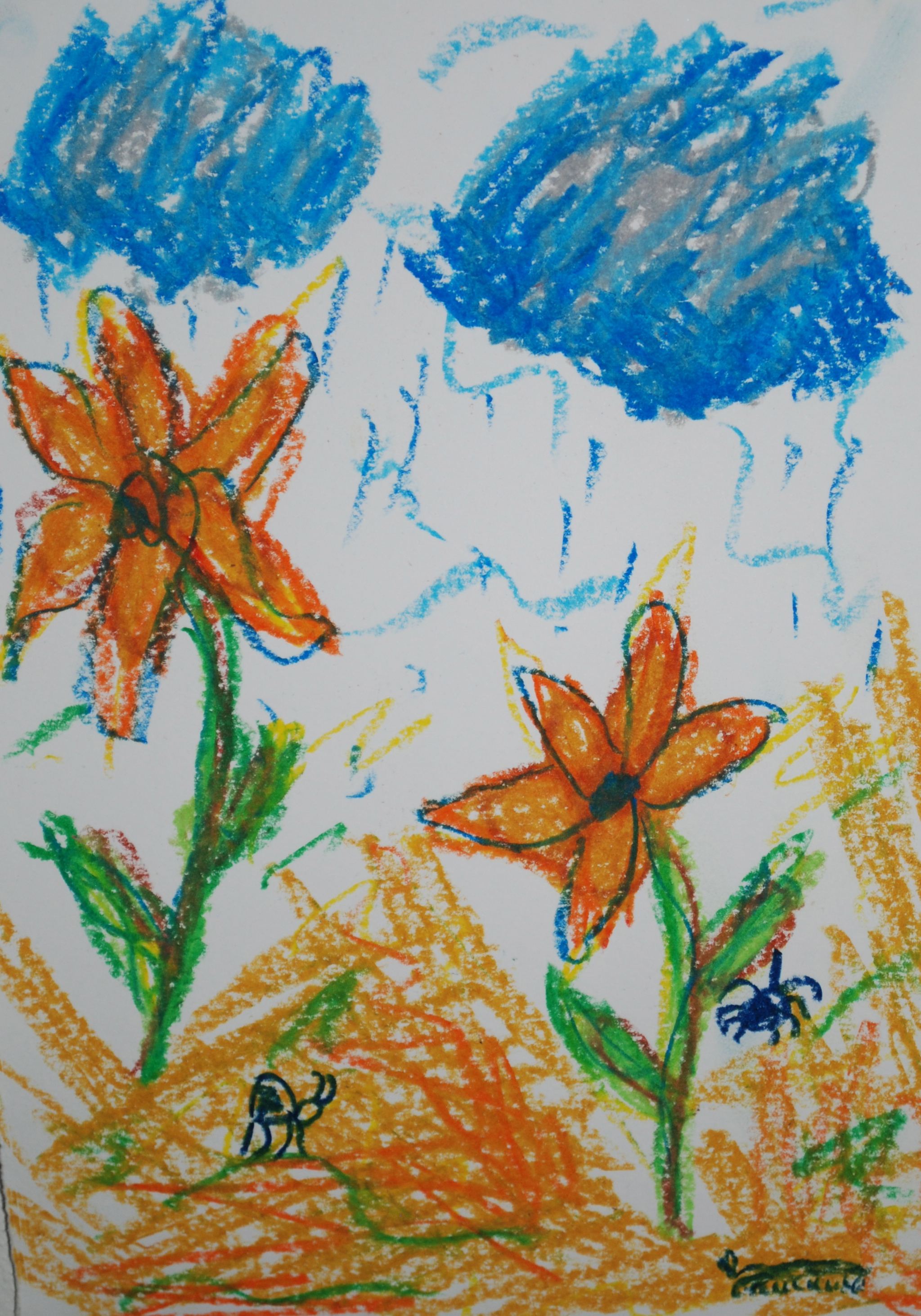
A Jeanette painting, for some reason. I’m sure it relates….

.

For interest – links to my radio shows, guest blog posts and TEDx talk

Hi good readers in blog land.

I recently attended an awards ceremony in Sydney and one of my amazing friends suggested that it would be good for me to provide a document to the public with links to everything I’ve done over the past few years. So here goes…links to all my radio shows, guest blogs, TEDx talk, radio interview on The Autism Show, book page on publishers site and so forth. All up it’s about 12 hours of material, so I would’t recommend going through all of it in one sitting, but if you’re interested, you could save the link in your favourites or something.

My favourite items are the TEDx talk, the blog for the Attitude Foundation, the radio show at the ASA conference and the shows with Alex Evans and Joel Wilson, but it’s all pretty good (I hope!). I try not to produce and substandard work, so enjoy my various things:

TEDx talk

https://www.youtube.com/watch?v=pqdGb4TraFk

Autism Show interview

http://autismshow.org/jeanette/

Wonderful World of Work 2 minute video for publisher

https://www.youtube.com/watch?v=A9XoG-dDYhI

Books

http://www.jkp.com/author/authors/view/id/jeanette-purkis-4568

Employment page on Autism Women Matter

http://autismwomenmatter.com/category/employment/

Guest blog for Aspect

http://www.autismspectrum.org.au/blog/2-x-chromosomes-mark-spot

Attitude Foundation blog for International Women’s Day 2015

http://www.attitude.org.au/jeanette_purkis

Murdoch Children’s Research Institute blog post

https://www.mcri.edu.au/users/murdoch-childrens-media/blog/resilience-vital-element-autistic-child%E2%80%99s-%E2%80%98tool-kit%E2%80%99

 Radio shows:

7 February 2015 – Emma and Jane

http://www.blogtalkradio.com/positivelyautistic/2015/02/07/positively-autistic-jeanettes-autism-show

14 February – Jeanette by herself

http://www.blogtalkradio.com/positivelyautistic/2015/02/14/positively-autistic-jeanettes-autism-show

20 February  – ASA Conference live show

http://www.blogtalkradio.com/positivelyautistic/2015/02/20/positively-autistic–jeanettes-autism-show

7 March – Dawn-Joy Leong

http://www.blogtalkradio.com/positivelyautistic/2015/03/07/positively-autistic-jeanettes-autism-show

14 March- Beck Kelly

http://www.blogtalkradio.com/positivelyautistic/2015/03/14/positively-autistic–jeanettes-autism-show

21 March – Alex Evans

http://www.blogtalkradio.com/positivelyautistic/2015/03/21/positively-autistic–jeanettes-autism-show

28 March 2015 – Ben Wilshire

http://www.blogtalkradio.com/positivelyautistic/2015/03/28/positively-autistic–jeanettes-autism-show

4 April – Joel Wilson

http://www.blogtalkradio.com/positivelyautistic/2015/04/04/positively-autistic–jeanettes-autism-show

11 April  – Tori Haar

http://www.blogtalkradio.com/positivelyautistic/2015/04/11/positively-autistic–jeanettes-autism-show

11001518_799349840146405_3405114448242454229_o

‘I’m an A**hole!’ Oh no wait, it s cultural difference

A pervasive stereotype of people on the Autism spectrum in popular culture is that we are arrogant, rude, tactless a**holes. The perception is prevalent across all media and seems to be believed by a lot of non-Autistic people, particularly those who have not known a lot of Auties. I often find myself getting very cranky with people who respond with ‘Are they on the spectrum?’ when I vent about someone or describe rude or inconsiderate behaviour. As somebody who tries my very best to be thoughtful and considerate to others this is certainly something of a concern. And given that I am a fairly passionate advocate for the rights and respect of people on the spectrum, I find these perceptions very challenging. Most of the Autistic people I know do not go out of their way to be rude or unpleasant and most of us find it quite upsetting when people accuse us of rudeness.

So why does this happen? Why do neurotypical people think Autistic people are arrogant and rude when the Autistic person is not trying to communicate anything of the sort? The answer may lie in our different communication styles. If you look at the diagnostic literature, Autism is described as involving ‘communication deficits.’ I’m not so sure about the nature of it as a deficit thought. Rather I think that Autistic people and neurotypical people simply communicate differently. The neurotypical style seems to utilise a lot of nuance and subtlety (although some neurotypical folks claim they struggle with that too). The traditional neurotypical communication style involves a number of levels and layers of meaning within conversation and the awareness and reciprocity of things like body language and facial expressions. Humour often centres around sarcasm or dry wit and there are particular signals which carry meaning for the non-Autisitc people, like flirting. Autistic people on the other hand often communicate using the power of words without a lot of emphasis on non-verbal cues. Autistic communication is very honest and things like white lies and tact are not so easy for us to accomplish or see the point of, for that matter. This is not to say that Autistic people can’t use white lies or tact, more that it is not our default setting and we have to almost consciously engage ‘tact mode’ in order to achieve it. Our humour is often based in the creative use of language and puns. We tend to value clear, honest communication and state what we mean and what we want.

So on the one hand you have nuanced, symbolic neurotypical people who put up a  sort of barrier of protection and politeness around themselves. Then there are Autistic people who often view the neurotypical communication style as dishonest or underhanded. It is very much a case of different communication cultures and as with any cross-cultural interaction, there can potentially be problems.

I’m sure she will not mind me saying this because it is said with immense love and respect, but my mum is an Aspie and has a very strong Christian faith. As such, mum has two fairly strong drivers for honesty in conversation – her faith and its emphasis on truth and her natural ‘settings’ as an Aspie. Growing up I would sometimes marvel at the very up front things my mum said to other people. When I had a conversation about tact on one occasion, she responded that it was just dishonesty. I knew a man when I was younger who was almost certainly on the spectrum. The worst insult you could level at this man was that of dishonesty. He recalled – with some merriment – the day a friend asked him over to look at their new baby. When faced with the infant and asked what he thought, my friend responded ‘He looks like a monkey!’. You can imagine that this den;t go off too well with the parents, even if it was true.

Going back to the introduction for this article, you can see why some neurotypical folks view Autistic people as rude. We often miss their non-verbal cues and hints and we might say whatever is on our mind. However, we are not usually trying to be rude. Instead what is happening is the meeting of two communication styles which are very different.

And it’s certainly not just the domain of neurotypical people to criticise Autists about our communication. Autistic people can really struggle with the confusing and apparently rather dishonest way non-Autistic people try to get us to understand what they mean.

Neither one style of communicating is ‘right.’ They are simply different. In my mind saying one is a ‘deficit’ and the other ‘normal communication’ would be like saying that English is a better language than Italian. So instead of focussing on ‘fixing’ Autistic people’s communication or trying to make us change, having that view that it is simply a cultural difference may be more helpful. If people tried to understand this cultural  difference, it would make things easier for everyone. Instead of telling us that our honesty is ‘rude’ it is much better to appreciate us for our qualities and understand that we simple speak a different ‘language’. Then a proper cross-cultural dialogue can begin.

IMG_1594

Mr Kitty is direct and will let you know when he needs something with a gentle bite