AWEgust Day Five: Some thoughts about psychiatry

You may wonder why my blog title is ‘AWEgust Day 5′. The reason for this is that I’m undertaking a challenge to raise money to train more mentors for the I CAN Network. I will be writing a blog post every day between now and the 31 August. So far some good people have donated $18.50 and I’ve had a promise of $93, which is good but I am hoping the raise a little more than that. Here is the link for donations if you feel the need:

https://awegust.everydayhero.com/au/jeanettepurkis

Today marked an occasion in the ongoing and rather too interesting Jeanette journey. I saw my new, private psychiatrist for the first time. I have lost count of how many of his colleagues I have seen over the years – they all merge into a sort of conglomerate mass of the mental health professionals I have seen in my lifetime. I saw my first psychiatrist when I was five – I probably should have realised that I was in for an ‘interesting’ life there and then! Mental health professionals have been part of my life forever. The fellow I met today is the latest in a parade of professionals of varying quality and value.

I have two significant brain-related diagnoses which impact on one another and in the past have confused doctors leading to misdiagnoses, disrespect and at times maltreatment. Sadly I know that I am far from the only Autistic person this applies to. Autism is a relatively new diagnosis and is often missed by professionals or mistaken for something else (often borderline personality disorder in women and schizophrenia in men). I have had a large number of psychiatric labels over the years. It got so bad that once in hospital during a hypomanic episode I demanded the nurses provide me with a copy of the DSM IV diagnostic manual so I could read through it and figure out my diagnosis myself!

My current – and possibly the most accurate – diagnoses are Autism spectrum condition and atypical schizophrenia, but labels are such a subjective thing – two doctors confronted with the same Jeanette can apparently arrive at different conclusions. I used to set a lot of store by the psychiatric diagnostic labels but now I see them more as a shorthand so that doctors know what medication to prescribe. My new doctor – who works part-time with my former psychiatrist in the public system – has had a conversation or two about my history and presentation. He asked me what I thought my conditions were and I told him I thought I was on the autism spectrum and also had a sort of ‘sampler’ mental illness with a little from the psychosis column, a little from the anxiety one and the depression one and so on. I don’t think he agreed and seemed happier with the schizophrenia one. I’m not sure how I feel about that rather loaded label. As I mentioned on Sunday’s blog, that is something a work in progress.

The labels are a concern though. Partially because some people in the community have a lot of prejudice about this one or that, and also because a ‘wrong’ one can determine how you are treated by psychiatrists and other mental health workers. Having had the misdiagnosis of borderline personality disorder in the distant past, I know how that particular label can mean that one is disrespected and dismissed and treated like you are seeking attention or being manipulative. A practical consideration for those misdiagnosed with BPD is that if you need to be hospitalised, good luck, for hospital is seen as unhelpful in treating that condition. Also it is a label which often means some clinicians harbour some prejudice against you. And so many women on the Autism spectrum are mistakenly given that label meaning they have inappropriate treatment and prejudice to contend with along with everything else.

I like my new psychiatrist. He is respectful and understands clearly that I am paying him so therefore he is my employee, charged with providing advice rather than dictating the terms of my treatment. I know that because I explained that to him as my expectation and he was happy with it.

Some considerations around getting the best out of psychiatrists:

  • Learn to be assertive – you may need it! Remember that you are the ‘subject’ of the treatment. As such, the relationship between you and doctor is about helping you.
  • In the private system, if you are looking for a new doctor, do some research. Ask people you know with similar health issues what their experiences are. Ask someone in your local Autism organisation if they have a preferred list of psychiatrists and pick from there.
  • A psychiatric diagnosis is never final. Seek a second opinion if you don;t agree with the diagnosis you are given initially. And it does;t hurt to be informed about the different conditions and how well you feel you ‘fit’ with some of the diagnoses
  • Apparently 20 per cent of people with a mental illness do not have a neat diagnosis that fits in the criteria in the DSM -5. I haven’t seen data but I imagine a lot of people  on the Autism spectrum fit within that 20 per cent.
  • Doctors – and psychiatrists – should not be put on a pedestal. They may have qualifications and have attended university for many years, but they are human too. They are just as capable of mistakes and silly ideas as anyone else. If you feel frightened to take your psychiatrist to task when they say or do something you find damaging or unhelpful, it may be time to find a new doctor.
  • Medication is hit and miss. If your doctor suggests you take medication (or start a new medication) find out what you can about it, including uses, possible side effects and possible long-term effects. It is your right to ask these sorts of questions of your doctor and also research online. The same goes for any diagnosis you are given.
  • Psychiatry is a service, like plumbing or carpentry. If your plumber can’t fix the leaking tap, you won’t ask him or her to come again. Likewise, if your relationship with your psychiatrist isn’t working out, you have every right to find a new one. They are there to help you, not control you. Even in the public system you can ask for a different doctor and state that the therapeutic relationship is unhelpful or damaging.

DSC_6710 IMG_0755_2

Pretty flowers and Mr Kitty are also quite good therapists…

AWEgust day four: Alex lives here. Alex who? Alexithymia

You may wonder why my blog title is ‘AWEgust Day 4′. The reason for this is that I’m undertaking a challenge to raise money to train more mentors for the I CAN Network. I will be writing a blog post every day between now and the 31 August. So far some good people have donated $18.50 and I’ve had a promise of $93, which is good but I am hoping the raise a little more than that. Here is the link for donations if you feel the need:

https://awegust.everydayhero.com/au/jeanettepurkis

I entered an international poetry competition earlier this year (I didn’t win but I was a finalist). I had to write thirty poems during the month of April and they all had to be on a theme. The theme I chose was Autism month so I got to write thirty Autism poems. Some were great, some were good, some i regretted including. I sent them all to my parents because apparently writing published things and speaking at conferences garner a fair few parental pride points for an adult daughter. I called my mum on the phone, as I tend to do of an evening. She told me that she loved the poems and ‘what is that wonderful word?’ I had used the word ‘alexithymia’ in one of the poems and my mum, who loves words, was curious to know what it means having not encountered it in her literary travels.

So what is Alexithymia? I don’t have a clinical definition but my understanding is that it is when one is unable to connect with emotions. A lot of people on the Autism spectrum experience alexithymia but it is not exclusive to Autists. I have a mental illness as well as begin Autistic which can provide me with some rather complex emotions but I often struggle to know how I am feeling. I remember when I was in hospital once, talking to a psychologist about my mental health. I was crying and looking at the ground but I couldn’t believe her when she told me that I was very depressed. I had absolutely no idea that I was depressed. I had no concept of how to distinguished the ‘depressed’ experience from all the other things going on in my mind.

When I am experiencing illness symptoms I experience lots of things at once. It’s like a particularly unappetising soup with the ingredients of depression, anxiety, anger, fear and a bunch of other nameless nasties. I can usually manage to identify that I a ‘unwell’ but that’s as far as it gets. I also experience crises and meltdowns on top of these things. When I was younger I would be so overwhelmed by unidentified horrors that I would have a meltdown but I didn’t understand what was going on. I was sacred and confused and had about 1000 emotions, experiences and fears demanding my attention at the same time. As a result I would be aggressive or self-destructive. This resulted in a lot of institutional care (and sometimes ‘care’) but I didn’t find that anyone cold help me. Psychologists would ask ‘how are you feeling?’ and I honestly couldn’t answer.

I sometimes have no sensation of emotions at all, even when a lot of emotions should be happening. Today was one of these days. I have been having a lot of low-level mental illness symptoms lately: hallucinations, strange thoughts, altered perception. I have not identified feeling sad or anxious or anything else. I had a period of three weeks of elevated mood (i made my bed every morning – a sure sign something was wrong!). I had a couple of days of anger, which is quite unusual for me. Today I went to work. We had a meeting and I got really upset with one of my colleagues, Things he said triggered off a whole load of identity issues. Then I had someone call me and ask for assistance. He was an anxious somebody and called a few times. This made me so stressed that I asked a colleague to talk to him. At this point I realised that something was wrong. I could’t identify any particular issue but my eyes felt teary so I figured I was probably depressed. Once I have worked out that something is wrong I can start to address the issues and either get help from an external source like my psychiatrist or put in place some of my own strategies.

So Alex most definitely lives here. She is a constant companion but not a friend. I just have to learn how to live with her and discover her secrets. She makes life difficult at times but she can be challenged. Managing the difficulties associated with having a mental illness and being unable to identify or immediately address what is going on for me emotionally is part of the life that is mine. This is what I have and I shall live within it and learn to master it. What more can I do?

DSC_6830

AWEgust day three: My wonderful women’s group

You may wonder why my blog title is ‘AWEgust Day 3′. The reason for this is that I’m undertaking a challenge to raise money to train more mentors for the I CAN Network. I will be writing a blog post every day between now and the 31 August. So far some good people have donated $18.50 and I’ve had a promise of $93, which is good but I am hoping the raise a little more than that. Here is the link for donations if you feel the need:

https://awegust.everydayhero.com/au/jeanettepurkis

Today is one of my favourite days of the month – the first Monday, as it is the night for my women’s group. I’m going to write this blog in two parts – before the group and after. I will be leaving in about twenty minutes. When I return it will be after the group and I shall reflect on it, or that is the plan anyway.

Before – 6:40 pm

I have been facilitating my women’s group since 2011. It is run by Autism Asperger ACT, the local Autism association for Canberra. I have had two co-facilitators who are staff of AAACT, Julia and Gillian. When the group started I was quite unwell with mental health issues. In fact I missed a good number of groups during 2011 and 2012. The group is for Autistic women and mums of girls on the spectrum  (some of whom are Autistic as well as their daughters). At first I struggled as a facilitator. I felt like an impostor. Why was I doing this? Weren’t there other women that could run the group? I missed half the meetings and was in hospital a lot of the time. Surely I was a terrible fit for this. I didn’t actually think I was up to the task until the first group in 2013, when Gillian started working with me. She did something wonderful and terrifying: she asked the women to say what they thought of the group and what they got out of it. One woman who often contradicted me and I thought disliked me immensely told me how she looked forward to the group and it was one of her favourite things, Another woman said it was the best thing in her life. I realised then that I was helping to provide an environment where Autistic women felt safe to talk about anything and everything. It provided an opportunity for women that they probably didn’t get anywhere else – the opportunity to be themselves, to be comfortably Autistic and to be in the company of people who understood a lot of what they experienced. Wow!

I realised that the women’s group was one of my favourite things. It is real, honest and I get a lot of support from it myself. The thing about facilitation is that you learn from the participants and draw strength and support from them. I always worry that I am too vocal as I am quite an extroverted little Jeanette but I’m sure someone would have said something if I was being too overwhelming and loud. I hope they would.

I find as an Autistic woman that I feel comfortable and safe with many other Autistic women. In fact,when I attended a conference for women and girls on the spectrum in 2009. One of the days was facilitated by Professor Tony Attwood and was just for women on the spectrum. I felt unlike I ever had before. Being among a large group of other Autistic women was like coming home. I deeply understood at that point that I must indeed be on the autism spectrum myself, after years of doubting. Given the difficulties faced by women on the spectrum around misdiagnosis and lack of understanding of the kinds of differences women on the spectrum often shere, having a women’s group seems quite a useful thing to do.

After – 9:42pm

As always, the group was quite wonderful. We had a couple of new people. I always feel like the group is being assessed when new people come and I want to impress them and let them know what a great group it is. Of course I have no idea what they thought. I can’t read facial expressions very well and most new people don’t make a lot of comments. I suppose if they come back next month it probably means they found it helpful.

I always feel energised after women’s group. I feel very comfortable with the regular attendees and I think they feel comfortable with me. They often have a bit of a laugh at my expense, which I love. Women’s group is like my family. I care a lot about everyone and feel very protective if anyone is having a hard time or being mistreated by someone. I am so lucky to have the group. It is probably my favourite part of my Autism world work. I mean, lots of people get to speak at conferences and write things but our group is something particularly special. There’s nothing like it. Thanks to all the attendees – new and old, past and present – who have made it what it is.

JP meme jpeg


AWEgust Day 2 – Embracing my ‘other’ label

You may wonder why my blog title is ‘AWEgust Day 2′. The reason for this is that I’m undertaking a challenge to raise money to train more mentors for the I CAN Network. I will be writing a blog post every day between now and the 31 August. So far one very lovely person has donated $7.50, which is good but I am hoping the raise a little more than that. Here is the link for donations if you feel the need:

https://awegust.everydayhero.com/au/jeanettepurkis

Most people know me as Jeanette the Autistic author and advocate. I do a lot of work in the Autism world and that is how I usually identify. Something many people won’t know is that I have another little ‘label’ – this one a psychiatric diagnosis of atypical schizophrenia. I have had this label for one year less than my Autism one so you would think I might have accepted and assimilated it into my sense of who I am, but alas no. My journey to ‘own’ my mental health diagnosis is an ongoing one.

The reason I am writing about this is that I met someone yesterday who I knew when I was in psychiatric hospital a few years ago. When I first met him, he was 21 and a somewhat errant, drug-smoking child of middle class parents. In the ensuing five years he became more and more institutionalised, spending long periods of time in hospital. When I saw him yesterday, he looked as old as me and he would be no older than 26. He has a BIg Issue lanyard and a bag full of Big Issue magazines. I’m glad he is working and I think The Big Issue is a great thing for many people who struggle with various issues. We had a conversation on the bus. He was caring if a little intense and as he disembarked the bus he called out to me to stay out of hospital. I was grateful for his advice but it is advice I ave given myself on a number of occasions.

My Big Issue-selling friend has a very similar diagnostic label to me. Our lives are very different in some ways and astoundingly similar in others. I too have spent many months and years in hospitals and other institutions as a result of my illness. I spent time in my twenties being homeless and institutionalised. What people see now is simply the latest chapter in the book of Jeanette, but I have been in dark places of dependence and self-destruction. Lately I have been thinking about my schizophrenia label and why I struggle to own it. It;s not about the fact it is a deficit or a negative for I can see some useful elements of it, particualrlly around creativity and writing.

I think what I struggle with most is the low expectations that almost everyone has when you mention that S word. I have known a number of fellow owners of the S-word in my life who are conventionally successful – professional employees, academics, artists. One woman I worked with in the past told me that fact about herself as if it were a great big shameful secret. She pleaded with me not to tell anyone, as if it were an undisclosed criminal conviction or a particularly embarrassing and disgusting sexual sin. I imagined this woman worrying that I might tell her supervisor or something. Of course i would never betray a confidence but it concerns me that having schizophrenia should be such a big deal.

Of course like all things I haven’t quite accepted I find it far easier to be strong and confident on behalf of other people. When it comes to thinking about myself I am almost as troubled by it as my work colleague all those years ago was. I know that I need to accept my other label and make friends with it. Like my autism, it is part of me and has shaped who I am today. One difference I notice between the schizophrenia world and the Autism world is that us Autistics have a fair number of high profile role models. We can say ‘but look at Temple Grandin or Dan Ackroyd, or Ladyhawke or Stephen Shore or John Elder Robinson or Susan Boyle…..’ For people with schizophrenia we have a couple of Louies  -Lewis Carroll and Louis Wain and of course the fellow in A Beautiful Mind, John Nash (who I am always compared to while in hospital). For most people, schizophrenia is entirely negative and people who have it are expected to become homeless or unemployed or live sad and lonely lives. I don’t see this as my future and I do not wish that on anyone I know who shares that diagnosis with me but these are the views that low expectations seem to impart to us all. I wonder how much these low expectations affect clinicians treating people with schizophrenia in their care ad how this in turn might impact on the person themselves and what they think they are capable of. I have been told on numerous occasions by hospital staff that I should go on the disability pension, despite having a supportive and well-paid professional job.

I am going to speak at a mental health conference this month, which I am looking forward to. My schizy label will be on display for all to see, including me. I am talking about creativity and my recovery journey. I am really looking forward to it. In fact I am beginning to want to do advocacy around mental health as well as Autism. Some of you may know that I am currently working on a collaborative book about Autism and mental health issues with Dr Emma Goodall and Dr Jane Nugent. The book is due out next year and I am hoping it will open doors around mental health advocacy and bring my two worlds together. Life is a funny little unexpected journey isn’t it?

10294977_799382020143187_8989493424462827214_o

Indeed, let’s do this thing!

AWEgust blog day 1: Overcoming isolation

You may wonder why my blog title is ‘AWEgust Day 1’. The reason for this is that I’m undertaking a challenge to raise money to train more mentors for the I CAN Network. I will be writing a blog post every day between now and the 31 August. So far nobody has parted with any money on my behalf. I’m thinking I may need to donate $100 myself, just to show willing! Here is the link:

https://awegust.everydayhero.com/au/jeanettepurkis

I have been wanting to write a blog about isolation and loneliness for a while. A lot of people on the Autism spectrum experience loneliness and social isolation. We may struggle to make connections with others or to find a partner. This is not just for older people. In fact many young people on the spectrum are extremely isolated and have few people in their life. For me, I was OK for human contact when I lived at home. I had my parents and my brother and I went to school and saw a bunch of other teens. There were enough humans in my life. In fact I wanted more solitary time. All this changed when I moved out of home. I had a very small number of friends – a couple who I idolised, an older friend who was quite similar to me in many respects (and actually works at my workplace now, some 23 years later – I saw him the other day and said hi). Apart from my housemate, they were my only friends. The housemate got together with a boyfriend and essentially moved out of my house. I was alone in a three bedroom house with nobody to talk to. As I only had three friends I would spend most of my time in the big empty house, waiting for the phone to ring, The friends I idolised were actually not very pleasant people and I think they probably saw me as a little needy and pathetic so I saw them less and less often. My loneliness was almost palpable – I felt physically detached from the human race.

I ended up moving into another house where there were more people – dysfunctional, drug-smoking people but humans nonetheless. Interestingly I was less concerned about the actual individuals I sent time with and the quality of the interaction. Instead I was happy just to have other humans around. As I grew older I met many, many people and lived in all sorts of different living situations. One thing i felt I could never do was live alone. However I was impoverished and had no control over my living arrangements. Despite not wanting to live alone, I found myself in a big flat in Melbourne all by myself. I would talk to a couple of people on the phone a lot. I liked to occupy myself as I found this staved off loneliness. I remember having a party and inviting all my friends and there were five of us.

When I moved to Canberra in 2007 for work I was worried about not knowing any people in Canberra. At first I spent most of my social time with my housemate and soon after got to know some people from my new church and the local Autism organisation, Up until the past couple of years I haven’t had a lot of friends and the ones I have have not always been my first choice in humans to spend time with – more friends through default rather than choice. Now I have a wide circle of friends  – most of them are people I know through Autism advocacy so we have some common interests. For the first time in my life I have a good balance between social time with people I value and enjoy their company and solitary time,

Thoughts on social isolation and connectedness

  • The idea that Autistic people do not need or want company is a complete myth. I am yet to meet anyone on the spectrum who has no wish for social contact.
  • Solitary time is really important for many of us. It does not make us ‘anti-social’ or rude.
  • Social media is a wonderful way to make friends and networks, either in the Autism world or in other areas. Make sure you are staying safe online though – there are predators and trolls out there so use your judgement and ask someone you trust if you aren’t sure about sheather to trust someone.
  • Autistic people can and do find partners and spouses. Some people find another Autistic person to love, others find a neurotypical one. There is no formula for this.
  • We need love as much as anyone else does. The stereotype of an emotionless, Asperger robot is misleading at best and  insulting at worst.
  • It can be hard to meet people – friends and partners. Shared interests are a good place to start.
  • A lot of people will value your Autistic manner, qualities and quirks. Things like honesty, sincerity and thoughtfulness are very common amongst Autistic folks and these are sought after qualities in a friend or partner. Never assume people will be prejudiced against you, even if this was the case at school or in early life.
  • Always remember when thinking about social isolation and everything else, where you are today is not where you will be tomorrow, next year or in ten years time.
  • There is no minimum or maximum number of friends. For some people, one or two close connections is enough while for others a larger social group is preferred.
  • I have found that loneliness can be chased away – at least temporarily – by engaging in a meaningful or interesting activity (for me, that usually involves writing something but it will be different for each person).
  • Don’t make friends with people just because they offer friendship. Make sure you are avoiding friendships with people who will exploit, abuse or humiliate you. Choose your friends or your partner. Just because friendship or a relationship is offered does not mean you have to take it.

WJP_3481

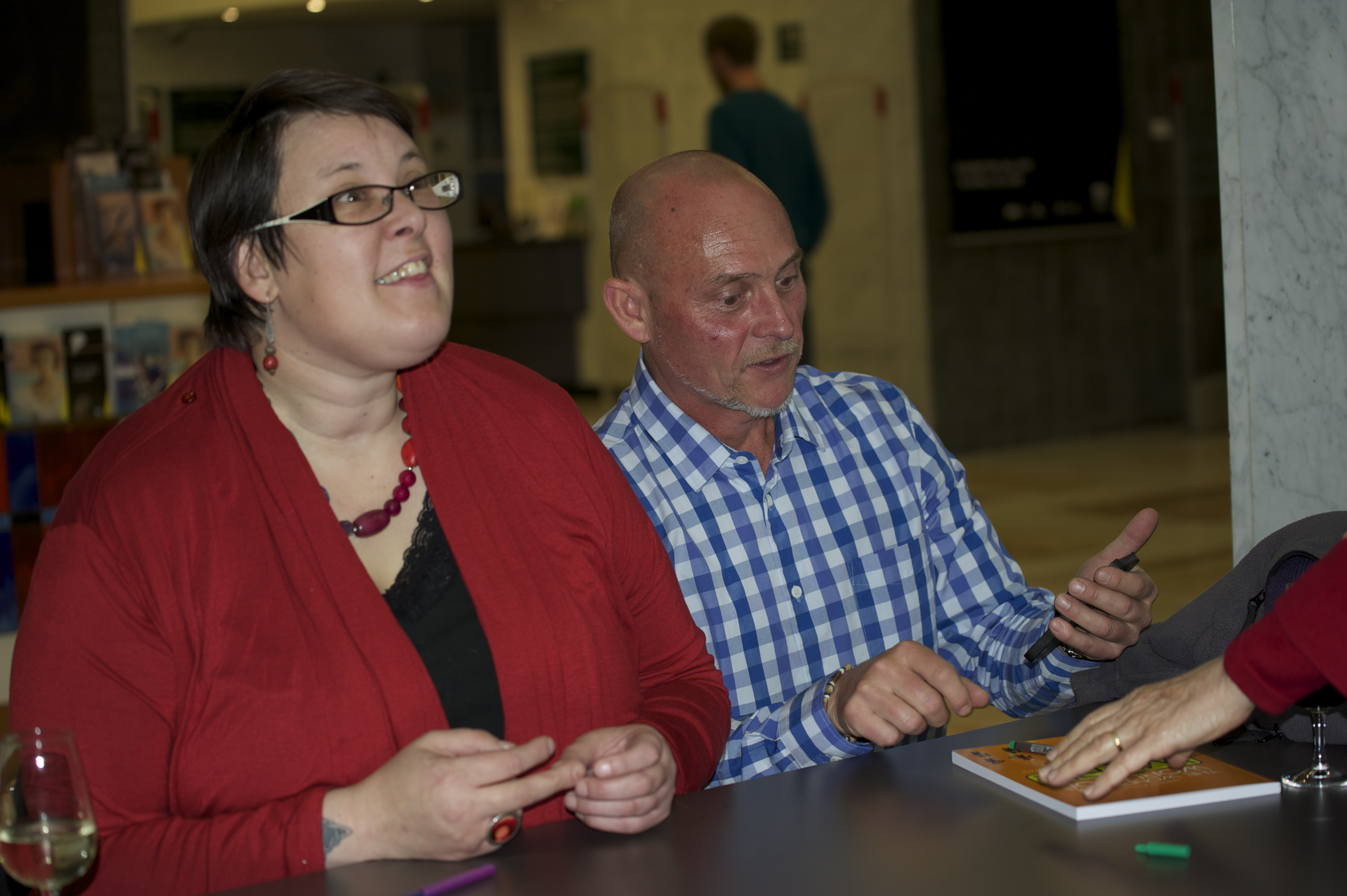
My illustrator friend Andrew and I signing some books…

The dangers of devaluing people

A while back I called someone I know and respect who runs a disability advocacy organisation in Canberra called Imagine More and offered my services for any upcoming events they might have which may benefit from a little bit of Jeanette. I have spoken for Imagine More a couple of times before and they are good people doing good things. They are one of a few parent-led organisations which I find align closely with my own vision. My friend said ‘would you like to speak at a Social Role Valorisation workshop?’ I replied that I didn’t know what that was but, OK. (Don’t worry – I went away and did some research and found it was actually a good thing).

So yesterday I attended and spoke at the workshop. I imagine you’re probably wondering what Social Role Valorisation (or SRV) is. Simply, it is a way of understanding and overcoming disadvantage and disempowerment. The best way to illustrate it is probably using an exercise the facilitator, John Armstrong, used yesterday at the workshop. He gave everyone six post it notes and asked us all to take five of them and write down the five things we strove for and/or valued in our life. Most people’s were quite similar – family, work, financial security, love, home. From memory I wrote down ‘financial security, confidence, cuddles with Mr Kitty, meaningful work and family.’ One the last post it note we were asked to write the one thing we could turn to if we lost everything. Being the advanced and evolved Jeanette that I like to be, I wrote down ‘me’ on my final note. Then John asked us all to take one of the cards from our neighbour. We reflected that we would need to compensate to make up for the thing that was lost. Then we took two more cards from each other. Now, of all our positive attributes and qualities we only had two left. My two remaining cards were ‘cuddles with Mr Kitty’ and ‘confidence’ – not really a lot of use without financial security or a job! Then we lost the last two cards. We had nothing. Effectively we were homeless, prisoners, inhabitants of an institution, powerless, poor, disenfranchised. I had one quality left. The card with the one thing I could rely on if I lost everything – me. My sense of self-worth, my strategies, my wisdom, my self reliance. John then asked us to cross out our final quality. I crossed out ‘me’, feeling quite upset. We then wrote ‘the mercery of strangers’ on the final card. So we had lost everything and our life was controlled by people who had no real stake in our wellbeing. I was reminded of being an inpatient in the psych ward. Soemtimes my nurse was caring and sweet and other times I got a different nurse who was tired, cranky, prejudiced, in a bad space themselves or whatever. Devaluaed people have no power, no influence and no control.

I was very moved by this exercise (and unfortunately it came directly before my talk – good thing I’m professional about my public speaking or it would have affected the quality of my talk!) My talk was about moving from the devalued twenty-something Jeanette to the Jeanette of today. Usually when I attend conferences or events and I am speaking, I listen politely to what the other presenters have to say but their words don’t affect me much (unless of course it is a friend speaking). But yesterday’s workshop really affected me. I was a little worried my talk wouldn’t fit the brief but in fact my story of moving from the devalued me of the past – homeless, criminal, prisoner, institutionalised, poor, sick etc – to the successful Jeanette I am now fitted with John’s presentation as if we had sat together and written our talks.

I missed day two of the workshop as I didn’t feel I could really justify another day of leave if I wasn’t speaking, So I didn’t see how to empower people to overcome their devalued state. Of course I kind of know how to do that already because I have done it myself but I would have liked to have seen the rest of the workshop. The whole idea of SRV is to enable devalued people to have The Good Life (not the 70’s English show with Felicity Kendall). The Good Life is having all those things we wrote on our five post it notes – work, wealth, security, family etc.

As a formerly devalued person, one thing really struck me from the presentation. When I was 22, I was on the disability pension. I was a recently-relased ex-prisoner and was in receipt of welfare benefits. I was essentially as devalued as one can be. I got very unwell with psychosis and spent three months in psychiatric hospital. The doctor there misdiagnosed me and I ended up in prison where I had no rights at all. I was overmedicated, brutalised, had a very tenuous hold on personal safety and was not worth much by anyone’s standards. My mental illness was treated with punishment and was exacerbated. Flash forward to when I was 36, I was a public servant with a Masters degree, a published book and a profile. I was a homeowner with connections to family and community. I got very unwell with psychosis again. I did have to go to hospital but I had a lot of friends (essentially advocates) and family involved in my care. I could access income protection insurance and so I kept my home. I was able to speak on my own behalf and when I experienced a violation of my rights I made a complaint which was taken seriously. I didn’t go to jail, I kept my job and my home. I was the same person with the same circumstance but the fact that I held the socially valued roles of author, public servant, homeowner etc meant that I was treated completely differently. These socially valued roles are a protective factor against being devalued. It is very important to hold on to them.

I really like this concept of social role valorisation. It is something I will explore further. And here is the link for Imagine More in case you are interested in their other workshops…www.imaginemore.org.au  

11046731_802262049855184_5926989556036969386_o

Loving, valuing and respecting yourself – the best option

Little Jeanette was similar to the current iteration of me in many ways. She was determined, motivated, curious, confident and smart. Little me had no reason not to love and respect herself. She had a loving family, enough food, a warm house, no neglect or abuse. And then she went to school.

After thirteen years of being given negative messaging about who I was by many of the other kids at school, pretty much constantly and then enduring sexual violence as a teen, I started to hate myself. In fact, at twenty years-old I was so negatively focussed that I actually wanted bad things to happen to me. I went through life deliberately making stupid mistakes and poor choices, mixing with criminals and drug addicts and trying to make life worse for myself. It was almost as if I had some kind of Stockholm syndrome from the ongoing abuse and invalidation and wanted to help out the bullies and abusers in their quest to make my life unpleasant.

Thankfully negative me got to a point where I realised the options had narrowed to either keep going on the path I was on and die or make some changes. A positive attitude is a formidable weapon in the arsenal of wellbeing and self-worth and I was soon achieving success in academia and then work. I den’t start valuing myself straight away but once I started seeking out good things, I gradually built up my self-worth.

I have noticed a few things about self-esteem and self-confidence during my journey. These are:

  • Self-confidence and self-esteem are actually a very strong protective factor against bullying and discrimination. When I was young and didn’t like or value myself, whenever someone bullied me I took their words on board and felt worse about myself. It becomes a bit of a vicious circle and resulted in my sense of my own value getting lower and lower. I also found that I cared what the bullies thought. However, my current, self-confident self firstly isn’t bothered by some stupid hostile opinion about me and I also don’t really care what some pathetic bully thinks of me.
  • Autistic people can suffer from low self-esteem which is not only reinforced by things like bullying and discrimination but also by prevalent attitudes around Autism being about deficits and ‘disorders.’
  • If you like, involve yourself in Autistic self advocacy (or self-advocacy for mental health issues, physical disability, MS or whatever relates to you). This will help you see the amazing achievements of Autistic others and will build your sense of pride in yourself and your community.
  • Low self-esteem can perpetuate itself when we internalise negative thoughts and comments. If you find yourself saying derogatory things about yourself then take yourself to task. Make a project of turning negative thoughts and words about yourself into positive ones. This can be hard to achieve because we often put ourselves down without even thinking about it. You can ask a friend, partner or trusted someone to point out when you do it if you have trouble spotting it.
  • If you have people in your life who put you down or disrespect you, maybe consider evicting them and their thoughts from your life and your mind.
  • You deserve love and respect. Remind yourself of this.
  • Reflect on the good things you do – your positive attributes, achievements and qualities. And I don’t believe you if you say you don’t have any!
  • Do something nice for yourself every day. It doesn’t need to be a big thing – it could be just making yourself a nice cup of tea or hot chocolate and taking out some time to yourself to drink it.

Self esteem is an amazing thing which can change your world. While it can be hard to achieve, it is very useful. And to report on my own self-esteem journey, I reached a bit of a milestone when I turned forty. I no longer care what rude, abusive bullies think of me, I am happy to buy myself nice things (and only feel a little bit guilty) and I started a job in an area I knew nothing about last year and didn’t get anxious about it (and I’ve been there a year and I rock at it!!) So it can definitely be done. I wish everyone this amazing quality of self-worth.

IMG_0166

Me looking rather confident signing a book – an activity which always inspires confidence and positive thoughts about myself

‘Are you a genius?’ and other thoughts on my academic journey

This week I had an exciting time at the tax accountant. No really, I did. I found out that I have finally paid off my student loan. This is quite an achievement as it was a rather large student loan, gathered over eight years of study of varying degrees.of diligence and success. I thought the end of my student debt probably signals the need for a study-themed blog post, so here it is.

When I was a young Jeanette, my parents always encouraged academic success. Neither of my parents had gone to university, which in their day was a far more esoteric sort of thing than when I was a teen and almost every professional job required a university qualification. In fact my mum’s radiography qualification was completed in a trade school environment rather than a university but now the equivalent course is a four year degree course, I guess my parents wanted the best for my brother and I in terms of our career opportunities, as most parents do. We were never told by my parents what we should study or even that we had to study at all, but it was a sort of unspoken given that when we finished school there should be some further education.

I left school at seventeen, but I did graduate with a year 12 certificate Both my brother and I were top of our respective years. I got a letter of congratulation from the local MP which I promptly threw out (I was a socialist and the MP a conservative). I didn’t get into uni the first year i applied because I applied for Fine Art courses where the admissions officer was more interested in your folio and knowledge of art than your Year 12 score. I spent a year working and painting, reapplied and was accepted the second attempt.

On the first day of uni I was terrified of all the students. I was certain they were ‘real’ artists and could see me for the dilettante that I surely must be. I saw the room full of students and thought I would never make any friends from their number. This turned out not to be the case and I mad a few friends but I was always intimidated by the talent of others. I didn’t finish the course. Instead I got involved with all sorts of scary people and took five years off the life I probably should have had and lay in the gutter, metaphorically, not looking up at the stars but into the drug dealer’s squalid lounge room.

The first thing I decided to do when I did find those allegorical stars and want a better life for myself, was to reenrol in my Fine Art course, I didn’t know how I would go at uni but I thought it was something I needed to do. I had left my course unfinished in 1994 and I hate to leave things unfinished. So in 2001 I started uni once more, this time as a mature aged student. I was less scared of my classmates than I had been the last time around but I was very anxious that they would find out my drug and criminal history so invented a few years of my life (very tricky for an honest Aspie like me). The second time I was in first year uni  – for I could not get credit for my previous study given the time that had elapsed –  I was struck by how much higher my marks were and by how my fellow students thought me something of a star. One older woman asked me in all seriousness ‘Are you a genius, Jeanette?’ I wasn’t quite sure what to say.

Uni wasn’t all joy though. I was quite unwell with mental illness for most of first and second year, having to use a special consideration at the end of first year. I was terrified of my drawing class, despite the fact that I was considered the best student in the year. It went for five hours and involved intense concentration. It was also dark by the end of the class and I have always hated going home in the dark. By the end of the class I was always frazzled, overloaded and paranoid.I was so determined to do well at the class that I sacrificed my well-being and comfort. I was top of the year and won a prize for the class but it almost brought me undone. Of course no-one else could see this and just saw this intense, very private person concentrating on her drawing like there was no tomorrow.

I went on through uni, a high achiever the whole time, even if the trade off was my sense of well-being and mental health. I was asked to do honours and then got accepted into Masters. The later years of university were less of a time of mental illness and more one of enjoying the course but also being in signifiant poverty, living in public housing and subsisting on Government benefits. Most students in my Fine Art course were from wealthy backgrounds. This makes sense because the poorer students tended to enrol in courses like nursing or teaching where there is usually a job at the end of the degree. For Fine Art graduates the career landscape has just a few options. You can do a graduate diploma in education and be an art teacher, you can do something completely unrelated to art (as I did when I joined the public service) or you can be an artist and often live a finically precarious life working odd jobs and selling the occasional painting or sculpture, Being poor was hard. I often went without food in order to afford a new tube of paint (Fine Art is a very expensive course for materials). Luckily I had a motherly neighbour with an endless supply of leftovers.

But in the end I got the degrees – Bachelor of Fine Arts (Monash University 2003), Bachelor of Fine Arts Honours (Monash University 2004) and Master of Fine Art (RMIT University 2006). I took a graduate job, wrote a book and became a different me. I loved university. It was hard, it was fascinating, it was wonderful.

uni grad final 400dpi

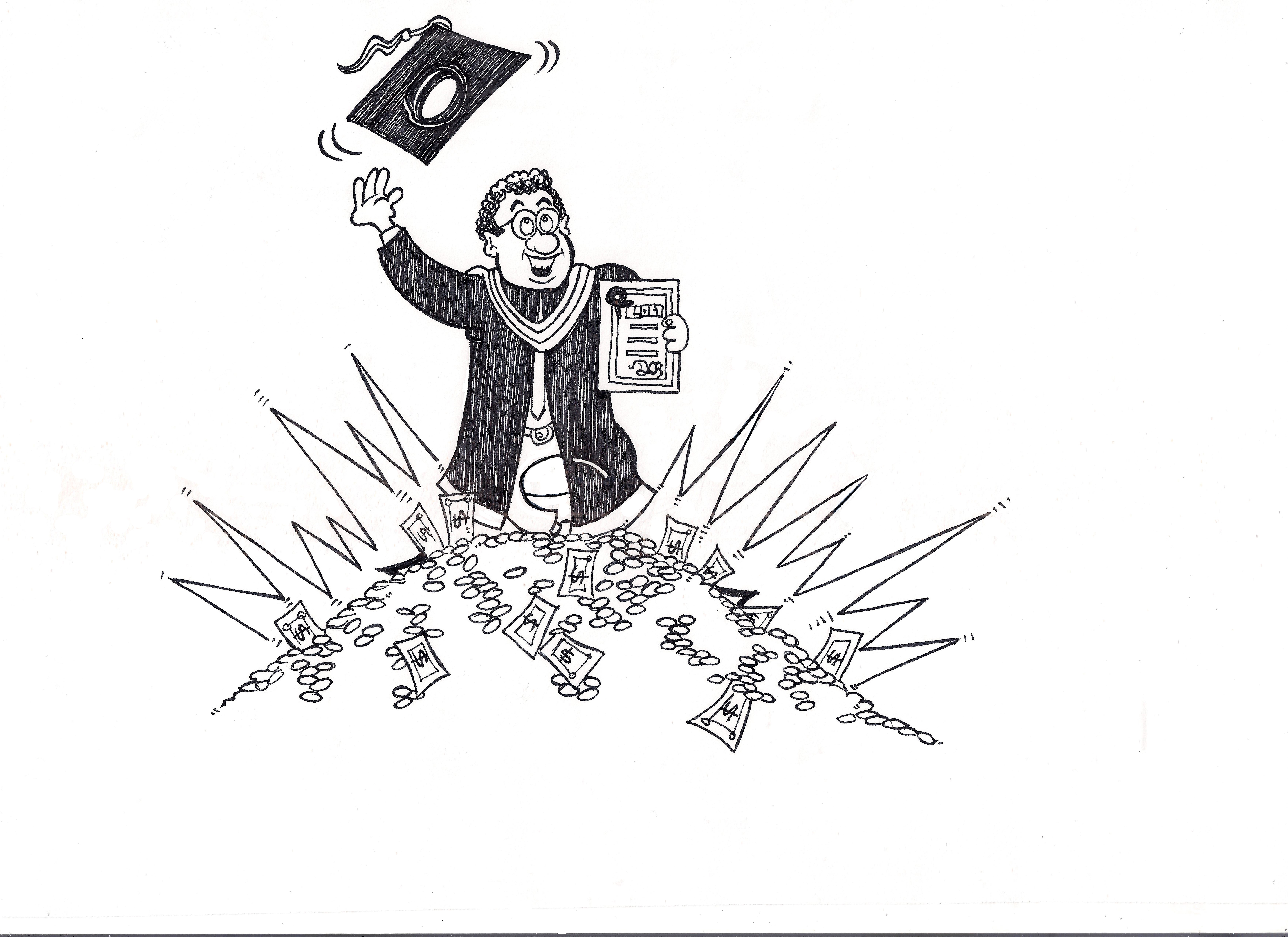
Image of a graduate from my Wonderful World of Work book (drawn by Andrew Hore)

Socially valued roles – a reflection

I am sitting in Whimsy Manor with the heater on and a cup of tea next to me, typing this blog. I am listening to myself interviewing Positively Autistic advocate Sarah Scrimshaw in a prerecorded interview on my radio show. It’s an odd experience and it brings home to me the idea of how i – and my various social roles are perceived and how I perceive myself. The reason I’m thinking about social roles and perceptions is that I am speaking at a social role workshop for a disability advocacy organisation called Imagine More later this month. An example of some of my social roles would be author, public servant, cat lady, public speaker, Aunty etc.

Our social roles are essentially a way for others to perceive us in relation to themselves and wider society. People with disability and those from various disadvantaged groups can be pigeon-holed into stereotyped roles or have negative perceptions applied before they even open their mouths.  Our social roles can impact on our employment prospects,relationships and on how those in authority treat us. A lot of people have noted that they are treated differently by shop owners when they are wearing their business attire and when they are in tracksuit pants and a T-shirt. Shopkeepers may see the person in business clothes as being in the social role of ‘wealthy’ and therefore worthy of a little attention in order to convince them to spend money. The same person in tracksuit pants may be viewed in a different social role – that of unemployed person perhaps, as that is the role their attire denotes.

I find the idea of social roles as applied to myself quite interesting, This is because I have occupied vastly different social roles in my life. As a child I occupied the role ‘problem child’, ‘class clown’, ‘weird’, ‘gifted’ and many others. There were not a lot of positive expectations or responses to me. Even without any formal diagnosis and the stereotypes that can come with that, I was often seen as deficient and broken.  By the time I graduated to adulthood I was a small, isolated and desperately unhappy person. I actively sought out the negative roles, the dark places. My social roles were variously ‘criminal,’ ‘drug addict’, ‘homeless person’, ‘person with mental illness’, ‘alienated person’. These roles became a self-fulfilling prophecy. I incorporated them and the expectations that came with them, into my persona and sense of identity. This was a dangerous situation. I could very easily have been permanently inducted into these extremely negative roles and never have escaped. I imagine a forty year-old criminal me, using her intellect to control criminal activities and survive in a dog-eat-dog world. This iteration of Jeanette is a hopeless person, someone who is far removed from everyday society, someone who has no hope of a productive or happy life. A broken woman. But I never became her.

In fact my social roles now are about as far removed from the criminal drug addict I once was as the Earth is from the moon. A selection of my social roles today includes:

  • Author
  • Autism advocate
  • Public speaker
  • Radio show host
  • Homeowner
  • Poet
  • Artist
  • Public servant
  • Friend
  • Mentor
  • Colleague
  • Blogger
  • Daughter/sister/aunty/niece/sister-in-law
  • Facilitator of women’s group
  • Ambassador for many Autism organisations
  • Taxpayer
  • Mum to Mr Kitty

People who see me now do not see my former self. People see the entire package of all these positive roles. The history beneath this is almost never evident. I made a choice in 2000 to be ‘ordinary’. Ordinary to me meant that I would join society. I would have a professional job, a mortgage, an education and a suit. Within eight years I had all this although when I announced my intent to gain an ordinary life most of the people I knew greeted the news with disbelief and even derision.

I think the way I managed to move from my negative roles to my positive ones was mostly around attitudes. I denied the negative roles. I distanced myself from all my criminal friends and acquaintance. This meant that I had three people in my address book for some time – my mum, my dad and my brother. I made a conscious break from my negative roles and sought out positive ones. As time went on I gathered more and more positive roles to myself. These things seem to snowball and over time and the more you reach for positive roles the more likely they are to come into being.

The other thing about roles which enabled me to move from negative to positive was that I mostly ignored other people’s opinions. When you try to change your life, it appears that everyone has an opinion. I tried very hard to ignore all the doubting the blaming, the focussing on the past. I was determined to make my own way. I often used people’s negative expectations ‘you can’t be a public servant. That job isn’t autism friendly’ etc) to propel me towards positive things. I was determined to prove people wrong who doubted me. So I used the social roles which were problematic as a means to springboard off into a positive world.

So our social roles can determine how others see us and how we see ourselves. But they are far from set in stone and can be changed as many elements of our character and persona can be. For Autistic folks, social roles and our perceptions of them can have a huge impact on how we see ourselves in relation to the world s be careful about ascribing or reinforcing a social role for someone on the spectrum and remember that you can break from from social roles,

11289587_846906952057360_4546062650575153305_o


That other certainty…reflections on the fact that one day I won’t be here

I went to work at the Department today as I have on almost every other day since February 2007. I had no concerns for my safety or welfare. I certainly didn’t think that today might be my last on Earth – who does? I spent the morning working, somewhat ironically, on risk management. I bought a sandwich for lunch from the cafe on the ground floor. I was peeved at the woman who served me as she was rather aggressive and rude. I got upstairs with my sandwich. It had smoked salmon and capers and some kind of cream cheese. Hungrily I bit into it and suddenly realised everything was wrong. I was choking on my sandwich! Not just one of those little things where you inhale a bit of your water or something but the kind of situation which could have ended badly. Thankfully it didn’t. I coughed and spluttered quite impressively and made some comment to my supervisor about having needed a risk management plan for eating lunch. I didn’t think I was in a lot of danger but it did remind me of something we humans don;t think about -our own mortality.

I think people can only function because we do that subconscious turning off of our thoughts about death most of the time. It is very unusual that I walk down the street and think ‘I wonder if I’ll die today?’ If I did I might be paralysed by fear and avoid doing anything. Of course some people would be wise to be a little more conscious of risk but for most of us I think that switching off of the knowledge that we will not always be here enables us to get out of bed and do useful things with our lives.

When I was in my twenties I put myself in so many extremely dangerous situations due to my involvement with criminal peer groups and having a serious mental illness but i was almost unaware of my mortality. Like a lot of young people I couldn’t connect cause to potential effect and didn;t think much about the future.  It seems strange that in another universe, as a forty-soemthing home-owning public servant with very little danger or risk in my life that I find myself wondering about the inevitable day when thee is no more Jeanette. I have found over the past year (my first year in my forties) that I have become quite reflective about many things, icnluuing thinking about death and the fact it will actually happen to me at some point.

For me the thoughts of mortality can be quite motivating. As a driven, ambitious workaholic, I look at my life and realise that I will not have enough time to complete all the things I want and need to. I have been an Autism advocate for ten years and I have a lot more people to talk to I think. I have a theory that one should aim to leave the world a little bit better because of what you have done. I know I’m going to speak to but a small proportion of the world’s people but I want to make sure what I say is helpful, positive and supports others to live well and value themselves. That idea that I should be a force for good is a very strong motivator to me.

The wish for immorality through fame is always a fascinating thing. I regret to admit that I have a little of that somewhere in my makeup. I sometimes want people to know for the great things I might do for years after I die. This is foolish though. I mean take someone like Frank Sinatra. He was very very famous in his day. A number of people know of him now but I wonder how many people younger than me know who he was? How about in a hundred years’ time? A thousand? So immortality through fame is a bit of a myth because as time goes on less people know who you were. It;s not really immortality at all, more stretching out the inevitable for a bit. It also seems a fairly ego-driven dream.

So  all of these reflections bring me to the point I always come to when thinking about the relative brevity of my tenure on Earth: the miracle that I exist at all and the priceless value of my – and everyone else’s – life. I spent the first twenty-five years of my life oblivious to my own value and the preciousness of my life. I made stupid, wrong, negative choices and harmed others along with myself. My life was worthless to me then and could so easily have been lost. Because of this, I look back and think of every day I have had for the past sixteen years as being a bonus, something extra which I probably shouldn’t have been given but was. So this is why I am driven and determined to use what time I have to make a difference in the world. But I would love a few more lifetimes to do all I want and need to in order to improve the world. Oh but yes, how I would. That would be amazing.

DSC_6789

OK I’m not sure about the image from Floriade but I guess it symbolises memory